How to Choose a UK Driving Instructor in 2026: 7 Checks
Your instructor matters more for your pass rate than the test centre, the car or the lesson plan. A good ADI fixes habits in 10 lessons; a bad one drags you across 2 years and 3 retakes.
ADI vs PDI: green badge vs pink badge
Every paid driving instructor in the UK must be registered with the DVSA and display a badge in the windscreen. The badge tells you their status. A green badge means Approved Driving Instructor (ADI), the full qualification. A pink badge means Potential Driving Instructor (PDI), a trainee instructor who has passed their first two qualifying exams but not yet their third (the practical test of teaching skill).
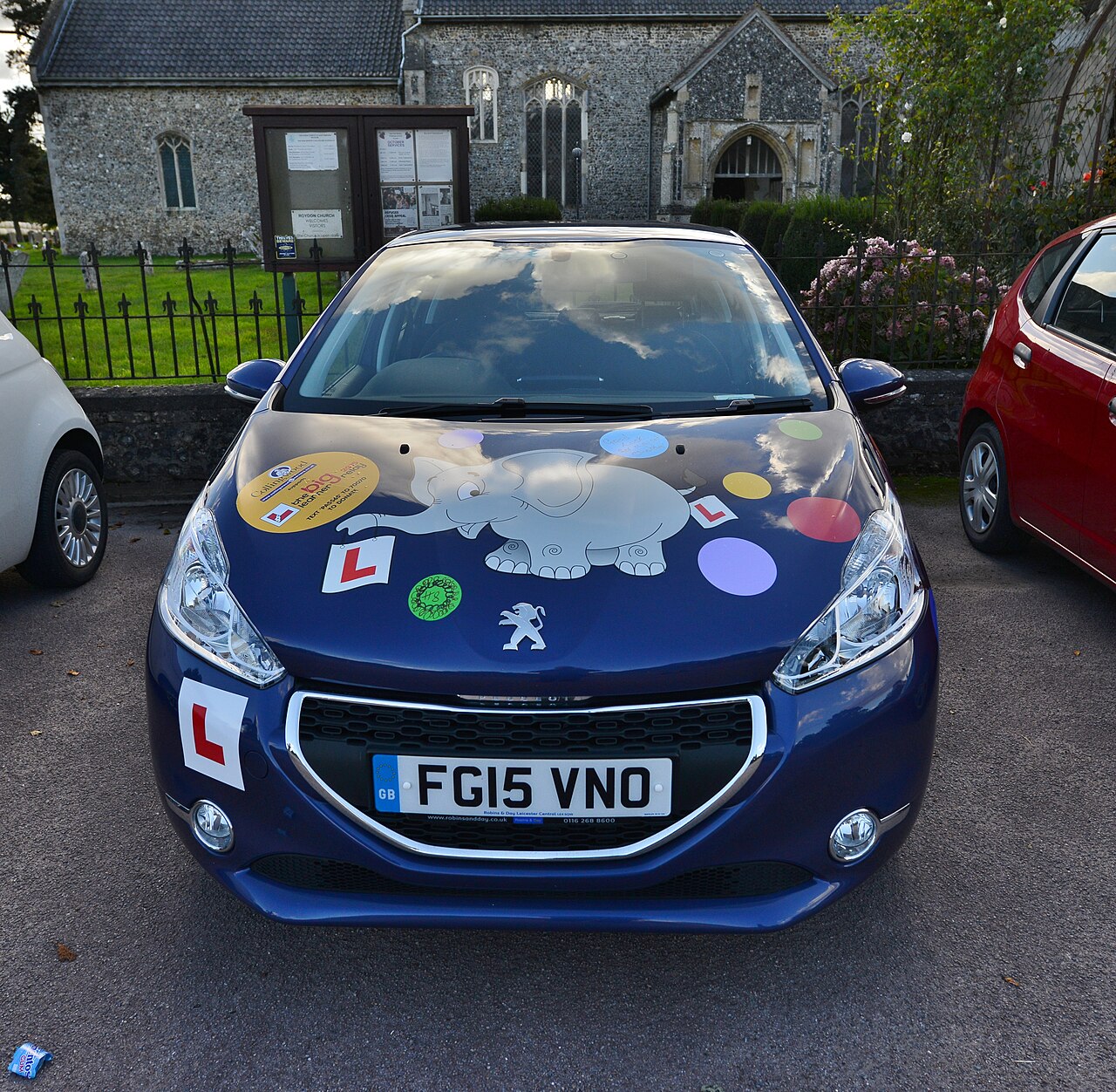
PDI status is a real qualification, not a fake one. Pink-badge instructors can legally teach paid lessons. They are typically charged at a slightly lower rate than ADIs and many go on to become excellent ADIs. But there is a real average-quality gap. PDIs are still learning the craft of teaching driving. ADIs have completed all three exams and have generally taught for longer.
For a first-time learner, an ADI is usually the safer choice. The price difference is rarely more than £5 to £10 per hour, and the quality gap can be much larger. PDIs can be a good fit for confident learners on refresher courses or for learners on tighter budgets, but ask explicitly whether your instructor is ADI or PDI before booking. Our how many lessons guide helps you size the budget either way.
| ADI (green badge) | PDI (pink badge) | |
|---|---|---|
| Qualification | All 3 DVSA exams passed | First 2 exams passed, third pending |
| Typical hourly rate | £35-£65 | £5-£10 cheaper than local ADI |
| Best fit for | First-time learners, full prep | Confident learners, refresher hours |
| gov.uk register | Searchable by postcode | Searchable by postcode |
| Block-booking discount | £5-£10/hr off for 10+ hrs | Sometimes offered |
Where to find good instructors
Three sources usually work best.
- Personal recommendation: friends, family or colleagues who have recently passed are the most reliable source, especially in the same town
- The gov.uk find-an-instructor tool: official register, post-code searchable, shows ADI status and contact details
- Local Facebook groups and parish forums: word of mouth in geographic communities tends to identify the genuinely good local instructors
Be wary of pure online review sites. Some are reliable, but many are gamed. A driving school with 5-star scores across hundreds of reviews looks impressive on screen but tells you less than five honest sentences from someone who actually passed under the same instructor.
For broader prep context including instructor selection, the find an instructor guide goes into more detail on the search process.
What makes a good instructor
Beyond the badge colour, the things that distinguish a strong instructor from an average one are mostly about teaching style.
- Clear feedback: tells you what you did well and what to work on, without being harsh or vague
- Adapts to your pace: pushes you when you are coasting, holds back when you are overwhelmed
- Knows the local test area: not just any roads, the ones around your specific test centre
- Calm in pressure situations: an instructor who panics on a roundabout teaches you to panic on roundabouts
- Honest about test-readiness: tells you when you are not ready, even if you want to book a test. A pushy instructor who books you in early to keep cash flowing is a red flag
- Reasonable car: dual controls, working AC, recent service. Some learners struggle with hot summer lessons in cars without working air conditioning
A useful early signal is the trial lesson. Most instructors offer a discounted first lesson, sometimes free. Use it to see how they teach, how the car feels, and whether you understand their feedback. If after the first hour you feel patronised, confused, or unsafe, switch instructors. The cost of switching at lesson one is small compared to the cost of switching at lesson 25. The private practice page covers extending your hours between paid lessons.
Independent vs franchise
UK driving instructors split roughly into two business models. Franchise instructors work with a national brand: BSM, RED, AA Driving School, or others. They use a branded car and pay a weekly fee to the franchise for lead generation, training and support. Independent instructors run their own business, set their own rates, and find their own students.
The differences for the learner are:
- Price: independents are sometimes cheaper because they do not pay franchise fees, but not always
- Booking flexibility: independents can be more flexible on cancellations and rescheduling
- Backup: franchises can sometimes assign a substitute instructor if yours is sick. Independents cannot
- Quality: highly variable in both. Excellent and poor instructors exist in both categories
Neither model is automatically better. Pick on the individual instructor, not the brand. A great independent in your town beats a mediocre franchise instructor every time, and vice versa.
Switching instructors
You are entitled to switch instructors at any time. There is no contract or commitment, even with franchise providers, beyond paying for lessons already taken. If you have prepaid for a block of lessons, ask for a refund of the unused balance. Most instructors and franchises will provide it without fuss.
Reasons to switch include:
- You feel patronised, dismissed or unsafe in the lessons
- Progress has stalled for several weeks despite your effort
- The instructor cancels frequently or is unreliable
- Their teaching style does not click with how you learn
- You feel pressured into booking a test before you are ready
When you switch, ask the new instructor for a one-hour assessment lesson. They will check your current standard and give you a realistic estimate of how many more lessons you need. Sometimes a fresh pair of eyes spots issues your previous instructor had stopped noticing. The weekly vs bi-weekly lessons page covers the cadence to agree at the swap.
Cost expectations
UK driving lesson rates vary by region. London and the south east are at the top of the range. Wales, Scotland and the north of England are typically cheaper.
- Outside major cities: £35 to £45 per hour for ADI lessons
- Major cities including London and Manchester: £45 to £65 per hour
- PDI rates: typically £5 to £10 less than ADI rates in the same area
- Block bookings of 10 hours or more: often discounted by £5 to £10 per hour
For broader cost context, the driving test cost guide covers the test fee itself, and the main pass guide covers the structural decisions around test prep.
Sources and further reading
The figures, fees, and procedures referenced in this article are verifiable on the official gov.uk pages below. PassRates.uk is built on the Driver and Vehicle Standards Agency’s open data, published under the Open Government Licence.
What is the pass rate at your test centre?
Search by centre name, town or postcode to see the latest DVSA figure.
Frequently asked questions
What is the difference between ADI and PDI?
ADI is Approved Driving Instructor (full green-badge qualification). PDI is Potential Driving Instructor (trainee on a pink badge). Both can legally teach paid lessons, but ADI is the higher qualification and generally the safer choice for first-time learners.
How do I check if a driving instructor is registered?
Use the gov.uk find-an-instructor tool. Search by postcode, find the instructor in the register, and verify their badge is current. Anyone who will not share their ADI number is not a registered instructor.
Are franchise instructors better than independent ones?
Neither is automatically better. Pick on the individual instructor, not the brand. Excellent and poor instructors exist in both categories.
Can I switch driving instructors mid-way through learning?
Yes. There is no commitment, and you should switch if it is not working. Ask the new instructor for a one-hour assessment lesson to align on what you still need.
How much do UK driving lessons cost?
Outside major cities, £35 to £45 per hour for ADI lessons. In London and the south east, £45 to £65 per hour. Block bookings often save £5 to £10 per hour.
Should I pick an instructor near my home or near the test centre?
Near your home is usually fine. Make sure they teach the test routes for the specific centre where you plan to book. The easiest vs hardest centres guide covers centre selection.
Every candidate behind these numbers passed a theory test first. Nationally 44.8% of attempts clear it.
Stopping distances, the two-second rule and driving in rain, ice and fog. All 14 DVSA topics are free to practise, with no sign up. See the theory pass rate by centre or the full practice hub.
Related guides
- Lessons and instructorsDriving lesson costs 2026Read guide
- Lessons and instructorsCheapest places to learn to driveRead guide
- Lessons and instructorsLessons to passRead guide
- Lessons and instructorsHow Many Driving LessonsRead guide
- Lessons and instructorsFind a Driving InstructorRead guide
- Lessons and instructorsLesson Frequency StrategyRead guide
Written by Vikas Dulgunde, the software engineer and driving enthusiast behind PassRates.uk. The figures come straight from the DVSA open dataset; see the methodology.
Source DVSA, Open Government Licence v3.0
Continue reading
How learner driver insurance works in the UK in 2026: standalone short-term policies, named-driver on family cover, black box telematics, and what really affects the premium.
UK driving lesson cadence compared: 1 hr weekly vs 2 hr fortnightly vs 2x1 hr weekly. Memory consolidation, cost and how to pick a rhythm.