Parallel Park on UK Driving Test: 6 Steps (Pass Guide)
Parallel park is the only on-road manoeuvre the examiner can pick, with live traffic behind you. The technique is mechanical once the reference points are locked in.
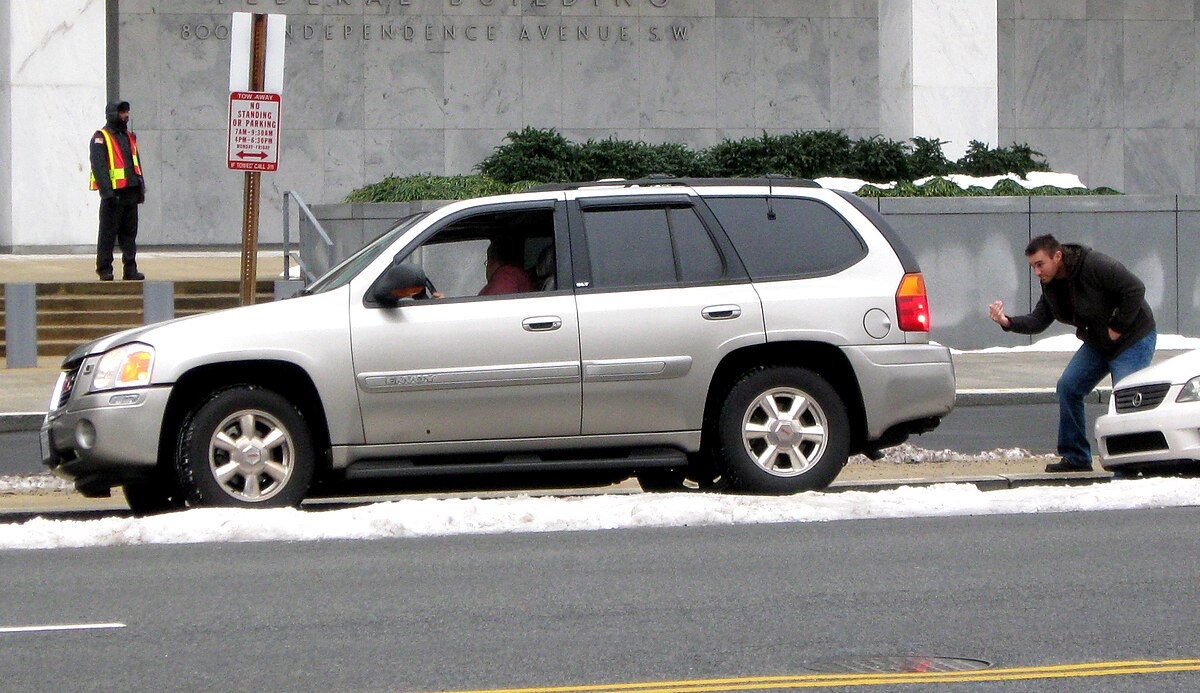
Of the four DVSA manoeuvres, parallel park is the one that intimidates learners most because it happens on a real road, with real cars passing, and you are reversing blind into a kerbside gap. The good news is the technique itself is the same every time. Memorise the reference points, run through the observation pattern, and the manoeuvre becomes almost mechanical.
When the examiner asks you to do it
You will be driving normally and the examiner will say something like "pull up alongside the car ahead on the left, ready to reverse park behind it." That is your cue. Indicate left, mirror check, and pull up parallel to the target car with about a metre of clearance, your front bumper roughly level with their front bumper. This is the setup position.
The 1 to 2 car gap rule
The examiner will pick a parking spot with at least one and a half car lengths of empty space behind the target vehicle. You do not need a huge gap. The reference is one to two car lengths. If it is much tighter than that, the examiner usually finds another spot.
The setup position in detail
- Stop with about one metre of clearance from the side of the target car.
- Your front bumper should be roughly level with their front bumper. Door-mirror to door-mirror is a useful visual.
- Apply handbrake. Select reverse. Reversing lights on signal your intent to anyone behind.
- Now do a full 360 observation: left mirror, left blind spot, front, right mirror, right blind spot, rear window.
The reverse: step by step
Reverse slowly in a straight line until the back of your car is roughly level with the back of the target car. Some instructors teach this as "when you can see the back wheel of the target car in your left rear window." Stop steering input here, the wheels are still straight.
Apply one full turn of the steering wheel to the left. Continue reversing slowly. The car will start to swing in towards the kerb. Watch your left door mirror. The kerb should appear and start moving up the mirror as you swing in.
When you see the kerb running roughly along the bottom edge of your left door mirror, that means you are at about a 45 degree angle to the kerb. Now steer back the other way, to the right, to bring the car parallel. As the car straightens, the kerb in your mirror flattens out. When you are parallel and roughly 30cm from the kerb, straighten the wheels.
Reverse a final half-metre to settle the car in the bay, then stop, handbrake, neutral. Observation again before you move off later.
- 01Setup position
Pull up parallel to the target car with about 1 metre of clearance, front bumpers roughly level. Apply handbrake, select reverse. Full 360 observation before moving.
- 02Reverse in a straight line
Reverse slowly until your rear bumper is roughly level with the target car's rear, watch for their back wheel appearing in your left door mirror.
- 03First steering input, one full turn left
Apply one full turn of the wheel to the left. The car swings towards the kerb. Watch the kerb rise in the left door mirror as you swing in.
- 04Counter-steer to parallel
When the kerb runs along the bottom edge of the left door mirror (roughly 45°), steer back to the right. The kerb flattens as the car comes parallel.
- 05Settle and finish
Reverse a final half-metre, aiming for about 30 cm from the kerb. Stop, handbrake, neutral. Full observation again before you move off later.
Mirror sequence throughout
Your eyes are not fixed on any one mirror. The pattern is left mirror (kerb), right mirror (front swing), rear window (anyone coming), repeat. If a car comes up behind you while you are mid-manoeuvre, stop and let them pass. Holding up traffic is not a fault. Hitting the kerb because you rushed is.
Common faults examiners mark
- Hitting the kerb. Even a gentle bump is normally a driving fault. Mounting the kerb is a serious.
- Finishing more than about 30cm from the kerb. Examiners want you reasonably close, not stranded out in the road.
- Finishing at an angle, with the front sticking out. The car should look parked, not abandoned.
- Skipping the rear window check before reversing. Mirror checks alone are not enough on a public road.
- Coasting with the clutch fully down. The examiner wants clutch control, not freewheeling.
- Holding up traffic without acknowledging them. If a car has been waiting, a quick wave once you are parked is good etiquette and signals awareness.
What examiners actually look for
The DVSA does not require a textbook-perfect park. They want to see safe execution. Slow speed, full observation, awareness of other road users, and a reasonable finish position. A car that ends up parked 40cm from the kerb but with perfect observation will pass. A car that ends up perfectly placed but skipped a blind spot will pick up a serious. Observation beats precision every time.
- Setup clearance
- ~1 mside-gap from the target car
- Minimum gap required
- 1.5 car lengthsexaminer picks a suitable space
- Target kerb finish
- ≤30 cmmore than ~40 cm = fault
- Typical completion time
- 30-60 secno time limit, rushing causes faults
- First steering input
- 1 full turnto the left at the reference point
- Tests including this manoeuvre
- ~1 in 4examiner picks from 4 options
Practice tips
Practise on quiet residential streets at first, with cones if you can borrow some, then with parked cars. Vary the gap size. Practise on streets with a slight camber so you get a feel for how the car drifts. Read our full manoeuvres guide for the other three the examiner might pick instead, our reverse bay park guide for the off-road equivalent, and our test day guide for what happens around the manoeuvre instruction. The faults guide breaks down the difference between minor, serious, and dangerous so you understand what each parking error actually costs.
For test centre context, our easiest vs hardest centres page covers route differences, the residential area test routes page covers where parallel park usually happens, and the highest volume centres ranking lists the busiest sites where parallel park usually happens on tight residential roads.
Sources and further reading
The figures, fees, and procedures referenced in this article are verifiable on the official gov.uk pages below. PassRates.uk is built on the Driver and Vehicle Standards Agency’s open data, published under the Open Government Licence.
What is the pass rate at your test centre?
Search by centre name, town or postcode to see the latest DVSA figure.
Frequently asked questions
How close to the kerb do I need to finish?
About 30cm is the target. Anywhere from touching the kerb (without hitting) to roughly 40cm out is acceptable. More than half a metre and you will pick up a fault for poor positioning.
Can I straighten up by pulling forward?
Yes. If you finish at an angle or too far from the kerb, you can pull forward and reverse again to correct. One correction is fine and not a fault. Multiple corrections start to look like loss of control.
What if a car wants to come past while I am reversing?
Stop, signal that you have seen them with eye contact or a small wave, and let them go. Resume the manoeuvre once they are clear. Examiners want to see this awareness.
Is parallel park done on every test?
No. The examiner picks one of the four manoeuvres: parallel park, forward bay park, reverse bay park, or pull up on the right and rejoin. Parallel is the only one done on a road with other traffic.
What happens if I touch the kerb?
Light contact is usually a driving fault. Bumping it firmly or mounting it (a wheel goes up onto the pavement) is a serious fault and you will fail. Treat the kerb as a no-touch line.
Can I open the door to check my distance from the kerb?
No. Opening the door during a manoeuvre is a serious fault. Use your left door mirror.
How long should the manoeuvre take?
Typically 30 to 60 seconds. There is no time limit, but rushing leads to faults and going too slowly suggests poor confidence. Steady and controlled is the right pace.
Every candidate behind these numbers passed a theory test first. Nationally 44.8% of attempts clear it.
Control in different weather, road surfaces, gradients and at night. All 14 DVSA topics are free to practise, with no sign up. See the theory pass rate by centre or the full practice hub.
Related guides
Written by Vikas Dulgunde, the software engineer and driving enthusiast behind PassRates.uk. The figures come straight from the DVSA open dataset; see the methodology.
Source DVSA, Open Government Licence v3.0
Continue reading
DVSA emergency stop on the 2026 UK driving test: the 1-in-7 chance after the November 2025 change, examiner signal, mirror-brake-clutch sequence and the skid faults that cost a pass.
Reverse bay parking on the UK driving test in 5 steps: reference points, observation pattern, common faults and drills from a UK instructor.