HGV Reverse Manoeuvre Explained: 6 Steps (UK 2026)
Every UK LGV candidate must complete the cone-marked reversing exercise: done well it takes 3 minutes, done badly it ends the test before you reach the road. This is the 6-step sequence.
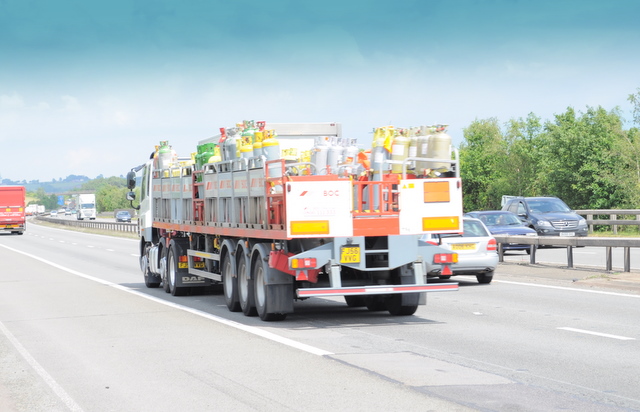
What the manoeuvre actually is
At every UK LGV test centre, the reversing area is a flat tarmac yard with a permanent set of painted lines or a cone layout marking out a starting position and a target bay. The candidate is asked to drive forward into a defined start zone, stop, and then reverse the vehicle backwards into the bay using a curve, ending fully inside the bay with the vehicle straight. The exercise is done blind side (your left side, where you cannot see the rear corner directly).
The bay dimensions are set so that the manoeuvre is achievable but not easy. For Cat C in a rigid lorry, you are reversing about three vehicle lengths, with a defined turning radius. For C+E in an articulated combination, the bay is a similar size but the steering geometry is reversed (you steer the cab in the opposite direction to push the trailer where you want it).
The cone layout
A typical layout has a starting box marked by four cones, the bay marked by four cones at the corners, and intermediate cones along the path showing the turning corridor. Some centres use painted lines on the tarmac instead of cones for the bay edges. The dimensions are standardised across DVSA centres so a candidate trained in Bristol does the same exercise as a candidate in Glasgow. Our Cat C explainer and Cat C+E explainer show what the right vehicle looks like for each version of the exercise.
Cat C reversing technique (rigid lorry)
- Start in the marked start box with the vehicle straight
- Forward to a stop, engage reverse, look back through the rear of the cab
- Use mirrors first, then physical look (mirror-mirror-look discipline)
- Begin reversing slowly, steering left to start the curve
- Watch the trajectory of the rear corner using the offside mirror
- Straighten the vehicle when the bay corners line up in your mirrors
- Continue reversing straight until the vehicle is fully inside the bay
- Stop when the rear is correctly positioned (most centres mark this with a final cone)
You are allowed to stop and shunt forward to correct your line. One or two shunts is normal and not penalised heavily. Three or more starts to look like you have lost control of the vehicle and the examiner will mark accordingly. Knocking down a cone is a serious fault. Mounting the kerb (where there is one) is a serious or dangerous fault depending on the speed and direction.
Cat C+E reversing technique (artic)
The artic reverse is fundamentally different. You steer the tractor in the opposite direction to where you want the trailer to go. Steer right and the trailer pushes left, and vice versa. The motion is gentle and slow, with constant correction. Every degree of steering input takes a moment to translate to trailer movement, then continues moving once you straighten the wheel. You learn to anticipate.
- Start with the combination straight in the start box
- Forward and stop, engage reverse, mirror-mirror-look
- Initial steer: opposite direction to your target bay (right wheel in to push the trailer left)
- Watch the trailer corner in your offside mirror, not the cab
- When the trailer is at the right angle to enter the bay, straighten the cab
- Then "follow" the trailer in by keeping the cab and trailer roughly aligned
- Reverse straight to finish inside the bay
Most C+E candidates find this counter-intuitive at first. By the third or fourth attempt during training it starts to click. By the seventh or eighth it feels natural. The temptation to oversteer is strong, especially when the trailer does not respond as fast as you expect. Resist it. Steady, small inputs win.
What the examiner is watching for
The examiner is positioned outside the cab, often standing where they can see your mirrors and the trailer corners simultaneously. They are watching for: observation pattern (mirror-mirror-look every few seconds), control over the speed (slow enough to correct, fast enough to make progress), accurate trajectory (smooth curve, not a series of sharp inputs), and whether you stop and shunt cleanly when you misjudge.
They are not watching to see if you complete the exercise on the first attempt. They are watching to see if you can complete it under pressure with awareness of what is happening around the vehicle. The wider HGV walkaround page covers the same observation discipline applied at the start of the day.
Common faults
- Knocking a cone (serious fault)
- Mounting the kerb if one is present (serious or dangerous depending on speed)
- Multiple shunts beyond two (driving fault per shunt)
- Failing to look around before reversing (serious fault for missed observation)
- Reversing too fast (driving fault, escalates if it leads to a near-miss)
- Stalling under pressure during the manoeuvre (driving fault)
Preparation
Most HGV training schools include 4 to 8 hours of dedicated reversing practice in their week. The exercise is taught on the same yard the test uses, with the same cone layout. Drilling the manoeuvre 20 to 30 times across a week embeds the muscle memory and the observation pattern. By test day it should feel routine, not exotic.
For C+E, the coupling and uncoupling exercise often happens on the same yard, see coupling and uncoupling guide and the broader HGV test explained guide. Pass rate variation across centres is covered at LGV pass rates UK.
Sources and further reading
The figures, fees, and procedures referenced in this article are verifiable on the official gov.uk pages below. PassRates.uk is built on the Driver and Vehicle Standards Agency’s open data, published under the Open Government Licence.
What is the pass rate at your test centre?
Search by centre name, town or postcode to see the latest DVSA figure.
Frequently asked questions
How long does the reversing exercise take?
About three minutes including the initial forward, the reverse, and the final stop. Faster is fine, much slower (over five minutes) starts to look like you are not in control.
Can I shunt forward to correct my line?
Yes. One or two shunts is normal and not heavily penalised. Three or more starts to look like loss of control.
What happens if I knock a cone?
Serious fault, which is an instant fail. The cones are not just markers, they represent the imaginary obstacles you would hit in a real depot.
Is the artic reverse harder than the rigid reverse?
Different and counter-intuitive at first. By the end of training week it usually feels natural. Most C+E candidates pass the manoeuvre on test day.
How long should I practise reversing during training?
Most schools build in 4 to 8 hours across a week. By the end you should be able to complete the exercise reliably without examiner pressure.
Do all centres use the same bay layout?
Yes, dimensions are standardised across DVSA LGV centres. Cone or painted-line marking varies but the geometry is the same.
Is the reverse done before or after the road portion of the test?
Always before. The reversing exercise is on the centre yard at the start of the test. If you fail it badly, the road portion sometimes still goes ahead for the experience but the test is already failed.
Every candidate behind these numbers passed a theory test first. Nationally 44.8% of attempts clear it.
Licence, insurance, MOT, vehicle tax and what the law requires you to hold. All 14 DVSA topics are free to practise, with no sign up. See the theory pass rate by centre or the full practice hub.
Related guides
Written by Vikas Dulgunde, the software engineer and driving enthusiast behind PassRates.uk. The figures come straight from the DVSA open dataset; see the methodology.
Source DVSA, Open Government Licence v3.0
Continue reading
Full UK C+E coupling and uncoupling sequence: pin, dog clip, electrics, suzies, brake test, observation. Wrong order is an instant fail.
The 12-step UK HGV daily walkaround: tyres, brakes, lights, mirrors, fluids, plates and load security, exactly as Module 4 examiners expect.