UK HGV Practical Test Explained: Full 90-Min Walkthrough
The HGV test is not a bigger car test: a longer drive, vehicle-specific manoeuvres, and demands a Cat B holder has never faced. Here is the structure you are walking into.
What the HGV practical test actually is
The DVSA HGV practical, formally the LGV (Large Goods Vehicle) test, is the on-road examination you sit after passing your theory and hazard perception tests. It is graded against the same fault categories as the car test (driving, serious, dangerous) but the threshold is tighter, the route is longer, and the vehicle you are operating weighs ten times what most candidates have ever driven. Pass rates for HGV tests run a little higher than the car average, sitting in the high 50s nationally, but that headline figure hides huge variance by category and centre. The car average sits closer to 48 percent, which you can verify on the main stats page.
You book the practical through the same DVSA system used for car tests, but the centres are a smaller subset. Most regional hubs have one or two LGV centres, sometimes co-located with car testing and sometimes purpose-built on industrial estates. The fee for a weekday Cat C test is £115, with module 4 (the practical demonstration test for new commercial drivers) running at £55 on a weekday.
How long the test takes
Plan for around 90 minutes from when you arrive at the centre to when you leave with a result. The on-road portion itself runs about 60 minutes, plus reversing exercise time, vehicle safety questions, and any coupling work for C+E candidates. By contrast, a car test takes about 40 minutes including manoeuvres, so come in expecting a much longer day with significantly more cognitive load. Dehydration is a real factor on a hot day in a vehicle without modern climate control.
The five parts of the test
- Vehicle safety questions: the examiner asks five "show me, tell me" questions covering items like fluid checks, brake operation, lights, and load security
- Practical road driving: roughly 60 minutes covering motorway, dual carriageway, urban and rural roads, depending on the test centre catchment
- Reversing exercise: a defined manoeuvre into a marked bay using cones, performed off-road on the centre approach
- Independent driving: about 10 minutes where you follow road signs or a sat nav without turn-by-turn instructions, just like the car test
- Coupling and uncoupling (C+E only): connecting and disconnecting the trailer under examiner observation, covered in detail in coupling and uncoupling guide
You can collect a maximum of 15 driving faults before failing on minor count alone, the same threshold as the car test. Any single serious or dangerous fault means an instant fail, and the examiner will usually let you finish the route anyway for the experience. The DVSA does not publish HGV-specific fault data the way they do for car tests, but instructors report the same broad pattern: lookouts, observation, and signal timing dominate the failure list.
The vehicle you will drive
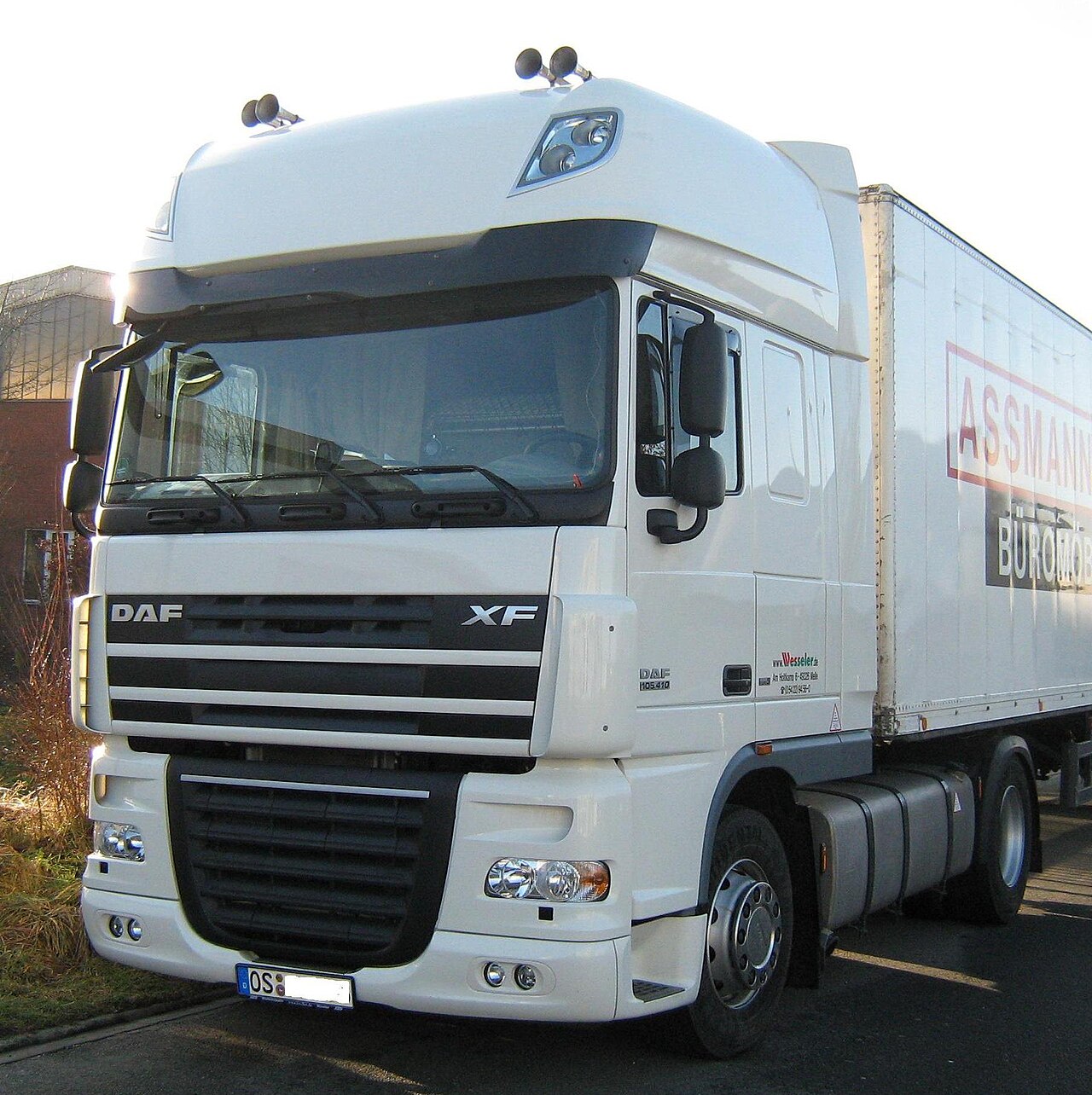
For Cat C, the test vehicle is a rigid lorry over 12 tonnes gross weight, typically a 17-tonne or 26-tonne curtainsider provided by your training school. For C+E, it is a tractor unit plus an artic trailer, usually a tri-axle 13.6 metre semi-trailer. You will not have driven this vehicle before unless you booked your training and test through the same provider, which is normal practice. The provider takes you to the test centre, the vehicle is the one you trained in, and they wait while you take the test.
Vehicle familiarity is the single biggest variable in HGV test outcomes. A learner who has done 30 hours in a particular tractor unit will outperform a learner who has done 50 hours but switches vehicles before the test. Always test in the vehicle you trained in.
The route
HGV test routes are designed to expose you to a wide range of conditions inside an hour. That usually means a short residential or industrial estate section near the centre, a longer A-road or dual carriageway leg, often a stretch of motorway, and a return through urban traffic. The examiner decides the route on the day and you have no way to know it in advance. Memorising routes is not feasible and not the point. The skill being tested is your ability to operate the vehicle safely in any reasonable mix of conditions.
Centre-by-centre route characteristics are covered in LGV test routes UK, and overall pass rate variation is in LGV pass rates UK.
The examiner
HGV examiners are typically experienced commercial drivers themselves, often with 20 years on the road before joining the DVSA. They sit in the cab beside you, take notes on a clipboard, and give clear, neutral instructions. They will not chat. They will not engage with banter. They are watching for specific things: mirror usage on every gear change and lane change, signal discipline at junctions, lane positioning on roundabouts, observation at uncontrolled junctions, and smooth gear and clutch operation.
Module 4 (the practical demonstration)
If you are training for initial Driver CPC alongside your licence, you also sit module 4. This is a 30-minute off-road practical demonstration test where you talk through and physically demonstrate vehicle safety procedures: walkaround checks, load security, emergency procedures, ergonomics, and accident reporting. It is marked out of 100 across five safety topics: you pass with at least 80 overall and no single topic below 15 out of 20. You can take it before, after, or on the same day as the practical road test. See the full breakdown in Driver CPC modules explained.
How to prepare
Most candidates take a five-day intensive HGV course at a JAUPT-approved training school immediately before their test. This compresses 30 to 40 hours of driving into a working week, with the test on day five or the Monday after. The intensity works because skills consolidate quickly when you do nothing else, but it leaves zero margin for a bad day. Some learners prefer a phased week-by-week approach. Both routes work, neither is cheaper, and the choice usually comes down to your work and personal schedule.
For the wider context of how DVSA testing works, the main UK driving test pass guide covers fault categories and examiner psychology in detail, and the HGV walkaround page covers Module 4 prep.
Sources and further reading
The figures, fees, and procedures referenced in this article are verifiable on the official gov.uk pages below. PassRates.uk is built on the Driver and Vehicle Standards Agency’s open data, published under the Open Government Licence.
What is the pass rate at your test centre?
Search by centre name, town or postcode to see the latest DVSA figure.
Frequently asked questions
How long does the HGV practical test take?
About 90 minutes total at the centre, with around 60 minutes of on-road driving plus reversing, vehicle safety questions, and (for C+E) coupling work.
What is the pass rate for HGV tests in the UK?
National HGV pass rates run in the high 50s percent, slightly above the car test average of around 48 percent. Cat C tends to run a little higher than C+E.
How much does the HGV practical test cost?
The DVSA fee is £115 for a weekday Cat C or C+E test. Module 4 (the Driver CPC practical demonstration) is £55 on a weekday. Total training and test costs typically come to £2,500 to £3,500.
Can I fail the HGV test for one mistake?
Yes. A single serious or dangerous fault is an instant fail. You can collect up to 15 driving faults (minors) before failing on count.
Do I have to take the test in a vehicle I have trained in?
You are not required to, but candidates who switch vehicles between training and test fail at much higher rates. Always test in the vehicle you trained in.
Is the HGV test harder than the car test?
Different rather than harder. The vehicle is bigger and slower to respond, the route is longer, and observation demands are higher. But the fault threshold is the same and pass rates are slightly higher than the car average.
Related guides
Written by Vikas Dulgunde, the software engineer and driving enthusiast behind PassRates.uk. The figures come straight from the DVSA open dataset; see the methodology.
Source DVSA, Open Government Licence v3.0
Continue reading
Category C HGV licence: vehicles covered, who needs it, theory and medical, age rules and how it fits with Driver CPC. The Class 2 entry route.
Bike show-me and tell-me questions for Mod 2 in 2026: the 15-question DVSA pool, chain tension, tyre pressures, brake fluid, horn and the marking rule.