UK LGV Test Routes 2026: Mix Across Test Centres
Every UK LGV centre runs a different route mix shaped by the roads around it. Knowing the broad shape of what your centre tends to use is still useful preparation.
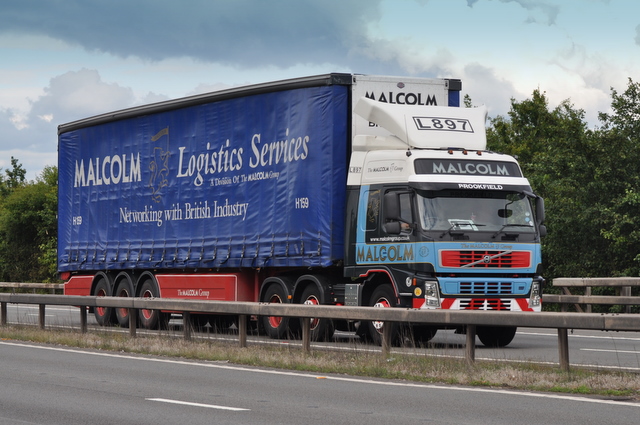
Route shape across centre types
An LGV test covers a representative range of conditions inside the 60-minute on-road portion. That usually means a section of motorway or dual carriageway driving, a section of urban or built-up driving, and a section of either rural A-road or industrial estate work. The proportions vary by centre based on what is geographically available around it.
A test centre on the M62 corridor, for example, will use the fast A-roads and dual carriageways around it because the network is right there, though the car test never goes on the motorway itself. A centre on the south coast might rely more on slower A-roads because the nearest faster roads are further away. Both formats meet DVSA requirements and the difficulty assessment is calibrated for the route mix you actually drive, not an abstract national average.
Motorway sections
Most LGV test routes include a stretch of motorway driving. The examiner is watching for: lane discipline (you stay in lane 1 except for overtaking), correct overtaking technique (mirrors, signal, position, signal off, mirrors), gentle gear and speed control on hills, and your handling of merging traffic at junctions. They are not testing your ability to use lane 3 at 70 mph, they are testing your ability to drive a heavy vehicle predictably so that other road users can plan around you.
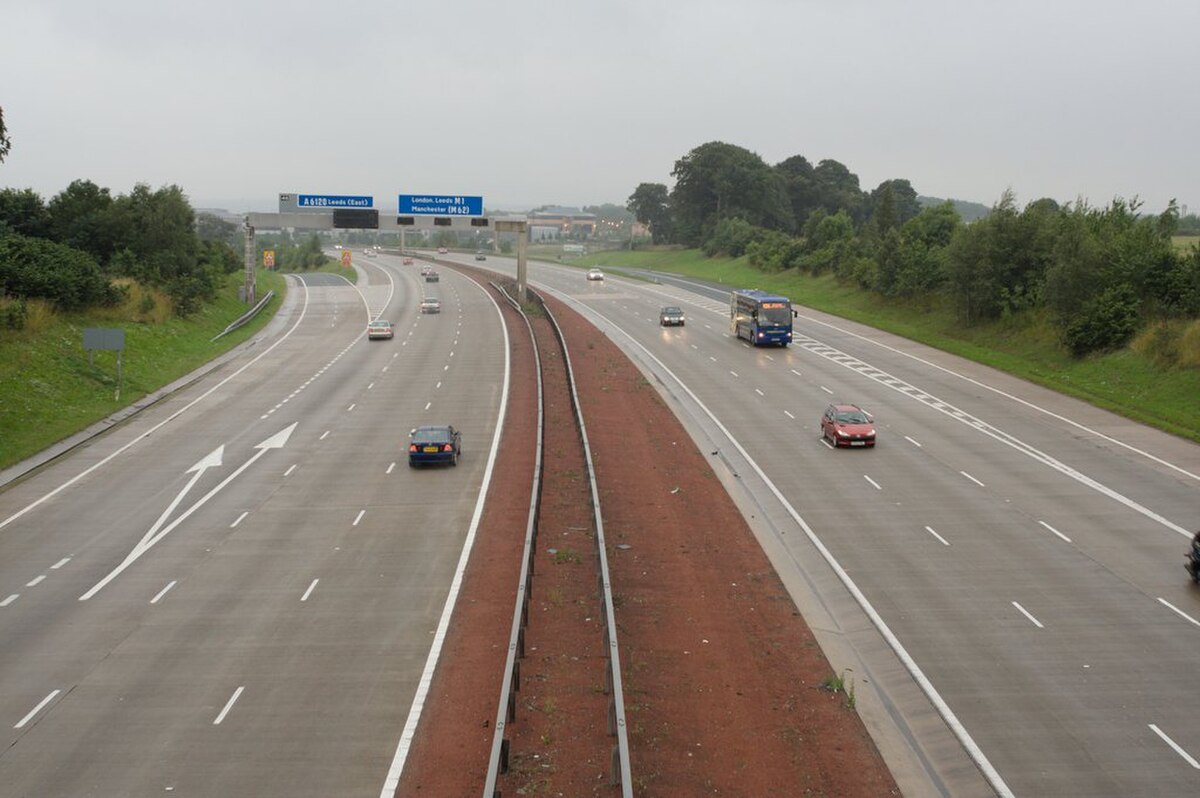
Common faults on motorway sections are sustained driving in lane 2 when lane 1 is clear (a serious fault), late mirror checks before lane changes, and gentle drift towards the central reservation in long stretches.
Dual carriageway
Where motorway is not available, dual carriageway A-roads fill the gap. The driving is similar to motorway but with more frequent junctions, often grade-separated but sometimes at-grade with traffic lights or roundabouts. Speed limits vary from 50 to 70 mph, and reading roadside signage is critical because limits drop at junctions, schools, and built-up sections without warning.
Urban driving
The urban section of a test typically lasts 15 to 20 minutes and is where most serious faults are collected. You work through traffic lights, pedestrian crossings, residential streets, parked cars on both sides, cyclists, bus lanes, and right turns across oncoming traffic. The vehicle is large and the gaps are small. Examiners are watching observation patterns above all else: have you checked your nearside mirror before this turn, have you made eye contact with the cyclist on your left, have you hesitated at the junction long enough to be sure the road is clear.
Cities like London, Birmingham, and Manchester have particularly demanding urban sections. See city pass rate breakdowns at London driving test guide, Manchester, and Birmingham. Routes in smaller towns with less density tend to produce higher pass rates.
Rural and A-road sections
Rural A-road driving features in most centres outside the major conurbations. Tests include reading the road for blind bends, judging speed limits at the boundaries of villages, and dealing with slow-moving farm traffic and tractors. Overtaking on a single carriageway in an HGV is often impractical (the safe gap rarely opens up) and examiners do not penalise you for sitting behind slower traffic, only for impatient or unsafe overtaking attempts.
Industrial estate sections
Many test centres are located on industrial estates and the route includes a few minutes of estate driving on the way out and back. This is where the examiner assesses your handling of low-speed manoeuvres, tight roundabouts, and your awareness of forklifts and reversing trucks at depot entrances. It is also where the pre-departure walkaround and the manoeuvre exercise happen, see pre-use vehicle checks and HGV reverse manoeuvre.
Examples of well-known centre routes
- Leeds Heaton Park: M621 motorway, A58 dual carriageway, residential routes around Beeston and Holbeck
- Manchester West: M62 westbound, urban Trafford and Eccles, return via A57 dual carriageway
- Birmingham Garretts Green: M6 short stretch, A45 dual carriageway, urban Yardley and Hodge Hill
- Bristol Avonmouth: M5 northbound, Avonmouth dock estate, return via A4 Portway
- Glasgow Bishopbriggs: M73, M80, A803 urban Bishopbriggs, residential Lambhill
Pass rate variation by route type
Centres with heavy urban content tend to have lower pass rates. Centres with more rural and motorway content tend to have higher pass rates. The reason is that urban driving generates more decision points per minute, and each decision is an opportunity for a serious fault. The full national picture is at LGV pass rates UK and overall test centre rankings are at easiest centres and hardest centres.
Sources and further reading
The figures, fees, and procedures referenced in this article are verifiable on the official gov.uk pages below. PassRates.uk is built on the Driver and Vehicle Standards Agency’s open data, published under the Open Government Licence.
What is the pass rate at your test centre?
Search by centre name, town or postcode to see the latest DVSA figure.
Frequently asked questions
How long is an LGV test route?
About 60 minutes of on-road driving, split between motorway or dual carriageway, urban, and either rural or industrial estate sections.
Can I see the route in advance?
No. Routes are not published, and the examiner decides which way to go on the day. Local instructors usually know the roads a centre tends to use and can drill the typical junctions with you.
Do all LGV centres have motorway sections?
Most do, but not all. Centres far from the motorway network (some in north Wales, the Scottish Highlands, parts of the south coast) substitute extended dual carriageway and A-road sections.
Where do candidates make the most mistakes?
Urban sections, by a wide margin. Density of decisions and tight gaps generate more observation faults than motorway driving.
Are some centres easier than others?
Yes, with measurable differences. See the centre rankings on the easiest centres page for the full breakdown.
Can I take a familiarisation drive before my test?
Most training schools include this in their package. A two-hour drive on typical centre routes the day before the test is standard.
Every candidate behind these numbers passed a theory test first. Nationally 44.8% of attempts clear it.
Spotting developing hazards, plus the effects of alcohol, tiredness and medicines. All 14 DVSA topics are free to practise, with no sign up. See the theory pass rate by centre or the full practice hub.
Related guides
Written by Vikas Dulgunde, the software engineer and driving enthusiast behind PassRates.uk. The figures come straight from the DVSA open dataset; see the methodology.
Source DVSA, Open Government Licence v3.0
Continue reading
UK LGV pass rates by category and centre: Cat C around 55%, C+E around 60%. How to read DVSA quarterly figures and pick a centre.
All 4 initial UK Driver CPC modules: theory parts 1a/1b, case studies (Module 2), the road test (Module 3) and demonstration (Module 4).