UK Driver CPC: All 4 Modules Explained (2026)
Initial Driver CPC is 4 exams on top of your HGV licence, each testing something different, and you need all 4 to drive commercially. Here is what each covers, in the usual order.
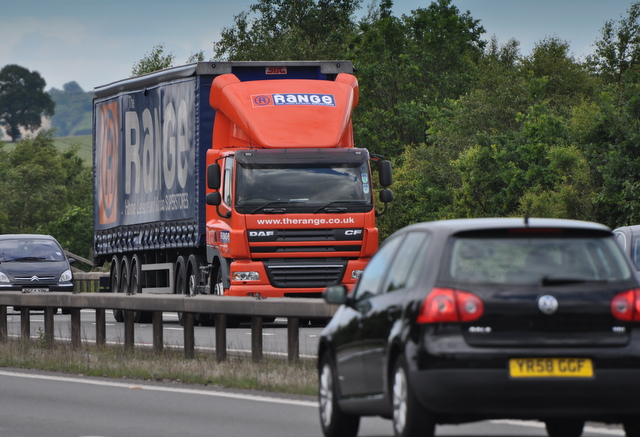
What initial Driver CPC is for
Driver CPC (Certificate of Professional Competence) is the regulatory qualification that allows a driver to operate goods vehicles for hire and reward. It runs alongside your HGV licence rather than replacing any of it. Without CPC you can hold a Cat C or C+E licence, but you cannot legally drive commercially. The exception is for drivers using HGVs for personal or non-commercial use only (private horse boxes, motorhomes, certain charity work).
Initial CPC is four modules. Once they are all passed, you receive a Driver Qualification Card (DQC) that you carry while driving. CPC then renews on a five-yearly cycle of 35 hours of periodic training, see Driver CPC renewal explained.
Module 1a: theory multiple choice
A 100-question multiple choice theory test taken at a Pearson Vue test centre. The pass mark is 85. The questions cover safe driving, vehicle dimensions and load distribution, drivers hours and tachograph rules, basic mechanics, and incident response. Material is more technical than the car theory test and many candidates underestimate it. The DVSA fee is £26.
You can sit module 1a at any time, but most candidates do it before training so the theory knowledge supports the practical work. The same multiple choice test counts for the Cat C, C1, C+E licences and the equivalent bus categories. You do not retake it for each.
Module 1b: hazard perception
A video-clip hazard perception test, also at a Pearson Vue centre. You watch 19 clips of professional driving footage and click when you spot a developing hazard. The pass mark is 67 out of 100. Material focuses on the kinds of hazards a commercial driver faces: pedestrians stepping out from behind parked vehicles, cyclists undertaking, complex urban junctions, and motorway lane-change conflicts. The DVSA fee is £11.
Module 1a and 1b can be sat together at one appointment for £37, which is what most candidates do. Both must be passed in the same calendar year as your other modules or your Cat C theory pass certificate expires.
Module 2: case studies
A 75-minute test of seven case studies, each presenting a workplace scenario followed by 6 to 8 questions. Topics include vehicle and load checks, accident reporting, drivers hours interpretation, customer service in transport, dealing with police checks, and emergency procedures. Format is multiple choice and short-answer. Pass mark is 40 out of 50. The DVSA fee is £23.
Module 2 is taken at the same Pearson Vue centres as theory. Some candidates struggle with the realism of the scenarios because the answers are not always intuitive (the right answer is sometimes "phone the office" rather than "make the decision yourself"). Practice tests are essential preparation. Most training schools provide them as part of an intensive course package.
Module 3: practical driving test
This is the main HGV practical test under a different name, and it comes in two parts: part 3a, the off-road manoeuvring exercises (£40), and part 3b, the on-road driving test (£115 on a weekday). The licence pass counts as your module 3 pass for CPC. There is no separate module 3 examination beyond the licence test itself.
Module 4: practical demonstration
A 30-minute off-road examination conducted at a DVSA centre by a DVSA examiner. You perform and explain a series of vehicle safety procedures. The five graded sections are: load security and weight distribution, walkaround and pre-use checks, ergonomic risk reduction, emergency procedures, and reducing physical risks to self and others. Each section is scored out of 20, and to pass you need 80 out of 100 overall with no individual section below 15 out of 20. Fee is £55 on a weekday.
Module 4 can be sat before, after, or on the same day as module 3. Many candidates do both on the same trip to the test centre. The demonstration must be done in a vehicle of the category you are licensing for, so a Cat C+E candidate uses a tractor and trailer, a Cat C candidate uses a rigid lorry. The full set of physical checks expected is in pre-use vehicle checks HGV guide.
Order of modules and timing
- Step 1: D4 medical and Cat C provisional application (first because the DVLA processing takes 4 to 8 weeks)
- Step 2: Modules 1a and 1b together at a Pearson Vue centre
- Step 3: Module 2 case studies, often a few days after 1a and 1b
- Step 4: Cat C training week and module 3 practical test
- Step 5: Module 4 practical demonstration on the same day as module 3 or shortly after
- Step 6: Optional Cat C+E upgrade following the same module 3 + 4 pattern
After all four are passed
Once your training school registers your final module pass with the DVSA, the DVSA notifies the DVLA. Your Driver Qualification Card is then issued and posted within 10 working days. You must carry the DQC while driving commercially, alongside your photocard licence and (if applicable) your tachograph card. Penalties for driving without the DQC are stiff: a fine for the driver, often a separate fine for the operator.
CPC then runs on a 5-year cycle of 35 hours of periodic training. The full mechanics are in Driver CPC renewal explained.
Sources and further reading
The figures, fees, and procedures referenced in this article are verifiable on the official gov.uk pages below. PassRates.uk is built on the Driver and Vehicle Standards Agency’s open data, published under the Open Government Licence.
What is the pass rate at your test centre?
Search by centre name, town or postcode to see the latest DVSA figure.
Frequently asked questions
How many modules are in the initial Driver CPC?
Four. Theory parts 1a and 1b, case studies module 2, practical driving module 3, and practical demonstration module 4.
Do I need to take all four modules in order?
No, you can take them in any order. Most candidates do theory first because it supports the practical training that follows.
How much does the full initial CPC cost in fees alone?
Roughly £270 in DVSA fees: £37 for modules 1a and 1b, £23 for module 2, then module 3 in two parts (£40 for part 3a off-road, £115 for part 3b on-road on a weekday), and £55 for module 4. Training costs sit on top of this.
Is module 3 a separate test from the HGV practical?
Module 3 is the driving-ability test, in two parts: part 3a is the off-road manoeuvres exercise (£40) and part 3b is the on-road driving test (£115 on a weekday). Together they are what most people mean by the HGV practical.
How long do CPC pass certificates last?
Theory passes are valid for 2 years against the practical, but in practice all four modules need to be passed within a 12-month rolling window to avoid expiry conflicts.
Do I need CPC if I already have a Cat C licence?
Yes, if you intend to drive commercially. The licence permits the driving, the CPC permits the commercial use.
Can I drive without a Driver Qualification Card?
Only for non-commercial purposes. Driving for hire and reward without a current DQC is an offence with substantial fines for the driver and the operator.
Related guides
Written by Vikas Dulgunde, the software engineer and driving enthusiast behind PassRates.uk. The figures come straight from the DVSA open dataset; see the methodology.
Source DVSA, Open Government Licence v3.0
Continue reading
How UK LGV test routes differ by centre: motorway, dual carriageway, urban and rural mix, with examples from the most-used routes.
UK Category C+E (Class 1) covers artic and drawbar combinations. Coupling test, age, medical and why long-haul drivers need it.