Mod 2 vs UK Car Test 2026: 7 Key Differences Explained
If you passed the UK car test, Mod 2 looks familiar in shape but different in detail. The structure rhymes; the marking is sharper on bike-specific points, and car muscle memory can hurt you.
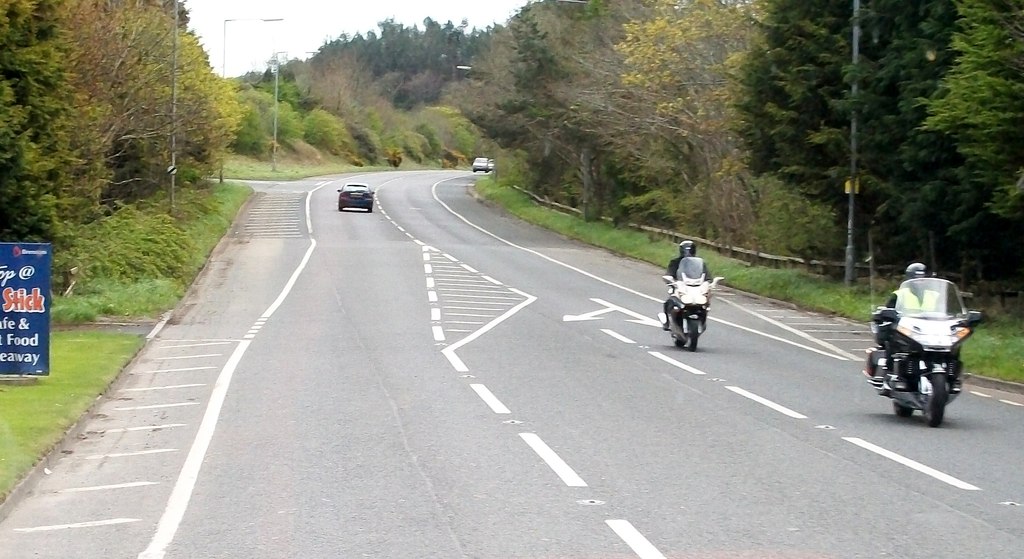
The same overall framework
The Module 2 marking sheet has a similar shape to the car practical but the fault allowance is tighter. Up to 10 minor faults pass on Module 2 versus 15 on the car test. One serious or one dangerous fault fails on both. Categories are similar: observation, control, road position, signals, speed, anticipation. The independent ride section is the same idea. The eyesight check, show-me tell-me questions and overall test length are all roughly equivalent. The full structure is in the faults explained guide.
The fee structure is similar but slightly different. The Mod 2 fee is 75 pounds weekday and 88 pounds 50 evening or weekend, against 62 pounds and 75 pounds for the car test. The motorcycle premium reflects the higher cost of running examiner bikes and the more complex test setup. Our driving test fees explained page has the full fee table.
Where the scoring differs
Bike-specific fault categories include lifesaver checks (no equivalent on car test), road position within the lane (much more nuanced than on a car, where centre-of-lane is usually fine), and slow-speed control (the slow ride and U-turn are far harder on a bike than the equivalent low-speed manoeuvres on a car). On the other hand, parallel parking, bay parking and reversing are absent from Module 2.
If you came from cars, our Mod 2 route tips page lays out the bike-specific patterns. A car driver transferring to bikes often underestimates the sensitivity of speed and road position marking. On a car test, sitting 5 mph below the limit on a clear A-road might earn a minor for hesitation if it is persistent. On a bike test, the same behaviour gets marked harder and faster, because the examiner knows a bike has the agility to use the limit safely. Similarly, drifting two feet to the right of centre lane on a car test is rarely marked. On a bike test it is. Our Mod 2 fail reasons page covers the position drift patterns examiners flag.
Manoeuvres compared
Car test manoeuvres: parallel park, bay park (forward or reverse), pull up on the right and reverse two car lengths, stop in an emergency. Module 2 manoeuvres: U-turn, pull up on the right, slow ride. The U-turn is unique to bikes. Slow ride is unique to bikes. Pull up on the right is similar but the bike version has no reverse element (you just rejoin traffic).
The U-turn deserves special attention because it is the manoeuvre that produces the most Module 2 fails. There is no car test equivalent. The closest car analogue would be a tight three-point turn, but the U-turn on a bike has to be done in one continuous movement without putting a foot down or swinging across the centre line. That makes it more demanding than any car test manoeuvre. The full manoeuvre breakdown is in the Mod 2 fail reasons guide.
Observation expectations
Car test observation centres on mirror checks plus the occasional shoulder check (mostly when reversing or pulling out from the kerb in tight traffic). Bike test observation includes mirrors, lifesaver checks, and head-movement checks at junctions. Examiners on bikes can see your helmet turn, which makes them strict on this. A car examiner cannot see whether your eyes flicked to a wing mirror, but a bike examiner can see whether your helmet rotated.
This means observation faults are more frequent on Module 2 than on car tests. The fix is to make the observations physically obvious. A clear helmet turn beats a quick glance, even if the glance gathered the same information. Examiners are marking what they can see, not what they hope you saw.
Speed sensitivity
Speed marking is tighter on Module 2 in both directions. On a car test, an examiner will give some leeway if you are 3 to 5 mph below limit on a road where everyone else is also moderate. On a bike test, persistent under-speed gets flagged faster because the bike has the acceleration and agility to ride to the limit. On the over-speed side, A category bikes accelerate hard, and a brief 5 mph over a 30 limit can happen before you notice. Examiners notice it.
The other speed-related difference is roundabout entry. On a car test, you have a few seconds while you cross the give way line to assess and commit. On a bike test, you are typically expected to commit faster because the bike accelerates more quickly and a hesitating bike at a roundabout entry is genuinely a hazard to traffic behind. Confident entries are rewarded.
Independent ride
The independent ride section is the same idea on both tests, with one practical difference. On a car test you can use a sat nav screen if the examiner offers one, or you follow signs to a named destination. On a bike test, sat nav is not used. You follow road signs only. That makes the bike independent ride slightly harder for anyone who has come from a car test where they used the sat nav option.
Examiner contact
On a car test, the examiner is sitting next to you, can see your hands and feet, can hear your breathing, can intervene if needed with the dual controls. On a bike test, the examiner is following on a separate bike with no dual controls. Their only intervention option is to talk to you over the radio. That removes some of the pressure of having someone sat next to you, but adds a different kind of pressure because you cannot see them and you cannot read their reactions.
Many car-test passers find the bike test less anxiety-inducing precisely because the examiner is not visible. Others find the radio voice in their ear distracting. There is no way to know which camp you are in until you do a mock with a school running radio comms, which is worth doing in the lead-up to the test. The Mod 2 test day checklist covers the radio setup, and the Mod 2 route tips page covers the route patterns the radio briefings will reference.
What transfers and what does not
What transfers: anticipation, hazard reading, road sign awareness, junction discipline (the principle, even if the head movement specifics differ), broad lane discipline (in the sense of what lane to be in, even if not where in the lane), independent navigation. What does not transfer: balance, slow-speed control, lifesaver muscle memory, the U-turn, road position within a lane, throttle management on a multi-cylinder engine.
Sources and further reading
The figures, fees, and procedures referenced in this article are verifiable on the official gov.uk pages below. PassRates.uk is built on the Driver and Vehicle Standards Agency’s open data, published under the Open Government Licence.
What is the pass rate at your test centre?
Search by centre name, town or postcode to see the latest DVSA figure.
Frequently asked questions
Is Module 2 easier or harder than the car test?
For a competent rider, Module 2 is in the same ballpark of difficulty as the car test. The overall pass rates are broadly similar nationally. The skill mix is different: bike test is sharper on observation and slow control, car test has more manoeuvres.
Can I use what I learnt on the car test for Module 2?
Some of it. Anticipation, hazard reading, road sign awareness, broad lane discipline all transfer. Balance, slow-speed control, lifesaver checks and the U-turn are bike-specific and need their own practice.
Is the marking standard the same?
The structure is similar but the fault allowance differs: 10 minors pass on Module 2, 15 on the car test. 1 serious or dangerous fails both. The categories overlap heavily. The difference is in what counts as a fault in each category, and the tighter minor-fault cap on the bike test. Bike marking is sharper on observation visibility and on speed/position consistency.
Do I get a sat nav on Module 2?
No. Bike tests do not use sat nav. The independent ride section is by signs only.
How much does Module 2 cost compared to the car test?
Mod 2 is 75 pounds weekday and 88 pounds 50 evening or weekend. Car test is 62 pounds and 75 pounds. Bike test is roughly 13 pounds more.
Are the fail reasons different?
There is overlap (observation, speed, road position) but Module 2 fails cluster heavily on lifesaver checks and U-turn execution, which have no car test equivalent.
Every candidate behind these numbers passed a theory test first. Nationally 44.8% of attempts clear it.
Licence, insurance, MOT, vehicle tax and what the law requires you to hold. All 14 DVSA topics are free to practise, with no sign up. See the theory pass rate by centre or the full practice hub.
Related guides
Written by Vikas Dulgunde, the software engineer and driving enthusiast behind PassRates.uk. The figures come straight from the DVSA open dataset; see the methodology.
Source DVSA, Open Government Licence v3.0
Continue reading
When you can legally take a pillion after Mod 2: full A licence rules, balance changes, insurance, gear and practical handling differences.
UK Mod 2 fail reasons: observation, lifesaver checks, speed control, road position and U-turn nerves. What they are and how to fix each.