How to Pass Your Driving Test in London
London centres host roughly 200,000 practical tests a year and consistently rank among the toughest in the country. Picking the right centre and preparing for the route are half the battle.
The London context
The 30-plus DVSA test centres in Greater London average about 47.8 percent in 2024-25, only around 0.9 of a percentage point below the UK figure of 48.7 percent. The London-wide average is close to the national one; the difficulty shows up in the spread. Inner-east centres run far lower, with Chingford at 36.5 percent (2024-25) and Belvedere at 38.3 percent (2024-25). The London vs UK pass rate research quantifies the gap centre by centre. The driving environment is the main reason: dense traffic, cyclists in unfamiliar lanes, multi-lane roundabouts, and long sections of complex urban driving with little of the quiet residential section that lets a candidate settle into the test.
The gap between London and the UK average matters in practical terms. Lerwick (Shetland), at 67.8 percent (2024-25), is nearly double the 36.5 percent (2024-25) at Chingford. That is not because the Lerwick test is easier in DVSA terms, marking is uniform UK-wide. It is because Lerwick routes have no multi-lane roundabouts, light traffic, and no bus-lane network to navigate. The why London centres are hard guide covers the structural reasons in detail; the easiest vs hardest centres guide sets out the national spread.
Pick a more forgiving centre where possible
Outer-London centres consistently produce higher 2024-25 pass rates than inner-zone centres. Sidcup leads at 59 percent, followed by Tolworth (53.3%), Isleworth Fleming Way (51.8%), Bromley (51.7%), Mill Hill (51.1%) and Pinner (50.3%). The contrast with the toughest London centres is sharp: Chingford at 36.5%, Belvedere at 38.3%, Wanstead at 40.4%, Greenford at 40.5%. The 23-point gap is the largest within any single UK city.
The easiest test centre in London guide lists every outer-zone option and what each is known for. The full ranking sits at https://passrates.uk/rankings/easiest with a London filter. Just remember that route familiarity matters more here than the headline pass-rate gap: a Pinner test you have never driven the routes for is often worse odds than a Wanstead test where you know every junction.
Route familiarity matters more here than anywhere else
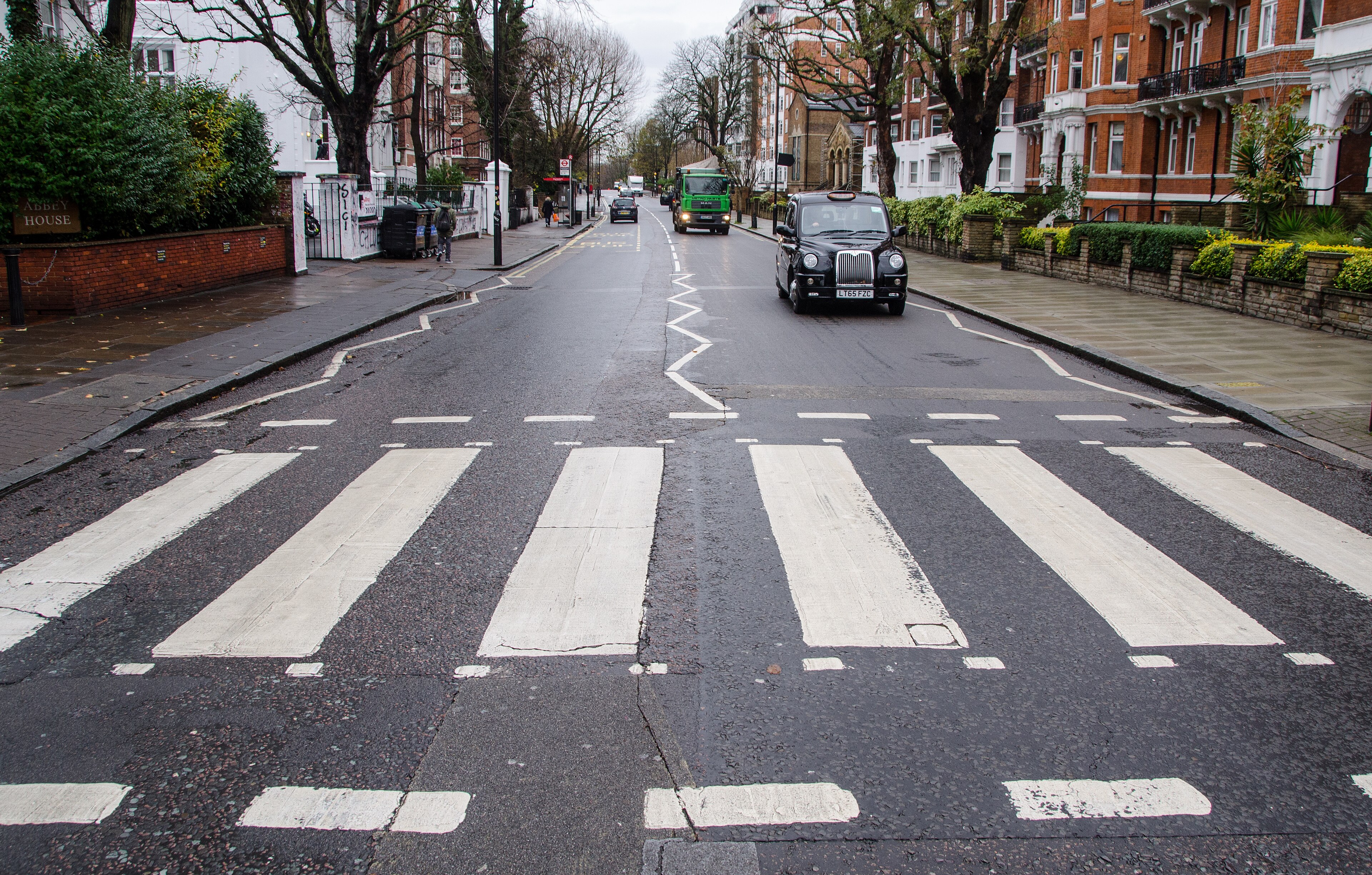
A learner who knows the typical Hornchurch routes has a structural advantage. Ask your instructor to drive every common test route at least twice, ideally at a similar time of day to your booking. Pay particular attention to multi-lane junctions, bus lanes, and lane discipline on busy A-roads. Each centre tends to reuse the same local roads, varied to stop learners memorising the exact sequence. The point of practice is not to memorise: it is to make every type of junction and decision feel familiar.
The independent driving section, around 20 minutes of following satnav instructions, has a heavier weight in London than at most rural centres. The London road network is dense enough that a misread satnav instruction can land you in a multi-lane junction with seconds to react. Practise satnav navigation in unfamiliar parts of London for at least three lessons before your test. Get used to handling missed turns calmly: the satnav recalculates and the examiner does not penalise the missed turn, only an unsafe response to it.
Common London faults
- Lane discipline on multi-lane roundabouts, especially the Aldgate, Vauxhall, and Hyde Park Corner gyratories
- Mirror checks before each lane change in heavy traffic
- Hesitation at busy junctions with poor sight lines
- Misjudging gaps when emerging from minor roads onto a main carriageway
- Bus lane infringements during their hours of operation, which vary by route
- Cycle lane priority changes that catch learners on autopilot
- Box junction rules, especially at high-frequency junctions where examiners watch the line crossing
Which centre should you pick? The honest London answer
The simple rule is: pick the centre with the highest pass rate among those where you can practise. For most London learners, that means an outer-zone centre 20 to 30 minutes from home, where your instructor knows the routes and where you can drive the local roads in the run-up to the test. A centre 90 minutes across London, with no route familiarity, is usually worse odds than your nearest centre at a slightly lower pass rate.
For learners in north London, Mill Hill (51.1%) and Pinner (50.3%) sit well above Chingford (36.5%): 13 to 14 points if you can travel and practise. For south London, Sidcup (59%) and Bromley (51.7%) are well above the south-east group including Belvedere (38.3%). For east London, Hornchurch and Goodmayes sit in the mid-40s, both above Chingford. For west London, Isleworth Fleming Way (51.8%) and Uxbridge (49.6%) outperform Greenford (40.5%) and Southall (46.2%). The should I travel for easier test guide walks through when the journey pays off.
Booking and logistics
London centres face the longest waits in the UK, often 16 to 24 weeks. Use the official cancellation finder daily and book several months in advance. Avoid third-party finder services that charge a premium; they have no special access to slots. The cancellations guide explains the routine that works through the official GOV.UK tool. From 12 May 2026, only the candidate can manage their own booking, so take over the login from your instructor if they have been handling it.
The standard fee applies in London: £62 weekday, £75 evening or weekend. There is no London surcharge. The test fees guide covers what counts as premium. A failed London test means a 10-working-day minimum wait before retake, and given London wait times the realistic interval is more like 4 to 6 weeks. The rebooking after fail guide covers the timing decisions.
Test day in London: what to expect minute by minute
Arrive 15 minutes early. London centres run to a strict schedule and a late arrival risks the test being cancelled with no refund. The traffic into central or inner-zone centres can be unpredictable, so leave an extra 20 minutes on top of any normal journey time. Sit in the waiting room, breathe, do not try to revise show-me tell-me cards in the last 5 minutes. The examiner will call your name on the hour or half-hour.
Outside the centre, the eyesight check happens immediately: read a number plate at 20 metres. Fail this and the test ends with no refund. Then into the car for the show-me tell-me questions, the drive itself (38 to 40 minutes including manoeuvre and independent section), and the debrief. The on test day guide covers the full minute-by-minute structure. The documents needed guide lists what to bring.
Sources and further reading
The figures, fees, and procedures referenced in this article are verifiable on the official gov.uk pages below. PassRates.uk is built on the Driver and Vehicle Standards Agency’s open data, published under the Open Government Licence.
What is the pass rate at your test centre?
Search by centre name, town or postcode to see the latest DVSA figure.
Frequently asked questions
Which London driving test centre has the highest pass rate?
Sidcup leads the 2024-25 ranking at 59 percent, well clear of the rest. Tolworth (53.3%), Isleworth at Fleming Way (51.8%), Bromley (51.7%) and Mill Hill (51.1%) follow. They sit 15 to 20 percentage points above the bottom-of-London group (Chingford 36.5%, Belvedere 38.3%, Wanstead 40.4%).
Are London test routes really harder than the rest of the UK?
Yes, but it shows up in the spread rather than the average. The combination of traffic density, multi-lane junctions, bus and cycle lanes, and the speed at which decisions need to be made is genuinely tougher than rural or smaller-town routes. On the headline figure London averages about 47.8 percent, only around 0.9 of a percentage point below the UK average. The real story is the variation within London in 2024-25, from Chingford at about 36.5 percent up to Sidcup at 59.0 percent.
Should I take my London driving test in the morning or afternoon?
Late morning slots (10am to 11:30am) statistically perform best because they avoid both the school run and the post-lunch traffic peak. Avoid 8 to 9am and 3 to 5pm where possible. The effect is largest at busy urban centres like London.
How long is the wait for a London driving test?
16 to 24 weeks is typical. Inner-zone centres often run longer than outer-zone. Cancellations open up daily through the official GOV.UK tool; checking three times a day reliably surfaces slots that bring tests forward by several weeks.
Should I travel out of London for an easier test?
Maybe. The pass-rate boost is real (8 to 15 percentage points if you can reach a 2024-25 outer-fringe centre like Farnborough at 58 percent, Maidstone at 58 percent, Sevenoaks at 53.6 percent or Bishops Stortford at 50.4 percent) but route familiarity matters more than the headline number. Without lessons in the new area, the data advantage usually disappears.
Every candidate behind these numbers passed a theory test first. Nationally 44.8% of attempts clear it.
Licence, insurance, MOT, vehicle tax and what the law requires you to hold. All 14 DVSA topics are free to practise, with no sign up. See the theory pass rate by centre or the full practice hub.
Related guides
Written by Vikas and the PassRates.uk team. Vikas is the software engineer and driving enthusiast who started the site. The figures come straight from the DVSA open dataset; see the methodology.
Source DVSA, Open Government Licence v3.0
Continue reading
Passing the Manchester driving test: 5 DVSA centre choices, suburban vs inner-city pass-rate gap, route quirks, and local conditions that catch learners out.
UK driving test pass rates by morning, midday, afternoon and evening slots, the 4-point gap instructors report, and practical advice on choosing a test time.