Driving with a Trailer UK 2026: Licence and Towing Rules
Towing a trailer is the most demanding everyday UK driving most motorists ever do. Speed limits drop, the licence rules changed in December 2021, and the margin for error with 750 kg behind you is smaller than without.
The licence picture in 2026
The UK licence rules for towing have been changed twice in recent years. From January 2013 to December 2021, drivers who passed the car test (category B) on or after 1997 needed an additional B+E test to tow trailers above 750 kg with a car-and-trailer combined weight over 3500 kg. From December 2021, that requirement was removed under government deregulation; new car licence holders could tow up to 3500 kg combined without an extra test.
That December 2021 change still stands in 2026. Drivers who passed their car test before 1 January 1997 retain "grandfather rights" and can usually tow a combination up to 8.25 tonnes without further testing. Drivers who passed on or after that date can tow trailers up to 3,500 kg maximum authorised mass on their category B licence, with no separate B+E test. The B+E test was not reinstated; the DVSA stopped offering it to new drivers in 2021, and category B+E entitlement is now added to qualifying licences automatically.
What you can legally tow still depends on your car's towing capacity and the trailer's weight, not just the licence: stay within the car's braked towing limit, the trailer's MAM, and the combined train weight on the V5C. The DVLA website has the current rules; check gov.uk/towing-with-car before you tow if your situation is unusual.
Weight, MAM, and the noseweight
Three numbers matter for any towing combination. The MAM (maximum authorised mass) of the trailer is the maximum it can weigh fully loaded, stamped on the trailer plate. The car towing capacity is the maximum the car is designed to pull, found in the manual or the V5C. The noseweight is the downward force on the towball, typically 50 to 90 kg, and must not exceed either the towbar rating or the car nosweight rating.
A common trap is loading the trailer wrong. Heavy items go over the axle, not at the back. Rear-loading reduces noseweight and increases sway risk dramatically. Side-to-side balance also matters; an asymmetric load can cause the trailer to pull to one side at speed.
| Solo car | Car with trailer | |
|---|---|---|
| Built-up area | 30 mph | 30 mph |
| Single carriageway | 60 mph | 50 mph |
| Dual carriageway | 70 mph | 60 mph |
| Motorway | 70 mph | 60 mph |
| Lane 3 of motorway | Allowed for overtaking | Not allowed |
| Trailer up to 3,500 kg MAM | Not applicable | No separate test on a category B licence (rules changed 2021) |
| Pre-1997 grandfather rights | Not applicable | Up to 8.25 tonnes combined, no B+E |
Hitching up: the checks
Before every tow, work through a hitching checklist:
- Towball clean and lightly greased; cap clipped to towball when not in use
- Coupling head fully on towball, locking lever down, indicator showing locked
- Breakaway cable attached to dedicated cable point on towbar, never to the towball
- Electrics plugged in; test all lights including indicators and brake lights
- Trailer brake handle (if fitted) released; jockey wheel up and locked
- Wheel chocks removed, lashings secured, cargo strapped
- Tyre pressures correct and tread legal (1.6 mm minimum, 3 mm advised)
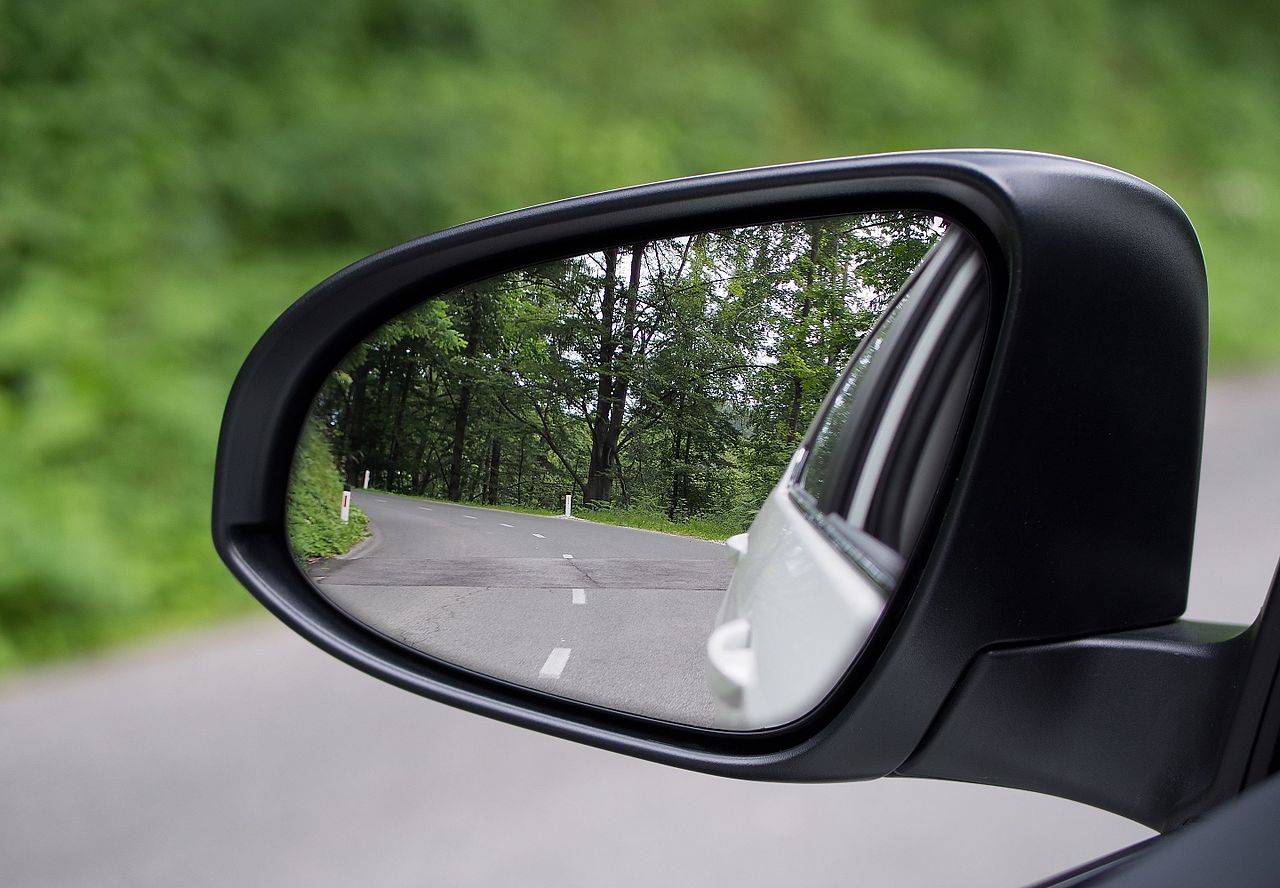
- Mirrors adjusted, ideally extended towing mirrors if the trailer is wider than the car
Towing mirrors are a legal requirement if the trailer obscures the car mirrors view. Most caravans require them. The fine for inadequate mirrors is £1000 in extreme cases, although usually a fixed penalty notice in practice.
Driving technique
A trailer changes how a car behaves in three main ways. Acceleration is slower (the engine has to pull more weight). Braking distances are longer (you cannot stop a trailer on car brakes alone, even with a trailer brake). Cornering is wider (the trailer cuts inside the car on tight bends).
Practical technique:
- Anticipate further ahead; you cannot brake or accelerate as suddenly
- Take corners wider; let the front wheels run wider to bring the trailer round cleanly
- Build a bigger gap to the car in front (4 seconds dry, 8 seconds wet)
- Keep speeds modest, especially on motorway downhills where weight builds momentum
- Plan overtakes carefully; you need a much longer clear stretch than without a trailer
Sway: cause and recovery
Trailer sway, also called snaking, is the swinging of the trailer side-to-side behind the car. Once it starts, it can build into a violent yaw that flips the trailer or jackknifes the combination. Causes include rear-loaded trailers, low noseweight, high speeds, crosswinds, and being overtaken by lorries on motorways.
Recovery is counter-intuitive. Do not steer to correct. Do not brake hard. Lift off the accelerator gently, hold the wheel straight, and let the combination slow down. The sway will damp out as speed drops. Once stable, pull over and check the load. Modern caravans often have stabilisers and electronic sway control that intervene automatically; older trailers do not.
Reversing and parking
Reversing a trailer is the skill that takes the most practice. The basic technique: with one hand at the bottom of the steering wheel, move it in the direction you want the trailer to go. Initial movements should be small. Stop and pull forward to straighten if the angle becomes too sharp.
Practice in an empty car park before trying a campsite pitch with an audience. Reversing is the towing skill drivers struggle with most, so it is worth rehearsing thoroughly before you rely on it.
Caravans and high winds
Caravans are particularly vulnerable to crosswinds because of their large flat sides. The strong wind driving guide covers the basics. For caravan-specific advice: drop your speed to 50 mph on motorways and dual carriageways in moderate wind, plan to stop if the caravan begins to sway, and never tow in red weather warnings. Many UK Met Office wind warnings specifically mention caravans and high-sided vehicles.
Bridge closures are also relevant. The Severn, Forth, Humber and Queensferry crossings close to high-sided vehicles and trailers in winds typically above 50 mph. Check the bridge status before you set off if your route includes a major crossing.
Putting it together
Towing in the UK is straightforward once you understand the licence rules, get the loading right, and develop the calmer driving style that a trailer demands. Structured towing tuition is worth taking even though a separate test is no longer required for new drivers; the practice pays for itself in confidence on the road. For broader weather and condition advice, see the rain driving guide, the snow and ice guide, and the main pass guide. The Pass Plus guide and the guides library cover the wider context.
Sources and further reading
The figures, fees, and procedures referenced in this article are verifiable on the official gov.uk pages below. PassRates.uk is built on the Driver and Vehicle Standards Agency’s open data, published under the Open Government Licence.
What is the pass rate at your test centre?
Search by centre name, town or postcode to see the latest DVSA figure.
Frequently asked questions
Do I need a B+E licence to tow a trailer?
Not since the rules changed in December 2021. If you passed your car test on or after 1 January 1997 you can tow trailers up to 3,500 kg maximum authorised mass on your category B licence, with no separate B+E test. If you passed before 1997 you can usually tow up to 8.25 tonnes. Always check your car's towing capacity and the trailer's weight stay within the limits on the V5C.
What is the speed limit when towing on a UK motorway?
60 mph maximum, vs 70 mph for cars alone. On single carriageways the towing limit is 50 mph (vs 60). In built-up areas, 30 mph applies to all vehicles.
How do I stop a trailer swaying?
Lift off the accelerator gently and hold the steering wheel straight. Do not brake hard or steer to correct. The sway damps out as speed drops. Pull over once stable and check the load.
How should I load a trailer or caravan?
Heavy items over the axle, not at the back. Maintain a noseweight of 50 to 90 kg (within the car and towbar limits). Check side-to-side balance.
Are towing mirrors legally required?
They are required if the trailer or caravan obscures the car mirrors view. Most caravans need them. Driving without adequate mirrors when towing can result in a fine of up to £1000 in serious cases.
Can I tow a caravan in high winds?
Slow down and take extra care in strong wind, keeping well back from high-sided vehicles. Seriously reconsider towing if a Met Office amber or red wind warning is in force. Some bridges close to high-sided vehicles and caravans in high gusts, so check before you set off.
Every candidate behind these numbers passed a theory test first. Nationally 44.8% of attempts clear it.
Sign shapes and colours, road markings and what each one tells you to do. All 14 DVSA topics are free to practise, with no sign up. See the theory pass rate by centre or the full practice hub.
Related guides
Written by Vikas Dulgunde, the software engineer and driving enthusiast behind PassRates.uk. The figures come straight from the DVSA open dataset; see the methodology.
Source DVSA, Open Government Licence v3.0
Continue reading
UK Cat D bus and coach (PCV) licence: minimum age, medical, theory, 4 modules, costs, and the order to take them. D1 minibus or full D explained.
Driving with pets in the UK under Highway Code rule 57: dog harness options, crates, car-sickness fixes, and the 9 penalty points an unrestrained animal can cost.