UK PCV Bus and Coach Licence: Cat D in 5 Steps
A UK bus or coach licence is the DVSA Cat D entitlement, with D1 covering minibuses up to 16 passengers and full D covering anything larger. The 5-step route is well-defined; most of the timeline is paperwork.
What the PCV licence actually covers
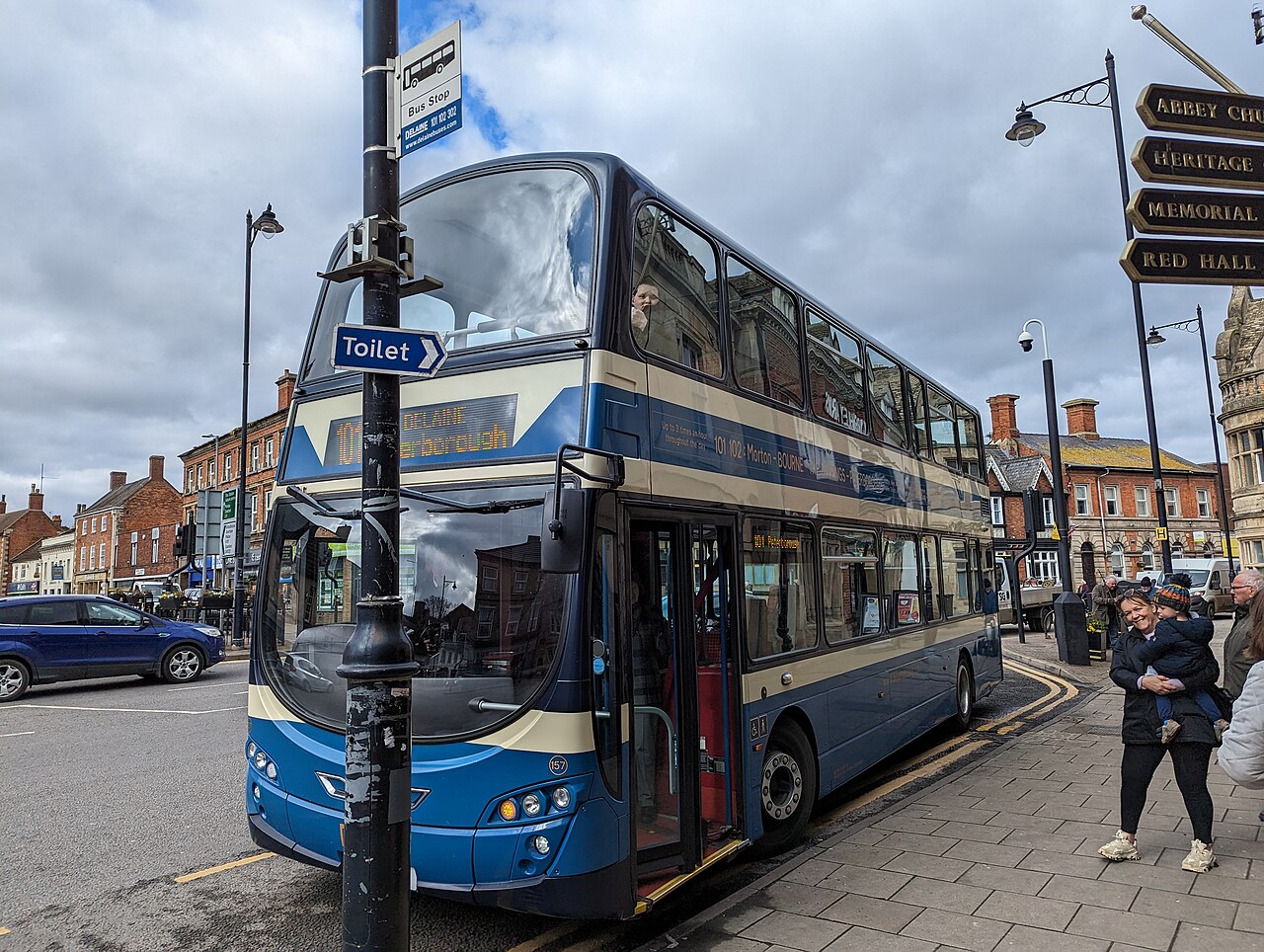
PCV stands for Passenger Carrying Vehicle, an industry term for any vehicle built to carry fare-paying or commercial passengers. In licensing terms there are two relevant DVSA categories. Cat D1 is the smaller minibus entitlement, covering vehicles with 9 to 16 passenger seats and a maximum length of 8 metres. Cat D is the full bus and coach entitlement, with no upper passenger seat limit. Most professional drivers go for Cat D, since it lets you drive any size of single-deck or double-deck bus or coach in the UK.
A trailer entitlement (D+E or D1+E) is a separate add-on, only relevant if your work involves towing a passenger trailer, which is rare in UK service. The mainstream commercial route is straight Cat D, often paired with a Driver Certificate of Professional Competence (CPC) since both are required to drive professionally. The Driver CPC modules guide covers the four-module CPC structure in detail.
Age and prior-licence requirements
You can start the D1 process from age 18 if you are taking it as part of an approved training programme such as the army, fire service or local-authority driving school. Outside those programmes, the standard minimum age for Cat D1 is 21, and for full Cat D is 24, unless you complete the initial CPC qualification, which lowers the Cat D minimum to 18 with a 50 km route restriction or 21 unrestricted. You must already hold a full UK Cat B (car) licence before applying.
A small group of older drivers hold automatic D1 entitlement on their licence because they passed their car test before 1 January 1997. This grandfathered D1 covers minibuses up to 16 passengers but only on a not-for-hire-or-reward basis, meaning charity, school, and volunteer driving rather than commercial bus work. Check the back of your photocard or the digital DVLA view-your-licence service to confirm whether you have it.
The medical exam (D4 form)
Every PCV applicant has to pass a stricter medical than the standard car licence. The form is the DVLA D4, completed by a doctor or registered medical examiner, covering eyesight, cardiovascular health, neurological conditions, and any history of seizures, sleep disorders or substance dependence. Eyesight must reach Snellen 6/9 in the better eye and 6/12 in the worse eye, with binocular field of view above the prescribed minimum. The medical typically costs between £60 and £140 depending on which provider you use, with HGV-and-PCV-specialist clinics usually cheaper than your own GP.
The medical needs to be done before you apply for your provisional Cat D entitlement. Send the completed D4 along with the D2 application form to DVLA and you should receive a provisional within two to three weeks. Provisional Cat D is what lets you start lessons in a qualifying vehicle.
The four-stage testing process
Like the HGV test, the PCV qualification is split into four DVSA modules. Mod 1 is Theory: multiple choice plus hazard perception, the same format as the car theory test but with PCV-specific questions. Mod 2 is the CPC Case Studies test, which puts you through seven scenario-based exercises around customer care, safety, and regulation. Mod 3 is the Practical Driving test, an off-road manoeuvring assessment plus an on-road drive of around 90 minutes. Mod 4 is the CPC Practical Demonstration test, where an examiner asks you to demonstrate vehicle safety, security, and emergency procedures.
You can sit Mod 1 and Mod 2 in either order, and the same for Mod 3 and Mod 4. Most training schools recommend doing the theory pair first, since they unlock the on-vehicle training, then the practical pair after lessons. Total elapsed time from starting the medical to holding a full Cat D plus CPC card is usually 10 to 16 weeks if you train intensively.
Costs to budget for
- D4 medical: £60 to £140
- Provisional Cat D licence: £34 (paper application) or £20 (online)
- Mod 1 Theory: £26
- Mod 2 Case Studies: £23
- Mod 3 Practical Driving: £115 weekday, £141 weekend
- Mod 4 Practical Demonstration: £55
- Training course (typically 5 to 10 days): £1,800 to £3,500
- CPC qualification card: £25
Most candidates find the training fees dwarf the DVSA fees by an order of magnitude. Choose the school carefully and ask for their first-time pass rate at Mod 3 specifically.
Where to find approved training
Look for a JAUPT-accredited training provider for the CPC modules and a Cat D-specialist driving school for Mod 3. Many of the larger national bus operators (Stagecoach, Arriva, First Bus, Go-Ahead) run their own in-house schemes where the company sponsors the training in exchange for a service commitment. These routes are often the most cost-effective if you have a confirmed job offer or trainee place. The main driving guides hub covers the broader landscape of UK driver licensing if you are weighing PCV against a HGV alternative such as the Cat C HGV route.
After you pass
Once you hold full Cat D and your CPC, you must keep the CPC current by completing 35 hours of approved Periodic Training every 5 years. Your DQC (Driver Qualification Card) shows the expiry date. The same Periodic Training counts for both PCV and HGV, so dual-category drivers do not need to double up. Failing to keep your CPC current is a fineable offence and stops you working professionally until you complete the missed hours.
Sources and further reading
The figures, fees, and procedures referenced in this article are verifiable on the official gov.uk pages below. PassRates.uk is built on the Driver and Vehicle Standards Agency’s open data, published under the Open Government Licence.
What is the pass rate at your test centre?
Search by centre name, town or postcode to see the latest DVSA figure.
Frequently asked questions
How long does it take to get a UK PCV licence?
From starting the medical to holding a full Cat D with CPC is typically 10 to 16 weeks of intensive training, or 4 to 8 months if you fit lessons around other commitments.
What is the difference between a PCV and a CPC?
PCV is the vehicle category on your licence (Cat D1 or Cat D). CPC is the professional qualification you also need to drive commercially. You need both to work as a paid bus or coach driver.
Can I drive a minibus on my car licence?
Only if you passed your car test before 1 January 1997, in which case you have grandfathered D1 entitlement, valid for not-for-hire-or-reward driving up to 16 passengers. Drivers who passed after that need a separate Cat D1 entitlement.
How much does the full PCV course cost?
Plan on £2,000 to £4,000 for training plus around £400 in DVSA fees and medical. Many bus operators sponsor the training cost in exchange for a service commitment.
Do I need a HGV licence first?
No. Cat D is independent of Cat C. You can go straight from a car licence to a PCV without any HGV qualification, though some schools offer combined courses.
How often do I have to renew?
The licence itself renews every 5 years from age 45 (and every year from age 65), each renewal triggering a fresh D4 medical. The CPC also requires 35 hours of Periodic Training every 5 years to stay valid for professional driving.
Related guides
- Bus and taxiD1 Minibus LicenceRead guide
- Bus and taxiTaxi Licence ProcessRead guide
- Bus and taxiPrivate Hire LicenceRead guide
- Becoming an instructor or examinerDriving Instructor (ADI)Read guide
- Becoming an instructor or examinerDriving Examiner (DVSA)Read guide
- Foreign and internationalForeign Licence ConversionRead guide
Written by Vikas Dulgunde, the software engineer and driving enthusiast behind PassRates.uk. The figures come straight from the DVSA open dataset; see the methodology.
Source DVSA, Open Government Licence v3.0
Continue reading
UK Cat D1 minibus licence (9 to 16 seats): pre-1997 grandfather rights, medical, theory and practical tests, and the £1,500 to £2,500 typical 2026 cost.
Towing a trailer or caravan in the UK: the 2021 licence change, 750 kg and 3,500 kg weight limits, anti-sway technique, and reduced speed limits.