Dual Carriageway Driving UK: 70 mph Lane Rules
A dual carriageway is any road with a central reservation, with a 70 mph limit for cars. Unlike a motorway, tractors, learners and cyclists may be present, so junctions and slow traffic need extra anticipation.
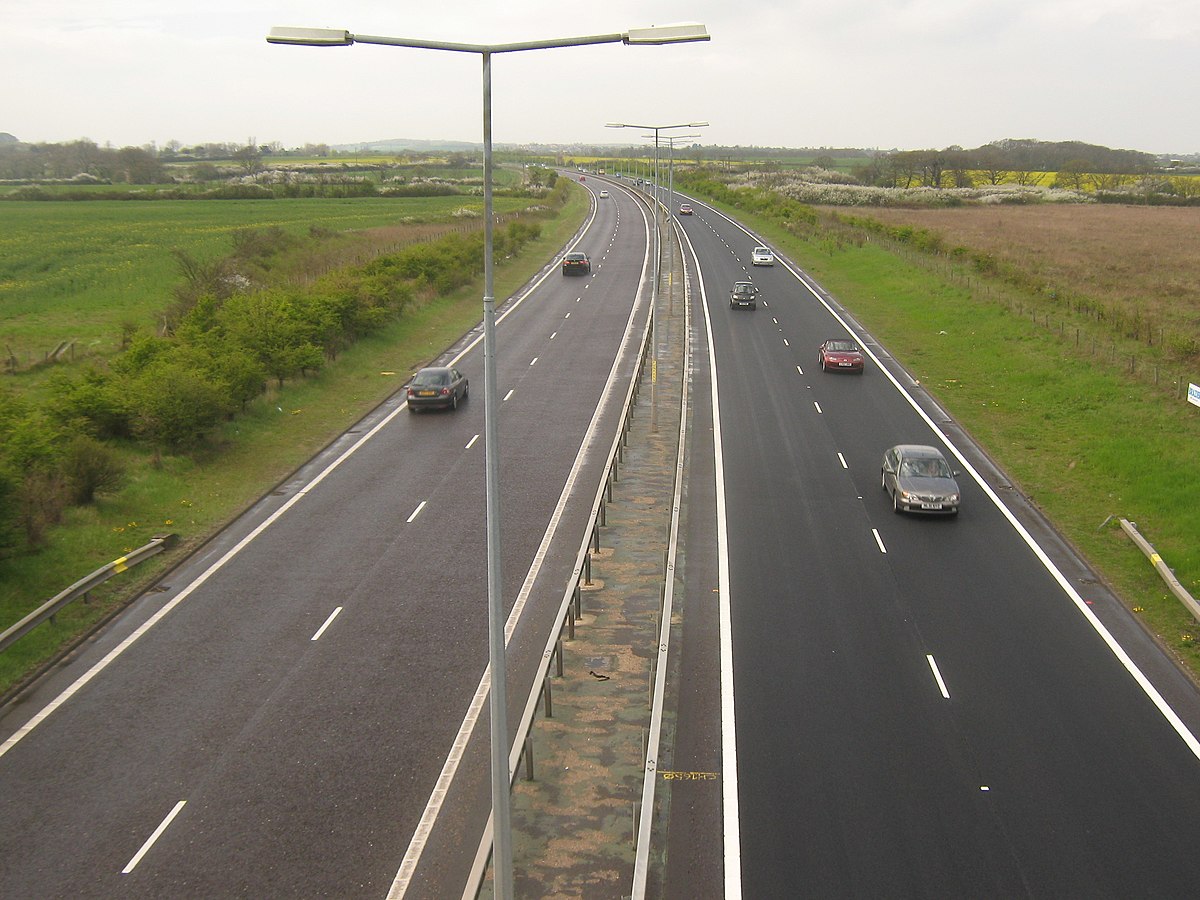
What counts as a dual carriageway
A dual carriageway is any road where the two directions of traffic are separated by a central reservation, kerb, or barrier. That is the only legal definition. A road can be dual carriageway with one lane each way (the central reservation is the key), and equally a wide road with painted lines down the middle is not a dual carriageway. The national speed limit on a dual carriageway is 70 mph for cars and motorcycles, 60 mph for cars towing trailers, and 60 mph for light goods vehicles.
The most important practical difference from a motorway is who is allowed on the road. Tractors, mopeds, learner drivers without an instructor, pedestrians on some sections, and cyclists can all use a dual carriageway unless specifically prohibited. That changes how you read the road. The car ahead might be a tractor doing 25 mph, and you need to spot it early.

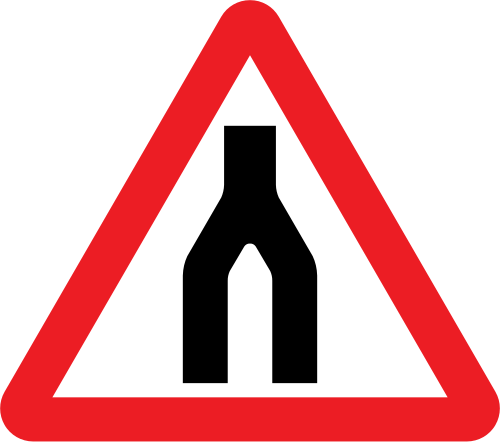
Joining a dual carriageway
Dual carriageways have two main entry types. The first is a slip road, much like a motorway, where you build to the carriageway speed and merge. Use the full slip road, match the speed of traffic, mirror-signal-blind-spot-merge. The second is a direct junction, where the side road feeds straight onto the carriageway with a give-way line. Direct junctions are more demanding because you have no run-up. You need a gap big enough that you can accelerate to road speed without forcing anyone behind you to brake hard.
Right-turn entries onto a dual carriageway, where you cross the central reservation gap, are some of the highest-risk moments in UK driving. You need to clear traffic from both directions and judge two streams of cars approaching at speed. If in doubt, wait. There is no prize for committing early.
Lane discipline at speed
On a two-lane dual carriageway, the same rules apply as a motorway. Lane one is the default. Lane two is for overtaking. Sit in lane one when you can. The trap on a quieter dual carriageway is the long, gentle bend where it feels natural to hold lane two; resist that, because faster traffic catching you in lane two has nowhere to go.
Three-lane dual carriageways are rare but exist (parts of the A1, A14, and A19 are examples). The middle lane is for overtaking the slower traffic in lane one, and lane three is for overtaking everything else. After your overtake, return left.
Slow vehicles, junctions, and hazards
Unlike a motorway, dual carriageways have direct junctions, lay-bys, and a wider mix of vehicles. The biggest pattern to learn is the closing-speed problem. You are doing 70 mph. The vehicle ahead is doing 30 mph. You will close on them at 60 feet per second, which means a four-second gap evaporates in seconds. Scan well ahead, watch for brake lights, and start easing off the accelerator at the first sign of slow traffic.
- Tractors and farm vehicles: legal on dual carriageways, often doing 20 to 30 mph
- Lay-bys: vehicles emerging from lay-bys may be accelerating from a standstill
- Side-road junctions: drivers may pull out misjudging your speed
- Pedestrian crossings (rare but present on older A-roads)
- Wildlife on rural sections, particularly at dawn and dusk
For more on rural dual carriageway hazards, the country road guide covers wildlife, blind bends, and the specific mistakes inexperienced drivers make. The full guides library has more on weather and conditions.
Overtaking and lane changes
A dual carriageway overtake should be deliberate. Mirror, signal, blind-spot check, and a clean lane change. Pass with conviction. Build a clear gap before returning, and signal left when you do. The thing that gets most people into trouble on a dual carriageway is hanging in lane two indefinitely. Each overtake should have a beginning, a middle, and an end.
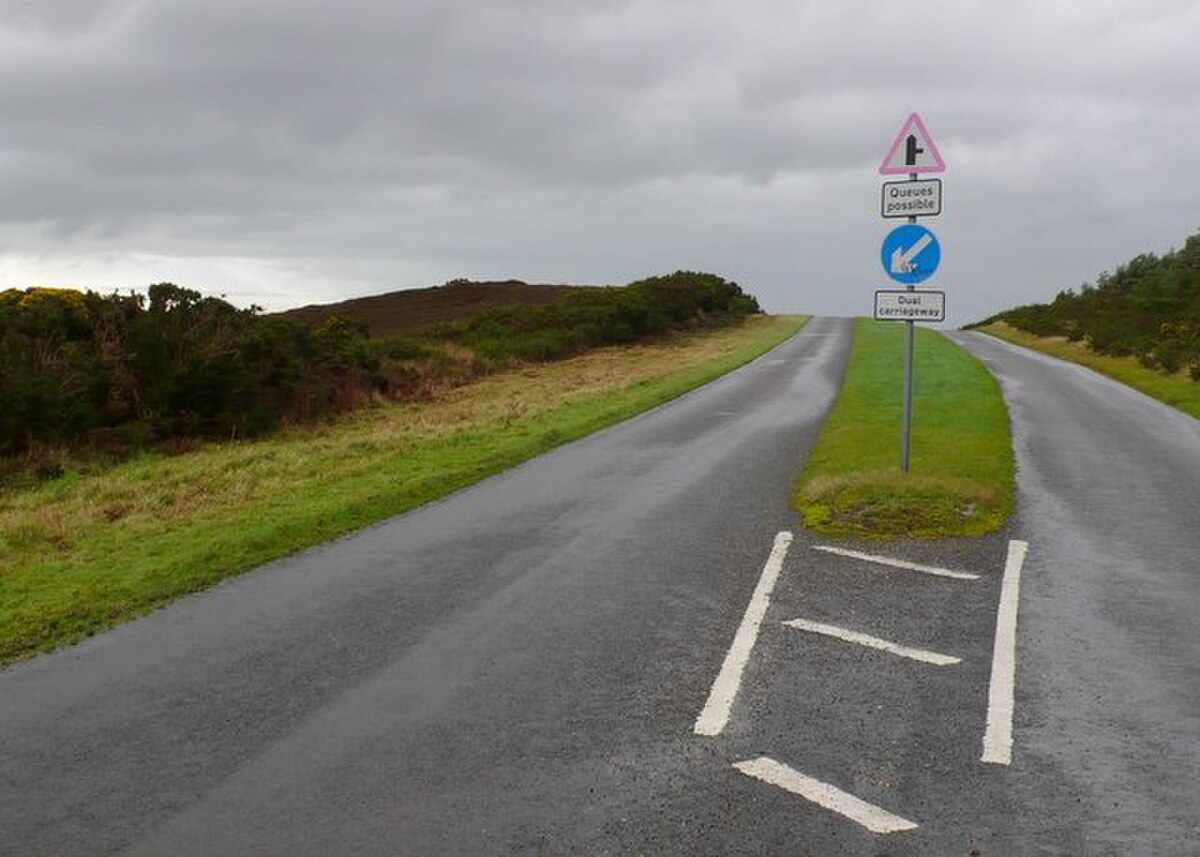
If a faster driver comes up behind you in lane two, do not block them. Move left as soon as it is safe. They are in the wrong if they are tailgating, but you are also in the wrong if you are sitting in the overtaking lane needlessly.
Leaving the carriageway
Plan your exit early. Most dual carriageways have countdown markers at 300, 200, and 100 yards. Move into lane one well before 300 yards. Signal at the 300-yard marker. Do not brake on the carriageway; wait until you are on the slip road. Keep your speed up until you are committed to the exit, then slow down on the deceleration lane. The most common mistake is braking on the carriageway and leaving too late.
For driving test specific dual carriageway advice, see the test day guide. For broader skills, the main pass guide covers the structural advice that applies on every road type.
Sources and further reading
The figures, fees, and procedures referenced in this article are verifiable on the official gov.uk pages below. PassRates.uk is built on the Driver and Vehicle Standards Agency’s open data, published under the Open Government Licence.
What is the pass rate at your test centre?
Search by centre name, town or postcode to see the latest DVSA figure.
Frequently asked questions
What is the speed limit on a UK dual carriageway?
The national speed limit is 70 mph for cars and motorcycles. It is 60 mph for cars towing trailers and light goods vehicles. Some dual carriageways have lower posted limits; always follow the signs.
What is the difference between a dual carriageway and a motorway?
A motorway is built to a higher specification, has restricted access, and excludes slow vehicles, learners (without an ADI), and pedestrians. A dual carriageway can have direct junctions, slow vehicles, and wider road user mix. Both are commonly 70 mph.
Can learner drivers use a dual carriageway?
Yes, with or without an instructor, provided they have valid provisional insurance and L plates. Learners are legally allowed on dual carriageways from day one of provisional licence holding.
Why are dual carriageways considered higher risk than motorways?
Direct junctions, slow farm vehicles, lay-bys, and a wider mix of road users mean the closing-speed differences are larger and there is no controlled merging onto the road.
Can I undertake on a dual carriageway?
No, except in queueing traffic where the lane to your left is moving faster than the lane to your right. Otherwise, always overtake on the right.
What if I miss my exit?
Take the next one. Never reverse, brake on the carriageway, or attempt a last-second swerve. Most exits are within a few miles, and adding a few minutes to your journey is always preferable to a serious accident.
Every candidate behind these numbers passed a theory test first. Nationally 44.8% of attempts clear it.
What to do at the scene, first aid basics and breakdown procedure. All 14 DVSA topics are free to practise, with no sign up. See the theory pass rate by centre or the full practice hub.
Related guides
Written by Vikas Dulgunde, the software engineer and driving enthusiast behind PassRates.uk. The figures come straight from the DVSA open dataset; see the methodology.
Source DVSA, Open Government Licence v3.0
Continue reading
UK country road driving: 60 mph default limits, blind bend technique, single-track passing places, livestock, and 4 traps behind most rural crashes.
First motorway drive guide: joining at 70 mph, the slip-road merge, smart motorway signs, lane 1 discipline, and 5 mistakes new UK drivers make.