UK Driving Test Dual Carriageways 2026: 70 mph Lane Skills
Dual carriageways are the closest thing to motorway driving that the UK practical test allows. The 70 mph section is often the most demanding part of the route at centres that include one.
What counts as a dual carriageway
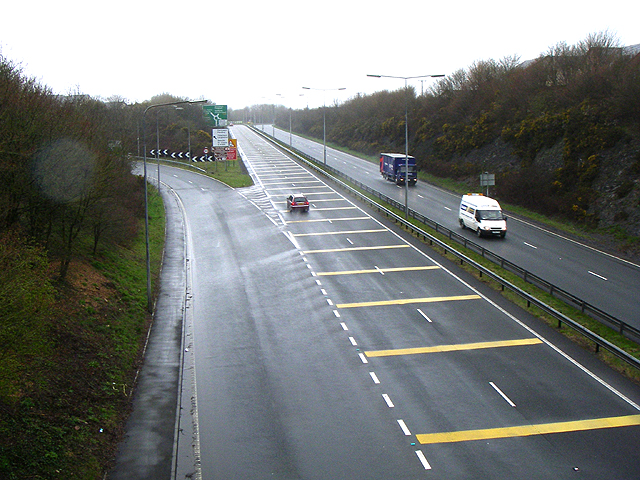
A dual carriageway is a road where traffic in the two directions is separated by a physical barrier or central reservation. The road can have one, two, three, or more lanes in each direction. Speed limits are usually fifty, sixty, or seventy mph. Many learners assume any wide road is a dual carriageway, but the central reservation is the defining feature. Without it, the road is a single carriageway no matter how wide it is.
Dual carriageways matter to the test because the rules differ from a single carriageway. The national speed limit for cars is seventy on a dual carriageway and only sixty on a single carriageway. Overtaking is conducted differently, lane discipline matters more, and the merging from a slip road requires a specific skill that does not come up elsewhere on the test.
Which centres include dual carriageway sections
Most urban and suburban test centres include at least a short dual carriageway section. Rural centres often do not, simply because the local road network does not have one. London centres have a few options including parts of the North Circular and the A40. Birmingham centres often use the A38 or the A45. Manchester centres can include the Mancunian Way. Cardiff Llanishen often uses the A48. The test centres directory lists each centre, and instructor lore at any centre will tell you whether a dual carriageway is in the typical mix.
Where a centre does not have a dual carriageway, the examiner cannot include one. That is not an advantage in itself. It often means the route is denser with urban or residential challenges instead, which can be just as fault-prone as a dual carriageway section.
What examiners assess on a dual carriageway
The dual carriageway test is almost entirely about lane discipline and speed control. The five things examiners watch for are listed below, and they are the same at every centre that uses one.
- Joining: smooth merging from the slip road, matching the speed of traffic in the left lane, and committing without hesitating
- Lane discipline: staying in the left lane unless overtaking, returning to the left after passing
- Mirror, signal, manoeuvre on every lane change: lane changes at speed need clear, deliberate checks
- Speed control: maintaining the limit without drifting, particularly when traffic ahead changes pace
- Leaving: reading the slip road exit signs early and moving across in time, without braking sharply on the live carriageway
The classic dual carriageway faults
The single most common fault is the failure to commit on joining. A nervous learner approaches the merge at thirty-five mph when traffic in the left lane is moving at sixty. They then either brake at the give-way line, which is often dangerous, or merge into traffic at the wrong speed and force someone behind to brake hard. Either way, it is at least a serious fault and possibly a dangerous one.
The second most common fault is lane-hogging in the right lane. UK rules require returning to the left lane after overtaking, and a candidate who stays in the right lane out of nervousness, or because they want to avoid a junction merge on the left, will be marked. A third common fault is missing the exit, which often forces a recovery that itself generates additional faults. The faults explained guide covers the marking detail.
How to practise dual carriageway driving
You need an instructor who can take you on the local dual carriageway in the conditions you will face on test day. Some learners arrive at the dual carriageway portion of their test having driven on one only twice in their lives. That is not enough. The skill of joining at speed, settling into the lane, scanning ahead for slow vehicles, and exiting smoothly is one that needs sustained practice.
If your local centre uses a specific dual carriageway, drive it both ways at the time of your test. The traffic flow at 8am differs sharply from 11am. The merging behaviour at busy times is more demanding because the gaps are smaller, but the speeds are also lower, which often makes it easier for a hesitant candidate. The routes guide explains how to identify the local sections used.
Dual carriageway versus motorway
The UK practical test does not include motorway driving. Motorways are reserved for full-licence holders or learners with an approved instructor in a dual-control car under specific conditions. The dual carriageway section is the closest the test gets to motorway-like conditions. That is also why passing the test is just the start. The main pass guide covers the broader picture, and the post-test motorway lessons offered by many ADIs are worth considering.
The honest summary
Dual carriageway sections are predictable. The skills are specific, the faults are well known, and the practice required is straightforward provided you have a local stretch to use. Treat the dual carriageway as a separate preparation block rather than something you will pick up on the day, and the entire higher-speed portion of your test becomes much less stressful. The stats hub shows the pass rate context, and the easiest versus hardest centres guide helps you decide whether the dual carriageway profile suits you.
Sources and further reading
The figures, fees, and procedures referenced in this article are verifiable on the official gov.uk pages below. PassRates.uk is built on the Driver and Vehicle Standards Agency’s open data, published under the Open Government Licence.
What is the pass rate at your test centre?
Search by centre name, town or postcode to see the latest DVSA figure.
Frequently asked questions
Will I have to drive on a dual carriageway during my test?
It depends on the centre. Most urban and suburban centres include a dual carriageway section, but many rural centres do not. The local road network determines whether one is in the route mix.
What is the speed limit for cars on a UK dual carriageway?
The national speed limit is seventy mph for cars on a dual carriageway, unless lower limits are signed. Many sections run at fifty or sixty.
Is a dual carriageway harder than a motorway for the test?
You will not be tested on a motorway during your practical test. Dual carriageways are the closest comparison, and they are often busier than motorways because of lower speeds and more frequent junctions.
What is the most common dual carriageway test fault?
Hesitation when joining from a slip road, leading to braking at the give-way line or merging at the wrong speed. Lane-hogging in the right lane is a close second.
How can I find out whether my centre uses a dual carriageway?
A local instructor will know the standard route mix. Online learner-driver communities also discuss which sections come up at each centre, and the routes guide explains the broader approach.
Every candidate behind these numbers passed a theory test first. Nationally 44.8% of attempts clear it.
Lane discipline, speed limits, the hard shoulder and smart-motorway signals. All 14 DVSA topics are free to practise, with no sign up. See the theory pass rate by centre or the full practice hub.
Related guides
Written by Vikas Dulgunde, the software engineer and driving enthusiast behind PassRates.uk. The figures come straight from the DVSA open dataset; see the methodology.
Source DVSA, Open Government Licence v3.0
Continue reading
Railway level crossings are rare on UK driving tests but cause oversized failures. 5 centres where they appear, what examiners watch for, easy-trap faults.
A-roads sit between residential streets and dual carriageways on UK test routes. The 50 to 60 mph faults that decide most results, and how examiners mark them.