UK Roundabouts: 1 Rule and 5 Faults That Fail Tests
Roundabouts are the single biggest source of serious faults on the UK driving test, mostly through lane choice on bigger junctions. One priority rule governs every approach.

The one rule that governs every roundabout
Give way to traffic coming from your right. That is the rule. Every other instruction you have ever heard about roundabouts is a refinement of that single principle. If a vehicle is on the roundabout to your right and is close enough to reach you before you clear the give way line, you wait. If the gap is genuinely yours, you take it without hesitation. The two failures examiners flag most often are the opposite of each other: pulling out into a vehicle you should have given way to, and freezing in a clear gap and causing the queue behind you to bunch.
- Mini roundaboutTreat the painted spot as the centre, give way to the right.
- Standard roundaboutGive way to traffic already on the roundabout.
- Spiral roundaboutLane choice on entry locks in your exit, plan early.
You will also see the chevrons or hatched paint in the centre of larger roundabouts, mini-roundabout dot markings, and signal-controlled roundabouts where traffic lights override the give way priority. The default rule still applies whenever lights are off or the lights show green for everyone in your phase. The point is to know the rule cold so the variations feel like minor adjustments rather than new problems.
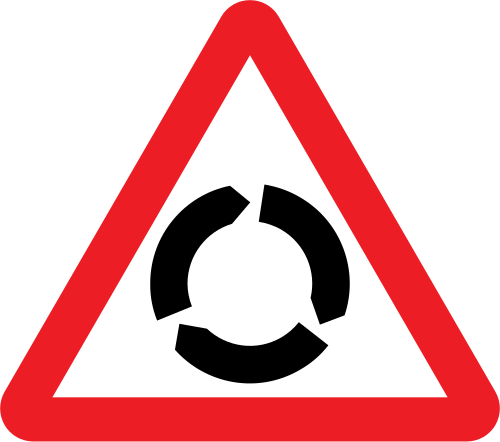
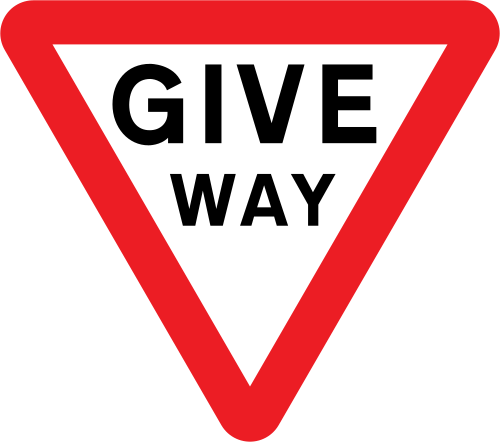
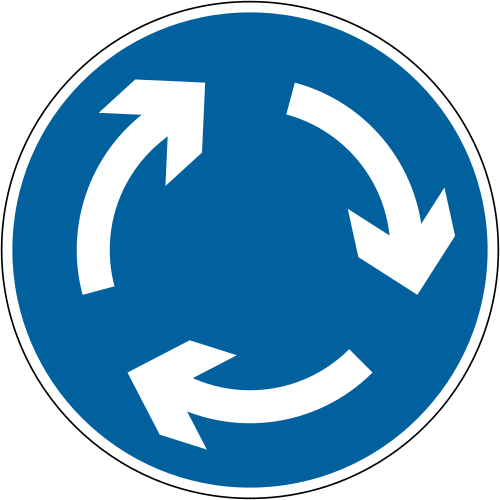
- No. 1 roundabout fault
- Lane choicewrong lane on multi-lane junctions
- Roundabouts per test route
- 3-10more at urban test centres
- Give way rule
- Right of wayalways give way to traffic from the right
- Mini-roundabout rule
- Go arounddriving over the dot = serious fault
- Signal: straight ahead
- None on approachsignal left after passing first exit
- Wrong lane recovery
- Stay in lanetake wrong exit, recover afterwards
Approaching the roundabout: mirror, signal, position, speed, look
The full approach routine is mirror, signal, position, speed, look. Start checking your mirrors at least 100 metres out. Decide which exit you want and signal accordingly. If you are taking the first exit (left), signal left on approach. If you are taking an exit straight ahead, no signal on approach is the standard rule, though some instructors teach a brief signal as you pass the exit before yours so following drivers know your intention. If you are turning right or going past 12 o clock, signal right on approach.
Lane positioning follows the signal. Left exits and straight ahead from the left lane. Right exits from the right lane. Once on the roundabout, you change your signal to left as you pass the exit before the one you want, which lets the vehicle waiting at that exit know you are not coming off there. The Highway Code essentials guide covers the full set of approach rules in plain English, and the mirror, signal, manoeuvre routine is the underlying technique you apply on every approach.
Lane choice on multi-lane roundabouts
This is the part learners struggle with most, and it is the most common source of serious faults. The default discipline is: left lane for left and straight ahead, right lane for right turns and full circles. But many UK roundabouts override this default with painted lane arrows on the road surface and overhead signage. When markings exist, they take priority over the default rules. Read them on approach, decide your lane, and commit early. Switching lanes mid-roundabout is a near-guaranteed fault.
On a four-exit roundabout, the standard lane allocation works like this:
- First exit (left): left lane, signal left on approach, signal left on the roundabout
- Second exit (straight ahead): left lane usually, no signal on approach, signal left after passing the first exit
- Third exit (right): right lane, signal right on approach, signal left after passing the second exit
- Fourth exit (full circle, behind you): right lane, signal right on approach, signal left after passing the third exit
Five and six-exit roundabouts work the same way. Anything past 12 o clock means right lane and right signal. Anything before 12 o clock or at 12 o clock means left lane.
Speed and observation on the roundabout itself
Once you commit to entering, accelerate smoothly. Crawling onto a roundabout makes you a hazard for traffic behind you and confuses the drivers waiting at the next exit. Aim for a steady speed that matches the flow already on the roundabout, usually 15 to 25 mph on suburban roundabouts and rather faster on rural high-speed roundabouts.
Keep checking right as you circulate, because vehicles entering after you may attempt to cut across your lane. Your blind spot to the right when you are in the right lane of a multi-lane roundabout is a known weak point. A brief shoulder check before changing lanes within the roundabout (which you should rarely need to do) is sensible.
Mini-roundabouts
Mini-roundabouts follow the same priority rule (give way to the right) but in practice they reward courtesy and eye contact. The painted dot in the middle is a legal roundabout, not a paint mark. You must drive around it, not over it, even if the gap is generous. Driving over the central marking is a serious fault. Mini-roundabouts also tend to come at junctions where two minor roads cross, so left exits straight ahead from a stop is common. Treat them like a junction with a turning circle.
Common faults on roundabouts
- Pulling out into traffic with priority (the most serious fault category, often a fail)
- Stopping unnecessarily when a clear gap was available, particularly if it disrupts traffic behind
- Wrong lane on approach, especially right turns from the left lane
- No signal or wrong signal on entry or exit
- Driving across the central paint of a mini-roundabout
- Stalling on the give way line under pressure
- Cutting across lanes once on the roundabout
- Late mirror checks before exiting
| Exit | Approach lane | Approach signal | Exit signal (when to start) | |
|---|---|---|---|---|
| 1st exit (left) | 1st exit (left) | Left lane | Signal left | Already signalling left |
| 2nd exit (straight ahead) | 2nd exit (straight ahead) | Left lane | No signal | Left after passing 1st exit |
| 3rd exit (right) | 3rd exit (right) | Right lane | Signal right | Left after passing 2nd exit |
| 4th exit (full circle) | 4th exit (full circle) | Right lane | Signal right | Left after passing 3rd exit |
Most of these are correctable with practice in real conditions. Roundabout-only practice sessions, where your instructor takes you to the same multi-lane roundabout and asks you to take every possible exit in sequence, are unusually effective for building the muscle memory. The faults explained guide covers what counts as a serious fault and what counts as a minor, and the junctions and priority guide explains the give way logic that sits behind every roundabout decision.
Putting it together for test day
On test day, the routes will include several roundabouts of varying complexity. The examiner is not trying to catch you out with anything weird. They want to see that you can read the road, choose the correct lane early, signal at the right moments, and integrate with traffic without forcing other drivers to change their behaviour. If you can do that on three roundabouts, you can do it on every roundabout in the country. The test day guide covers the broader logistics, and the test day morning routine walks through the warm-up drive that helps lane choice feel natural.
- 01Mirrors (100 m out)
Check interior then appropriate door mirror. Decide your exit and the lane you will need. Start slowing if traffic is heavy at the give way line.
- 02Signal (100 m out)
Left signal for first exit. Right signal for anything past 12 o'clock. No signal if going straight ahead. Commit to your decision early.
- 03Position and speed
Move into the correct lane smoothly. Slow to a speed where you can stop if priority is not yours, but avoid braking to a crawl in a clear gap.
- 04Look right and commit
At the give way line, check right for vehicles on the roundabout. If the gap is genuinely yours, take it decisively. Hesitating in a clear gap is also a fault.
- 05Exit signal and mirrors
Signal left as you pass the exit before yours. Check interior and left mirror before leaving. Cancel signal and return to normal road position once clear.
Sources and further reading
The figures, fees, and procedures referenced in this article are verifiable on the official gov.uk pages below. PassRates.uk is built on the Driver and Vehicle Standards Agency’s open data, published under the Open Government Licence.
What is the pass rate at your test centre?
Search by centre name, town or postcode to see the latest DVSA figure.
Frequently asked questions
Which lane do I take if I am going straight ahead at a four-exit roundabout?
The left lane, unless road markings or signs say otherwise. Do not signal on approach for a straight-ahead exit. Once you pass the first exit, signal left to indicate you are taking the second exit.
Do I have to give way to traffic on the roundabout?
Yes. Give way to traffic coming from your right. If a vehicle on the roundabout will reach you before you can clear the give way line, you wait. If the gap is yours, take it confidently.
What is the most common roundabout fault on the UK driving test?
Wrong lane choice on multi-lane roundabouts is the most frequent serious fault. Right turns taken from the left lane and right-lane drivers cutting across to a left exit are both classic examples.
Can I drive over the painted dot in the middle of a mini-roundabout?
No. The dot is a legal roundabout. Driving over it instead of around it is a serious fault and can fail your test. The exception is large vehicles where the geometry makes it physically impossible to go round.
Do I signal when leaving a roundabout?
Yes. Signal left as you pass the exit before the one you want. This tells drivers waiting at that exit that you are not coming off there.
How do I know which lane to use if there are no road markings?
Default rules apply: left lane for left exits and straight ahead, right lane for anything past 12 o clock. When in doubt, left lane is safer because cutting from the left lane to a right exit is a worse fault than going round again from the right lane.
Every candidate behind these numbers passed a theory test first. Nationally 44.8% of attempts clear it.
What to do at the scene, first aid basics and breakdown procedure. All 14 DVSA topics are free to practise, with no sign up. See the theory pass rate by centre or the full practice hub.
Related guides
- Junctions and priorityJunctions and PriorityRead guide
- Junctions and priorityCrossroadsRead guide
- Junctions and priorityBox JunctionsRead guide
- Junctions and priorityMulti-Lane RoundaboutsRead guide
- Speed and following distanceUK Speed LimitsRead guide
- Speed and following distanceTwo-Second RuleRead guide
Written by Vikas and the PassRates.uk team. Vikas is the software engineer and driving enthusiast who started the site. The figures come straight from the DVSA open dataset; see the methodology.
Source DVSA, Open Government Licence v3.0
Continue reading
How to read 2, 3 and 4 lane roundabout markings, choose the right lane early, and follow overhead arrows that override the default UK rules.
Theory test day walkthrough: 90-minute appointment, 15-minute check-in, 57-minute multi-choice, 3-minute break, 20-minute hazard perception, results at exit.