Mirror Signal Manoeuvre: The MSM Routine in 3 Steps
Every change of speed, position or direction on a UK driving test follows the same three-step MSM routine. Get it into muscle memory and the test feels half as hard.
What MSM actually means
Mirror, signal, manoeuvre is the safety routine that governs every change you make to your driving. Before you change direction, change lanes, slow down significantly, speed up significantly, pull away from a stop, or pull into a stop, you run through the three steps in order. Mirror first: check what is around you, particularly behind. Signal next: tell other road users what you are about to do. Manoeuvre last: execute the change.
The routine is not optional and it is not just for tests. Real-world driving uses it constantly, often unconsciously. The reason it appears so heavily on the faults explained guide is that examiners can verify each step from the passenger seat. Missing a mirror check before a manoeuvre is the most common observation fault and a common cause of fails.
Mirror: which mirrors and when
You have three mirrors: the interior mirror (centre), the right door mirror, and the left door mirror. The interior mirror is your primary mirror and tells you what is directly behind. The door mirrors give you the angle just to either side, which the interior mirror cannot see.
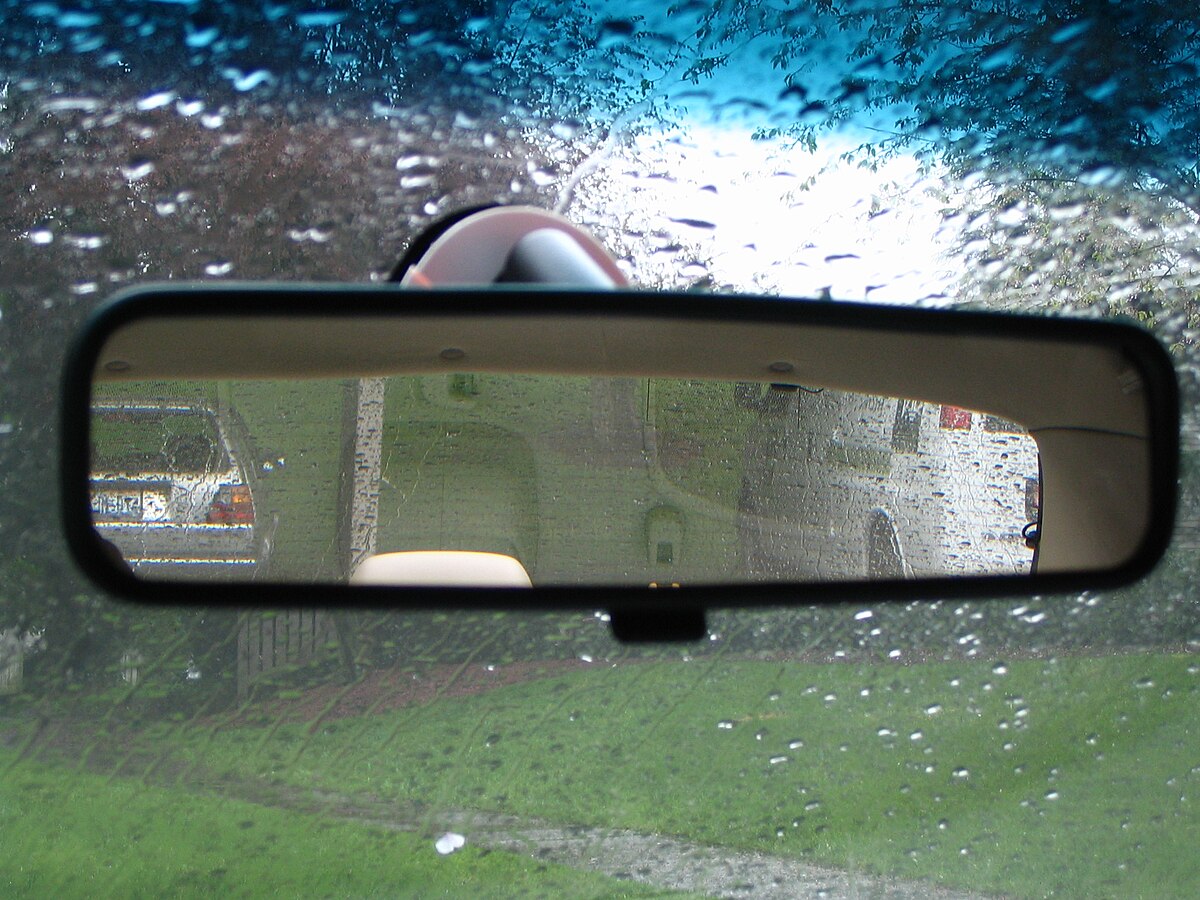
For most manoeuvres, the standard mirror sequence is interior first, then the door mirror on the side you are moving towards. So:
- Slowing down: interior mirror, then either door mirror
- Turning left or pulling into a left-side stop: interior, then left door mirror
- Turning right, changing lane right, or pulling out from a left-side stop: interior, then right door mirror
- Reversing: all three mirrors plus a shoulder check (head turn) for blind spots
You should also be glancing at your interior mirror every five to ten seconds during normal driving, even when no manoeuvre is imminent. Examiners watch for this habitual scanning. Drivers who only check mirrors at the moment of action are flagged as having insufficient awareness, and that judgement can tip a borderline test into a fail. The why people fail guide lists observation faults as the leading test fail year after year.
Signal: when to signal and when not to
Signal early enough that other road users have time to respond, but not so early that you confuse them. The standard timings are:
- Approaching a junction or roundabout: signal at least 100 metres before, sometimes more on faster roads
- Changing lanes on a motorway or dual carriageway: signal three to five seconds before the lane change
- Pulling away from a stop: signal as you start the mirror check, cancel after you have moved away
- Stopping at the roadside: signal as you start to slow down for the stop
There are situations where you do not signal. Going straight ahead at a roundabout is the most familiar example, covered in detail in the mastering roundabouts guide. Following the natural curve of a road that is changing direction without a junction also does not require a signal. The principle is: signal when you are doing something other road users could not predict from the road layout itself.
Cancelling your signal after a manoeuvre is part of the routine. Self-cancelling indicators handle most cases, but a sharp turn with a small steering input may not trigger cancellation, and leaving a signal on is a recognised fault.
Manoeuvre: the position-speed-look phase
The manoeuvre step in MSM has its own internal sub-routine, sometimes called PSL. Position, speed, look. After mirror and signal, you adjust your position on the road (move towards the centre line for a right turn, stay slightly left for a left turn), adjust your speed to whatever is appropriate for the change you are making, and look one last time before committing.
This final look is the part that catches out anxious learners. Examiners want to see your eyes do the work, not just your mirrors. For a right turn at a junction, that means actively looking right, then left, then right again before pulling out, as the junctions and priority guide covers in depth. For a lane change, it means a quick shoulder glance to confirm the blind spot is clear, with lane discipline shaping the broader habit.
MSM in the manoeuvres themselves
The four formal manoeuvres on the UK test (parallel park, bay park, pull up on the right and reverse two car lengths, and forward bay park) all use MSM as their structuring routine. Mirror checks before you start, signal as you begin, and observation throughout. The manoeuvres guide walks through each one step by step.
Common MSM faults
- Late or missing interior mirror check before slowing down (often a serious fault)
- Late or missing door mirror check before changing lane
- Signalling too early and confusing drivers waiting at side roads
- Signalling too late so that other drivers cannot react in time
- Forgetting to cancel a signal after a small-input turn
- Mirror checks that are too brief to actually register what is there (the mirror flick)
- Skipping the final look before pulling out at a junction
Building the MSM habit
The single best way to embed MSM is to talk yourself through it out loud during your lessons. Mirror, signal, manoeuvre, said aloud at every change, sounds clunky for two weeks and then becomes automatic. By test day you will not need to say it, but the routine will run on its own. Instructors who do not encourage this often find learners reach test day with mirror checks that look hesitant or rushed.
How MSM connects to test scoring
MSM faults are graded the same way as other faults. A minor fault is a missed step that did not endanger anyone. A serious fault is a missed step that put another road user at risk or could have done. Three minor faults of the same type can be re-graded as a serious. The why people fail guide lists observation as one of the top three failure causes nationally, and most observation failures trace back to a broken MSM routine.
The fix is straightforward: practise the routine until it is unconscious. The main pass guide gives the structural advice on how to integrate MSM into your overall test preparation.
Sources and further reading
The figures, fees, and procedures referenced in this article are verifiable on the official gov.uk pages below. PassRates.uk is built on the Driver and Vehicle Standards Agency’s open data, published under the Open Government Licence.
What is the pass rate at your test centre?
Search by centre name, town or postcode to see the latest DVSA figure.
Frequently asked questions
What does MSM stand for?
Mirror, signal, manoeuvre. It is the standard routine for every change of direction, lane, or speed on UK roads.
Do I have to do MSM every time I slow down?
For significant slowdowns (approaching a junction, traffic light, hazard, or stop), yes. For small adjustments to flow speed in moving traffic, your routine mirror scanning every five to ten seconds covers it without a separate MSM cycle.
Can I skip the signal if no one is around?
No. The examiner is around, for one. The Highway Code requires a signal whenever it could help any road user, even one you have not seen. Treat every signal as required unless the road geometry makes it pointless.
How much time should pass between mirror and signal?
A second or two is enough to register what your mirrors show before you signal. The point is to actually use the information your mirrors give you.
Is a shoulder check the same as a mirror check?
No. A shoulder check (sometimes called a blind spot check) is a head turn to look at the area your door mirror does not cover. You need a shoulder check before pulling out into traffic, before lane changes on multi-lane roads, and before reversing.
What is the most common MSM fault on the test?
A missed or rushed mirror check before changing direction or speed. Examiners watch eye and head movement specifically. A glance that is too brief to register information counts as a missed check.
Every candidate behind these numbers passed a theory test first. Nationally 44.8% of attempts clear it.
Following distances, courtesy, priority and how to behave around other road users. All 14 DVSA topics are free to practise, with no sign up. See the theory pass rate by centre or the full practice hub.
Related guides
Written by Vikas Dulgunde, the software engineer and driving enthusiast behind PassRates.uk. The figures come straight from the DVSA open dataset; see the methodology.
Source DVSA, Open Government Licence v3.0
Continue reading
Which following-distance situations examiners mark as serious faults versus minors on the UK driving test, how the gap requirement changes on wet and icy roads, and the three most common scenarios that catch learners out. Highway Code Rule 126 with real test context.
How to read 2, 3 and 4 lane roundabout markings, choose the right lane early, and follow overhead arrows that override the default UK rules.