Mod 2 Route Tips UK 2026: 6 Differences from Car Routes
Mod 2 routes are not car routes on a bike: the examiner follows on a second machine over radio and watches a different skill set. Knowing the layout gives you room to ride properly rather than reactively.
How Mod 2 routes are designed
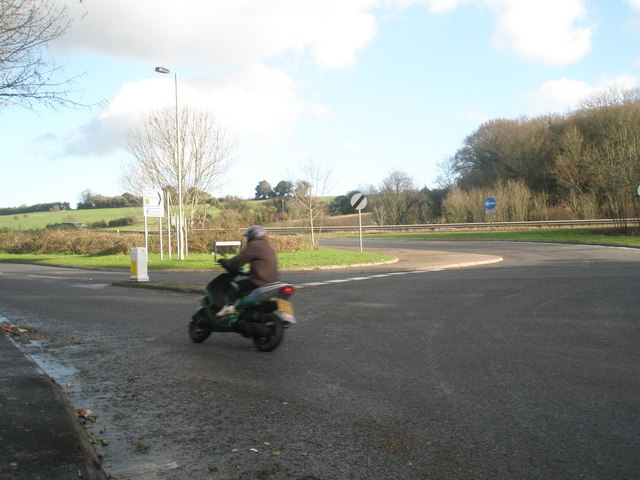
DVSA test routes are not published, but instructors who teach in any given area know them well, and the structure repeats across the UK. A typical Module 2 route includes a stretch of slow urban riding, an independent ride section of about ten minutes, a higher-speed road (usually a dual carriageway), a manoeuvre such as a U-turn, and the return leg. Total time on the bike is about forty minutes.
Compared to car test routes, the bike routes tend to include more dual carriageway and fewer fiddly residential streets. The reasoning is partly safety (filtering and slow speed control on a bike in a heavy residential street with parked cars is genuinely difficult to assess fairly) and partly practical (the bike needs to demonstrate speed control across a meaningful range, which only a dual carriageway provides). The hardest centres ranking shows the centres where this pattern goes most against bike candidates.
Lane discipline patterns
Bike-specific lane discipline is one of the most-marked areas on Module 2. Examiners want to see you in the right part of the lane for the situation, not just in the lane. That usually means: centre of the lane on a normal A-road, slightly offset to the right at junctions to maximise visibility past parked cars on the left, slightly offset to the left when overtaking parked vehicles, and back to the centre once past.
Two specific patterns get marked. First, riding too far to the kerb on a single-lane road is a road position fault. Bikes have right to use the full lane and examiners want to see you using it. Second, drifting into the right-hand part of the lane on the approach to a left-hand bend is a blind-spot risk and gets marked. The faults explained guide has the framework but the bike-specific patterns above are not in there.
Dual carriageway expectations
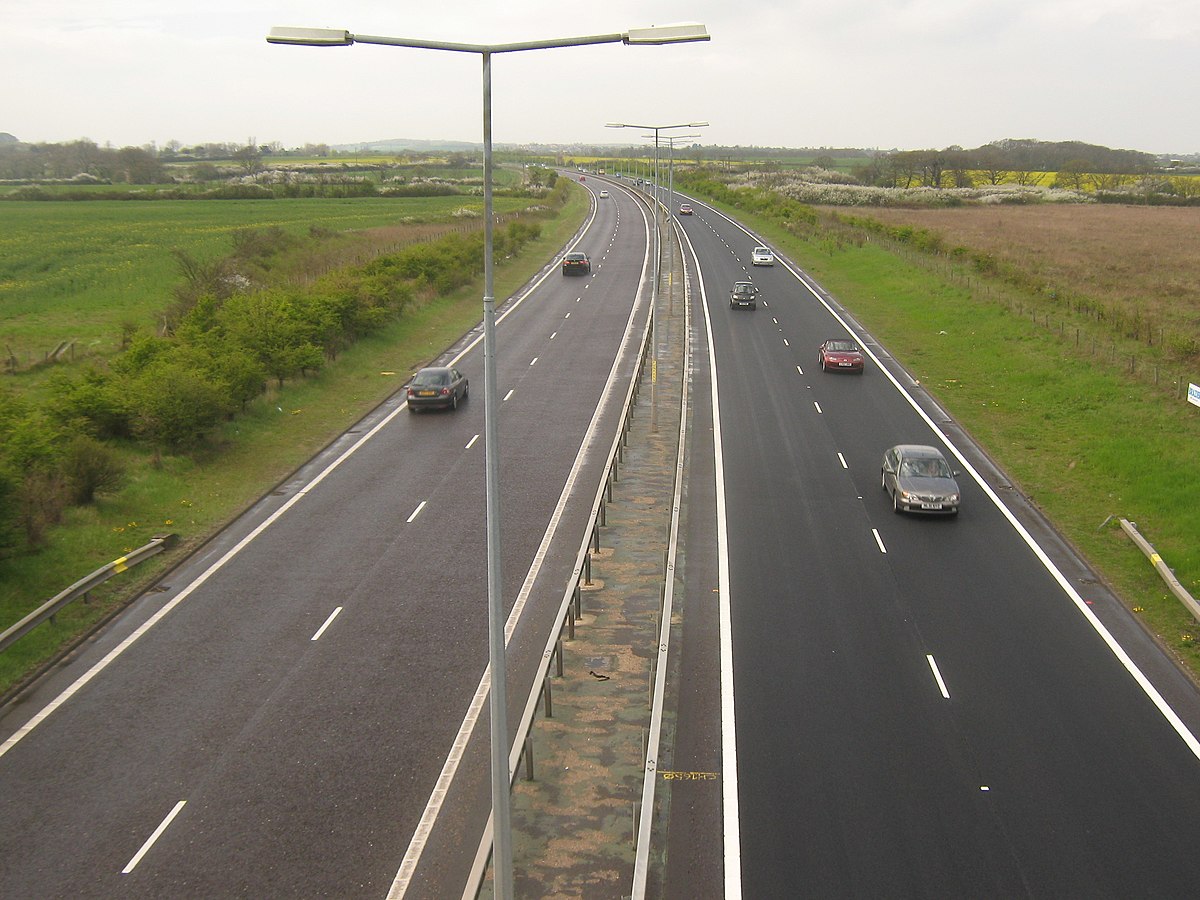
Almost every Module 2 route includes at least one dual carriageway section. Examiners use it to test three things: speed control (do you sit at the speed limit, do you adjust smoothly when traffic in front slows), lane discipline at speed (centre of the left lane unless overtaking, then a clean move and a clean return), and observation discipline at higher speeds (mirror, signal, lifesaver, manoeuvre, in that order, every time).
The most common dual carriageway fault is sitting in the right lane when the left is clear. Bike riders sometimes drift right because the right feels safer (less debris, fewer junctions), but it is a marked fault. Move back left as soon as the overtake is complete. The second most common fault is hesitation on the slip road. Examiners want to see you accelerate to motorway-equivalent speed before merging, not amble onto the carriageway at 40 miles an hour.
The independent ride
About ten minutes of the test is independent riding. The examiner says something like "follow signs to Birmingham city centre for the next ten minutes, I will not give you turn instructions until then" and then falls back. Your job is to keep yourself on the right route by reading road signs, while still riding to the standard required everywhere else.
Two practical tips. First, missing a sign is not a fault. Riding badly because you missed a sign is the fault. If you go wrong, the examiner just rerouters you back. Second, the independent ride is a great place to relax slightly because the examiner is not actively giving instructions, but the marking does not relax. Treat it like the rest of the test, ride normally, follow signs.
The examiner radio
The radio briefing is normally clear and predictable. "At the next junction, turn left." "Take the second exit at this roundabout." "Pull over on the left when safe to do so." If a briefing is unclear, you can say so back to the examiner. They prefer that to a wrong turn. The mic is always live, so a quick "say again please" is fine.
Some examiners are chattier than others, but they will not give you running commentary. The exception is the manoeuvre setup. For a U-turn they will brief you a few hundred metres in advance: "I would like you to do a U-turn in the next side road, parking on the right when you find a safe place." That gives you time to plan rather than panic.
The manoeuvre on the road
You get one manoeuvre on the road during Mod 2. The most common is the U-turn, asked on a side road wide enough to do it without putting the front wheel on the kerb on the far side. The Mod 1 U-turn guide covers the technique that transfers. Pulling up on the right is a frequent alternative, where the examiner asks you to park on the right hand side of a quiet road and then rejoin traffic when safe. Slow ride at walking pace is sometimes asked of you on a residential road, usually as part of the regular ride rather than a formal manoeuvre.
- U-turn: lifesaver before turning, smooth clutch and rear brake, tight line, second lifesaver before pulling away
- Pull up on right: indicate, mirror check, lifesaver across both lanes, smooth turn in
- Rejoining from right: indicate, both mirrors, lifesaver across both lanes, accelerate cleanly
- Slow ride: clutch dipped, light rear brake, eyes up at horizon (looking down at front wheel makes it wobble),
The full Module 2 framework, including the show-me tell-me questions and what counts as a serious fault, is in the Mod 2 explained guide.
Reading the centre you booked
Different centres have different route flavours. London centres tend to push lane discipline and bus lane awareness. Northern city centres often use dual carriageways heavily. Rural centres focus on speed sensitivity and road position on bends. Knowing the flavour of your centre is the single most useful piece of preparation, and the Mod 2 pass rates by centre page gives the data, while Mod 2 London tips covers the worst-offender London centres. Most training schools that teach in an area can give you a sense of where the routes go, even if they cannot publish them.
Sources and further reading
The figures, fees, and procedures referenced in this article are verifiable on the official gov.uk pages below. PassRates.uk is built on the Driver and Vehicle Standards Agency’s open data, published under the Open Government Licence.
What is the pass rate at your test centre?
Search by centre name, town or postcode to see the latest DVSA figure.
Frequently asked questions
How long is a Module 2 route?
Around 25 to 35 miles, taking about forty minutes. The exact length depends on the centre and the specific route the examiner picks on the day.
Are Module 2 routes published?
No. The DVSA does not publish official routes. Instructors who teach in an area know the local roads, but the examiner decides the route on the day and you cannot prepare for the exact one.
Will I have to ride on a dual carriageway?
Almost always, yes. Module 2 routes include a dual carriageway section to test speed control and lane discipline at higher speeds. Motorways are not used, since learner motorcyclists are not allowed on motorways.
How does the examiner give instructions?
Through a radio headset that they fit inside your helmet before you ride out. They speak directly to you and you can speak back if a briefing is unclear. The mic is always live during the test.
What is the independent ride?
A ten-minute section where the examiner asks you to follow signs to a destination without further turn instructions. You ride to the same standard as the rest of the test. Missing a sign is not a fault as long as you ride safely.
What manoeuvre will I have to do?
One of: U-turn (right or left), pulling up on the right hand side of the road, or pulling away from a stop. Slow ride at walking pace can also be asked of you. The bike test does not include parallel or bay parking.
Every candidate behind these numbers passed a theory test first. Nationally 44.8% of attempts clear it.
Spotting developing hazards, plus the effects of alcohol, tiredness and medicines. All 14 DVSA topics are free to practise, with no sign up. See the theory pass rate by centre or the full practice hub.
Related guides
Written by Vikas Dulgunde, the software engineer and driving enthusiast behind PassRates.uk. The figures come straight from the DVSA open dataset; see the methodology.
Source DVSA, Open Government Licence v3.0
Continue reading
UK Mod 2 fail reasons: observation, lifesaver checks, speed control, road position and U-turn nerves. What they are and how to fix each.
Full UK Mod 2 test day checklist: documents, gear, bike checks, fuel, plates, headset and the small details that fail candidates before the engine starts.