Why 20 mph Zones Fail Most UK Driving Tests in 2026
UK driving tests spend more time in residential streets than any other road type. A large share of failures happen in 20 mph zones because the slow speed lets the examiner see every small mistake clearly.
Why residential streets dominate UK test routes
Open the map of any test centre in England, Wales or Scotland and trace the radius an examiner can reach in twenty minutes of driving. The largest share of that radius, in almost every case, is residential. Town centres are too congested, A-roads are too few, and dual carriageways are restricted to the small number of urban centres that have them. Residential streets fill the rest, which is why the average UK test spends fifteen to twenty-five minutes in twenty or thirty mph zones.
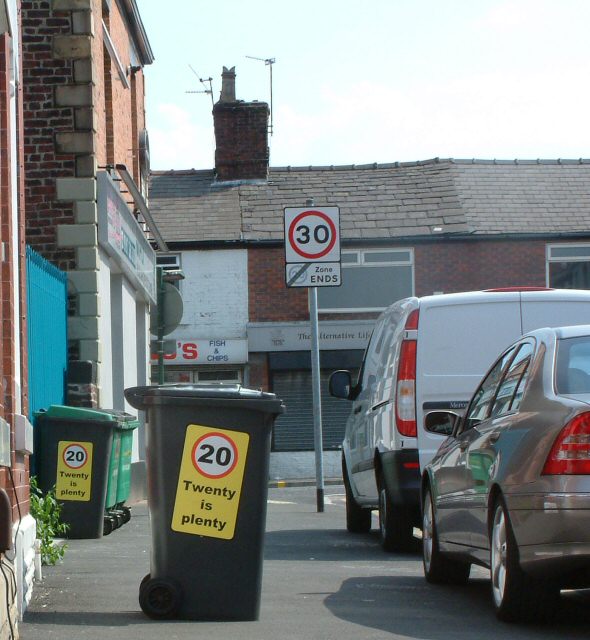
That is also where the DVSA wants you to be tested. The Highway Code spends a disproportionate amount of its space on slow-speed urban driving because that is where most everyday accidents happen. Residential streets force you to read parked cars for hidden pedestrians, judge gaps between oncoming vehicles in single-lane sections, and respond to children, cyclists and side-road exits in close succession. Every one of those scenarios is a fault opportunity.
The skills examiners are watching for
The slow speed of residential driving is what makes it diagnostic. An examiner can see your steering inputs, your mirror checks, and your scanning pattern in detail because nothing is happening fast enough to hide. The faults that turn up most often in residential sections are not dramatic mistakes. They are clusters of small slips that add up to a serious fault category.
- Mirror discipline: every change of speed or direction needs a check, and on a quiet residential road the examiner has time to notice when one is missing
- Position: drifting toward parked cars is a classic fault, especially when oncoming traffic is approaching
- Speed: hitting twenty in a twenty mph zone is required, sustained driving at fifteen because you are nervous is also marked
- Anticipation: spotting a child near the kerb, a reversing van, an opening car door, before you need to react
- Junction discipline: residential T-junctions and crossroads come thick and fast, and treating each one as a full-attention check is the difference between a clean test and a marked one
Parked cars: the silent fault generator
Parked cars on both sides of a single-track residential road create the classic UK driving test scenario. You meet an oncoming vehicle, you have to decide who waits, and you have to position your car so that nobody scrapes a wing mirror. Examiners are watching for three things: did you spot the situation early, did you choose the safer option, and did you communicate your intention with mirror, signal and position?
A surprising number of failures come from candidates who panic and stop in a position that blocks both directions, then forget to check mirrors before moving off again. The fix is to rehearse this scenario specifically rather than hoping you will encounter it at the right moment in your test. Most of the why-do-people-fail guide traces back to this kind of slow-speed urban work.
School zones and twenty mph zones
A growing share of UK residential streets are now in twenty mph zones. The compliance is mandatory and the examiner will mark sustained speeds above twenty-three or twenty-four mph as a fault. The trickier scenario is the entry. Some twenty mph zones are signed clearly with a gateway treatment, others have only a small repeater sign you can miss. A learner who maintains thirty in a twenty zone for more than a few seconds is heading for at least one driver fault and possibly a serious one.
School zones bring a separate set of considerations. Children, parents stopping in unsafe places, and increased pedestrian movement around the start and end of the school day. If your test happens to coincide with a school run window, the examiner will be watching how you handle the elevated risk. Many residential test routes pass at least one school simply because schools sit in the residential areas these routes use.
How to practise residential driving
Drive the residential streets within a five-mile radius of your test centre at the time of day you have booked. Morning rush is different from mid-afternoon, and a road that is empty at 11am can be lined with school-run cars at 3pm. Use the routes guide and the local test centres directory to identify which areas your centre uses, then drive them in conditions that match your booking.
Practise the manoeuvres in residential streets too. Bay parking on a quiet supermarket car park is easy. Reverse parking between two cars on a real residential road, with traffic passing every minute, is the actual test scenario. Get comfortable with the latter and the former takes care of itself. The main pass guide ties this into the wider plan.
The honest summary
Residential streets are not the boring filler between the dual carriageway and the test centre. They are the bulk of the test, the bulk of the fault opportunities, and the bulk of the difference between a pass and a fail. Spend more time on them than you think you need, and the higher-speed sections look after themselves. The stats page shows the national picture, and the easiest centres ranking gives a sense of where the residential mix is more or less demanding.
Sources and further reading
The figures, fees, and procedures referenced in this article are verifiable on the official gov.uk pages below. PassRates.uk is built on the Driver and Vehicle Standards Agency’s open data, published under the Open Government Licence.
What is the pass rate at your test centre?
Search by centre name, town or postcode to see the latest DVSA figure.
Frequently asked questions
How much of a UK driving test is on residential streets?
Most tests spend fifteen to twenty-five minutes of the forty-minute driving time on residential streets, more than any other road type at the majority of centres.
What is the most common residential-street fault?
Position around parked cars and missed mirror checks at junctions. Both are slow-speed faults that an examiner can see clearly because nothing is happening fast.
Will I be tested in twenty mph zones?
Almost certainly. The proportion of UK residential streets in twenty mph zones is increasing rapidly. Sustained speeds above twenty-three or twenty-four mph will be marked.
Are school-run times on residential streets harder for the test?
They are busier and require more anticipation, but examiners account for the conditions. The bigger risk is candidate stress reacting to children, parents and stopped cars all at once. Practise the school-run window if your test falls into it.
How should I practise for residential driving in particular?
Drive the residential streets within a few miles of your test centre at the time of day you have booked, and rehearse the bay-park and reverse-park manoeuvres on real residential roads rather than empty car parks.
Every candidate behind these numbers passed a theory test first. Nationally 44.8% of attempts clear it.
What to do at the scene, first aid basics and breakdown procedure. All 14 DVSA topics are free to practise, with no sign up. See the theory pass rate by centre or the full practice hub.
Related guides
Written by Vikas Dulgunde, the software engineer and driving enthusiast behind PassRates.uk. The figures come straight from the DVSA open dataset; see the methodology.
Source DVSA, Open Government Licence v3.0
Continue reading
UK city driving tests in 2026 pack the most faults per minute: bus lanes, cycle lanes, multi-lane roundabouts, pedestrian crossings. The 6 features examiners mark hardest.
DVSA stopped publishing test routes in 2010. How examiners pick them now, what local instructors actually know, and the route myth most learners fall for.