UK Speed Limits Explained
The UK speed limits look simple on paper, but the rules about which limit applies where catch out drivers who have forgotten the lit street light rule. This guide cleans up the categories.
The four headline limits
Outside specific signage, UK speed limits depend on the road type and the vehicle. For a standard car or motorbike, the four headline limits are:
- Built-up areas: 30 mph (the default), or 20 mph in many residential and urban zones
- Single carriageway outside built-up areas: 60 mph
- Dual carriageway: 70 mph
- Motorway: 70 mph
These are upper limits, not targets. Driving at the limit is appropriate when conditions allow. Driving below the limit is appropriate when conditions demand. Driving above the limit is illegal at any time. The Highway Code essentials guide gives the full table for cars towing trailers, vans, lorries, and buses, all of which face lower limits in some categories.
- Residential 20 mph zones
- 20 mphLondon, Bristol, Edinburgh, Wales-wide
- Built-up area default
- 30 mphLit street lights, no other sign
- Single carriageway
- 60 mphNational speed limit, no central reservation
- Dual carriageway
- 70 mphCentral reservation present
- Motorway
- 70 mphOr whatever a gantry shows
- Wales 20 mph default
- Since 2023National change in built-up areas
How to know when 30 mph applies: the lit street light rule
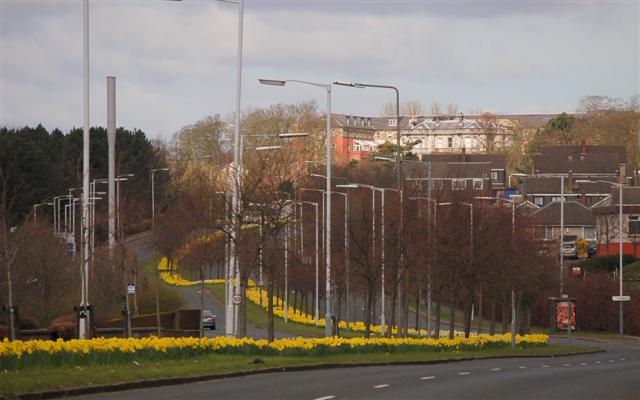
The single most useful rule for built-up areas: if there are street lights and no other speed limit sign is visible, the limit is 30 mph. Street lights are the legal indicator that you are in a built-up area. The presence of lit street lights at night or unlit street lights during the day both count.

Common variations:
- Lit street lights, no signs: 30 mph
- Lit street lights with 20 mph repeater signs: 20 mph (now common in residential and urban centres)
- Lit street lights with 40 mph repeater signs: 40 mph (specific arterials in some cities)
- No street lights and no signs: usually 60 mph (single carriageway derestricted)
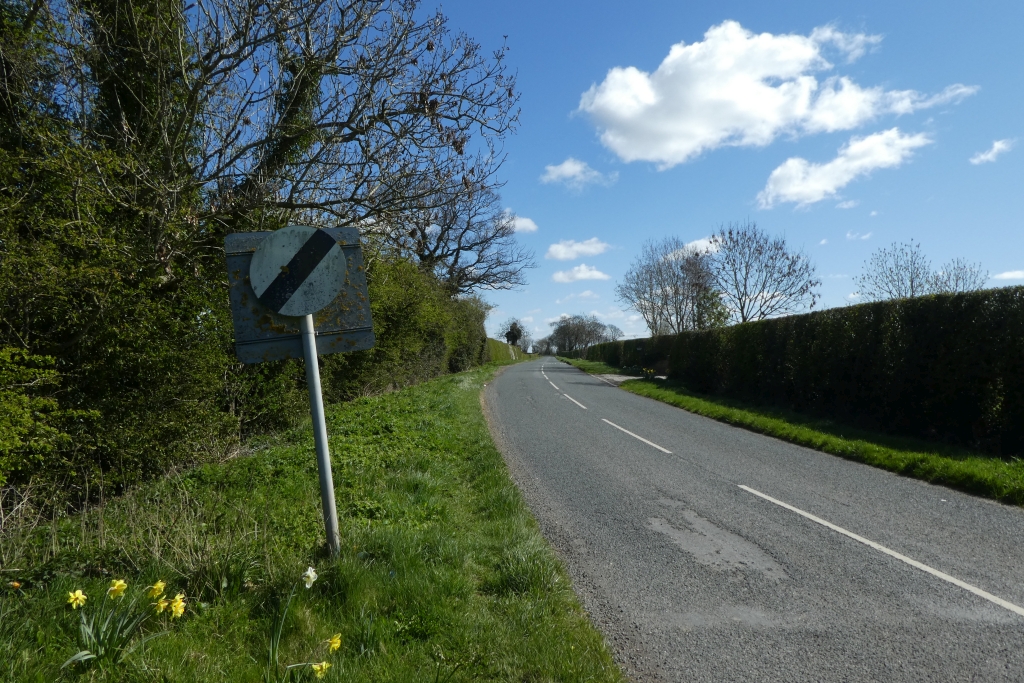
- A sign showing a circular black diagonal stripe on white: national speed limit applies (60 single, 70 dual)
The 20 mph residential zone rollout has changed the picture significantly in many UK cities. London, Bristol, Edinburgh and Wales (nationally since 2023) all have widespread 20 mph defaults in built-up areas. Repeater signs are required, but they can be infrequent, so check carefully on test routes.
Single carriageway versus dual carriageway
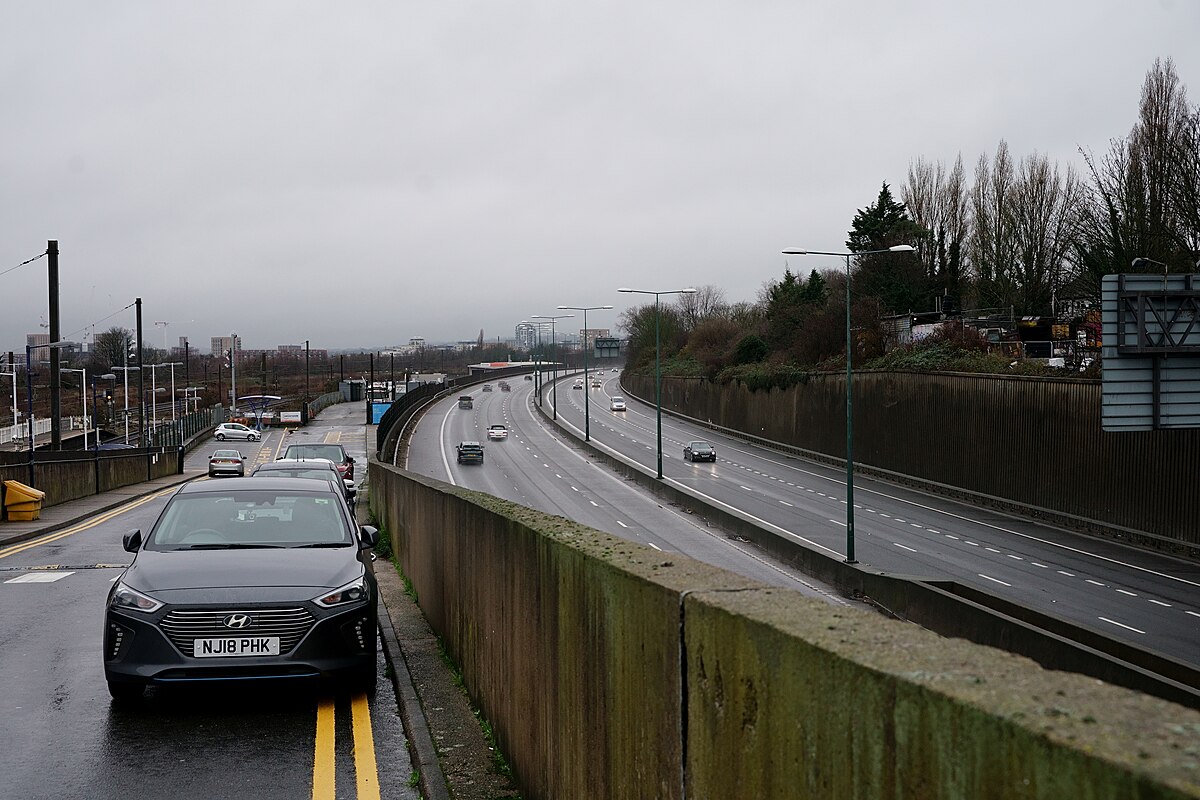
A dual carriageway is a road where the two directions of traffic are separated by a central reservation (a physical barrier or strip of land). It does not need to have multiple lanes in each direction. A single-lane road in each direction with a central reservation is still a dual carriageway and still has a 70 mph limit.
A road with two lanes in each direction but no central reservation (just a painted central white line, even a hatched one) is a single carriageway and the limit is 60 mph. This catches out a lot of drivers who assume two lanes per direction means dual carriageway. The lane discipline guide covers the leftmost-lane default that applies on every dual carriageway.
Variable speed limits
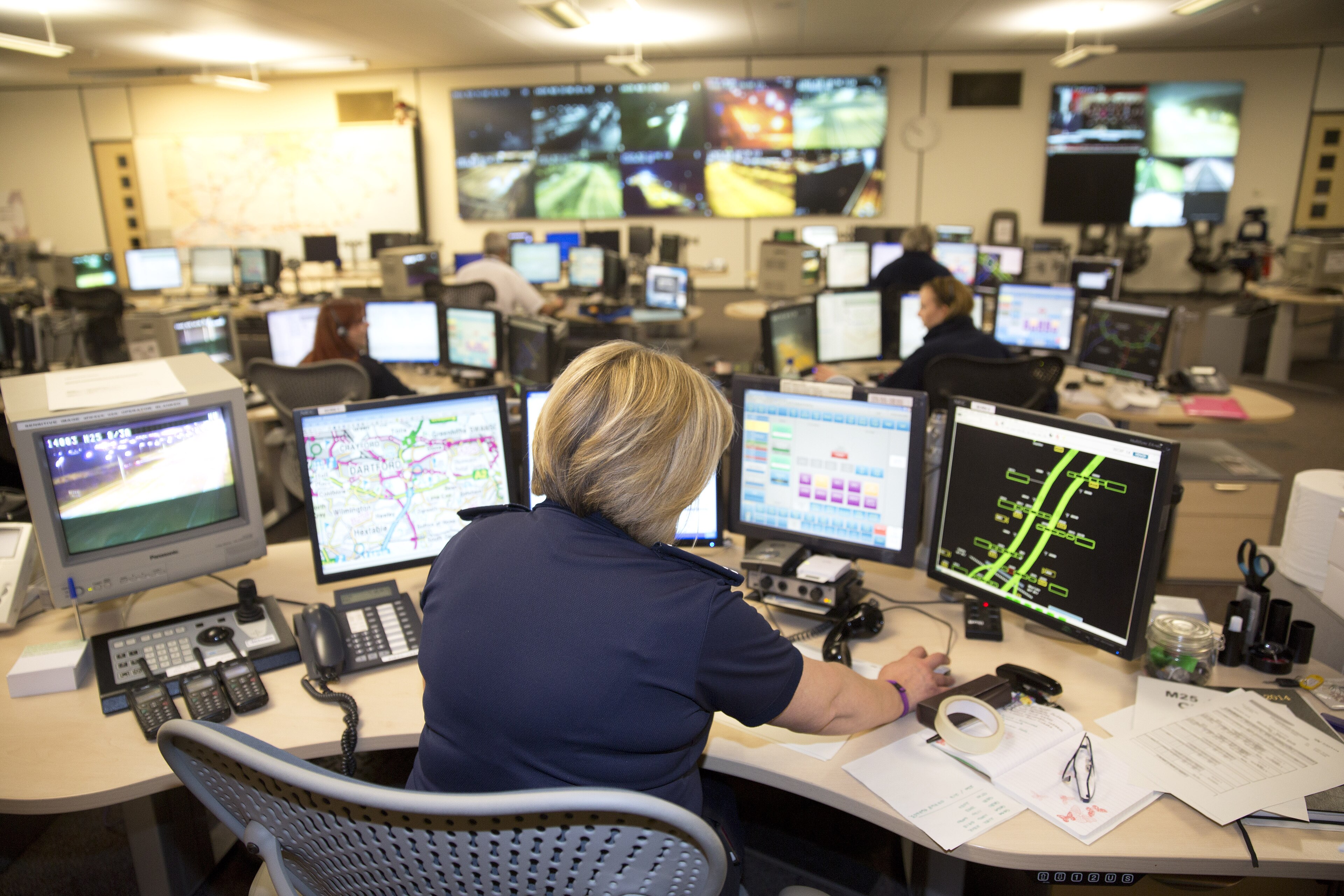
Smart motorways and some major arterials use variable speed limits displayed on overhead gantries. When a limit is shown in a red circle, it is mandatory and enforced by camera. Common variable limits are 60 mph, 50 mph and 40 mph for congestion management, and lower figures for incident response. Treat any displayed limit as the active limit until you pass a higher figure or a "national speed limit applies" sign. The first motorway drive guide and the speeding tickets guide cover what happens when you misread one of these.
Speed on the driving test
Examiners assess speed in two directions: too fast, and too slow. Too fast is the obvious fault and an automatic serious if you exceed the limit on the test route. Too slow is graded as making progress; driving at 25 mph in a 30 mph zone with no reason is a minor fault, and persistent under-speed driving across the test can become a serious. The phrase to remember is "drive to the conditions, up to the limit." If the road is clear and the limit is 30, you should be doing 30, not 24.
The most common speed-related fail on UK tests is failing to slow appropriately for a 30 mph zone after a 60 mph stretch. The transition is often signalled only by repeater signs and street lights starting; learners who do not actively recalibrate their speed for the new limit overshoot for several hundred metres. The test day guide covers route preparation strategies that prevent this.
Speed limit signs
There are two main types of speed limit sign:
- Terminal sign: a circular sign with the limit in red on a white background, marking the start of a new limit zone (e.g., the 30 mph entry sign as you enter a town)
- Repeater sign: a smaller version of the same circle, placed at intervals along the road to remind drivers of the active limit (these confirm that the limit has not changed)
A terminal sign with a black diagonal stripe through it is the "national speed limit applies" sign. The actual limit depends on the road type: 60 single, 70 dual, 70 motorway. New drivers find this sign confusing because it does not state a number, but the rule is consistent.
 National speed limitThe national speed limit applies from this point. For a car that is 60 mph on a single carriageway and 70 mph on a dual carriageway or motorway.
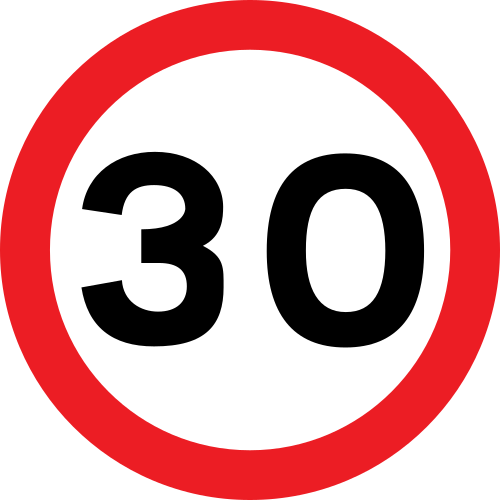 Speed limitA red ring with a number is the maximum for that stretch.
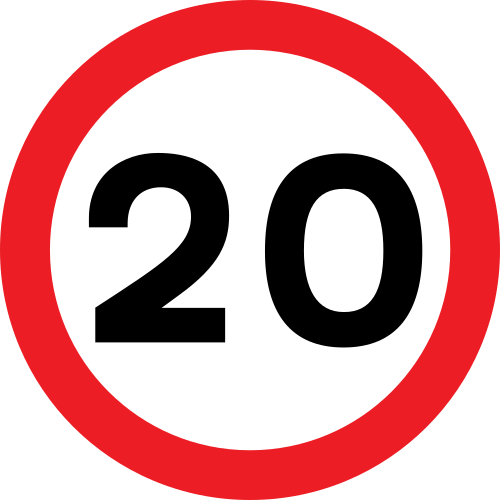 20 mph speed limitThe maximum speed is 20 mph.
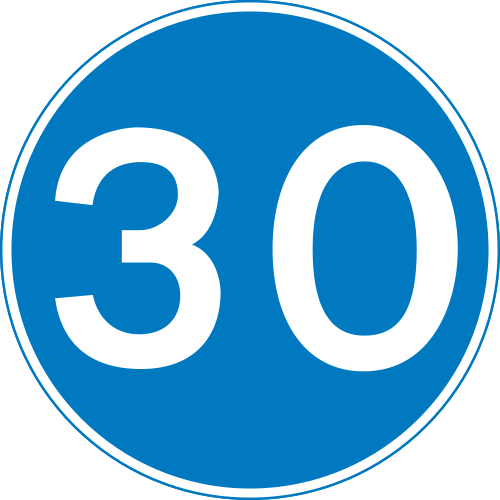 Minimum speedMinimum speed limit. You must not drive slower than the speed shown unless it is unsafe to do so.
When to drive below the limit
- Wet roads: reduce by 10 to 20 percent depending on intensity
- Snow or ice: down to 20 to 30 mph on roads where the limit would normally be 60
- Fog: down to whatever lets you stop within visible distance, often 30 mph or below
- Heavy rain at night on unlit roads: cut your speed sharply because reaction time and visibility both suffer
- Approaching a known hazard like a school zone, a sharp bend, or a junction: ease off well before the hazard, not at it
Examiners do not penalise sensible reductions for conditions. They penalise speed that is reckless, regardless of whether the absolute number is below the limit. The following distance and the two-second rule guide sets out the matching gap discipline for each speed band.
Common speed-related faults
- Exceeding the limit, even briefly (immediate serious or fail)
- Too slow without reason (making progress fault)
- Late recalibration after a limit change
- Speeding through a 30 zone because the route looks like it could be 40
- Missing a reduced limit through roadworks or a lower limit on a dual carriageway
- Hitting the limit on the dot just before a corner that demands less
Linking speed to wider test prep
Speed appears in the faults explained guide under both "control" and "progress" categories. The two failure modes (too fast and too slow) are equally weighted. Build a habit of glancing at your speedometer every fifteen to twenty seconds in normal driving, more often when limits are changing. The why people fail guide lists speed misjudgement as one of the top five failure causes.
Sources and further reading
The figures, fees, and procedures referenced in this article are verifiable on the official gov.uk pages below. PassRates.uk is built on the Driver and Vehicle Standards Agency’s open data, published under the Open Government Licence.
What is the pass rate at your test centre?
Search by centre name, town or postcode to see the latest DVSA figure.
Frequently asked questions
What is the default speed limit on a UK road with street lights?
30 mph, unless other signs say otherwise. Street lights are the legal indicator of a built-up area.
Is a road with two lanes each way always a dual carriageway?
No. A dual carriageway requires a central reservation (a physical barrier or strip of land) between the two directions. Two lanes each way with only paint between them is a single carriageway, with a 60 mph limit.
What does the white circle with a black diagonal stripe mean?
It means the national speed limit applies. The actual limit depends on the road type: 60 single carriageway, 70 dual or motorway, all for cars and motorbikes.
Can I fail my driving test for going too slow?
Yes. Persistent driving well below the limit without reason is a "making progress" fault. A single instance is a minor; consistent under-speed driving across the test can be a serious.
Do 20 mph zones apply to the whole town or only to specific streets?
It varies. Some cities have town-wide 20 mph defaults; others apply 20 mph only to specific residential streets. Repeater signs are required to mark the active limit. Always check the signs.
What is the speed limit on a motorway in fog or heavy rain?
The legal limit is still 70 mph (or whatever variable limit is shown), but the practical limit is whatever lets you stop within visible distance. In dense fog, that may be 30 mph or below.
Every candidate behind these numbers passed a theory test first. Nationally 44.8% of attempts clear it.
Observation, anticipation, concentration and avoiding distractions at the wheel. All 14 DVSA topics are free to practise, with no sign up. See the theory pass rate by centre or the full practice hub.
Related guides
- Speed and following distanceTwo-Second RuleRead guide
- Speed and following distanceWet road following distanceRead guide
- Speed and following distanceLane DisciplineRead guide
- Junctions and priorityJunctions and PriorityRead guide
- Junctions and priorityCrossroadsRead guide
- Junctions and priorityBox JunctionsRead guide
Written by Vikas Dulgunde, the software engineer and driving enthusiast behind PassRates.uk. The figures come straight from the DVSA open dataset; see the methodology.
Source DVSA, Open Government Licence v3.0
Continue reading
The 5 UK pedestrian crossing types (Zebra, Pelican, Puffin, Toucan, Pegasus), who has priority at each, and the faults that fail tests at crossings.
Which following-distance situations examiners mark as serious faults versus minors on the UK driving test, how the gap requirement changes on wet and icy roads, and the three most common scenarios that catch learners out. Highway Code Rule 126 with real test context.