UK Driving Tests with Tram Routes 2026: 7 Cities Listed
Trams feature on UK driving tests in 7 cities with running networks. The rules are specific, the faults are unforgiving, and a candidate who has not rehearsed tram driving is at a clear disadvantage.
The seven UK cities with running tram networks
The current UK tram cities are Manchester (Metrolink), Sheffield (Supertram), Birmingham (West Midlands Metro), Croydon (Tramlink), Edinburgh (Edinburgh Trams), Nottingham (NET), and Blackpool (Blackpool Tramway). Each network varies in size and the proportion of route miles that share the carriageway with general traffic. Some networks run almost entirely on segregated track and rarely appear on driving test routes. Others share city-centre streets extensively.
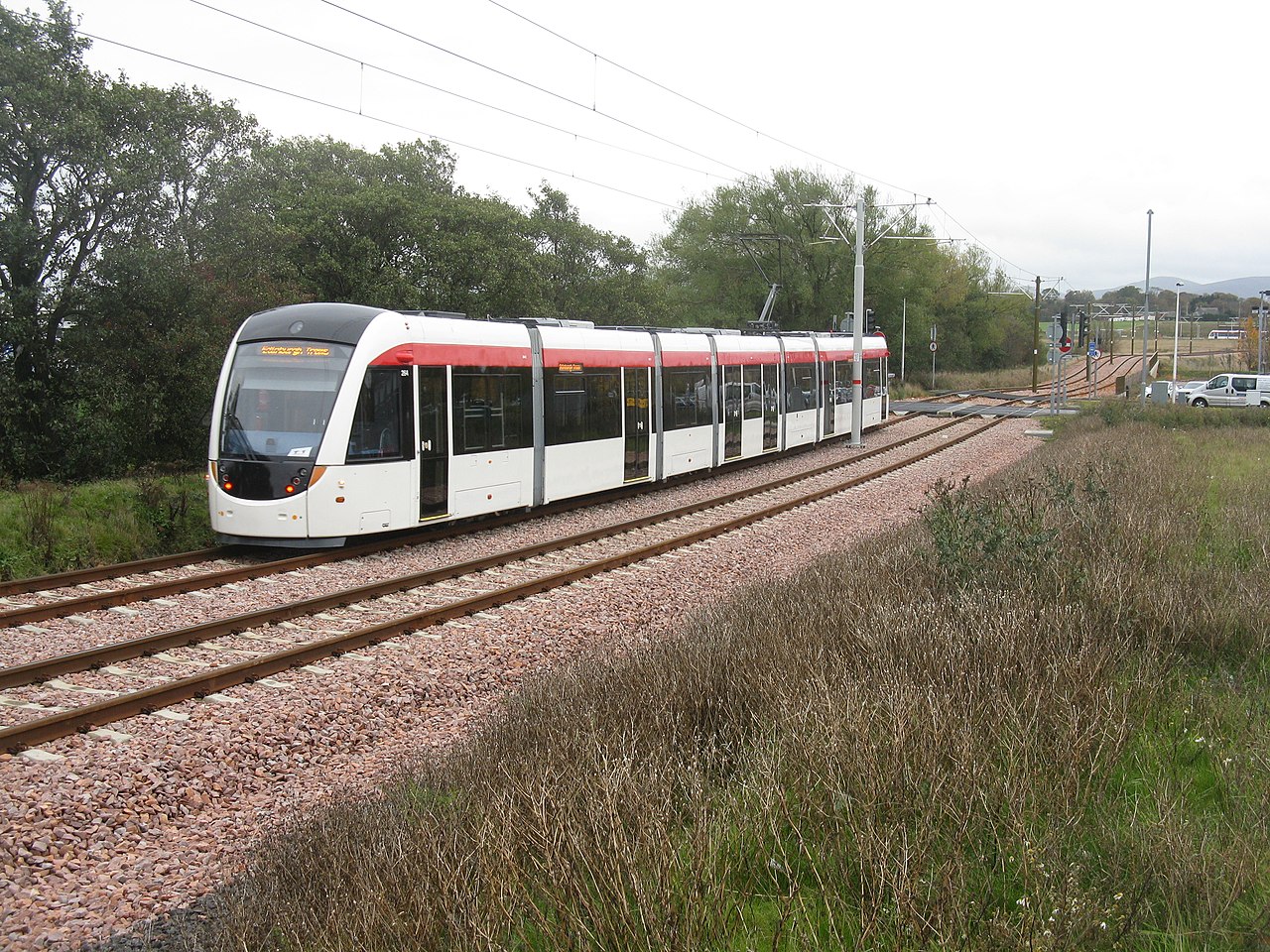
Manchester and Sheffield have the densest on-street running, and tests at central Manchester or Sheffield centres routinely include sections where trams share the road. Croydon Tramlink runs on streets through central Croydon, and Edinburgh Trams use Princes Street, both of which appear on local test routes. Birmingham, Nottingham and Blackpool are similar. The test centres directory and the stats hub cover each centre with its current pass rate.
What makes tram driving different
Trams have priority over general traffic in almost all situations. They cannot steer to avoid you, they cannot brake quickly because of their mass, and the consequences of a collision are severe. The rules around trams are designed around those facts. You must give way at junctions where trams are approaching. You must not park on or near tram tracks. You must not overtake a tram on the right unless you are at a clear junction. You must not stop on tram tracks for any reason.
- Tram priority: at most junctions, trams have right of way over general traffic
- Track materials: tram lines can be slippery in wet weather, particularly for cyclists and motorcyclists
- Stop islands: tram stops in the road have safety zones for boarding and alighting passengers, and you must not enter these
- Signal markings: junctions in tram cities often have additional signal heads for trams that look similar to general signals at a glance
- Lane sharing: where trams share the carriageway, the centre of the lane is reserved for the tram and you must not stray onto the tracks
What examiners assess in tram cities
In cities with trams, the examiner is watching for awareness as much as compliance. Did you spot the tram early? Did you read the signal head correctly? Did you give priority where required? Did you avoid the tracks where avoiding them was possible? A candidate who acts as if the trams are not there, or who panics when one appears, will be marked even if no specific incident triggers a serious fault.
The classic tram-city fault is positioning. A learner who drifts toward the centre of the lane in an attempt to avoid parked cars on the left can end up partly on the tracks. This is fine if no tram is approaching, but it generates a fault for poor lane discipline and a serious fault if a tram is anywhere within a few hundred metres. The faults explained guide covers the marking categories.
How tram cities differ from each other
Manchester Metrolink runs on a wide variety of road types, from city-centre pedestrian streets where trams operate at walking pace, to suburban arterials where they run at thirty mph alongside cars. Sheffield Supertram runs through the city centre and out to suburban residential areas. Croydon Tramlink shares carriageway through central Croydon and runs largely segregated elsewhere. Edinburgh Trams use Princes Street and the airport route, which is a mix of segregated and on-street running.
Birmingham West Midlands Metro runs on Corporation Street and Stephenson Place in the city centre. Nottingham NET shares the carriageway through several inner suburbs. Blackpool Tramway runs along the seafront, which is a tourist-heavy area where pedestrians, parked cars and trams all interact. Each city has its own quirks, and a local instructor is the best source for the specific stretches your centre uses.
How to prepare for tram-area test routes
Drive the on-street tram sections in your city before your test, in the conditions you will face on the day. Pay particular attention to the junctions where tram tracks cross the road and to the points where the carriageway narrows around stop islands. Practise reading the signal heads, since some tram cities have separate signals for trams that you must not confuse with general signals.
For the broader urban-driving context, the urban features guide covers the wider picture. The main pass guide ties tram preparation into the overall strategy. The routes guide explains how to identify which sections your centre uses.
The honest summary
Trams add a distinct layer of complexity to UK city driving tests. The rules are clear, the practice is finite, and a candidate who has rehearsed the local tram-area routes will handle them as routinely as any other road type. The mistakes happen when a learner arrives on test day having only read the Highway Code section on trams, without ever having shared a lane with one in real conditions. The easiest versus hardest centres guide helps you weigh whether the local profile suits you.
Sources and further reading
The figures, fees, and procedures referenced in this article are verifiable on the official gov.uk pages below. PassRates.uk is built on the Driver and Vehicle Standards Agency’s open data, published under the Open Government Licence.
What is the pass rate at your test centre?
Search by centre name, town or postcode to see the latest DVSA figure.
Frequently asked questions
Which UK cities have trams on driving test routes?
Manchester, Sheffield, Birmingham, Croydon, Edinburgh, Nottingham and Blackpool all have running tram networks. Not every centre in these cities uses tram-area routes, but several at each do.
Do trams have priority over cars in the UK?
In almost all situations, yes. Trams cannot steer to avoid you and have very long stopping distances. The rules give them priority at most junctions and require general traffic to keep clear of the tracks.
What happens if I drive onto tram tracks during the test?
It depends on the situation. Briefly straying onto the tracks where no tram is approaching is usually a driver fault. Doing so when a tram is close is a serious or dangerous fault.
Are tram cities harder for the test than non-tram cities?
On average, slightly. The tram element adds rules and decisions that other cities do not have, but the effect on the headline pass rate is modest because trams appear on only a portion of routes.
Can I avoid tram routes by choosing a specific test centre?
In most tram cities, some centres have more tram exposure than others. A local instructor will know which routes use the on-street running and which avoid it.
Every candidate behind these numbers passed a theory test first. Nationally 44.8% of attempts clear it.
Lane discipline, speed limits, the hard shoulder and smart-motorway signals. All 14 DVSA topics are free to practise, with no sign up. See the theory pass rate by centre or the full practice hub.
Related guides
Written by Vikas Dulgunde, the software engineer and driving enthusiast behind PassRates.uk. The figures come straight from the DVSA open dataset; see the methodology.
Source DVSA, Open Government Licence v3.0
Continue reading
Does day of the week move your UK driving test pass rate? An honest look at DVSA data: small differences, why they exist, and why bookings should not change.
Railway level crossings are rare on UK driving tests but cause oversized failures. 5 centres where they appear, what examiners watch for, easy-trap faults.