UK Box Junction Rules: 1 Right-Turn Exception
Yellow criss-cross paint marks a box junction, and the rule is one sentence long. Breaking it triggers PCNs in cities and serious faults on test, with one right-turn exception worth knowing.
The single rule
You must not enter a box junction unless your exit is clear. That is the rule. The yellow criss-cross paint marks the area where stopping is forbidden. The intent is to prevent traffic from blocking junctions during congested phases at traffic lights or busy intersections.
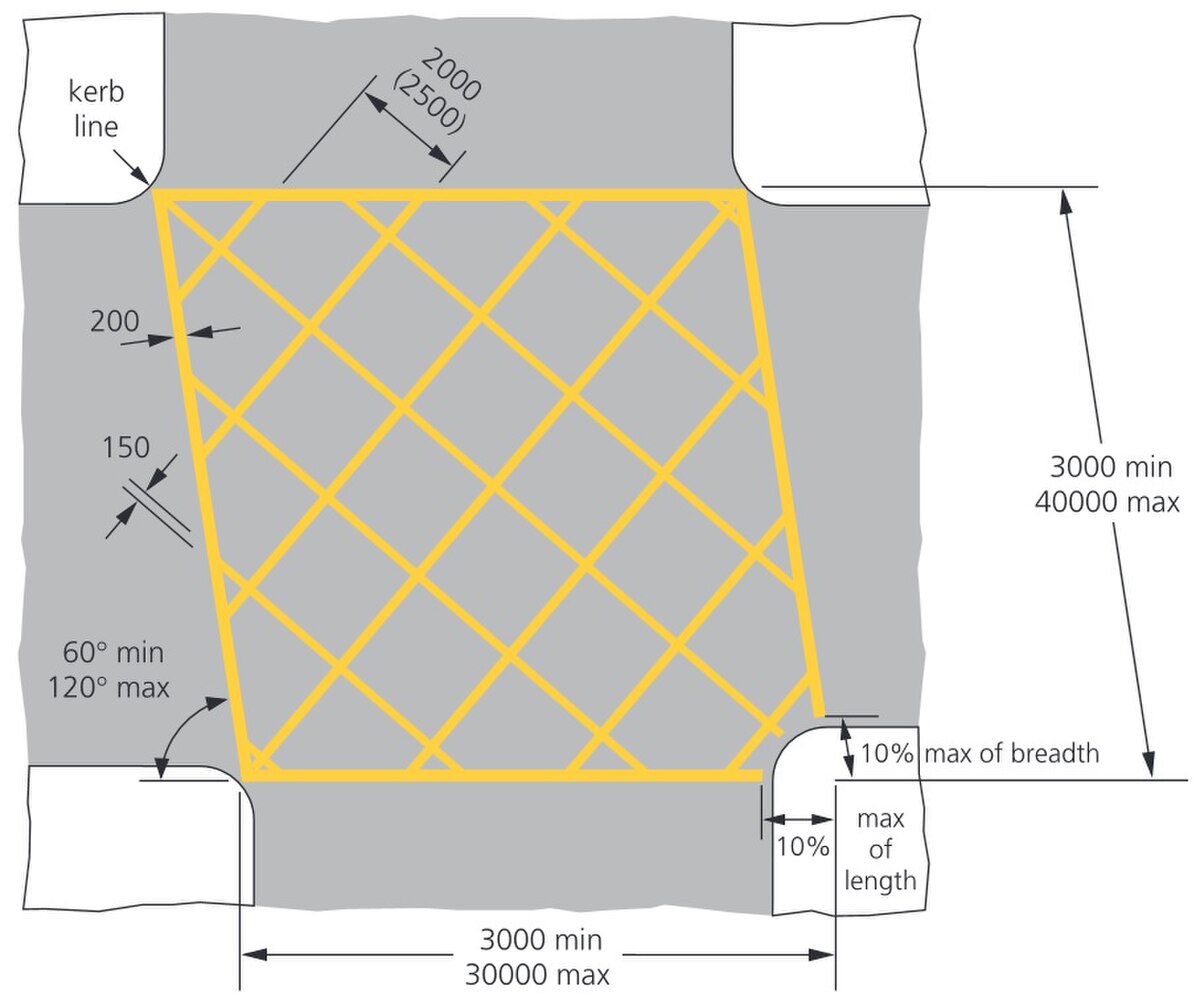
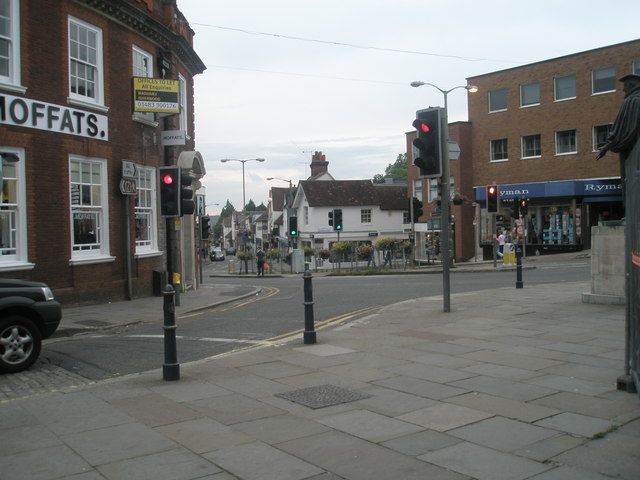
In London, Manchester, and increasingly in other UK cities, box junctions are camera-enforced. Stopping inside a box can mean a Penalty Charge Notice in the post for around 130 pounds (60 if paid within fourteen days). Even where they are not camera-enforced, examiners flag stopping in a box as a serious fault, and police can stop you for it. The traffic light priorities guide covers signal interactions at box-controlled junctions.
The right-turn exception
There is one exception. You may enter a box junction when you are turning right and you are only prevented from completing your turn by oncoming traffic. In that case, you wait inside the box for the oncoming traffic to clear, then complete your right turn.
This exception applies only when:
- You are turning right (not left, not straight ahead)
- The reason your exit is blocked is oncoming traffic specifically
- There is no other reason your way is blocked (no queue ahead, no light against you on your exit road)
If your right turn is blocked by a queue on the exit road as well as oncoming traffic, you may not enter the box. You wait at the entry until the exit road is clear.
Reading a box junction on approach
On approach to any signal-controlled or congested junction, scan for the yellow paint on the road. If you see it, your decision tree changes:
- Going straight ahead or turning left: only enter when the exit is clear
- Turning right: only enter when the exit is clear OR when only oncoming traffic blocks your turn
- In all cases: if you are unsure whether the exit is clear, wait at the entry
The exit is "clear" when there is enough space on the far side of the box for your vehicle to come to a stop without any part of your car still inside the box. A queue that you would join at the back, with your rear bumper still over the yellow paint, is not a clear exit.
Box junctions at traffic lights
Most UK box junctions are at traffic-light-controlled intersections. The combined logic is: green light gives you permission to proceed, but you must still check the exit before entering the box. A green light does not authorise you to enter a blocked box. This is the most common failure point. Drivers see green and assume they may go, ignoring the box rules.
The right-turn exception is most often invoked at signal-controlled junctions. Right-turners frequently need to wait inside the box for an oncoming gap, then complete the turn during the late green or amber phase. This is legal and expected behaviour. Examiners watch that the right-turner has properly read the situation and is genuinely blocked only by oncoming traffic. The junctions and priority guide covers the wider right-turn etiquette this builds on.
Box junctions on roundabouts
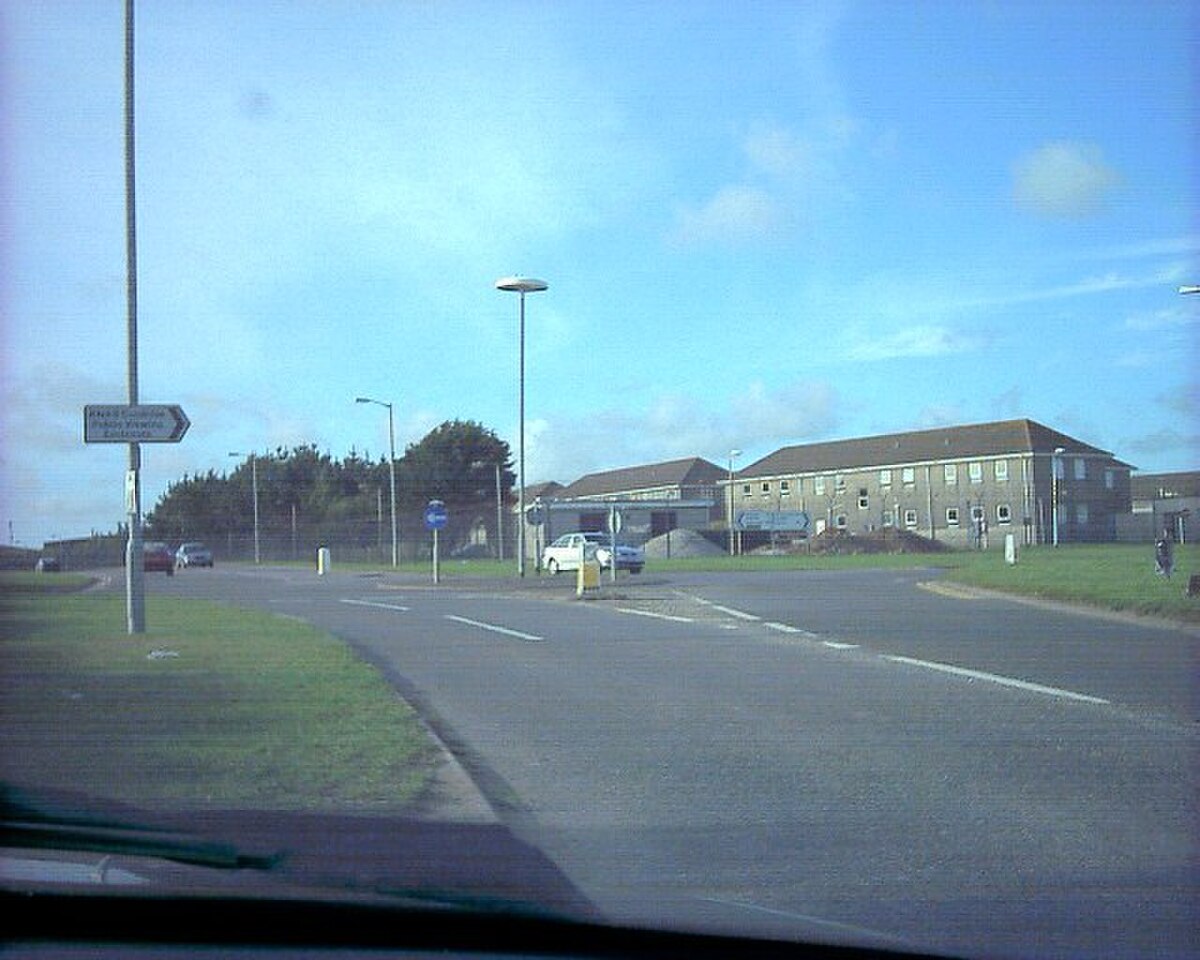
Some larger UK roundabouts have box junctions painted on the circulating carriageway, particularly where traffic lights have been added. These work on the same principle: do not stop inside the box. The give-way priority rules are unaffected, as the mastering roundabouts guide and the multi-lane roundabouts guide both explain.
Common box junction faults
- Entering a box when traffic ahead is clearly queuing (the most common test fault)
- Stopping inside a box for any reason other than the right-turn exception
- Waiting in a box while turning right but blocked by something other than oncoming traffic (e.g., a pedestrian crossing on the exit road)
- Edging forward into the box during a red light to "get a head start"
- Not seeing the yellow paint at all because of sun glare or wear
How examiners assess box junctions
Examiners are looking for evidence that you have read the road, recognised the box junction, and applied the entry rule correctly. The first line of assessment is whether you stopped before entering when the exit was not clear. The second is whether, having entered for a right turn, you correctly judged the gap in oncoming traffic and completed the manoeuvre safely.
A box junction fault is usually a serious. Stopping in a box is graded similarly to ignoring a no-stopping sign. Combined with the urban context (often heavy traffic, pedestrians, multiple lanes), it is treated as a meaningful safety failure. The why people fail guide lists junction handling among the top failure categories.
The "creeping" anti-pattern
A common bad habit at box junctions is creeping forward inch by inch in heavy traffic, ending up partly in the box even when stationary. Each individual creep does not feel like a violation, but the cumulative position does. Examiners flag this. The fix is to choose a final stopping position before traffic ahead actually clears, and stay there. If you cannot reach it without entering the box, you do not move at all.
Practising box junctions
Box junctions are concentrated in urban centres. Cities with the densest box junction networks include London, Manchester, Birmingham, and Edinburgh. If your test is at a centre with city or large-town routes, your instructor should plan at least one lesson around the local box junctions. Practise the right-turn exception specifically; it is the part learners are least confident on.
Rural test centres rarely have box junctions, which is one of several factors in their generally higher pass rates. Urban centres with more box junctions tend to sit in the hardest centres or middle of the rankings. The main pass guide covers how local conditions affect overall test difficulty.
Sources and further reading
The figures, fees, and procedures referenced in this article are verifiable on the official gov.uk pages below. PassRates.uk is built on the Driver and Vehicle Standards Agency’s open data, published under the Open Government Licence.
What is the pass rate at your test centre?
Search by centre name, town or postcode to see the latest DVSA figure.
Frequently asked questions
When can I enter a box junction?
When your exit is clear. The one exception is turning right when you are only blocked by oncoming traffic; in that case you may enter and wait inside the box for the oncoming gap.
Will I fail my test for stopping in a box junction?
It is graded as a serious fault, which makes it a likely fail. The exception is a brief, clearly-bounded right-turn wait for oncoming traffic.
What is the fine for stopping in a box junction?
In camera-enforced cities, around 130 pounds (60 if paid within 14 days). It is a Penalty Charge Notice rather than a moving traffic offence in most areas, so no licence points.
Do box junction rules apply when traffic lights are green?
Yes. A green light authorises you to proceed in general, but you must still verify the exit is clear before entering a box. Green plus a blocked exit equals stop.
Can I enter a box junction while turning left?
Only if the exit is clear. The right-turn exception does not apply to left turns or straight-ahead movements.
How big is a typical UK box junction?
Big enough to encompass the full conflict zone of the junction, usually around six to ten metres on each side. Some major junctions have boxes that occupy thirty metres or more.
Every candidate behind these numbers passed a theory test first. Nationally 44.8% of attempts clear it.
What to do at the scene, first aid basics and breakdown procedure. All 14 DVSA topics are free to practise, with no sign up. See the theory pass rate by centre or the full practice hub.
Related guides
- Junctions and priorityJunctions and PriorityRead guide
- Junctions and priorityCrossroadsRead guide
- Junctions and priorityMastering RoundaboutsRead guide
- Junctions and priorityMulti-Lane RoundaboutsRead guide
- Speed and following distanceUK Speed LimitsRead guide
- Speed and following distanceTwo-Second RuleRead guide
Written by Vikas Dulgunde, the software engineer and driving enthusiast behind PassRates.uk. The figures come straight from the DVSA open dataset; see the methodology.
Source DVSA, Open Government Licence v3.0
Continue reading
UK yellow line parking rules: single and double yellow lines, kerb dashes for loading, time restrictions, and 4 ways they catch out learners on test routes.
UK traffic light rules for the driving test: the 4-phase sequence, when amber means stop or proceed, filter arrows, and the most common light-related faults.