Can You Learn to Drive from YouTube and TikTok?
YouTube and TikTok videos are useful for theory revision, hazard perception practice and understanding manoeuvre concepts, but they cannot substitute for professional driving lessons. The Driving Instructors Association (DIA) confirmed in September 2026 that free video content works best alongside instructor time, not instead of it, and that a learner might pass the test on video prep alone but would not learn to drive safely that way.
- Total cost of learning to drive (2026)
- ~£2,460Average all-in cost including lessons, tests and provisional licence (DIA, September 2026)
- Rise since 2020
- +£570Increase in the average total cost of learning to drive over six years (DIA)
- TikTok views for #passdrivingtest
- 17 million+Reported view count for the top driving test TikTok hashtag (BBC, September 2026)
- DIA verdict on video prep
- Theory yes, practical noVideo works for theory study and hazard perception, not for road safety skills (Carly Brookfield, DIA)
- DVSA recommended learning order
- Lessons firstDVSA rebuilt Ready to Pass? in July 2026 to place instructor lessons before theory revision
- Learners without lessons before theory
- +25% more likely to failTo fail the practical test, compared with learners who had lessons first (DVSA survey, July 2026)
Can you learn to drive from YouTube and TikTok?
The short answer is: partly, for the theory side, but not for the practical. YouTube channels and TikTok accounts that cover the Highway Code, common road signs, hazard perception clips and manoeuvre walk-throughs have genuine revision value. For a learner sitting at home with an upcoming theory test, free video content is a reasonable supplementary resource. What it cannot do is teach you to control a car safely on public roads, and the Driving Instructors Association is clear that these are different things.
The reason learners are turning to free sources is straightforward: the cost of learning to drive has risen sharply. The DIA put the total all-in figure at around 2,460 pounds in September 2026, up more than 570 pounds since 2020. That covers a provisional licence, a theory test, a practical test and roughly 45 hours of lessons. For a young person paying for lessons out of part-time wages, a 17-million-view TikTok hashtag full of free driving tips looks like a tempting shortcut.
What YouTube and TikTok driving videos actually do well
Free video content is good at explaining things that are visual and rule-based. Road signs, right-of-way rules, the structure of a roundabout, the sequence of checks for a bay park, and the Highway Code sections on stopping distances all translate well to a short clip or a longer walkthrough video. Hazard perception is particularly well served: watching dashcam footage and trying to spot developing hazards is close to how the DVSA hazard perception test itself works.
- Theory test multiple-choice revision (Highway Code, road signs, rules of the road)
- Hazard perception practice using dashcam and driving point-of-view footage
- Understanding what manoeuvres look like from a passenger or external camera angle
- Seeing common test routes at specific centres, which can reduce anxiety before the test
- Reviewing examiner commentary on mock test videos to understand what faults look like
The #passdrivingtest hashtag on TikTok had accumulated more than 17 million views by September 2026, according to BBC reporting. A significant portion of that is theory-adjacent content: sign mnemonics, stopping distance tables, and examiner-style commentary. That kind of content genuinely helps learners who are preparing for the theory test or who want to understand the examiner's perspective before a practical test.
What free video cannot replace
Knowing what a bay park looks like on video is not the same as executing one in a moving car on a sloping car park surface, with other vehicles present and an examiner in the passenger seat. Road safety skills depend on physical feedback: the feel of the clutch biting point, the weight of the steering as you approach a junction, the spatial awareness that only comes from hours of real driving. No amount of passive watching builds those reflexes.
A qualified driving instructor provides something a video cannot: real-time correction. When you approach a junction too quickly, or check your mirrors out of sequence, or position the car too close to the kerb, an instructor identifies the fault immediately and tells you what to do differently in that exact moment. That feedback loop, repeated across dozens of lessons, is what builds safe driving habits. Watching a video of someone else making mistakes and being corrected is categorically different.
| Area | YouTube and TikTok | Professional lessons | |
|---|---|---|---|
| Highway Code and road signs | Strong coverage. Many high-quality revision channels. | Covered, but the instructor focus is on applying rules in real conditions. | |
| Hazard perception | Good. Dashcam clips are close to DVSA test format. | Covered in theory prep sessions; practical hazard reading built across all lessons. | |
| Physical car control | Not possible. Steering, clutch, throttle and braking cannot be taught via screen. | Core of every lesson. Instructor corrects technique in real time. | |
| Examiner feedback | Instructors on video describe common faults, but cannot react to your specific driving. | Direct, immediate correction of your actual mistakes as they happen. | |
| Manoeuvre practice | Good for conceptual understanding of the sequence and reference points. | Physical execution, spatial awareness and dealing with real road conditions. | |
| Emergency situations | Cannot teach the physical and psychological response to a real skid or near-miss. | Instructor can create controlled practice scenarios on quiet roads. |
The DIA's view on learners using video to cut costs
Carly Brookfield of the Driving Instructors Association addressed the trend directly in September 2026, in response to BBC reporting on the rise of YouTube and TikTok as driving prep tools. Her position was measured: free video content works hand in hand with instructor time for study and theory preparation, but cannot replace it for road safety. She warned that a learner could possibly pass the driving test based on video preparation alone, but would not learn to drive safely that way.
“Free video content works hand in hand with instructor time for study and theory prep, but cannot replace it for road safety. A learner could possibly pass the test off video alone, but not learn to drive safely that way.”
The distinction matters. Passing the test and driving safely are not identical outcomes. The driving test is a snapshot of competence on a specific route, on a specific day. The first year after passing is the most dangerous year for new drivers in the UK: new drivers are significantly more likely to be involved in a serious collision in the 12 months after passing than at any later point in their driving life. That risk is reduced by a broader base of supervised practice, not just by test-passing technique.
How to use free video prep effectively alongside lessons
The most efficient approach is to treat YouTube and TikTok as a complement to lessons, not a replacement. Use them to arrive at each lesson with better conceptual preparation, so your paid time in the car is spent on physical execution rather than explaining what a box junction is.
- 01Use video for theory preparation
Before booking lessons or a theory test, work through Highway Code revision on YouTube and use hazard perception dashcam clips. This is where free content gives the best return.
- 02Book professional lessons alongside theory study
DVSA recommends starting lessons before your theory test, not after. Learners who take lessons before sitting the theory test are 25% less likely to fail the practical, based on DVSA's own survey data. See the guide on whether you need lessons before your theory test.
- 03Use our free theory practice engine to test your knowledge
Passrates.uk's free theory test practice covers all the official question categories and gives you an immediate score on each session. Use it after video revision to confirm your knowledge sticks. You'll find the practice tests at theory test mock.
- 04Review video between lessons
After each lesson, look up video explanations of any area your instructor flagged as a weak point. Video is excellent for conceptual review between sessions. It cannot replace the lesson but it can make the next one more productive.
- 05Do not use video to replace lessons
If cost is the constraint, consider fewer lessons over a longer period rather than cutting lessons entirely. The average learner needs around 45 hours of lessons. Reducing that significantly increases the risk of failing the practical test and spending more on retakes.
The cost breakdown: what the money actually goes on
The DIA's 2,460 pound figure covers the full journey from provisional licence to first car. Understanding the breakdown shows where there is and is not room to cut costs. The lesson element is the biggest single item and also the part where cutting back has the clearest downside.
The theory revision line is the only item on that list where free video content is a genuine, complete substitute. The DIA figures already assume paid revision materials in that slot. Using YouTube and TikTok alongside passrates.uk's free theory test practice instead of a paid revision app saves that 20 pounds and does not reduce your preparation quality. The lesson hours, the test fees and the provisional licence are fixed costs that video cannot reduce.
What this means for learners watching the full cost of lessons
The 570 pound rise in the all-in cost since 2020 is a real pressure, and it is understandable that learners look for any way to reduce it. The DIA's position is not that learners should ignore free content: it is that the content should supplement lessons, not replace them. Use video to arrive at lessons better prepared, use free theory tools to reduce or eliminate spending on revision apps, and book the lessons you need rather than trying to skip them.
For regional cost differences, see the guide to the cheapest places to learn to drive in the UK. Costs vary significantly by location. A learner in the north of England can access lessons at rates meaningfully below the national average, which has more impact on the total than any free video strategy. The full driving lessons cost guide covers hourly rates by region alongside manual versus automatic comparisons.
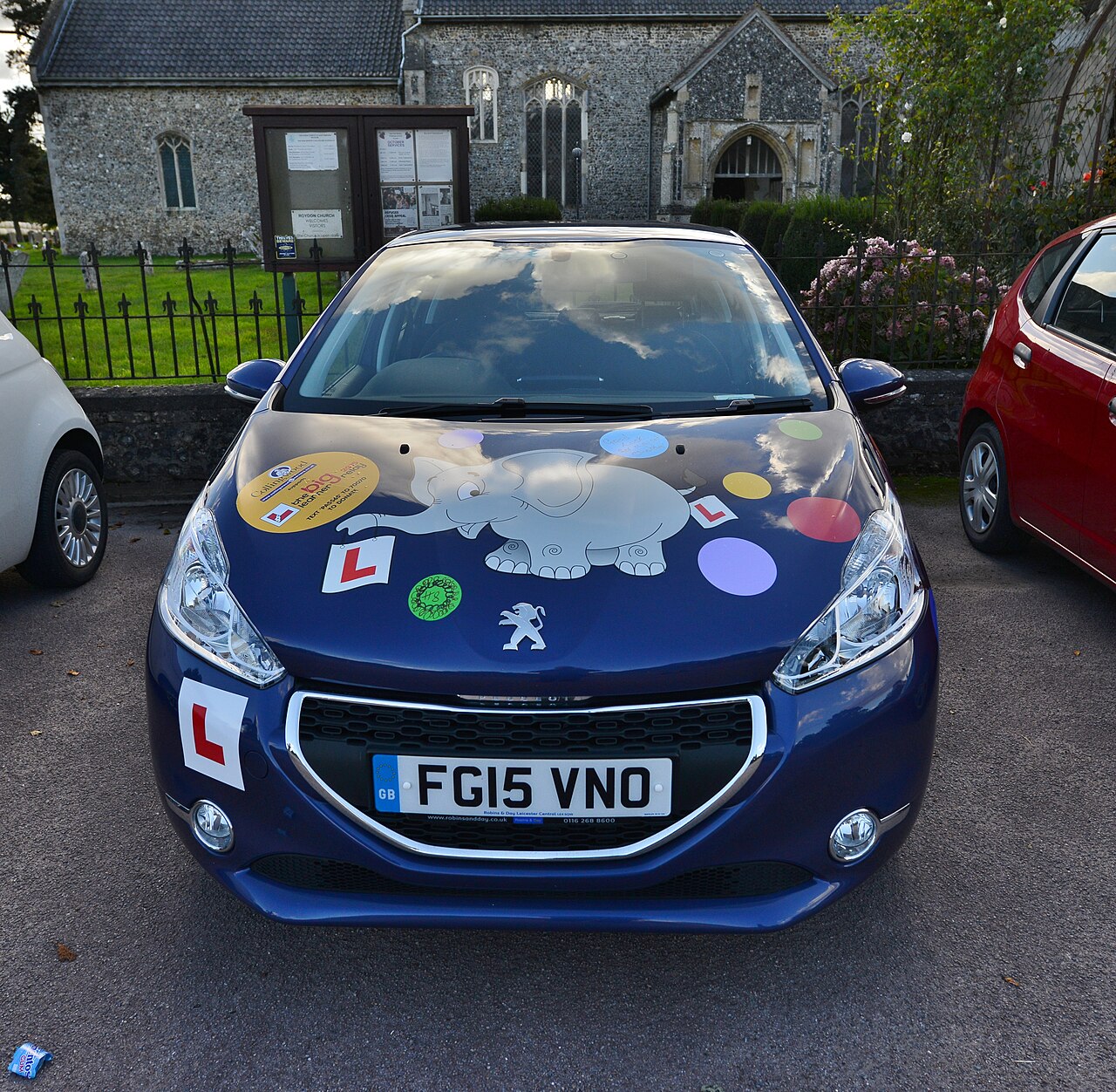
Private practice: the option that video discussion often misses
The conversation about YouTube and TikTok prep mostly ignores the most cost-effective way to increase your total driving hours: private practice with a supervising driver. A supervising driver must be 21 or over, have held a full UK driving licence for at least three years, and the car must be insured for learner driver use. Many learner drivers whose family owns a car can add learner driver cover for a modest additional premium. This adds driving hours at a fraction of the per-hour lesson rate.
- Private practice hours count towards your total experience and build road confidence
- A supervising driver cannot teach in the way a qualified instructor can, but practice volume helps
- Learner driver insurance can be added to a family car by the day or the year depending on the policy
- Always practice routes the learner already understands from lessons rather than introducing new scenarios without instructor guidance
Private practice supplements lessons rather than replacing them. A learner who has had five hours with an instructor and then does ten hours of private practice on familiar roads is in a better position than one who has only had the five instructor hours. Video cannot provide this.
Sources and further reading
The figures, fees, and procedures referenced in this article are verifiable on the official gov.uk pages below. PassRates.uk is built on the Driver and Vehicle Standards Agency’s open data, published under the Open Government Licence.
What is the pass rate at your test centre?
Search by centre name, town or postcode to see the latest DVSA figure.
Frequently asked questions
Can you pass the driving test from YouTube videos alone?
The DIA said in September 2026 that a learner could possibly pass the test from video preparation alone, but would not learn to drive safely that way. Passing the test and driving safely are different outcomes. Most examiners assess road safety behaviours that require real practice to develop reliably, and most learners who try to minimise lessons significantly risk failing the test and paying for retakes.
Which YouTube channels are best for UK driving test revision?
PassRates.uk does not endorse specific third-party channels, but you should look for content that references the current UK Highway Code edition, uses real UK roads and signs, and distinguishes clearly between DVSA requirements and general driving advice. For theory test practice, use our free mock tests at /theory-test/mock rather than relying on video alone, as the practice tests score your answers and show you where to improve.
Does watching TikTok count as hazard perception practice?
Dashcam clips and driving point-of-view videos on TikTok are close in format to the DVSA hazard perception test and can be useful practice. The test itself uses specific DVSA footage and rewards clicking at the exact moment a hazard starts to develop. Free hazard perception apps and the DVSA's own practice materials are more accurate preparation, but video clips are a reasonable warm-up.
How much does it cost to learn to drive in the UK in 2026?
The DIA put the total all-in figure at around 2,460 pounds in September 2026, up from roughly 1,890 pounds in 2020. This covers a provisional licence (34 pounds), a theory test (23 pounds), a practical test (62 pounds for a weekday slot), around 45 hours of professional lessons, and first-year insurance. Lessons are the largest variable. See our driving lessons cost guide for a full regional breakdown.
Should I take driving lessons before or after my theory test?
DVSA recommends lessons before your theory test. Its July 2026 research found learners without professional lessons before their theory test were 16% more likely to fail the multiple-choice section and 25% more likely to fail the practical test. The guide to lessons before the theory test covers this in detail.
Can private practice replace professional driving lessons?
No, but it can supplement them effectively. Private practice with a supervising driver (aged 21 or over, with three years' full licence experience, with the car insured for learner use) builds road hours at a much lower cost per hour than professional lessons. It works best on routes the learner has already covered with an instructor. It cannot replace the instructor's real-time correction and teaching of new skills.
How many views has #passdrivingtest got on TikTok?
The hashtag had more than 17 million views as of September 2026, according to BBC reporting. It includes a mix of theory tips, mock test walk-throughs, pass celebrations and commentary on common test mistakes.
Related guides
- Lessons and instructorsDriving lesson costs 2026Read guide
- Lessons and instructorsCheapest places to learn to driveRead guide
- Lessons and instructorsLessons before theory testRead guide
- Lessons and instructorsLessons to passRead guide
- Lessons and instructorsHow Many Driving LessonsRead guide
- Lessons and instructorsFind a Driving InstructorRead guide
Written by Vikas and the PassRates.uk team. Vikas is the software engineer and driving enthusiast who started the site. The figures come straight from the DVSA open dataset; see the methodology.
Source DVSA, Open Government Licence v3.0
Continue reading
Junctions and mirrors are the most-recorded UK driving test fault categories (DVSA 2024-25 rank data): the categories, why they dominate, and how to fix each.
Record 2.13 million practical tests to August 2026 and 52.1% pass rate in August, but only 40% of learners met the 7-week target. Explains both DVSA wait metrics and the gap between record capacity and actual queues.