Chingford (London) Driving Test Centre Pass Rate 2024-25
Chingford (London) driving test centre returned a 36.5% pass rate in 2024-25 on 13,235 practical car tests, placing it among the more challenging DVSA centres in northeast London. The national average for the same year was 48.7%, a gap of 12.2 percentage points. Nearby Enfield reached 54.1% on the same measure, a difference of 17.6 percentage points between two centres fewer than 6 kilometres apart.
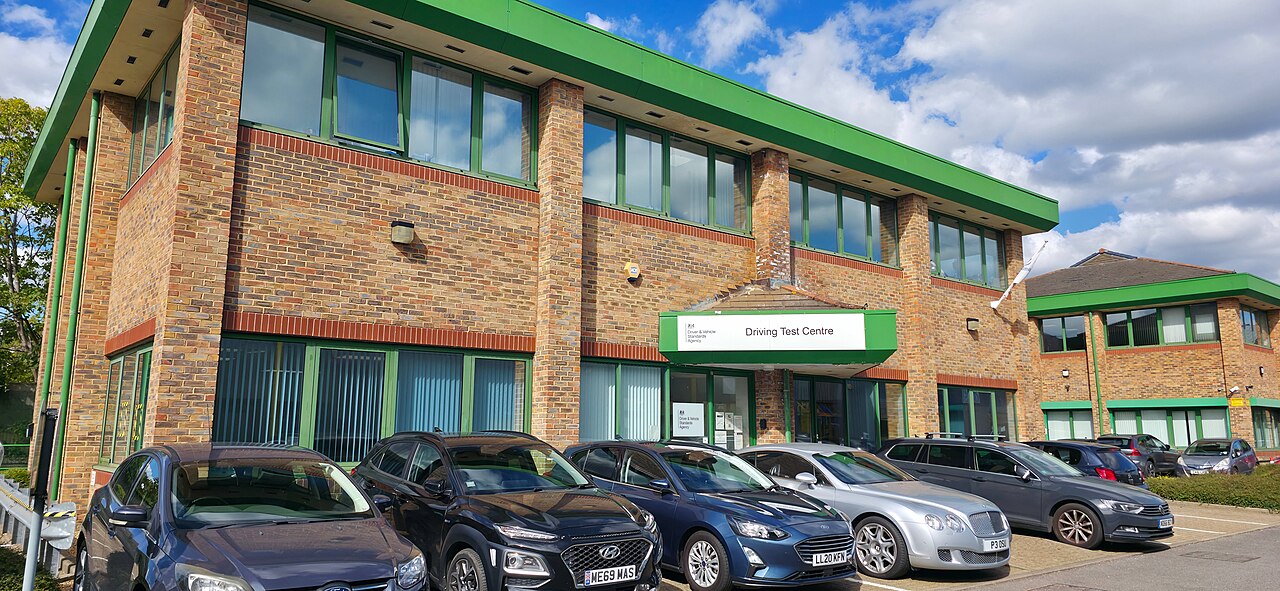
- Pass rate 2024-25
- 36.5%on 13,235 tests at Chingford (London)
- Below UK average
- 12.2ppnational average 48.7%, 2024-25
- First-time pass rate
- 34.6%on 5,458 first-attempt candidates
- Gender gap
- 4.0ppmen 38.0% vs women 34.0%, 2024-25
The 2024-25 result in context
At 36.5%, roughly one in three candidates leaves Chingford with a pass certificate on any given sitting. At the national average of 48.7%, nearly one in two does. With 13,235 tests conducted in 2024-25, the gap between Chingford and the national figure produces a measurable practical outcome: if the centre matched the national rate, approximately 1,600 additional candidates per year would pass rather than fail. That figure is a direct reading of published DVSA statistics, not a projection.
The first-time pass rate at Chingford in 2024-25 is 34.6%, based on 5,458 candidates sitting the practical test for the first time. First-time candidates typically pass at a slightly lower rate than the overall figure, as retakers carry prior test experience and a clearer picture of where faults tend to accumulate on local roads. At Chingford the gap between first-timers (34.6%) and the overall rate (36.5%) is 1.9 percentage points.
How Chingford compares to nearby northeast London centres
Among DVSA centres in the northeast London area and the adjacent Essex fringe, Chingford sits at the foot of the pass-rate table in 2024-25. Enfield, fewer than 6 kilometres to the north, returned 54.1% on 8,042 tests, a difference of 17.6 percentage points. Loughton (London), just under 6 kilometres to the northeast, recorded 48.0%, broadly in line with the national average. The bar chart below places Chingford against the main centres within reasonable reach.
The contrast with Enfield (Innova) is particularly striking. Both centres sit in the same broad borough zone of northeast Greater London and the adjacent areas, yet the pass-rate gap is 17.6 percentage points. Enfield operates on roads that, while urban, are less congested than the routes around Chingford and the lower Lea Valley area. Wood Green (London) at 46.8% and Tottenham at 47.9% are both above the national average despite being in inner north London, reinforcing that the Chingford figure is specific to that test area rather than a general north London pattern.
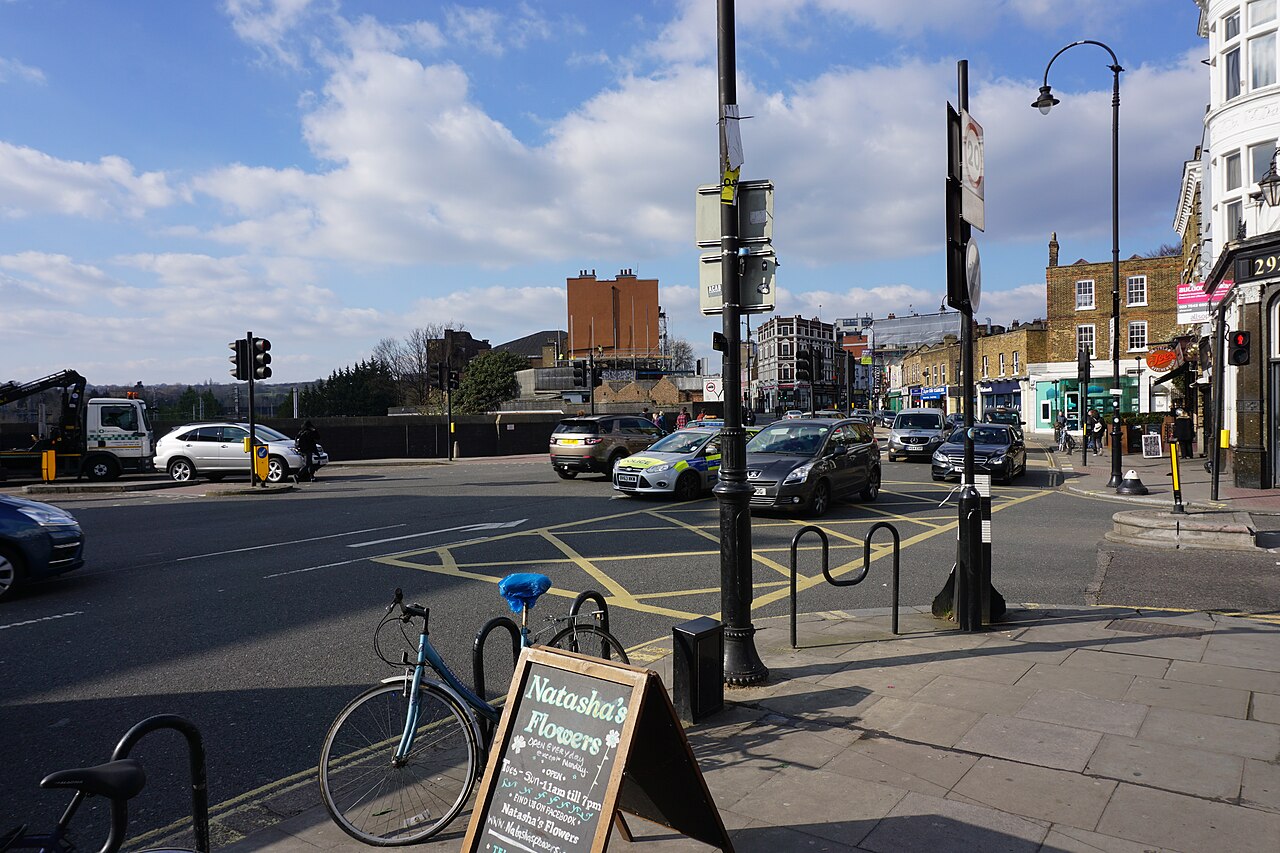
Pass rate history at Chingford 2009-10 to 2024-25
Chingford's pass rate history across the published DVSA data runs from 2007-08 to the present and shows a broadly declining trend interrupted by a pandemic-era recovery. The centre reached its highest recorded figure of 41.7% in 2011-12, when test volumes were similar to the current level. From that point the rate fell steadily through the mid-2010s, touching a pre-pandemic low of 35.4% in 2017-18. The post-lockdown recovery pushed the figure back up to 40.6% in 2021-22, but by 2023-24 the rate had fallen back to 36.1%, and the 2024-25 result of 36.5% is essentially unchanged.
Test volume data runs alongside the pass-rate trend. In 2019-20 volumes fell to 9,484, likely reflecting the pandemic's effect on bookings in the final months of that financial year. After the reopening the centre saw volumes rise strongly, reaching 15,601 tests in 2023-24, the highest figure in the published series. The 2024-25 reduction to 13,235 may reflect changes in test slot availability, reduced demand, or the normal year-to-year variation in bookings. The DVSA releases do not break down the reasons for volume changes at individual centres.
Gender breakdown at Chingford
Male candidates at Chingford passed at 38.0% in 2024-25, based on 8,165 tests. Female candidates passed at 34.0% on 5,070 tests. The resulting gender gap of 4.0 percentage points is more than double the national figure of 1.9 percentage points (men 49.5%, women 47.6% nationally). A wider gender gap at below-average centres is a pattern visible across the DVSA dataset: where both male and female rates are suppressed relative to the national figure, the gap between them tends to be wider than at higher-rate centres. The published statistics do not include the data needed to explain why this pattern occurs.
Historically the gender split at Chingford has been more pronounced than the current 4.0-point gap. In 2011-12 male candidates passed at 44.9% and female candidates at 37.7%, a gap of 7.2 percentage points. By 2024-25 both rates have fallen from their early-decade levels, and the proportional gap has narrowed to 4.0 points. The convergence appears to reflect the general compression of both rates toward the lower range at which the centre has settled rather than any specific change in either group's results in isolation.
Why does Chingford return a pass rate well below the national average?
The DVSA does not publish route maps or fault-level data broken down by individual test centre, so no definitive explanation for Chingford's below-average pass rate is available in the published statistics. The national marking standard applied by examiners is identical at every centre; the DT1 marking guide is the reference, and examiners train to it at the DVSA's Cardington assessment centre. Pass-rate differences between centres reflect the road environment, not differences in how faults are recorded. Based on the road network around Chingford, the following are the most plausible contributing factors:
- Dense residential streets with consistent on-street parking: the roads in and around Chingford contain long stretches of residential housing with heavy kerb-side parking on both sides. Candidates must select safe passing positions, check mirrors before moving out wide and maintain awareness of pedestrians emerging from between parked vehicles. These situations arise frequently and generate assessment opportunities throughout a typical test route.
- Busy arterial roads under constant traffic pressure: the A110, A1009 and associated main roads through Chingford carry a mix of commercial vehicles, buses and commuter traffic throughout the test day. Maintaining appropriate following distance, managing lane changes and judging safe gaps at busy junctions require consistent attention and are active assessment points at every urban test centre.
- Complex junctions and varied give-way situations: the test area contains a mix of signal-controlled crossroads, mini-roundabouts and larger roundabouts. Correct lane selection, early positioning and accurate observation at each type of junction are all assessed. Candidates unfamiliar with the specific junctions on test routes may encounter layouts for the first time on test day, when the cost of a misjudgement is highest.
- Proximity to Epping Forest road corridors: routes that extend toward the Forest boundary pass through areas with reduced street lighting, varying speed limits and junctions that see less regular traffic, requiring candidates to read the environment quickly and adapt their driving. The abrupt transition between urban residential and semi-rural roads within a single test route is a feature particular to northeast London centres like Chingford.
- Independent driving in unfamiliar territory: the 20-minute independent driving section of every practical test requires candidates to follow a sat-nav or road signs without instructor input. In a test area that mixes residential streets, arterial roads and the routes toward the Forest, the independent section covers a wide range of road types in quick succession. Candidates who have practised mainly in their local neighbourhood rather than the specific Chingford road network may find the independent section more demanding.
Preparing for your test at Chingford (London)
The below-average pass rate at Chingford does not mean the test applies a stricter standard than elsewhere: the DVSA uses the same national marking criteria at every centre, with 15 minor faults the maximum permitted and zero tolerance for serious or dangerous faults. What the data indicates is that the road environment tests specific competencies under consistent pressure. The preparation steps below address those directly.
- 01Cover the specific Chingford road network before test day
Ask your instructor to plan lessons in and around the roads Chingford test routes use: the residential streets to the south and east of the test centre, the arterial routes along the A110 corridor and the roads approaching the Epping Forest boundary. Familiarity with these areas means you can concentrate on observation and vehicle control rather than processing an unfamiliar layout during the test itself.
- 02Build confidence on residential streets with parked vehicles
On-street parking is a constant feature of Chingford test routes. Practise selecting safe passing positions, checking mirrors before moving out and identifying the correct moment to give way to oncoming vehicles. These situations recur throughout a typical route and generate minor faults that accumulate if handling them becomes hesitant.
- 03Sharpen junction approach and lane discipline
Signal-controlled crossroads, mini-roundabouts and busier multi-lane junctions all appear in the Chingford test area. Work through each type until lane selection and give-way decisions are consistent. Junction faults are among the most common causes of test failure at urban centres and are straightforward to reduce with targeted lesson time on the relevant roads.
- 04Practise independent driving in the local area without instructor guidance
The independent driving section lasts around 20 minutes and requires you to follow a sat-nav or road signs without input from your examiner. Practise making route decisions in the Chingford area without prompting in the weeks before your test, so that navigating the junction sequence and speed-limit changes feels manageable rather than stressful under test conditions.
- 05Complete at least one full mock test on the local roads
A full mock test conducted by your instructor in the Chingford area is the closest available simulation of the real experience. Aim to complete one in the fortnight before your test date and ask for a fault-by-fault debrief afterwards. Specific items to address in remaining lessons are more useful than a general sense that the drive went reasonably well.
Booking and what to expect on test day
The DVSA practical test at Chingford follows the standard format used at every test centre in Great Britain. The test begins with an eyesight check reading a number plate at the required distance. The examiner then asks one vehicle safety question before you set off. After that you drive for approximately 40 minutes, which includes the independent driving section and one standard manoeuvre: bay parking (forward or reverse into a bay), parallel parking, or pulling up on the right-hand side of the road and reversing a short distance. The emergency stop is conducted on approximately one in every seven tests. The test concludes with a debrief in the car or inside the test centre building.
Passing requires no more than 15 minor driving faults and zero serious or dangerous faults. A single serious or dangerous fault ends the test with a failure regardless of the standard of driving up to that point. You receive a printed result sheet at the end showing every fault the examiner recorded; if you need to rebook, this gives you a precise starting point for addressing specific areas with your instructor.
Bookings are made through the DVSA online booking service on gov.uk using your provisional driving licence number and your theory test pass certificate number. Theory test passes are valid for two years; your practical test must be completed before the certificate expires. Slot availability at Chingford varies by time of year. Checking the booking service over several days often surfaces earlier slots than an initial search shows, as cancellations are released back into the system throughout the day.
“Chingford (London) returned 36.5% in 2024-25, essentially unchanged from 36.1% in 2023-24. The centre last exceeded 40% in 2022-23, when it recorded 40.3%.”
Sources and further reading
The figures, fees, and procedures referenced in this article are verifiable on the official gov.uk pages below. PassRates.uk is built on the Driver and Vehicle Standards Agency’s open data, published under the Open Government Licence.
What is the pass rate at your test centre?
Search by centre name, town or postcode to see the latest DVSA figure.
Frequently asked questions
What is the pass rate at Chingford (London) driving test centre?
Chingford (London) driving test centre recorded a 36.5% pass rate in 2024-25, based on 13,235 practical car tests. The national average in 2024-25 is 48.7%, leaving Chingford 12.2 percentage points below the UK figure. The centre last exceeded 40% in 2022-23, when it returned 40.3%.
Is Chingford driving test centre hard?
By published pass rate, Chingford is one of the more challenging centres in northeast London. Its 36.5% pass rate in 2024-25 is 12.2 percentage points below the national average of 48.7% and below every nearby centre including Loughton (48.0%), Tottenham (47.9%), Wood Green (46.8%) and Wanstead (40.4%). Nearby Enfield returned 54.1% in the same year. The test uses the same national marking standard as every other DVSA centre; the lower pass rate reflects the road environment rather than a stricter assessment.
How does Chingford compare to other nearby northeast London centres?
Among the main centres within reasonable reach of Chingford in 2024-25: Enfield (Innova) returned 54.1%, Loughton (London) 48.0%, Tottenham 47.9%, Wood Green (London) 46.8%, and Wanstead (London) 40.4%. Chingford at 36.5% is below all of these. Candidates who can reach a higher-rate centre may find a significantly better pass rate in their catchment, though booking availability and road familiarity are practical factors to weigh before switching.
What is the first-time pass rate at Chingford?
The first-time pass rate at Chingford (London) in 2024-25 is 34.6%, based on 5,458 candidates sitting the practical test for the first time. This is 1.9 percentage points below the overall pass rate of 36.5%, consistent with the general pattern that retakers who have prior test experience pass at a marginally higher rate than first-time candidates.
What is the gender pass rate at Chingford?
Male candidates passed at 38.0% at Chingford (London) in 2024-25 based on 8,165 tests, and female candidates at 34.0% based on 5,070 tests, a gap of 4.0 percentage points. The national gender gap in 2024-25 is 1.9 percentage points (men 49.5%, women 47.6%), so Chingford shows a wider-than-average difference between male and female pass rates.
How has the Chingford pass rate changed over time?
Chingford reached its highest recorded pass rate of 41.7% in 2011-12. The rate then declined through the mid-2010s, reaching a pre-pandemic low of 35.4% in 2017-18. The post-lockdown period saw a recovery to 40.6% in 2021-22, but by 2023-24 the rate had returned to 36.1%, and the 2024-25 figure of 36.5% is essentially the same. The centre has not been above 40% since 2022-23.
Where is Chingford (London) driving test centre?
Chingford (London) driving test centre is located in Chingford, in the London Borough of Waltham Forest, northeast London. It serves candidates from Chingford and the surrounding area including parts of the Lea Valley and the Essex border. Bookings are made through the DVSA booking service on gov.uk using your provisional licence number and theory test pass certificate number.
Every candidate behind these numbers passed a theory test first. Nationally 44.8% of attempts clear it.
Vehicle condition, tyres, lights, fuel efficiency and reducing emissions. All 14 DVSA topics are free to practise, with no sign up. See the theory pass rate by centre or the full practice hub.
Related guides
- London and regional analysisEasiest London centreRead guide
- London and regional analysisEasiest Manchester centreRead guide
- London and regional analysisManchester vs LiverpoolRead guide
- London and regional analysisEasiest Newcastle centreRead guide
- London and regional analysisEasiest Sheffield centreRead guide
- London and regional analysisEasiest Edinburgh centreRead guide
Written by Vikas and the PassRates.uk team. Vikas is the software engineer and driving enthusiast who started the site. The figures come straight from the DVSA open dataset; see the methodology.
Source DVSA, Open Government Licence v3.0
Continue reading
Enfield driving test centre returned a 54.1% pass rate in 2024-25, 5.4 percentage points above the national average of 48.7%. Pass rate history from 2016-17, gender breakdown, nearby northeast London centre comparison and practical preparation advice.
Wolverhampton driving test centre recorded a 33.4% pass rate in 2024-25, more than 15 percentage points below the national average of 48.7%. Pass rate history from 48.5% down to an all-time low, gender breakdown, nearby centre comparison, and preparation advice for candidates.