Enfield Driving Test Centre Pass Rate 2024-25
Enfield driving test centre returned a 54.1% pass rate in 2024-25 on 8,042 practical car tests, placing it above the national average of 48.7% and among the stronger-performing centres in Greater London. The 2024-25 result is the highest on record at Enfield and represents an increase of 18 percentage points from the 2017-18 low of 36.1%.
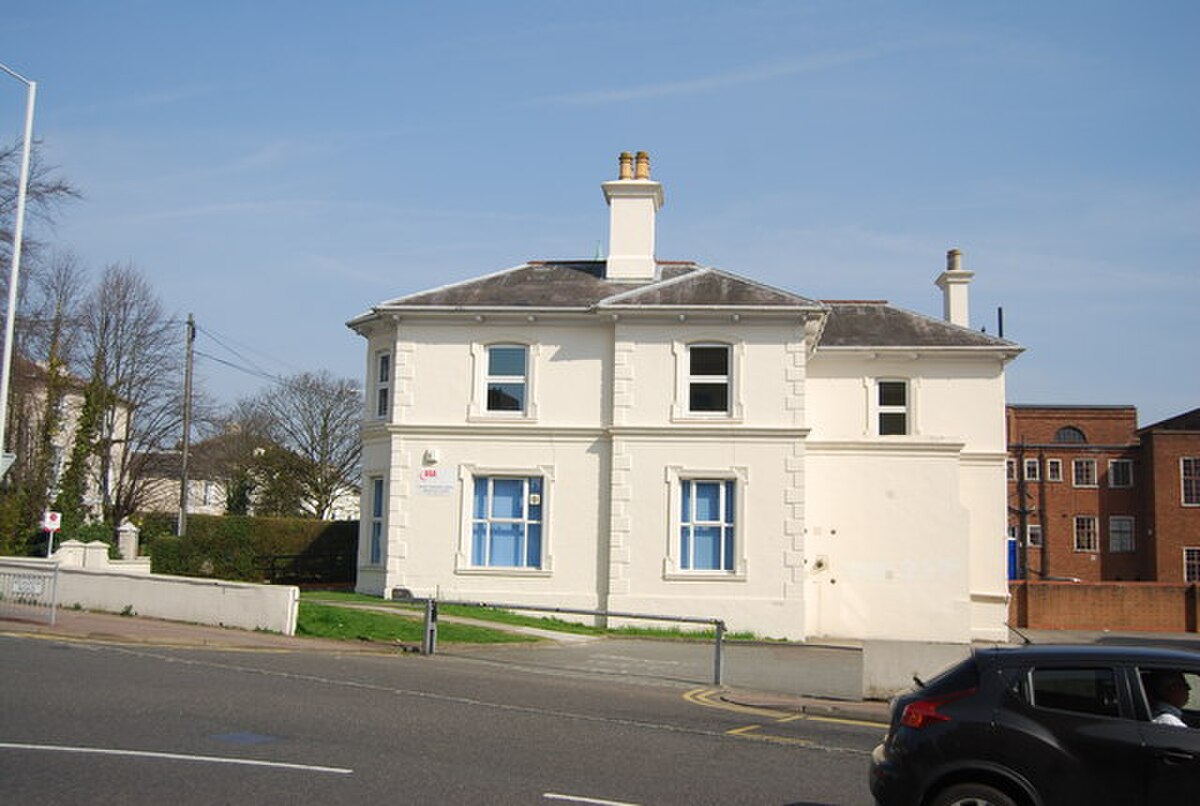
- Pass rate 2024-25
- 54.1%on 8,042 tests at Enfield (Innova Business Park)
- Above UK average
- +5.4ppnational average 48.7%, 2024-25
- First-time pass rate
- 53.9%on 4,191 first-attempt candidates
- Gender gap
- 2.4ppmen 55.1% vs women 52.7%, 2024-25
The 2024-25 result in context
At 54.1%, roughly one in two candidates leaves Enfield with a pass certificate. That is 5.4 percentage points above the national average of 48.7% and positions the centre in the upper third of DVSA sites across England, Scotland and Wales for the 2024-25 year. With 8,042 tests conducted, the sample is large enough that the headline figure carries statistical weight: the confidence interval at the 95% level is approximately plus or minus one percentage point on either side of 54.1%. Among northeast London centres, Enfield sits clearly at the top of the 2024-25 rankings, with nearby Chingford (London) returning 36.5% on a much higher test volume of 13,235.
The first-time pass rate at Enfield in 2024-25 is 53.9%, based on 4,191 candidates sitting the practical test for the first time. The gap between first-timers (53.9%) and the overall pass rate (54.1%) is just 0.2 percentage points, which is unusually small. At most test centres the overall rate sits noticeably above the first-time rate because retakers bring prior test experience. The near-identical figures at Enfield suggest that first-time candidates at this centre perform almost as well as those taking a retest, which is a good sign for anyone sitting their first practical examination here.
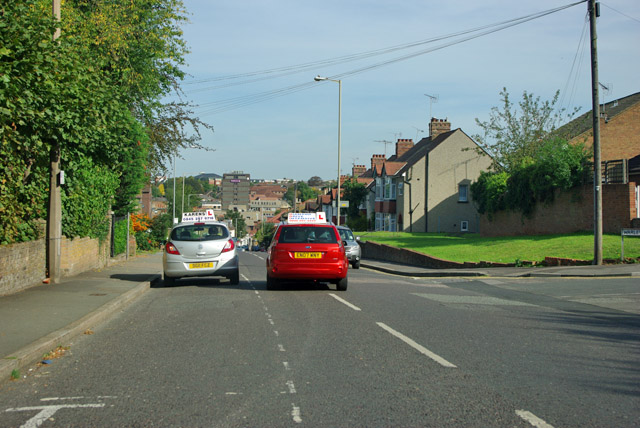
Enfield against nearby northeast London centres
Enfield sits at the top of the northeast London pass-rate table for 2024-25, ahead of every centre within 20 kilometres. Barnet (London) comes second with 49.9% on 9,720 tests, followed by Loughton (London) at 48.0% (6,009 tests), Tottenham at 47.9% (12,178 tests) and Wood Green (London) at 46.8% (10,797 tests). All of those centres sit within a few points of the national average. Wanstead (London) at 40.4% and Chingford (London) at 36.5% are the outliers in the other direction. The bar chart below places Enfield alongside all the main sites within 20 kilometres.
The gap between Enfield and Chingford (London) is 17.6 percentage points despite the two centres sitting fewer than 6 kilometres apart. This is the largest pass-rate gap between any two immediately adjacent northeast London centres in the 2024-25 data. Candidates booking within the northeast London area who have genuine flexibility over which centre to attend will find a meaningful difference in historical pass rates, though the DVSA allocates test slots by the test centre you choose when booking and does not guarantee route familiarity for centres you have not practised on.
Nine-year pass rate history at Enfield: 2016-17 to 2024-25
The published DVSA data for Enfield (Innova Business Park) covers nine years from 2016-17 to 2024-25, and the trajectory over that period is one of sustained improvement, interrupted only by a dip in 2022-23. The centre began the recorded period at 39.0% in 2016-17 before falling to 36.1% in 2017-18, the lowest figure in the dataset. At that point Enfield was performing similarly to where Chingford and Wolverhampton sit today. The recovery since then has been consistent and substantial.
After the 2017-18 low, the pass rate climbed steadily through 2018-19 (38.7%), 2019-20 (41.9%), and then jumped to 46.3% in 2021-22 once testing resumed after the pandemic. A slight dip to 45.6% in 2022-23 preceded the two strongest years: 52.8% in 2023-24 and 54.1% in 2024-25. The DVSA does not publish centre-level data on route changes, examiner staffing or other factors that might explain improvements at specific sites. What the data shows is that the centre's upward trend has been particularly pronounced in the two most recent years, pushing it from below the national average in 2022-23 to 5.4 percentage points above it in 2024-25.
Male and female pass rates at Enfield
Male candidates at Enfield passed at 55.1% in 2024-25, based on 4,852 tests with 2,673 passing. Female candidates passed at 52.7% on 3,190 tests with 1,681 passing. The gender gap of 2.4 percentage points is slightly wider than the national figure of 1.9 percentage points (men 49.5%, women 47.6% nationally in 2024-25), but it is notably narrower than the gender gap observed at lower-performing northeast London centres. At Chingford (London), the same-year gender gap was 4.0 percentage points; at Wolverhampton, 4.8 percentage points. The tight gap at Enfield suggests both male and female candidates benefit from the road environment to a similar degree.
| Male | Female | |
|---|---|---|
| Enfield pass rate | 55.1% | 52.7% |
| National average | 49.5% | 47.6% |
| Enfield vs national | +5.6pp | +5.1pp |
| Tests conducted (Enfield) | 4,852 | 3,190 |
Both male and female candidates at Enfield perform above their respective national averages by a similar margin: +5.6 percentage points for male candidates and +5.1 percentage points for female candidates. The near-symmetry of these margins suggests the Enfield advantage is not concentrated in one gender group but reflects the overall road environment rather than factors that differentially affect male or female test performance.
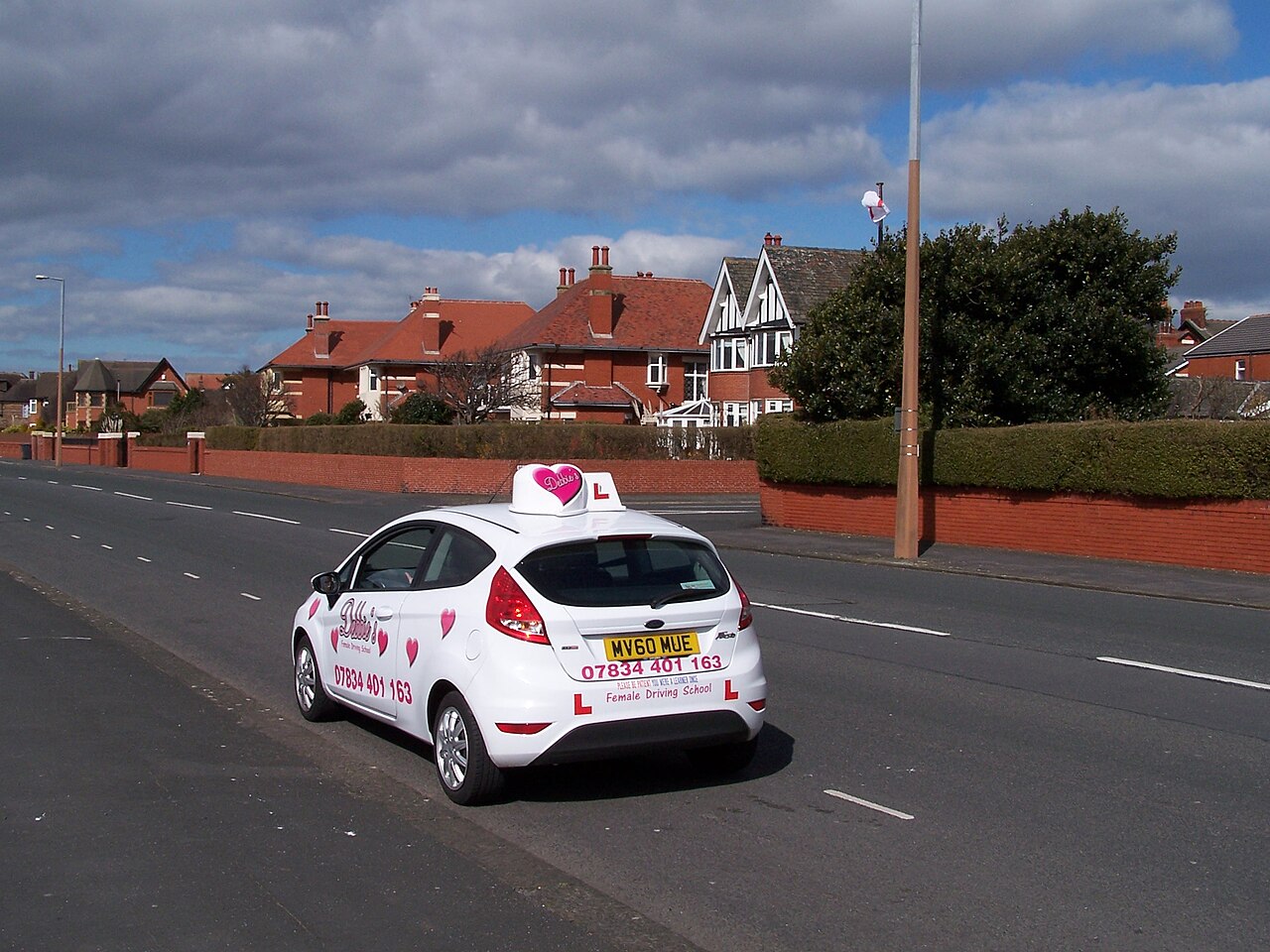
First-time candidates at Enfield
Of the 8,042 tests conducted at Enfield in 2024-25, 4,191 were first-attempt tests, with 2,261 passing. That gives a first-time pass rate of 53.9%, just 0.2 percentage points below the overall figure of 54.1%. The DVSA dataset does not provide a national breakdown of first-time vs retake pass rates for 2024-25, but the typical pattern across the dataset is for retakers to pass at a noticeably higher rate than first-timers because they carry direct experience of the test environment. At Enfield the two figures are effectively identical, which may indicate that first-time candidates at this centre arrive with thorough preparation and that the test routes do not generate high levels of unexpected difficulty.
What the Enfield test route covers
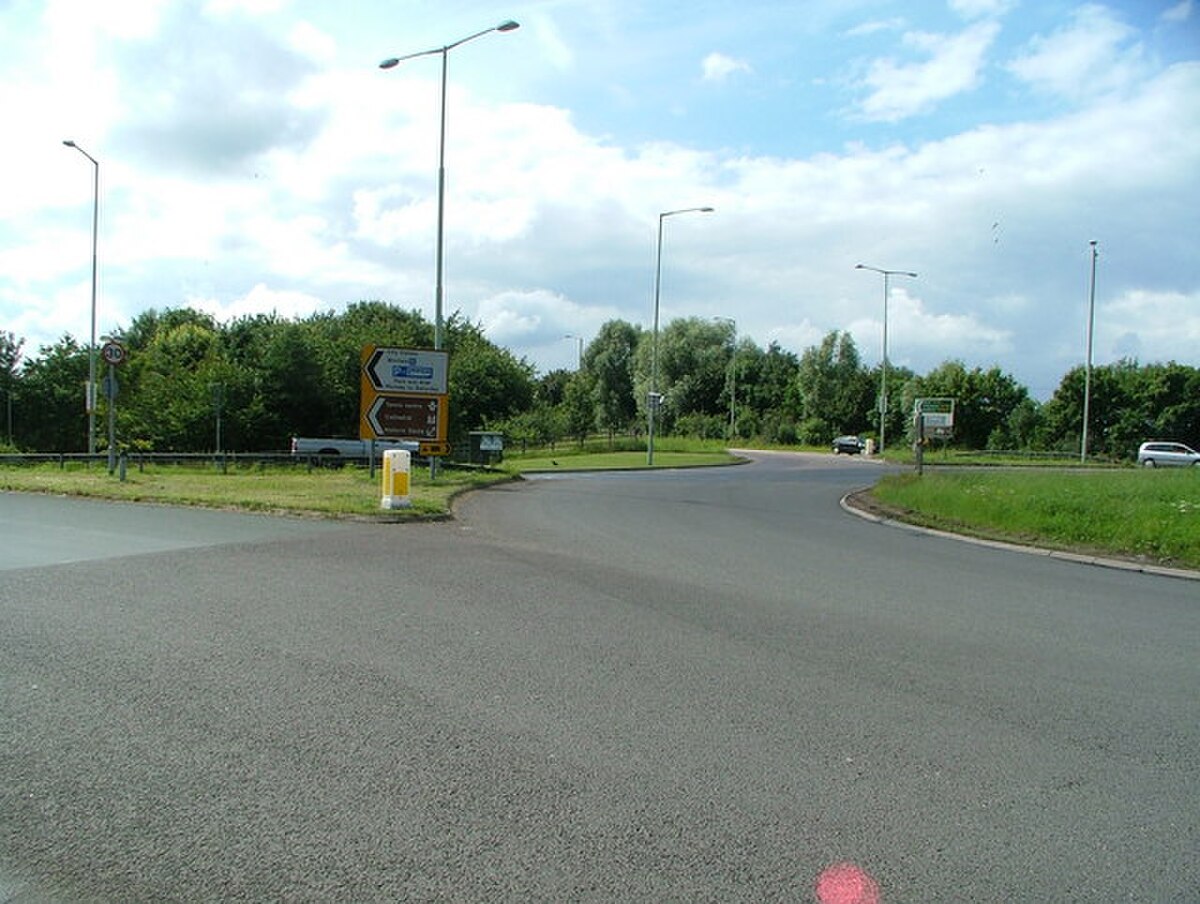
The DVSA does not publish official route maps for individual test centres, and the specific roads used change as examiners vary routes and road conditions evolve. Enfield (Innova Business Park) sits in the EN2 postcode area in north Enfield, near the boundary with Hertfordshire. Based on the road network surrounding the centre, practical tests departing from Innova Business Park are likely to include the following features:
- Suburban residential streets in the Enfield Chase and Bush Hill Park areas: these roads carry moderate traffic with on-street parking and a mix of residential junctions. Give-way situations, pedestrian crossings and observation at junctions are assessed throughout.
- The A1010 and A110 Great Cambridge Road corridor: these arterial roads involve lane discipline, following distance and signal-controlled crossroads with multi-lane approaches. Speed management and safe gap judgement are active assessment points on these routes.
- Quiet B-roads and country-lane sections toward Enfield Chase and the Hertfordshire boundary: some routes extend into lower-traffic roads where speed limits vary and road markings are less frequent. Candidates must read the environment and adjust speed appropriately without instructor prompts.
- Dual carriageway or dual-lane sections: the A10 and nearby roads provide opportunities for safe joining, overtaking and lane-change assessment. DVSA practical tests include dual carriageway work where the road network permits it.
- Independent driving via sat-nav: the 20-minute independent driving section requires candidates to navigate without examiner instruction. The Enfield road network combines residential streets and arterial routes within a navigable area; candidates who practise the local road network before test day will approach the independent section with familiarity.
Preparing for your test at Enfield
A 54.1% pass rate means four in ten candidates still leave Enfield without a pass certificate, and the DVSA marking standard is identical at every test centre. The road environment at Enfield is more forgiving than many urban London centres in terms of traffic complexity, but preparation targeted at the specific roads around the centre remains the most effective use of lesson time in the weeks before test day.
- 01Cover the Enfield road network before test day
Ask your instructor to plan lessons on the roads around Innova Business Park: the residential streets of Bush Hill Park and Enfield Chase, the A1010 corridor and the approach routes toward the Hertfordshire boundary. Familiarity with the road layout means less cognitive load during the test itself, freeing attention for observation and vehicle control.
- 02Practise dual carriageway and arterial road sections
Sections of the A10 and A110 are likely to appear in Enfield test routes. Work through safe lane-changing, joining from a slip road, maintaining appropriate following distance at higher speeds and reading variable speed limit signs. These elements can catch candidates who have practised primarily on residential streets.
- 03Sharpen independent driving confidence
The 20-minute independent driving section runs without examiner input. Practise following a sat-nav in the Enfield area without asking for directions, including making route decisions at busy junctions under normal road conditions. Confidence in sat-nav navigation is easier to build in familiar roads before test day than during the test itself.
- 04Build consistent junction approach on residential streets
Give-way junctions and signal-controlled crossroads on the residential network around the centre require accurate observation, correct lane selection and well-judged timing. These situations recur throughout a typical route. Practise each junction type until responses are consistent rather than hesitant.
- 05Complete at least one full mock test on the local roads
A mock test conducted by your instructor in the Enfield area gives you the closest available preparation for the real thing. Aim to complete one in the fortnight before your test date and request a fault-by-fault debrief. Specific items to address in remaining lessons are more useful than a general sense that the drive was satisfactory.
Booking and what to expect on test day
Bookings for the DVSA practical test at Enfield are made through the DVSA online booking service on gov.uk using your provisional driving licence number and your theory test pass certificate number. Theory test certificates are valid for two years and your practical test must be completed before the certificate expires. Slot availability varies throughout the year. Checking the booking service over several days often surfaces earlier slots as cancellations return to the system throughout the day. The DVSA cancellation finder aggregates available slots if you are trying to book an early date.
The practical test at Enfield follows the standard DVSA format. It begins with an eyesight check reading a number plate at the required distance. The examiner then asks one vehicle safety question before you set off. After that you drive for approximately 40 minutes, which includes the independent driving section and one standard manoeuvre: bay parking (forward or reverse into a bay), parallel parking, or pulling up on the right and reversing a short distance. The emergency stop is conducted on approximately one in every seven tests. The test concludes with a debrief in the car or inside the test centre building.
Passing requires no more than 15 minor driving faults and zero serious or dangerous faults. A single serious or dangerous fault ends the test with a failure regardless of the standard of driving before that point. If you need to rebook, the printed result sheet lists every recorded fault, giving you and your instructor a precise basis for targeting remaining lesson time. The driving test wait times guide covers current booking availability across the DVSA network.
“Enfield returned 54.1% in 2024-25, an 18-percentage-point gain on the 2017-18 low of 36.1% and the highest figure recorded at the centre across the nine published years.”
Sources and further reading
The figures, fees, and procedures referenced in this article are verifiable on the official gov.uk pages below. PassRates.uk is built on the Driver and Vehicle Standards Agency’s open data, published under the Open Government Licence.
What is the pass rate at your test centre?
Search by centre name, town or postcode to see the latest DVSA figure.
Frequently asked questions
What is the pass rate at Enfield driving test centre?
Enfield driving test centre recorded a 54.1% pass rate in 2024-25, based on 8,042 practical car tests. The national average in 2024-25 is 48.7%, placing Enfield 5.4 percentage points above the UK figure. It is the highest pass rate recorded at the centre across the nine years of published DVSA data from 2016-17 to 2024-25.
Is Enfield a good driving test centre?
By published pass rate, Enfield is one of the better-performing test centres in Greater London. Its 54.1% in 2024-25 is above the national average of 48.7% and substantially above several nearby centres, including Chingford (London) at 36.5% and Wanstead (London) at 40.4%. Within northeast London, only Enfield exceeds the national average among the main centres with large test volumes.
How does Enfield compare to nearby northeast London centres?
Among the main centres within 20 kilometres of Enfield in 2024-25: Barnet (London) returned 49.9%, Loughton (London) 48.0%, Tottenham 47.9%, Wood Green (London) 46.8%, Wanstead (London) 40.4%, and Chingford (London) 36.5%. Enfield at 54.1% sits above all of them and is the only centre in the group that clearly exceeds the national average of 48.7%.
What is the first-time pass rate at Enfield?
The first-time pass rate at Enfield in 2024-25 is 53.9%, based on 4,191 candidates. This is 0.2 percentage points below the overall pass rate of 54.1%, an unusually small gap. At most centres retakers pass at a noticeably higher rate than first-timers; at Enfield the two figures are nearly identical, suggesting first-time candidates arrive well prepared for the local road environment.
What is the gender pass rate at Enfield?
Male candidates passed at 55.1% at Enfield in 2024-25 based on 4,852 tests, and female candidates at 52.7% based on 3,190 tests, a gender gap of 2.4 percentage points. The national gender gap in 2024-25 is 1.9 percentage points (men 49.5%, women 47.6%). Both male and female candidates at Enfield perform above their respective national averages by similar margins.
How has the Enfield pass rate changed over time?
Enfield's recorded pass rate reached a low of 36.1% in 2017-18 on 11,012 tests. Since then it has risen steadily: 38.7% (2018-19), 41.9% (2019-20), 46.3% (2021-22), 45.6% (2022-23), 52.8% (2023-24), and 54.1% (2024-25). The 18-percentage-point improvement from 2017-18 to 2024-25 represents one of the larger upward trends among London centres with consistent test volumes across the period.
Where is Enfield driving test centre located?
Enfield driving test centre operates from Innova Business Park in the EN2 postcode area of north Enfield, Greater London. It serves candidates from Enfield and the surrounding area including parts of north London and the adjacent Hertfordshire fringe. Bookings are made through the DVSA booking service on gov.uk using your provisional licence number and theory test pass certificate number.
Related guides
- London and regional analysisEasiest London centreRead guide
- London and regional analysisEasiest Manchester centreRead guide
- London and regional analysisManchester vs LiverpoolRead guide
- London and regional analysisEasiest Newcastle centreRead guide
- London and regional analysisEasiest Sheffield centreRead guide
- London and regional analysisEasiest Edinburgh centreRead guide
Written by Vikas and the PassRates.uk team. Vikas is the software engineer and driving enthusiast who started the site. The figures come straight from the DVSA open dataset; see the methodology.
Source DVSA, Open Government Licence v3.0
Continue reading
Ipswich driving test centre recorded a 63.1% pass rate in 2024-25, well above the national average of 48.7%. Full pass rate history from 2015-16, gender breakdown (women outperform men here), nearby Suffolk centre comparison and preparation advice.
Chingford (London) driving test centre recorded a 36.5% pass rate in 2024-25, 12.2 percentage points below the national average of 48.7%. Pass rate history back to 2009-10, gender breakdown, nearby northeast London centre comparison, and preparation advice for candidates.