Are Electric Scooters Legal in the UK? What Riders Need to Know in 2026
Private electric scooters remain illegal to ride on public roads, cycle lanes and pavements anywhere in the UK in 2026. The only lawful option is a council-run rental trial scooter in a designated trial area. If you want a road-legal powered two-wheeler, the CBT and AM moped route is the legal path, and it opens at age 16.
- Private e-scooter on public roads
- IllegalRoads, cycle lanes and pavements. No insurance available for private e-scooters. The law has not changed.
- Council rental trial e-scooter
- Legal in trial zonesOnly in designated trial areas where a council scheme operates. Rental trial extended to May 2028.
- Seizures (approx, 3 years to mid-2026)
- 5,800+Reported by Fleet News across England and Wales. National enforcement days have targeted illegal private e-scooters.
- Possible court fine (private e-scooter)
- Up to GBP1,000Secondary source figure (retailer); verify at gov.uk. Fixed penalty option also reported at up to GBP300.
- Penalty points (private e-scooter)
- Up to 6 ptsSecondary source figure; re-verify at gov.uk. For a new driver, 6 points means licence revocation under the New Drivers Act.
- AM moped legal age
- 16+Provisional licence, CBT, approved helmet, insurance. Top speed capped at 28 mph (45 km/h). Fully road-legal.
Are private electric scooters legal on UK public roads?
No. Under current UK law, a privately owned electric scooter is classified as a motor vehicle under the Road Traffic Act 1988. That means it must be insured, taxed, have an MOT (where applicable) and be driven by someone holding the correct licence for the road. The problem is that no insurer will provide third-party insurance for a private e-scooter because the product category is not recognised as road-legal under current regulations. The result is a catch-22: you cannot legally ride one on a public road, and you cannot insure one for road use even if you wanted to.
Pavements are covered too. The Highways Act 1835 makes it an offence to ride any mechanically propelled vehicle on a footway. Cycle lanes are included in the same picture because they form part of the public highway. The only lawful place to ride a privately owned e-scooter is on private land with the landowner's permission.
What about council rental trial electric scooters?
The one lawful exception is council-run rental trial e-scooters, which operate under government-authorised trials in specific UK towns and cities. These scooters are provided by operators (such as Voi, Lime and Bird) who have been granted a formal exemption. Riders must be 18 or over, hold at least a provisional driving licence covering AM or A category vehicles, and ride only in the designated trial zone. The rental scheme does not extend to privately purchased scooters of any kind, even identical-looking models from the same manufacturer.
These trials were extended to May 2028, and the government has said the data from them will inform any future permanent legislation. But as of October 2026, no new laws have been brought in, and the rental trial rules have not changed to allow private ownership on the road.
What are the penalties for riding a private e-scooter illegally?
The enforcement picture in 2026 shows the authorities are treating illegal e-scooter riding seriously. A national day-of-action in West Bromwich on 6 June 2026 resulted in multiple seizures. In Evesham, a rider was stopped on 7 June 2026 and had the scooter seized because they had no insurance, which is unobtainable for a private e-scooter regardless of intent. Fleet News has reported more than 5,800 seizures across England and Wales over approximately three years.
- Seizure of the e-scooter. Police have powers to seize vehicles used without insurance or on roads unlawfully.
- A fixed penalty notice. One retailer's legal summary cites up to GBP300, but verify the current figure at gov.uk or police.uk before relying on it.
- A fine on conviction. The same secondary source cites up to GBP1,000 in court; again, verify at gov.uk.
- Penalty points. Up to 6 points on your licence, according to secondary sources. For anyone within the first 2 years of holding a full licence, 6 points triggers automatic revocation under the New Drivers Act.
- No insurance means no cover if you hurt someone. An uninsured rider who injures a pedestrian faces civil liability with no insurer behind them.
The penalty figures above come from a retailer's guide rather than a primary gov.uk or legislation.gov.uk source, which was not directly accessible during the research for this page. The principle, that riding a private e-scooter on a public road is an uninsured motor vehicle offence with penalty-point and fine consequences, is well-documented in independent legal sources. Check gov.uk or ask a qualified legal adviser for the precise current amounts.
Is there a bill to legalise private e-scooters in the UK?
The E-scooters (Review and Awareness) Bill was introduced in the House of Commons on 26 February 2026. On 18 February 2026, the transport minister was quoted saying the law "needs updating". These are political signals, but they are not law. A law firm's commentary from 2026 confirms that no new rules have actually been brought in for private e-scooters: the legal position remains unchanged.
It is worth being clear about the gap between a minister's comment and a piece of legislation. A bill must pass multiple readings in both the Commons and the Lords before receiving Royal Assent. Even if the bill progresses, secondary regulations would then need to set the technical standards (speed limiters, power ratings, lighting requirements) before private e-scooters could be sold as road-legal products. That process typically takes 12 to 24 months from a bill passing into an Act. Until there is a commencement date in the official gazette, private e-scooters remain illegal on public roads.
| Aspect | Current law (Oct 2026) | What the bill proposes | |
|---|---|---|---|
| Private e-scooter on public roads | Illegal | Review and possible legalisation (bill text not finalised) | |
| Insurance requirement | Required but unavailable for private e-scooters | Likely required if legalised; product would need to exist | |
| Age minimum | N/A (illegal regardless of age) | Not specified in available bill summaries | |
| Speed limit | No road-legal standard | Likely capped (rental trials capped at 15.5 mph / 25 km/h) | |
| Status | Law in force | PROPOSED -- no commencement date |
The legal alternative: AM moped licence via CBT
If you want a powered two-wheeler you can ride on public roads right now, the AM moped category is the legal route. You can start at age 16 with a provisional driving licence. The AM category covers mopeds with a maximum speed of 28 mph (45 km/h) and an engine or motor output of up to 4 kW. This includes many electric mopeds, not just petrol-powered ones, so the move to an electric machine does not require a separate licence category.
The first step is completing Compulsory Basic Training (CBT), a one-day practical course at an approved training body (ATB). CBT gives you a DL196 certificate valid for 2 years, and it allows you to ride a moped or motorcycle up to 125cc on public roads with L-plates. You do not need to pass a theory or practical test to hold a CBT certificate, but you cannot carry a pillion passenger or ride on motorways. See CBT explained for the full course breakdown.
- 01Get a provisional driving licence
Apply via gov.uk DVLA. You need to be 16 or over. The provisional must cover AM or A category (all provisional licences automatically do).
- 02Book and complete CBT
Find a DVSA-approved ATB near you. CBT is a full day: eyesight check, basic machine checks, off-road riding, on-road riding with an instructor. Pass and you receive your DL196 certificate.
- 03Sort insurance before riding on the road
You must have at least third-party insurance in place before your first ride. Many learner-specific policies are available for mopeds and 125cc bikes. Ride uninsured and you risk the same penalties as an e-scooter rider.
- 04Fit L-plates and wear an approved helmet
L-plates front and rear are required. Your helmet must meet BSI, ECE 22.06 or equivalent standard. It must not have modifications that affect its structural integrity.
- 05Ride legally with your CBT
With CBT, insurance, L-plates and a provisional licence you are fully legal on public roads. Renew CBT every 2 years or, ideally, progress to the full AM test or the A1/A2/A motorcycle tests.
E-scooter vs rental trial scooter vs CBT moped: a decision table
Before choosing between these three options, it helps to compare them on the dimensions that matter to most people: legality, age, cost, insurance and where you can actually ride.
| Private e-scooter | Rental trial e-scooter | Moped with CBT (AM) | ||
|---|---|---|---|---|
| Legal on public roads? | No | Yes, in trial zones only | Yes, anywhere in the UK | |
| Minimum age | N/A (illegal regardless) | 18 + provisional licence | 16 + provisional licence | |
| Insurance available? | No product exists | Included in rental fee | Yes, learner moped policies widely available | |
| Where can you ride? | Private land only | Designated trial zone only | All UK public roads except motorways | |
| Penalty for illegal road use | Seizure, fine, up to 6 pts (see caveats above) | N/A if within trial zone rules | N/A if compliant with CBT conditions | |
| Pillion passenger allowed? | N/A | No | No (not on CBT alone) | |
| Motorway allowed? | N/A | No | No (not until full licence) | |
| Electric option? | Many models exist but illegal on roads | Yes, rental fleet is electric | Yes, electric mopeds exist within AM category limits |
Why does this affect learner car drivers?
Many people who are learning to drive a car also use an e-scooter as a daily commute or short-trip vehicle. If that scooter is privately owned and ridden on public roads, the rider is building up a penalty-point record before they even sit their driving test. Six points within the first 2 years of a full driving licence triggers revocation under the New Drivers Act; if those points were picked up before passing (on a provisional licence), they carry forward. A fixed penalty for uninsured road use on an e-scooter can put your driving licence at risk before you have finished your lessons.
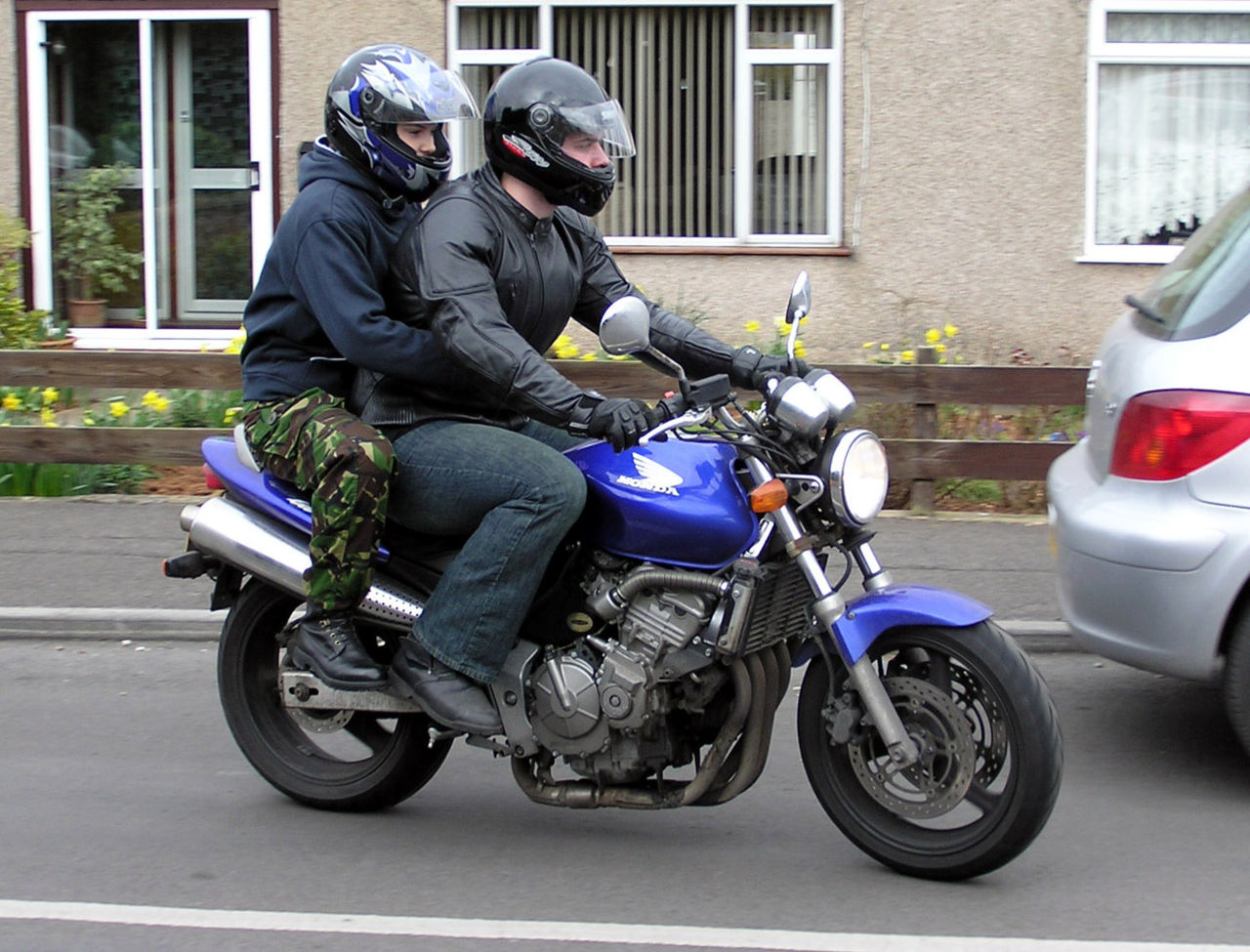
“A private e-scooter is a motor vehicle under UK law: no insurance exists for it on public roads, so riding one on a road or cycle lane is an uninsured driving offence regardless of how the vehicle looks or how fast it goes.”
What changes if the E-scooters Bill becomes law?
If the E-scooters (Review and Awareness) Bill progresses through Parliament and receives Royal Assent, the government would then need to lay secondary regulations setting the technical standards for road-legal private e-scooters. Based on the rental trial specs (which are the closest reference point), any future road-legal standard would likely require a maximum speed around 15.5 mph (25 km/h), a power limit, front and rear lights, a bell or horn, and no modifications. Riders would probably need at least a provisional licence and third-party insurance, which would become a new insurance product if legalisation proceeds.
The framing above comes from analysis of the rental trial scheme and secondary commentary; the bill text was not confirmed directly from parliament.uk during the research for this page. The important point for now is that none of this is decided. Until there is Royal Assent and a commencement date, the current law applies: a private e-scooter on a public road is illegal.
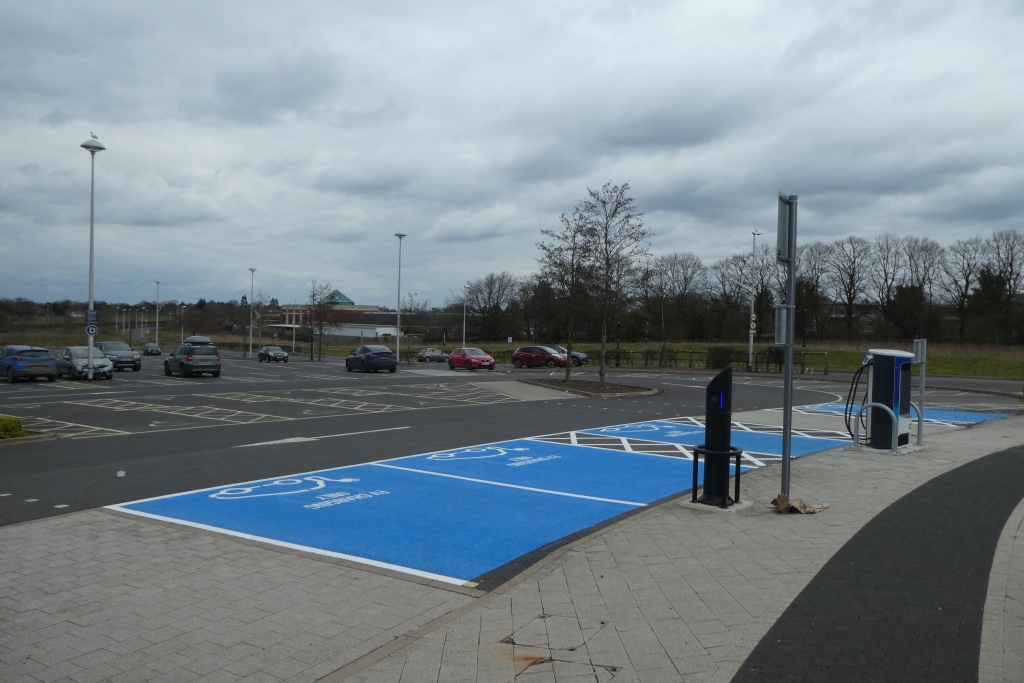
Key things to check before making a decision
- If you want a two-wheeler now: check whether a council e-scooter rental trial scheme operates in your area. If it does, rental is the only legal on-road option for an e-scooter.
- If you are 16 or over and want something road-legal you own: look at the AM moped route. CBT costs around GBP100 to GBP200 for a full-day course and gives you 2 years of provisional riding with L-plates.
- Check the insurance cost before committing to a moped. For a 16 to 18-year-old, moped insurance can be significant; get comparison quotes first.
- Do not rely on "everyone does it" logic with private e-scooters. Enforcement has included dedicated national days-of-action and has resulted in seizures and penalty points.
- Keep an eye on gov.uk for bill updates, but do not ride illegally on the expectation that the law is about to change. Until it does, the current rules apply.
Sources and further reading
The figures, fees, and procedures referenced in this article are verifiable on the official gov.uk pages below. PassRates.uk is built on the Driver and Vehicle Standards Agency’s open data, published under the Open Government Licence.
What is the pass rate at your test centre?
Search by centre name, town or postcode to see the latest DVSA figure.
Frequently asked questions
Are electric scooters legal in the UK in 2026?
Privately owned electric scooters are not legal on UK public roads, cycle lanes or pavements in 2026. The law has not changed. The only lawful e-scooter option is a council-run rental trial scooter in a designated trial area.
Can I ride a private e-scooter on a cycle path?
No. Cycle lanes form part of the public highway, so riding a private e-scooter on one is as illegal as riding on the road. The Highways Act prohibition on mechanically propelled vehicles on footways applies to cycle paths as well.
What is the fine for riding an e-scooter illegally in the UK?
Secondary sources report a fixed penalty of up to GBP300 or a court fine of up to GBP1,000, plus up to 6 penalty points and seizure of the scooter. These figures come from a retailer's legal summary rather than a gov.uk source; verify the current amounts at gov.uk or police.uk before relying on them.
Can I use a council rental e-scooter without a driving licence?
No. You need to hold at least a provisional driving licence covering AM or A category vehicles to use a rental trial e-scooter. You must also be 18 or over for the rental schemes currently operating.
Will e-scooters be legalised in the UK soon?
The E-scooters (Review and Awareness) Bill was introduced in the House of Commons in February 2026, but as of October 2026 no new rules have been brought in. There is no commencement date for any change. The legal position for private e-scooters on public roads remains unchanged.
What is CBT and how does it let me ride a moped legally?
Compulsory Basic Training (CBT) is a one-day course at a DVSA-approved training body. Completing it gives you a DL196 certificate valid for 2 years, allowing you to ride a moped or motorcycle up to 125cc on public roads with L-plates, provided you also hold a provisional licence and have insurance. The course covers safety checks, basic machine control off-road, and on-road riding with an instructor.
Can I get an electric moped through the CBT route?
Yes. The AM moped category covers electric mopeds as well as petrol-powered ones, as long as the motor output is no more than 4 kW and the top speed is capped at 28 mph (45 km/h). There is a growing range of electric mopeds built within these limits, and the licence and CBT requirements are the same as for a petrol moped.
Does riding a private e-scooter illegally affect my driving licence?
It can. If you receive penalty points for riding a private e-scooter on a public road, those points sit on your DVLA record. Under the New Drivers Act, any driver within the first 2 years of passing their practical test who accumulates 6 or more points has their licence revoked. Points picked up on a provisional licence before passing can count towards that total.
Every candidate behind these numbers passed a theory test first. Nationally 44.8% of attempts clear it.
Licence, insurance, MOT, vehicle tax and what the law requires you to hold. All 14 DVSA topics are free to practise, with no sign up. See the theory pass rate by centre or the full practice hub.
Related guides
- Licences, bikes and trainingCBT test explained (UK)Read guide
- Licences, bikes and trainingUK Motorcycle LicencesRead guide
- Licences, bikes and trainingBike Licence CategoriesRead guide
- Licences, bikes and trainingMotorcycle licensing reform 2026Read guide
- Licences, bikes and trainingTest Bike GuideRead guide
- Licences, bikes and trainingChoosing Bike SchoolRead guide
Written by Vikas and the PassRates.uk team. Vikas is the software engineer and driving enthusiast who started the site. The figures come straight from the DVSA open dataset; see the methodology.
Source DVSA, Open Government Licence v3.0
Continue reading
A DVSA and DfT consultation on moped and motorcycle licensing closed in March 2026. No government response has been published. Find out what was proposed and what the current rules remain.
The DfT proposed cutting the drink-drive limit in England and Wales from 80mg to 50mg/100ml blood in 2026, with a separate stricter tier for new drivers. No government response yet. Here is what the proposal says.