Pulling Up on the Right: 1 of 3 DVSA Test Manoeuvres
Three manoeuvres can come up on the UK driving test. Pulling up on the right gets the least practice and is the one most candidates fail on, because nobody told them what the examiner watches for.
What is pulling up on the right?
The examiner asks you to pull up on the right-hand side of the road, behind any parked vehicles if there are any, then reverse back two car lengths and rejoin the traffic when it is safe. The DVSA introduced this manoeuvre in December 2017 alongside the bay-park-and-leave variations. The reason: most drivers will, at some point, need to stop on the opposite side of a residential street to drop someone off or pick up a parcel. The test now checks you can do that safely.
The whole exercise takes about 90 seconds. It does not feel difficult once you have practised it three or four times. The problem is that most lesson packages cover it once, near the end of the course, and then move on. Bay park gets twenty repetitions; pulling up on the right gets two. Then the examiner picks it on test day and the candidate is essentially attempting it cold.
- Introduced
- 2017DVSA test format change
- Manoeuvres in pool
- 3one is asked per test
- Reverse distance
- ~2 carsabout 4 to 5 metres
- Time on test
- ~90 secincluding rejoining traffic
- Frequency examiners pick it
- ~33%roughly 1 in 3 tests
- Most common fault
- Observationon the move-off, not the reverse
The full step-by-step
Read this once, then practise it on a quiet residential road with your instructor or a qualified supervising driver. Do not attempt this manoeuvre for the first time on test day.
- 01Mirrors and signal
Check your interior mirror, then your right-hand door mirror, then signal right. Hold the signal long enough that following drivers know what you are doing. If a vehicle is close behind you, give it a moment to back off before you change lane position.
- 02Cross safely and stop parallel
Move to the right side of the road only when there is no oncoming traffic. Stop close to the kerb, parallel to it, with about 30 cm of clearance. If there are parked vehicles further down, position yourself just behind them rather than alongside.
- 03Secure the car
Apply the handbrake (or use auto-hold if your car has it engaged). Select neutral if manual. The examiner expects the car to be properly secured before you start the reverse, even though it is only stopped for a few seconds.
- 04Reverse two car lengths
Select reverse. Look over your right shoulder and through the rear window before moving. Keep your speed under walking pace, no faster. Steer minimally, the goal is a straight reverse, not a swerve. Stop when you have moved roughly two car lengths back.
- 05Full check before rejoining
Now the part most candidates rush. Check both door mirrors, the interior mirror, look over your right shoulder for cyclists, and check oncoming traffic in front. Only signal and pull away when it is genuinely clear in both directions. The examiner is watching this whole sequence; do not skip the shoulder check.
The two failure points are predictable. First, the reverse is too fast or too curved, and the car drifts away from the kerb. Second, the move-off is rushed: the candidate signals and pulls out without a full all-round observation, and the examiner marks a serious fault for failing to check for following traffic. Either of those, and the test ends regardless of the rest of the drive. Pulling up on the right is genuinely binary in this way.
What the examiner is actually marking
Three things, in priority order. Observation, control, and accuracy. Observation matters most because the consequence of getting it wrong is real harm to other road users. Control matters because the examiner needs to see you can manage the clutch (in a manual) without stalling, and steer slowly without grabbing the wheel. Accuracy matters least, the kerb does not need to be perfectly straight, just close enough that the car is not creating a hazard.
A common misconception is that the manoeuvre is graded primarily on how well you park. It is not. You can finish slightly out from the kerb and still pass. What you cannot do is reverse without a proper shoulder check, or pull away again without checking your blind spot. Those are immediate-fail observations. The serious vs minor faults guide sets out exactly which categories are absolute and which are subject to clustering.
| Minor (driver) fault | Serious / dangerous fault | |
|---|---|---|
| Kerb position 50 cm out | Yes, possibly | No |
| Slightly fast on the reverse | Yes | No, unless out of control |
| Reverse without right shoulder check | No | Yes (immediate) |
| Move off without all-round observation | No | Yes (immediate) |
| Touch the kerb gently | Yes | No, unless mounting |
| Mount the kerb | No | Yes (immediate) |
| Stall during the reverse | Yes | No, unless rolling into traffic |
Why this manoeuvre catches so many candidates
The honest answer is preparation imbalance. Driving instructors, on the whole, drill bay parking and parallel parking far more than the right-side stop. Bay parking comes up at the test centre car park itself, so candidates can see exactly where they will perform it and want the practice. Parallel parking has been part of the test for decades and lesson plans built up around it long before 2017. Pulling up on the right is the newest of the three and the one with the least intuitive technique. Most learners simply do not get enough repetitions on it.
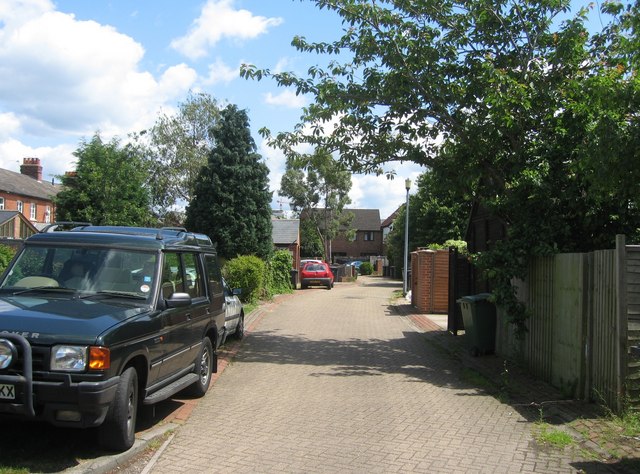
The other reason: the manoeuvre crosses oncoming traffic to start, then re-crosses the road to leave. Both crossings require active observation rather than the procedural check-and-go that bay parking uses. If your normal driving habit is to glance at mirrors rather than properly read traffic in both directions, pulling up on the right exposes that. Examiners can tell the difference between a candidate who looks because they remember to and one who looks because they mean to. The mirror-signal-manoeuvre routine is the underlying habit this manoeuvre relies on.
Cyclists and motorcyclists are the specific risk this manoeuvre is checking. A bicycle filtering through stationary traffic on the right side of the road can be invisible from a single mirror glance. The shoulder check before reversing, and the second one before pulling away, is what catches them. Skip either, and you are creating exactly the situation the manoeuvre exists to prevent.
“The kerb does not have to be perfect. The shoulder check has to be perfect. That is what the examiner is really marking.”
How to practise it properly
Pick a quiet residential road with light traffic. Cul-de-sacs are too quiet, the manoeuvre is supposed to involve oncoming vehicles. A residential through-road with maybe one car every minute is ideal. Drive past one or two parked vehicles on the opposite side, signal right, cross when clear, stop just behind the parked car, and reverse two lengths. Then rejoin. Repeat ten times in a single session.
After the tenth repetition, the procedure becomes automatic. That is the goal. On test day you do not want to be thinking through five steps. You want your hands and eyes doing the right thing while your conscious attention is on traffic. Five days before your test, do another session of ten repetitions to refresh the muscle memory. The combined hour of practice will make the difference between a routine pass and a manoeuvre-induced fail.
On test day: what to expect
The examiner will say something like, "When it is safe, please pull up on the right-hand side of the road. Then reverse two car lengths and continue when it is safe to do so." They will then sit back and let you do it. They will not coach you mid-manoeuvre. If you start drifting away from the kerb, they will let it happen and mark accordingly. If you forget the shoulder check, they will note it.
There is no requirement to perform the manoeuvre in a specific spot, the examiner will not pick a tricky location. They will tell you when there is a suitable place coming up, or simply ask you to do it when you reach a safe point. If the road they ask you to use looks too busy, you can say so. They will accept "I would prefer to find a quieter spot if that is OK", and they will reissue the instruction further along the route.
After the manoeuvre, you carry on driving as normal. The examiner does not give you a pass-or-fail signal. Your job is to keep the same standard of observation and control for the remaining 25 to 30 minutes of the test. Many candidates relax mentally after a successful manoeuvre and pick up faults in the post-manoeuvre driving. Do not let that be you. The test day morning routine covers how to keep your concentration intact across the full route.
How this manoeuvre fits the bigger picture
You will be asked to perform one of the three DVSA manoeuvres. Around 1 in 3 tests get pulling up on the right. The other two are bay parking (forward or reverse, with a leave-the-bay element) and parallel parking. There is no way to predict which one your examiner will pick, so all three need to be at a confident standard before you book. The manoeuvres overview guide covers each in turn, and the reverse bay park step-by-step and parallel park guide go deeper on the other two.
About 1 in 7 tests also includes the emergency stop (cut from 1 in 3 in November 2025), which is separate from the standard manoeuvre and not in rotation with it. If you are unlucky, you will get the emergency stop and pulling up on the right in the same test. That is rare but it does happen, and it is entirely manageable if you have practised both. The emergency stop guide walks through the technique. Treating each manoeuvre as automatic before test day is the best protection against the test-day combination you did not predict.
Sources and further reading
The figures, fees, and procedures referenced in this article are verifiable on the official gov.uk pages below. PassRates.uk is built on the Driver and Vehicle Standards Agency’s open data, published under the Open Government Licence.
What is the pass rate at your test centre?
Search by centre name, town or postcode to see the latest DVSA figure.
Frequently asked questions
What is pulling up on the right on the UK driving test?
It is one of three possible DVSA manoeuvres. The examiner asks you to pull up on the right-hand side of the road, behind any parked vehicles, then reverse two car lengths, and rejoin the traffic when it is safe. The whole exercise takes about 90 seconds and was added to the test in December 2017.
How often does pulling up on the right come up on the test?
Roughly 1 in 3 tests. The examiner picks one of three manoeuvres at random for each candidate: pulling up on the right, bay parking, or parallel parking. There is no way to predict which one you will get, so all three should be at a confident standard before you book.
What is the most common fault when pulling up on the right?
Failing to check the right shoulder before reversing, or before pulling away again, is the most common immediate-fail mistake. A cyclist filtering past on the right is the specific risk this manoeuvre exists to manage. Skipping the shoulder check is a serious fault even if no cyclist is actually there.
How close to the kerb do you have to be?
About 30 cm is ideal. Up to 50 cm is usually marked as a minor (driver) fault rather than a serious one, provided you are not creating a hazard. Touching the kerb gently is also a minor fault. Mounting the kerb properly is a serious fault and an immediate fail.
How do you reverse two car lengths accurately?
Use a fixed reference: pick a feature on the kerb or pavement that is roughly two car lengths behind your starting position. Reverse slowly until that feature is alongside your right-rear door. The DVSA does not require precise measurement, just a clear, controlled reverse of approximately two car lengths.
Can you fail the test on this manoeuvre alone?
Yes, if you commit a serious fault during it. Reversing without a shoulder check, mounting the kerb, or pulling away into the path of another road user are immediate-fail outcomes. Minor positioning faults will not fail you on their own, but a combination of small errors during the manoeuvre can be upgraded to a serious fault under the clustering rule.
Why do learners struggle with pulling up on the right?
It is the newest of the three manoeuvres and gets the least lesson time. Most lesson plans drill bay parking far more often, leaving candidates underprepared for the right-side stop. The fix is straightforward: ask your instructor for a session of at least ten repetitions in the week before your test.
Every candidate behind these numbers passed a theory test first. Nationally 44.8% of attempts clear it.
Vehicle condition, tyres, lights, fuel efficiency and reducing emissions. All 14 DVSA topics are free to practise, with no sign up. See the theory pass rate by centre or the full practice hub.
Related guides
Written by Vikas and the PassRates.uk team. Vikas is the software engineer and driving enthusiast who started the site. The figures come straight from the DVSA open dataset; see the methodology.
Source DVSA, Open Government Licence v3.0
Continue reading
From 9 June 2026, DVSA test moves are restricted to the 3 nearest centres to your current booking. What changes, who is affected, and what to do.
UK driving test faults: 15 minor and you still pass, 1 serious and the test ends. What turns the same mistake into either mark, with real test examples.