Chadderton Test Centre: How It Ranks in Greater Manchester
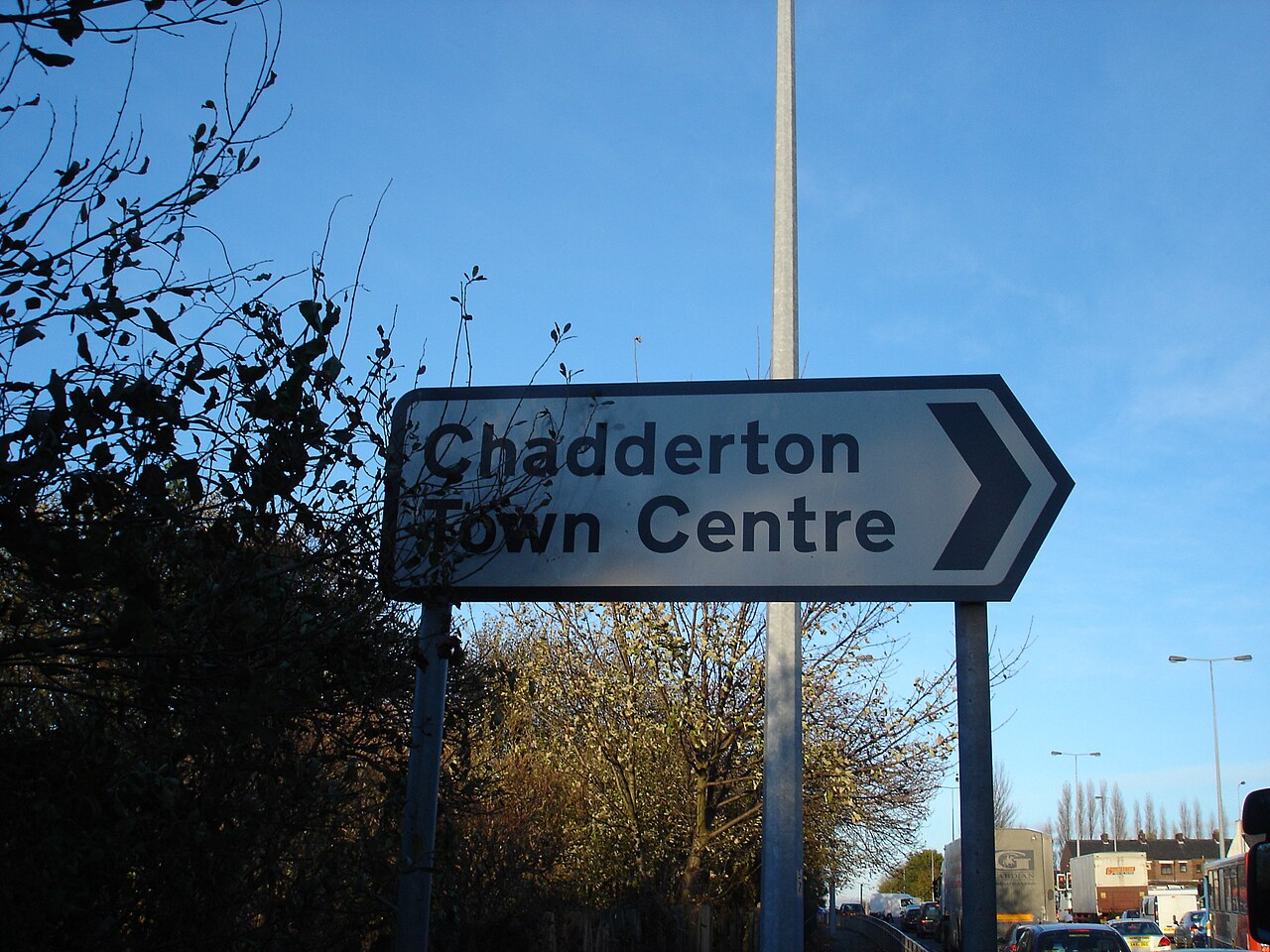
The Chadderton pass rate in 2024-25 is 44.9%, based on 12,454 tests at the DVSA centre in Oldham. That sits 3.8 percentage points below the UK national average of 48.7%, placing Chadderton in the lower half of Greater Manchester centres but above Cheetham Hill (43.7%) and Rochdale (41.2%).
- Overall pass rate
- 44.9%DVSA 2024-25, all tests
- First-time pass rate
- 44.5%first-attempt candidates only
- Total tests conducted
- 12,454DVSA-reported 2024-25
- Male pass rate
- 48.0%6,637 male tests
- Female pass rate
- 41.5%5,817 female tests
- UK national average
- 48.7%DVSA 2024-25 Category B
Chadderton test centre pass rate: the 2024-25 figure
The current Chadderton pass rate is 44.9% for 2024-25, based on 12,454 tests. The first-time pass rate is 44.5%, compared with the national first-attempt figure of 48.9%. Both sit roughly four points below the national average, reflecting a route mix of busy Oldham arterial roads and residential streets that places consistent demands on junction observation and lane discipline. At 12,454 tests, Chadderton is one of the three highest-volume DVSA centres in Greater Manchester, alongside West Didsbury (17,196) and Bolton (11,879). High volume means the pass rate figure is statistically sound: the margin of error at this sample is under one percentage point.
How Chadderton compares across Greater Manchester
Among Greater Manchester centres with 2024-25 data, Bolton leads at 56.7% and Rochdale trails at 41.2%, a 15.5-point spread. Chadderton at 44.9% sits in the lower half of that range. Bredbury (Stockport area) comes in at 54.2%, West Didsbury at 50.9%, and Sale at 49.1%. Atherton (44.4%) and Cheetham Hill (43.7%) are close to Chadderton, making the Oldham centre part of a group of urban northern Manchester centres that run in the mid-40s. The centres with higher rates serve routes with more residential suburban character and lower base-traffic density than the Oldham and central Manchester network.
Why the Chadderton pass rate sits below the national average
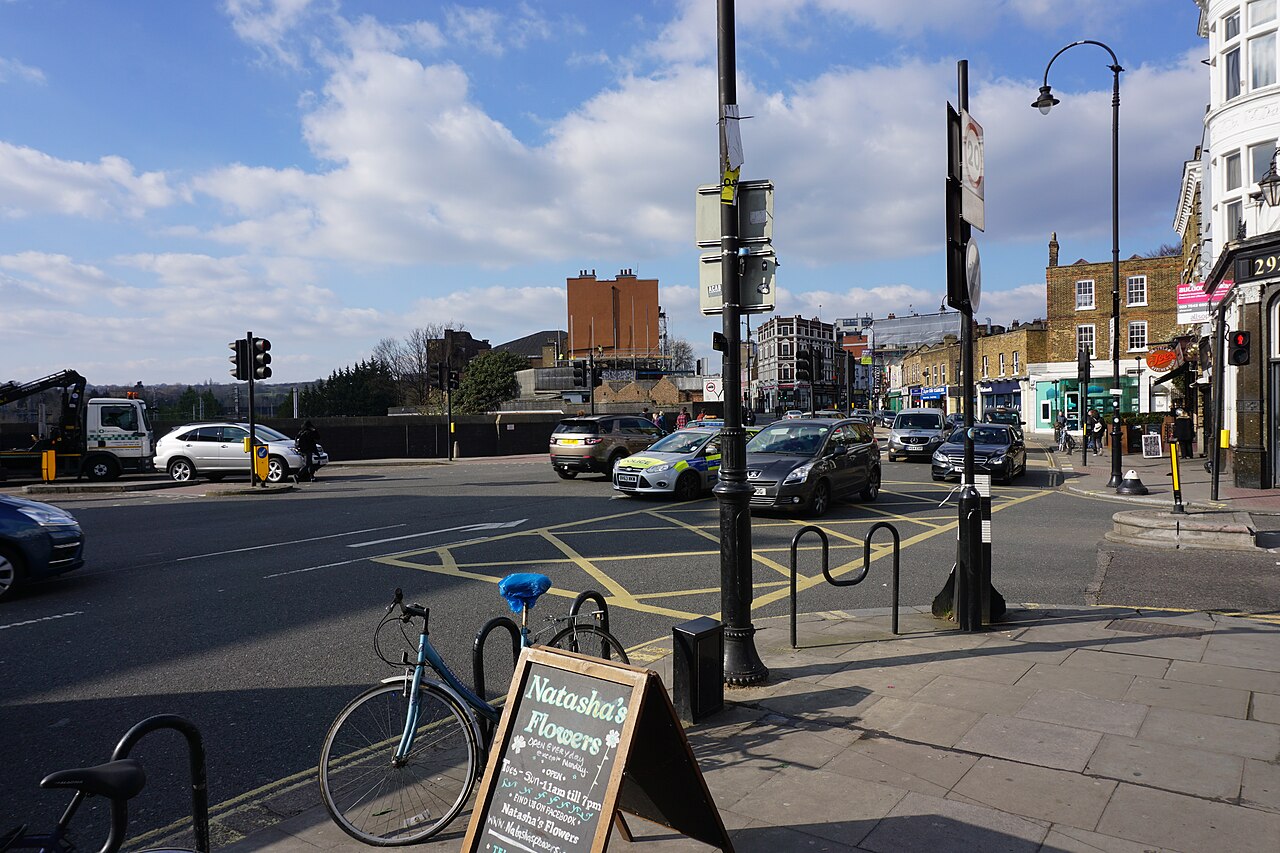
Chadderton is in the Metropolitan Borough of Oldham, north-east of Manchester city centre, at OL9 0HX. The road network around the centre mixes urban A-roads (the A669 Oldham Road, the A627 corridor) with residential streets in the Chadderton, Royton, and Hollinwood areas. Test routes from the centre draw on a road environment that places repeated demands on lane discipline under moving traffic, observation at restricted junctions, and independent decision-making at unmarked crossroads. None of those demands are individually exceptional, but their combination on the Oldham network produces a consistently below-national-average result.
- A669 Oldham Road: a busy urban arterial with frequent pedestrian crossings, bus stops, and parked vehicles. Speed and positioning must be managed while reading ahead for changing priority conditions.
- A627 corridor and Hollinwood junctions: multi-lane approaches where correct lane choice must be made early. Late lane changes or hesitation at these points are a common serious fault source.
- Residential streets in Chadderton and Royton: parked vehicles on both sides narrow the effective road width, demanding accurate lateral positioning at low speed to avoid mirror contact.
- Give-way and unmarked crossroads: the residential grid around the centre contains junctions where priority is inferred from road layout, not signalled, placing full independent decision-making on the candidate.
- Roundabouts on the A627 and connecting roads: decisive approach-lane selection and confident insertion into moving traffic are required. Examiners note roundabout faults at the approach, not after the exit.
| Chadderton | UK national | |
|---|---|---|
| Overall pass rate | 44.9% | 48.7% |
| First-time pass rate | 44.5% | 48.9% |
| Male pass rate | 48.0% | 49.5% |
| Female pass rate | 41.5% | 47.6% |
| Tests conducted | 12,454 | ~1.84 million |
Male and female pass rates at Chadderton in 2024-25
Men pass at 48.0% at Chadderton (6,637 tests) and women at 41.5% (5,817 tests) in 2024-25, a gender gap of 6.5 percentage points. The national gender gap is 1.9 points (49.5% male, 47.6% female), so Chadderton's gap is 4.6 points wider than the national pattern. For first-time candidates, men pass at 47.6% and women at 40.5%, a 7.1-point spread. A wider-than-national gender gap at a centre typically reflects routes with a high proportion of multi-lane junctions and A-road sections, where the examiner records faults at the point of approach. The pattern appears consistently at urban northern England centres with significant arterial road exposure.

For female candidates booking at Chadderton, the wider gender gap is a planning signal, not a deterrent. The driving test pass rate by gender guide covers the national patterns in detail. At centres where the gap exceeds the national average, focused practice on multi-lane approach lanes and roundabout entry tends to close the gap more directly than additional general hours of driving. Ask your instructor to include the A627 and A669 approach lanes in pre-test lessons.
When is the pass rate highest at Chadderton?
Chadderton pass rates in 2024-25 ranged from 42.7% in October (1,130 tests) to 48.8% in August (804 tests), a 6.1-point spread across the year. The August figure places Chadderton close to the national average for that month, suggesting that lower school-run and commuter traffic in summer genuinely changes the route environment. October and January are the two lowest months: both came in between 42 and 44%, coinciding with heavier autumn and winter traffic and shorter daylight hours on residential routes.
- August: 48.8% across 804 tests. The lowest commuter and school-run traffic of the year on the A-road network. Longer daylight and dry conditions reduce low-visibility pressure on junction approaches.
- June and September: both above 47%, with June recording the highest monthly test count (1,022 tests) and above-average results. The May to September window is the most consistent period at Chadderton.
- October: 42.7% across 1,130 tests, the lowest month in 2024-25. Autumn commuter traffic returns after the school break and darker afternoons increase cognitive demand on residential routes.
- January and February: both below 44%. The post-Christmas traffic restoration and reduced daylight push these months into the lower band. Booking in these months is not advantageous if the timeline permits a choice.

How the Chadderton pass rate has changed since 2017
The Chadderton DVSA centre opened at partial capacity in 2016-17 (166 tests, 35.5%), then expanded to full operation in 2017-18 with 7,932 tests at 33.6%. Pass rates rose sharply to 42.6% in 2018-19 (8,975 tests) and continued to 46.0% in 2019-20 before the pandemic halted testing. The post-pandemic year 2021-22 recorded the centre's highest rate: 47.3% across 8,401 tests, a result partly reflecting the selective cohort of the reopening period. Since 2022-23, volumes have climbed to 10,000 to 12,000 tests per year while the pass rate has settled in the 44 to 45% range, consistent with a centre serving a representative cross-section of learners rather than the more prepared cohort of the immediate post-pandemic period.
- 01Cover the A-road sections in lessons
Ask your instructor to include the A669 Oldham Road and the A627 corridor in at least two lessons before your test. These arterial routes are common around the Chadderton centre and demand confident speed discipline at 40 mph with early lane positioning.
- 02Practise the Hollinwood and A627 roundabouts
The multi-lane roundabouts near the A627 and the Hollinwood network are where approach-lane errors produce serious faults. Drive through them until the approach sequence (lane, mirror, signal, position) is automatic rather than considered.
- 03Work the residential grid thoroughly
The streets around Chadderton and Royton contain many unmarked crossroads. Practise confirming right of way before moving rather than edging forward and relying on other drivers to yield. Examiners at this centre use these junctions on most routes.
- 04Book between May and September if possible
Monthly pass rates at Chadderton peak in summer (August: 48.8%) and drop in October (42.7%). If your preparation timeline allows a choice, a May to September booking gives the best statistical environment without changing what you practise.
- 05Practise sat-nav navigation in unfamiliar Oldham streets
The independent driving section uses sat-nav directions for around 20 minutes. Practise following sat-nav specifically in Oldham and the Chadderton area so that an unexpected route does not add extra pressure alongside the normal demands of the test.
Should you book at Chadderton or travel to Bredbury?
Bredbury, in Stockport, is the nearest Greater Manchester centre with a significantly higher pass rate: 54.2% in 2024-25 versus Chadderton's 44.9%, a 9.3-point advantage. The two centres are about 9 miles apart via the M60. For a learner based in Oldham or Chadderton, the practical question is whether the route-preparation effort is manageable. Bredbury routes use the A6 Buxton Road corridor and quieter Stockport residential streets that are genuinely less demanding than the Oldham urban network. If you can arrange two or three pre-test lessons in the Bredbury area, the pass-rate difference is real and the travel is worth considering. The should I travel for easier test guide sets out the general framework for making this call.
Bolton (56.7%) is a second alternative, roughly 12 miles north-west via the M60 and M61, with routes mixing Bolton town roads and residential streets at lower traffic density than the Oldham network. West Didsbury (50.9%) and Sale (49.1%) both require crossing central Manchester from Oldham, which reduces their practicality for most Chadderton-area learners. The passing in Manchester guide and easiest test centre in Manchester guide cover the full centre choice context across Greater Manchester. For most Oldham-based learners the calculation comes down to Chadderton if staying local, Bredbury if the 9-mile journey and route prep are achievable.
“Chadderton is in the lower half of the Greater Manchester range at 44.9%. The gap to Bredbury at 54.2% is 9.3 points: large enough that any learner who can access both route networks has a genuine decision to make before booking.”
Sources and further reading
The figures, fees, and procedures referenced in this article are verifiable on the official gov.uk pages below. PassRates.uk is built on the Driver and Vehicle Standards Agency’s open data, published under the Open Government Licence.
What is the pass rate at your test centre?
Search by centre name, town or postcode to see the latest DVSA figure.
Frequently asked questions
What is the Chadderton driving test centre pass rate?
The Chadderton pass rate is 44.9% for 2024-25, based on 12,454 DVSA-reported tests. The first-time pass rate is 44.5%. Both figures are approximately four percentage points below the UK national average of 48.7%. The rate has been stable in the 44 to 45% range for three consecutive years: 44.5% in 2022-23, 44.2% in 2023-24, and 44.9% in 2024-25.
Is Chadderton a hard driving test centre?
Chadderton is moderately difficult by national standards, running 3.8 points below the UK average of 48.7%. Within Greater Manchester it sits below Bolton (56.7%), Bredbury (54.2%), West Didsbury (50.9%) and Sale (49.1%), and above Cheetham Hill (43.7%) and Rochdale (41.2%). The A669 Oldham Road and A627 corridor routes are the primary difficulty factor, requiring consistent lane discipline and junction observation under urban traffic.
How does Chadderton compare to other Manchester driving test centres?
Among eight Greater Manchester centres with 2024-25 data, Chadderton ranks fifth. Bolton leads at 56.7%, Bredbury is second at 54.2%, West Didsbury third at 50.9%, and Sale fourth at 49.1%. Atherton (44.4%), Cheetham Hill (43.7%) and Rochdale (41.2%) are all lower. The 15-point spread from top to bottom is large, and centre choice matters for Greater Manchester learners who have flexibility about location.
What is the male and female pass rate at Chadderton?
Men pass at 48.0% (6,637 tests) and women at 41.5% (5,817 tests) in 2024-25, a gender gap of 6.5 percentage points. The national gender gap is 1.9 points (49.5% male, 47.6% female). The wider-than-national gap at Chadderton reflects a route environment with multi-lane A-road junctions and roundabouts where confident approach decisions are repeatedly tested.
When is the best time to take the driving test at Chadderton?
Pass rates at Chadderton are highest in August (48.8% in 2024-25) and lowest in October (42.7%). The May to September window consistently runs at 45% or above, while October, November, and January are the three lowest months. Booking in summer gives a statistically better environment, primarily because lower school-run and commuter traffic reduces the complexity of the arterial road sections.
How many driving tests does Chadderton conduct per year?
Chadderton conducted 12,454 tests in 2024-25, making it one of the three highest-volume DVSA centres in Greater Manchester. In 2023-24 it ran 12,728 tests. At this volume the pass rate is statistically sound, with a 95% confidence interval of under one percentage point on the 44.9% headline figure.
Every candidate behind these numbers passed a theory test first. Nationally 44.8% of attempts clear it.
Following distances, courtesy, priority and how to behave around other road users. All 14 DVSA topics are free to practise, with no sign up. See the theory pass rate by centre or the full practice hub.
Related guides
Written by Vikas and the PassRates.uk team. Vikas is the software engineer and driving enthusiast who started the site. The figures come straight from the DVSA open dataset; see the methodology.
Source DVSA, Open Government Licence v3.0
Continue reading
What UK driving lessons cost per hour in 2026, region by region: £31 in the North East to £49 in London. Independent vs franchise rates, block booking discounts, and how many hours you pay for.
Wednesbury pass rate is 36.4% in 2024-25 (8,335 tests), 12.3 points below the UK average. One of the lowest rates in England. Black Country routes, why the rate is so low, and what to do about it.