The Four Driving Test Manoeuvres and What Examiners Mark
Your practical test contains exactly one reversing or parking manoeuvre, and the examiner picks it from four options: parallel park on the road, reverse into a bay, forward park into a bay, or pull up on the right and reverse about two car lengths. Reverse around a corner and turn in the road are not among them and have not been tested in Great Britain since 4 December 2017.
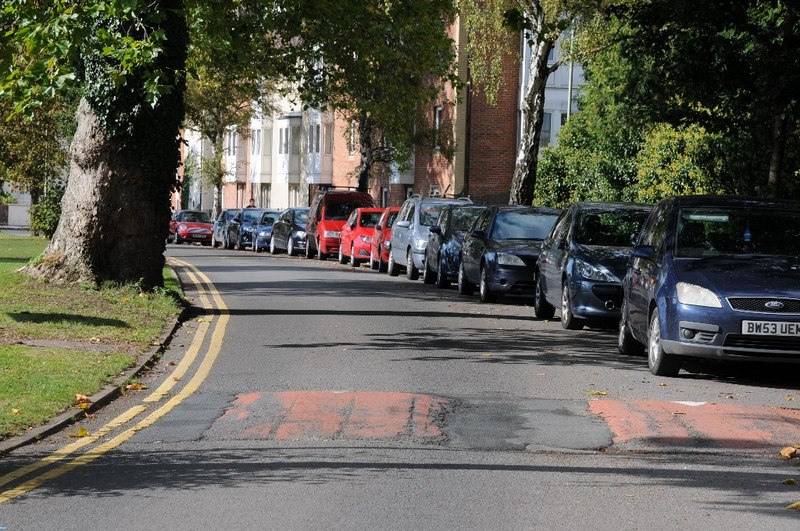
One manoeuvre. That is the whole of it. Whatever your instructor has drilled with you, the examiner sets a single reversing or parking exercise during the drive, chosen from four options published in the DVSA examiner manual: reverse park on the road (the parallel park), reverse into a parking bay, forward park into a parking bay and reverse out again, or pull up on the right-hand side of the road, reverse for about two car lengths and rejoin the traffic. The emergency stop sits outside that list and is set separately, so getting one does not mean you avoid the other.
The confusion worth clearing up first is the old pair. Reverse around a corner and turn in the road (the three-point turn) were both dropped from the Great Britain test on Monday 4 December 2017. DVSA said at the time that they would "no longer be tested, but you should still be taught them by your instructor", which is exactly why they are still on lesson plans nearly nine years later and why learners keep arriving at the test centre braced for a manoeuvre that cannot come. If you are taking your test in England, Scotland or Wales, neither one can be asked. Northern Ireland is genuinely different and is covered further down.
- Manoeuvres per test
- 1Chosen by the examiner, not by you
- Options the examiner picks from
- 4Two of them are bay parks
- Dropped in Great Britain
- 4 Dec 2017Reverse around a corner, turn in the road
- Still tested in Northern Ireland
- BothThe DVA runs its own test
- Emergency stop
- SeparateNot one of the four, set on about 1 in 7 tests
- Manoeuvres in the top 10 faults
- NoneDVSA ranking, last three reporting periods
What the examiner actually says for each manoeuvre
The examiner manual sets out how each exercise is introduced, and the wording is more open than most learners expect. You are rarely told which bay or which gap. You are told what to achieve and left to choose the spot, which is part of what is being assessed.
| Parallel park | Reverse bay park | Forward bay park | Pull up on the right | |
|---|---|---|---|---|
| Where it happens | On the road, behind a parked car the examiner points out | A car park, often the test centre car park | A car park, drive in then reverse out | A two-way road with room to cross |
| The instruction in DVSA wording | Pull up "well before a parked vehicle identified by the examiner", then drive alongside and reverse in behind it | Reverse "into any convenient bay to park the car" when set at the end of the test | Drive "forwards into any convenient bay, finishing within the lines", then reverse out left or right | Pull up "on the right when it is safe to do so", then reverse two car lengths before driving on |
| How much room you get | About two car lengths, behind one car or between two | Any bay you judge suitable | Any bay, either side | About two car lengths of reverse |
| What the mark splits into | Control and Observation | Control and Observation | Control and Observation | Control and Observation |
The parallel park and the one correction rule
You are asked to pull up well before a parked vehicle the examiner identifies, drive alongside it, and reverse into a parked position behind it. If it is a single parked car, the exercise should be finished within two car lengths. If you are going between two cars, the gap will be about two car lengths. Nothing in the published standard mentions a specific distance from the kerb, a fixed number of steering turns, or a reference point on the door mirror. Those are teaching aids, and useful ones, but they are your instructor's method rather than a DVSA requirement.
What the standard does define is where a correction stops being acceptable. A driving fault for control is recorded where "re-positioning is required to correct a loss of control or accuracy". A serious fault is "excessive re-positioning to correct a complete misjudgement and/or significant loss of control". The same loss of control becomes a dangerous fault if it results in actual danger. Read plainly: shunting forward once to tidy up an angle costs you a minor at worst. Shunting repeatedly because you have no idea where the car is going costs you the test.
The bay parks, and the most precise rule on the whole marking sheet
The reverse bay park can be set at the start of the test, before you drive off, or at the end when you return. At the start you may be asked to reverse into a convenient bay, drive out to the left or right, straighten the wheels and reverse into another bay. At the end the instruction is simply to reverse into any convenient bay to park the car. The published marking boundary is blunt: a final parking position outside the bay is a serious fault.
The forward bay park carries the single most precisely worded standard in the whole assessment guide, and it is worth memorising because it settles most car-park arguments. Finishing with one or two wheels on the bay line is a driving fault. Finishing with one or two wheels fully in the bay next to the one you aimed for is a serious fault. If control is lost badly enough that the examiner has to act to stop you hitting a car in the adjacent bay, that is a dangerous fault. On the line is survivable. In the neighbour's bay is not.
Pull up on the right, where the fault is usually before you reverse
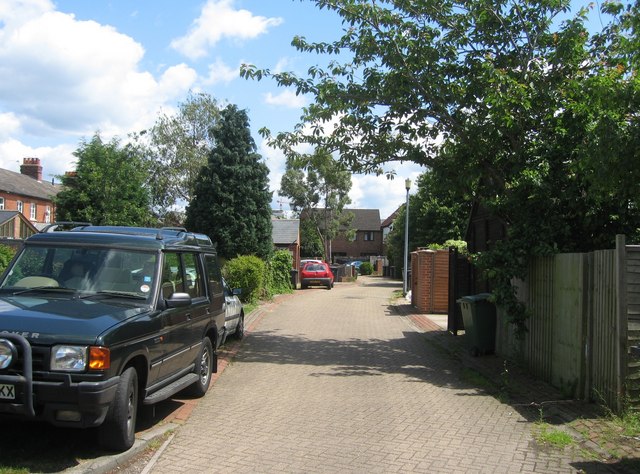
This is the manoeuvre learners rate as easy and examiners mark most often for observation, because the risky part is not the reversing. It is the moment you cross to the wrong side of a two-way road. The expected outcome is to pull up safely on the right, reverse two car lengths, and keep effective all-round observation going throughout while showing consideration to other road users.
The marking boundary is entirely about the driver coming the other way. A misjudgement of the speed and distance of an approaching vehicle as you begin to move over is a driving fault where "the safety of other road users was not compromised". The same misjudgement becomes a serious fault where it causes that driver to brake heavily to let you across. One variable decides it: whether somebody else had to do something about you. That is also the cleanest illustration on the test of how DVSA separates a minor from a major, because the action you took is identical in both cases and only the consequence differs.
The observation requirement is almost word for word the same across all four
Read the four expected outcomes side by side and one phrase repeats: "effective all-round observation throughout the manoeuvre", followed by "showing consideration to other road users". The forward bay park adds "and pedestrians", which makes sense given you are reversing out into a car park where people walk. That is the entire published observation standard. There is no fourth manoeuvre with a softer requirement and no exercise where mirrors alone are enough.
- Observation is continuous, not a single check before you move. The published wording is "throughout the manoeuvre".
- Acting on what you see counts as much as looking. Spotting a pedestrian and carrying on regardless is worse than the look itself was good.
- Pausing to let somebody past is not a fault. Holding up a road because you froze and then rushed the finish usually is.
- Control and observation are marked in separate boxes for every manoeuvre, so a tidy park with poor looking still picks up a fault.
- A single correction is built into the control standard. Repeated correction to fix a misjudgement is what tips it over.
“The four manoeuvres differ in what your hands do and barely at all in what your eyes are supposed to do.”
Reverse around a corner and turn in the road: gone in GB, alive in Northern Ireland
The 4 December 2017 change did two things at once. It removed reverse around a corner and turn in the road, and it introduced the forward bay park and the pull-up-on-the-right exercise in their place. That is why both replacements feel newer and why older relatives who passed decades ago describe a test you will not sit. DVSA still recommends being taught the old pair, on the reasonable grounds that turning a car round in a narrow street is a genuine driving skill whether or not anybody marks you on it.
Northern Ireland is not a footnote here. The test there is run by the DVA rather than DVSA, and nidirect still lists reversing around a corner and turning in the road among the exercises, alongside reverse parking on the road or into a bay, plus an emergency stop. The fault thresholds match Great Britain, with up to 15 driving faults still a pass and any serious or dangerous fault a fail, but the manoeuvre list does not. If you are preparing for a test in Belfast or Londonderry, treat every "these are no longer tested" article, including the GB half of this one, as not applying to you.
Manoeuvres are not what fails most candidates
Here is the part that reframes how much practice time the manoeuvre deserves. DVSA publishes an annual ranking of the ten most common faults on the car test, and no reversing or parking exercise appears anywhere in it for the latest period or the two before it. The list is dominated by observation at junctions, mirror use before changing direction, turning right, and responses to traffic lights and road markings. Reverse park control last surfaced in the top ten several years ago and has not returned.
That does not make the manoeuvre free. It means the manoeuvre is the part of the test candidates over-prepare and the ordinary driving between manoeuvres is the part they under-prepare. If you can already park without drama, the honest advice is to spend the next few lessons on approach speed and observation at junctions rather than another hour in a supermarket car park. Our breakdown of how driving test faults are graded covers the ranking in full and explains why nobody can honestly attach a percentage to it.
For technique on the individual exercises we have step-by-step guides to the reverse bay park, the parallel park and pulling up on the right. The overview of all four manoeuvres is the shorter reference version of this page, what happens on test day sets out the running order so the instruction does not surprise you, and the emergency stop frequency change explains the separate exercise that is now set on roughly one test in seven. If you are still choosing where to book, the easiest centres ranking and the national statistics page are the data-led starting points.
Sources and further reading
The figures, fees, and procedures referenced in this article are verifiable on the official gov.uk pages below. PassRates.uk is built on the Driver and Vehicle Standards Agency’s open data, published under the Open Government Licence.
What is the pass rate at your test centre?
Search by centre name, town or postcode to see the latest DVSA figure.
Frequently asked questions
Do I still need to learn the three-point turn for my driving test?
Not for the test itself in England, Scotland or Wales, where the turn in the road was dropped on 4 December 2017. DVSA still recommends instructors teach it as a driving skill. In Northern Ireland the DVA does still test it, so it remains part of test preparation there.
Can the examiner ask me to do two manoeuvres?
No. Every candidate does one reversing or parking manoeuvre chosen by the examiner. The emergency stop is a separate exercise rather than a fifth manoeuvre, so it is possible to get a manoeuvre and an emergency stop in the same test.
Is it a fail if I touch the bay line on a forward bay park?
No. Finishing with one or two wheels on the bay line is recorded as a driving fault. It becomes a serious fault only if one or two wheels end up fully in the bay next to the one you were aiming for.
How many times can I shunt forward during a parallel park?
DVSA does not publish a number. The standard is written around control: repositioning to correct a loss of control or accuracy is a driving fault, while excessive repositioning to fix a complete misjudgement is a serious fault. One tidy-up shunt is normal and rarely more than a minor.
Which manoeuvre is the examiner most likely to choose?
DVSA publishes no breakdown of how often each of the four is set, so any percentage split you see elsewhere is an estimate rather than official data. Practical availability matters more than probability: a centre with a large car park can set either bay park, and a centre on quiet residential streets can set the parallel park or the pull-up on the right.
Do I get to choose which bay I reverse into?
Usually yes. The examiner instruction is worded around "any convenient bay", so choosing a sensible one with clear space beside it is part of the exercise rather than cheating. Picking a bay you cannot realistically get into is a judgement problem the marking will pick up.
Are the manoeuvres different in an automatic car?
The manoeuvres and the marking standard are the same. The test itself is identical for manual and automatic cars, and the marking sheet treats transmission as a vehicle detail rather than something that changes what is assessed.
Every candidate behind these numbers passed a theory test first. Nationally 44.8% of attempts clear it.
Licence, insurance, MOT, vehicle tax and what the law requires you to hold. All 14 DVSA topics are free to practise, with no sign up. See the theory pass rate by centre or the full practice hub.
Related guides
Written by Vikas and the PassRates.uk team. Vikas is the software engineer and driving enthusiast who started the site. The figures come straight from the DVSA open dataset; see the methodology.
Source DVSA, Open Government Licence v3.0
Continue reading
DVSA cut the emergency stop from about 1 in 3 driving tests to about 1 in 7 on 24 November 2025. What changed, why, the marking standard, and why you should still practise it.
Book your UK driving test on gov.uk for £62 weekday or £75 evening or weekend. What you need, the step-by-step flow, choosing a centre, and the 2026 rules.