Driving Test Pass Rates by London Borough in 2026
A London learner often books their nearest test centre without checking whether the borough sits in the top or bottom band of pass rates. Bexley borough centres pass at 59 percent. Waltham Forest centres pass at 36.5 percent. The same DVSA marking applied to learners across 30-plus London centres produces a 22.5 percentage point spread that maps almost cleanly onto borough geography. Reading the borough breakdown before booking can shift the maths by a full 20 points.
- Top borough
- 59.0%Bexley (Sidcup centre)
- Bottom borough
- 36.5%Waltham Forest (Chingford)
- Borough spread
- 22.5pptop-to-bottom range
- London volume-weighted avg
- 47.9%across 30+ rankable centres
- UK national average
- 48.7%DVSA DRT122A 2024-25
- Outer-inner gap
- ~12ppouter boroughs vs inner
How borough geography maps onto pass rates
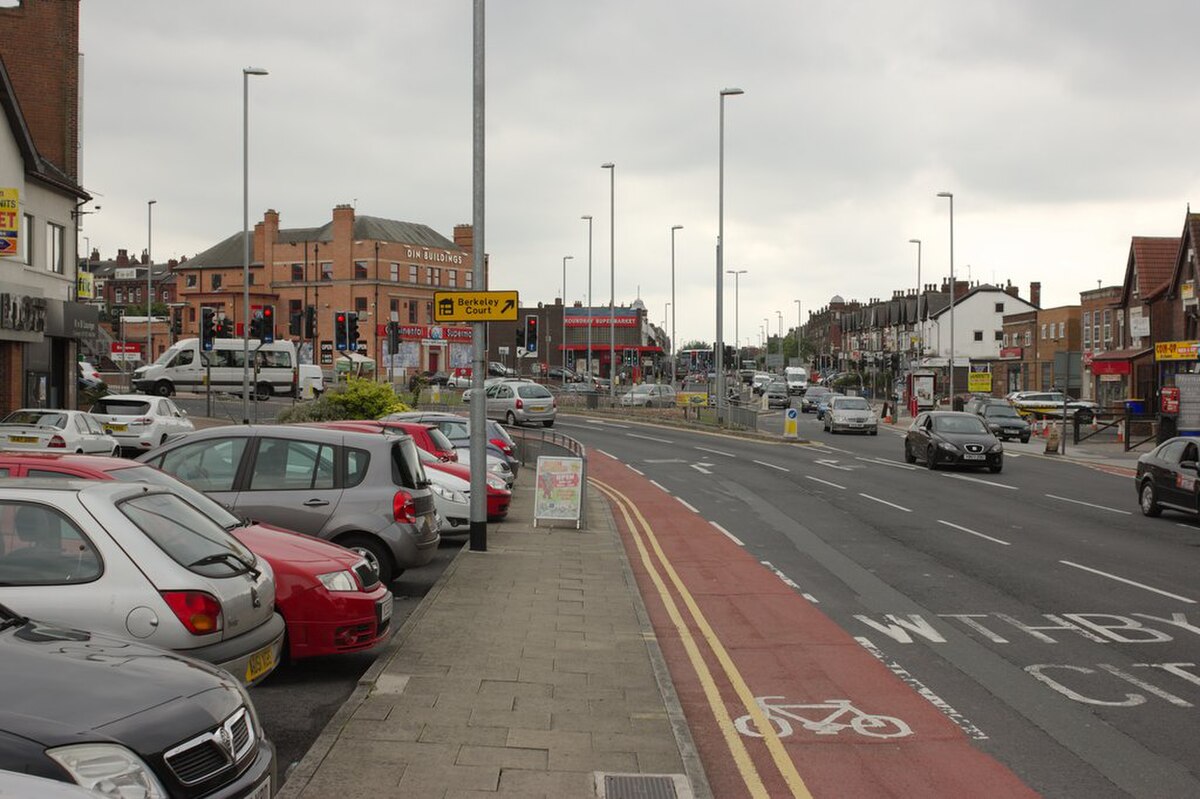
London driving test centres cluster by borough rather than independently by postcode. Bexley borough hosts Sidcup at 59.0 percent (2024-25) and is the highest-performing London borough by pass rate. Waltham Forest hosts Chingford at 36.5 percent (2024-25), the lowest. The outer boroughs on the M25 fringe (Bexley, Bromley, Sutton, Hillingdon, Enfield) consistently occupy the top half. The inner boroughs (Hackney, Tower Hamlets, Lambeth, Waltham Forest) sit at the bottom. The pattern is not random and the borough lens is more useful for planning than the centre-by-centre view alone.
Three structural reasons explain the borough pattern. First, route environment: outer boroughs route candidates through suburban A-roads and residential streets with predictable junctions, while inner boroughs feature dense cycle infrastructure, box junctions, and priority-shifting bus gates. Second, cohort: outer boroughs see learners who can practise on quieter roads more easily, inner boroughs see learners pinned to high-density urban routes. Third, traffic and catchment: inner boroughs carry heavier, denser traffic and a more urban learner catchment. Marking is a single national standard applied the same way at every centre, so it is the route environment and catchment, not the examiners, that differ.
The borough-by-borough ranking
The top boroughs in detail
Bexley borough hosts Sidcup at 59.0 percent (2024-25), the highest-performing London centre. Routes cover residential Sidcup, the A20 corridor, and quieter sections through Foots Cray and Bexley. The route environment is genuinely suburban: protected cycle lanes are limited, box junctions are infrequent, and the bus network is less dense than inner London. A south London learner who can travel 35 minutes from the centre via the A2 has access to Sidcup, but wait times have lengthened (20 to 24 weeks in May 2026) because the centre is widely known.
Enfield borough hosts Enfield (Innova) at 56.4 percent. The Innova Business Park centre is distinct from the older Enfield town centre site (which closed). Routes cover residential streets around the Great Cambridge Road and sections through Bullsmoor and Crews Hill on the M25 fringe. North London learners reach it in 25 to 40 minutes from most inner-north postcodes. Kingston upon Thames borough hosts Tolworth at 55.1 percent with routes along the A3 corridor and residential Tolworth and Chessington.
Hounslow and Bromley round out the top-five outer boroughs. Hounslow (Isleworth Fleming Way) at 53.8 percent serves west London via the A4 corridor and residential streets through Isleworth and Hounslow. Bromley at 52.3 percent serves south London via the A21 and residential streets through Bickley and Petts Wood. All five top-band boroughs share the M25-fringe suburban character that drives the pass-rate advantage.
The bottom boroughs in detail
Waltham Forest borough hosts Chingford at 36.5 percent (2024-25), the hardest London centre by a clear margin. Routes cover the A104 Lea Bridge Road junction complex, A406 North Circular approaches, and residential streets through Walthamstow and Highams Park. The route environment includes priority-shifting cycle infrastructure on the A104, multiple box junctions, and bus-only sections through residential areas. North-east London learners often default to Chingford because alternatives require long journeys.
Bexleyheath (Belvedere) at 38.3 percent (2024-25) and Newham (Wanstead) at 40.4 percent (2024-25) sit at the next-hardest band. Belvedere routes include the A206 corridor and Erith dock approaches with dense Heavy Goods Vehicle traffic. Wanstead routes feature the Wanstead Flats, Aldersbrook residential streets, and the Snaresbrook crown court roundabout that catches learners on positioning faults. Ealing (Greenford Horsenden Lane) at 40.5 percent is the hardest west London centre with routes including A40 Western Avenue sections and the Greenford Road bus corridor.
Redbridge (Goodmayes) at 43.7 percent is the highest-volume centre in the bottom band, running over 20,000 tests a year with routes through residential Ilford and the Romford Road corridor. The volume drives substantial search query attention but the underlying pass rate is unfavourable. A learner with east London access should compare Goodmayes against Hornchurch (44.1 percent, Havering borough) before committing.
| Top boroughs (Bexley, Enfield) | Bottom boroughs (Waltham Forest, Newham) | |
|---|---|---|
| Typical road environment | Suburban A-road plus residential | Inner-city arterial plus dense residential |
| Protected cycle infrastructure | Limited, marked lanes | Heavy, priority-shifting and contraflow |
| Box junctions per typical route | 1 to 2 | 3 to 5 |
| Bus gates and bus-only sections | Rare | Common, often on residential streets |
| Heavy goods vehicle exposure | Limited | High at Belvedere (dock road), Wanstead |
| Parked-car density on residential | Moderate | Very high |
| Wait time, May 2026 | 18 to 24 weeks | 14 to 20 weeks |
| First-time pass rate at sample centre | ~62% Sidcup | ~32% Chingford |
The cross-borough travel calculation
A learner in Waltham Forest facing a 36.5 percent (2024-25) pass rate at Chingford can travel to Enfield (Innova) at 56.4 percent in roughly 35 minutes by car. The journey adds 70 minutes of travel per lesson (35 each way) and potentially 30 to 60 minutes of fuel cost. Across three pre-test lessons at the alternative centre, that is roughly £45 to £75 of extra travel, which is meaningful but recoverable against avoiding a £62 retake fee plus 10-week rebook wait.
The general rule for London cross-borough travel: a 15+ percentage point pass-rate lift typically justifies a 30 to 45 minute journey for centre route practice plus the test itself. A 5 to 10 percentage point lift rarely justifies more than 20 minutes extra travel. The trade-off depends on whether you can practise at the alternative centre (two to three lessons make the difference) or only test there once.
- 01Identify your home borough centre
The centre closest to where you live. Find it in the borough ranking above. This is your benchmark pass rate to compare against.
- 02List two alternative boroughs within 45 minutes
Look across the borough ranking for centres that are practical to reach with pre-test lessons. Outer-M25 boroughs almost always provide the lift, inner boroughs rarely do.
- 03Calculate the pass-rate lift
Difference between your home centre and the alternative. A 10+ point lift justifies most cross-borough travel costs. Under 5 points usually does not.
- 04Factor in wait times
Top-band borough centres often run 4 to 6 weeks longer waits than bottom-band. Checking gov.uk for cancellations helps but does not always close the gap.
- 05Book three pre-test lessons at the chosen centre
Without explicit route practice, the cross-borough advantage shrinks to roughly half its headline size. The route familiarity is most of why those centres pass higher.
Borough-specific route features
Three route features cluster by borough type and produce London-specific fail patterns. The first is priority-shifting cycle infrastructure. Waltham Forest (A104 Lea Bridge Road), Hackney (multiple Cycle Superhighway routes), and Tower Hamlets (the Whitechapel area) all feature cycle lanes that change priority between junctions. Learners without explicit cycle-lane practice consistently fault on these. Outer boroughs have less of this infrastructure.
The second feature is dense box junction networks. Inner boroughs route candidates through three to five box junctions per test, often within a few minutes of each other. The rule itself (do not enter unless your exit is clear, unless turning right and only oncoming traffic blocks) is simple, but applying it across multiple junctions in succession catches learners under cognitive load. The third is bus gates and bus-only roads. London has more of both than any other UK region, concentrated in inner boroughs, and driving into one produces a serious fault on response to signs. The box junction rules guide and the urban test route features guide cover these features in detail.
The Goodmayes problem and the high-volume trap
Redbridge's Goodmayes centre runs over 20,000 tests a year, the highest volume in London and one of the highest in the UK. The high volume drives substantial Google search query attention and creates a perception that Goodmayes is the obvious choice for east London learners. The 43.7 percent pass rate makes it an expensive choice. An east London learner with access to Havering (Hornchurch at 44.1 percent) or willing to travel to Bexley (Sidcup at 59.0 percent (2024-25)) can usually do better.
The same trap exists at other high-volume centres in bottom-band boroughs. Volume alone does not indicate quality of outcome. The borough ranking matters more than the centre brand recognition. Worth checking before committing to a default centre purely on familiarity grounds. The easiest test centre London guide covers the centre-by-centre picture.
Borough wait times in May 2026
Wait times vary by borough in inverse correlation with pass rate. Top-band borough centres (Bexley, Enfield, Kingston, Hounslow) typically run 20 to 24 weeks because learners actively target them. Bottom-band borough centres (Waltham Forest, Newham, Ealing) typically run 14 to 18 weeks because learners avoid them and the volume includes more retakes. The inverse pattern means the cross-borough decision is not just about pass rate but also about how long the wait advantage on the worse centre is worth.
A learner in Waltham Forest could book Chingford at 14 weeks wait or Enfield at 22 weeks wait. The Enfield route delivers a 20-point pass-rate lift but requires an 8 week longer wait. For most learners the trade is worth it, because the £62 retake fee plus 10 working day rebook from a Chingford fail typically erases the wait advantage anyway. The driving test wait times 2026 guide covers the wait time picture in detail.
How instructor cars cross boroughs
Most London ADIs are based in a specific borough and operate within a roughly 30 minute radius of their base. If you choose a cross-borough centre for testing, your existing ADI may not travel that far. Two options: switch to an ADI based at the chosen centre for the final 4 to 6 lessons (provides route familiarity and avoids the travel premium), or pay your existing ADI the additional fuel and time for cross-borough travel (typically £15 to £30 per cross-borough lesson on top of the hourly rate).
For a structured cross-borough plan, the cleanest option is usually three lessons with a Sidcup-based or Enfield-based ADI for route familiarity at the chosen centre. The cost is similar to your existing rate (£45 to £55 per hour in London), and the route familiarity is built in. The choosing driving instructor UK guide covers how to identify a local ADI for the chosen centre.
“The borough you test in matters more than the borough you live in. A 22.5 point spread on the same DVSA marking is the lever, and a 35 minute drive on test day is the price. Most London learners overpay by not running the maths.”
Wider regional context: London versus the UK
The volume-weighted London average driving test pass rates sit at 47.9 percent versus the 48.7 percent UK national. The sub-1pp headline gap is real but tiny compared to the within-London spread. A London learner who optimises borough choice can comfortably exceed the UK national average; a London learner who defaults to nearest centre often lands well below. The borough lens is the single most useful planning tool for London learners specifically.
The research/london-vs-uk-pass-rate page covers the statistical framework comparing London with the rest of the UK in depth. The pass driving test in London tips guide covers the centre-by-centre tactics. The passing driving test London guide covers the wider London picture including practical practice tips.
How this connects with the rest of the London guides
For the centre-by-centre breakdown, see the easiest test centre London guide. For the structural reasons London is harder, see the why London test centres are hard guide. For the route-feature picture, see the urban test route features guide. For the travel calculation, see the should I travel for easier test guide. For the statistical workup, see the research/london-vs-uk-pass-rate page.
Sources and further reading
The figures, fees, and procedures referenced in this article are verifiable on the official gov.uk pages below. PassRates.uk is built on the Driver and Vehicle Standards Agency’s open data, published under the Open Government Licence.
What is the pass rate at your test centre?
Search by centre name, town or postcode to see the latest DVSA figure.
Frequently asked questions
Which London borough has the highest driving test pass rate?
Bexley borough, hosting Sidcup at 59.0 percent in DVSA DRT122A 2024-25 data. Routes cover residential Sidcup, the A20 corridor, and quieter sections through Foots Cray. The suburban character (limited cycle infrastructure, few box junctions, lighter bus network) drives the pass-rate advantage versus inner London. Wait times have lengthened to 20 to 24 weeks in May 2026 because the centre is widely targeted. South London learners reach it in 35 minutes from central London via the A2.
Which London borough has the lowest driving test pass rate?
Waltham Forest borough, hosting Chingford at 36.5 percent in DVSA 2024-25 data. Routes cover the A104 Lea Bridge Road junction complex, A406 North Circular approaches, and residential streets through Walthamstow and Highams Park. The route environment includes priority-shifting cycle infrastructure, multiple box junctions, and bus-only residential sections. North-east London learners often default to Chingford because alternatives require long cross-borough journeys.
How big is the pass rate spread between London boroughs?
22.5 percentage points between the top (Bexley at 59.0 percent) and bottom (Waltham Forest at 36.5 percent). The spread is larger than any other UK regional difference at the within-region level, larger than the entire Scotland-vs-London headline gap. The pattern is consistent: outer-M25 boroughs occupy the top half, inner boroughs the bottom half, with a sharp transition around the 45 percent line. Borough pass rates span about 20 points on the same DVSA marking.
Should I test in a different London borough from where I live?
Often yes, if your home borough is in the bottom band and an outer-M25 borough is practically reachable. A 15+ percentage point pass-rate lift usually justifies a 30 to 45 minute journey for the test plus three pre-test lessons at the alternative centre. The trade-off is wait times (top-band borough centres run 4 to 6 weeks longer waits) and lesson logistics (your existing ADI may not travel cross-borough). For most Waltham Forest, Newham, or Ealing-defaulted learners, the maths favours travelling.
Why do inner London boroughs have lower driving test pass rates?
Three structural reasons. First, route environment: dense cycle infrastructure, multiple box junctions per route, and bus gates concentrated in inner boroughs. Second, cohort: inner-borough learners often pin to high-density urban routes for practice with less access to quieter roads. Third, traffic and catchment: inner boroughs carry heavier, denser traffic and a more urban learner base. The same national marking standard applies at every centre, so it is the route features and catchment, not the examiners, that make faults more likely. See the why London test centres are hard guide.
Is Goodmayes a good London test centre?
Not particularly. Goodmayes (Redbridge borough) runs over 20,000 tests a year (the highest London volume) at a 43.7 percent pass rate, in the bottom band. The high volume creates name recognition and search query attention, but volume does not indicate quality of outcome. East London learners with access to Havering (Hornchurch at 44.1 percent) or willing to travel to Bexley (Sidcup at 59.0 percent (2024-25)) can usually do better. Worth running the borough comparison before defaulting to Goodmayes on familiarity grounds.
Do outer London boroughs really have higher pass rates?
Yes, consistently. The five top-performing boroughs (Bexley, Enfield, Kingston, Hounslow, Bromley) all sit on the M25 fringe and feature suburban A-road and residential route environments. The bottom-band boroughs (Waltham Forest, Newham, Ealing, Bexleyheath inner) cluster in inner London with dense urban features. The pattern holds across the full 30-plus London centre dataset. The outer-inner gap is roughly 12 percentage points on the volume-weighted average.
How long are wait times in different London boroughs?
Inversely correlated with pass rate. Top-band borough centres (Bexley, Enfield, Kingston) run 20 to 24 weeks in May 2026 because learners actively target them. Bottom-band borough centres (Waltham Forest, Newham, Ealing) run 14 to 18 weeks because learners avoid them and the volume includes more retakes. A cancellation hunt across the centres you are allowed to move to can sometimes close the wait gap. See the finding cancellations guide.
Every candidate behind these numbers passed a theory test first. Nationally 44.8% of attempts clear it.
Sign shapes and colours, road markings and what each one tells you to do. All 14 DVSA topics are free to practise, with no sign up. See the theory pass rate by centre or the full practice hub.
Related guides
- London and regional analysisEasiest London centreRead guide
- London and regional analysisEasiest Manchester centreRead guide
- London and regional analysisManchester vs LiverpoolRead guide
- London and regional analysisEasiest Newcastle centreRead guide
- London and regional analysisEasiest Sheffield centreRead guide
- London and regional analysisEasiest Edinburgh centreRead guide
Written by Vikas and the PassRates.uk team. Vikas is the software engineer and driving enthusiast who started the site. The figures come straight from the DVSA open dataset; see the methodology.
Source DVSA, Open Government Licence v3.0
Continue reading
How to find your nearest UK driving test centre in 2026: the free DVSA postcode lookup, third-party finder tools and their fee structures, the pass-rate gap between picking the nearest centre and the easiest one, and free passrates.uk alternatives.
Practical advice for maximising your first-time UK driving test pass odds in 2026: route preparation, mock test cadence, time-of-day timing, vehicle prep, and the age-cohort effect that pushes 17 year olds to 60.75%.