First Year After Passing Your Driving Test UK (2026 Guide)
The two years after passing your UK driving test carry stricter legal conditions than any other point in your driving life: just six penalty points will revoke your full licence automatically, and UK road safety research consistently shows new drivers face the highest crash risk in year one.
- Points before licence revocation
- 6Half the normal 12-point limit
- Probationary period length
- 2 yearsFrom date full licence issued
- Motorway access
- ImmediateLegal from day one in England, Scotland, Wales
- Photocard arrival
- 1-3 weeksDVLA posts automatically, no action needed
- Insurance: when to update
- Before drivingLearner cover expires the moment you pass
- Pass Plus: required?
- OptionalNo extra test is legally required in GB
Six things to do in the first 24 hours after passing
The practical tasks that new drivers need to handle stack up quickly in the first day after passing. Most of them take minutes, but missing any one can lead to expensive or even criminal consequences. The order below is roughly by urgency, with insurance at the top because it is the only task where a mistake can put you instantly on the wrong side of the law.
- 01Update your insurance to a full-licence policy
Learner driver insurance, whether short-term daily cover for private practice or a named-driver restriction on a family policy, covers you as a provisional licence holder only. It expires the moment you pass your test. Call your insurer or use a comparison site to convert to full-licence cover before driving away from the test centre. Most conversions are done in under an hour by phone or online.
- 02Remove or cover the L plates
L plates are a legal requirement on public roads for provisional licence holders. Once you hold a full licence, you must remove or cover them before driving unaccompanied. Displaying L plates on a full-licence solo drive is not itself a criminal offence in most situations, but it causes unnecessary confusion for other road users and is incorrect.
- 03Keep your test pass certificate accessible
The paper pass certificate DVSA issues at the test centre serves as proof of your entitlement to drive while you wait for your photocard licence to arrive. Keep it in your wallet or the glove box. Do not rely on it beyond the first few weeks: it is temporary evidence, not a replacement for the photocard.
- 04When the two-year clock starts
The two-year probationary period under the Road Traffic (New Drivers) Act 1995 runs from the date you pass your first practical test, not from when the photocard later arrives. So the clock is already running from test day, and picking up 6 or more penalty points inside those two years means the DVLA revokes your licence.
- 05Confirm your DVLA address is current
DVLA will post your new photocard to the address held on your provisional licence record. If you have moved since applying for your provisional, update your address at GOV.UK now (free, a few minutes). A card sent to the wrong address costs £20 to replace and means a further wait of up to three weeks.
- 06Plan your first solo routes deliberately
The biggest jump in crash risk for new drivers comes from tackling roads and conditions that the test never covered: motorways, night driving, and routes with unfamiliar heavy junctions. Plan your first week of solo drives on familiar roads in daylight, at low-risk times. Introduce new road types one at a time as your confidence grows through actual experience.
The 6-point rule: your licence is at risk from day one
Under the Road Traffic (New Drivers) Act 1995, every new driver in Great Britain enters a two-year probationary period from the day they pass their first practical test. During that period the penalty point threshold for automatic licence revocation drops from the normal twelve to just six. There is no court hearing, no judicial discretion, no warning letter before revocation happens. The moment your cumulative points reach six, DVLA revokes your licence as a matter of law.
After revocation you revert to provisional licence status. You must apply for a new provisional, pay the provisional fee, and then pass both the theory test and the practical test again from scratch before you can drive legally. The current practical test fee is £62 on weekdays or £75 for evenings and weekends, and average waiting times for a test slot are running at 15 weeks or more. A revocation in year one realistically costs you four to six months of independent transport access, plus all the exam fees to rebuild your licence from zero.
Sorting your car insurance after passing
Any insurance that covered you as a learner, whether short-term daily cover or a named-driver policy with a provisional restriction attached, covers you only as a provisional licence holder. Cover ends the moment you pass your test. Driving home from the test centre on learner cover makes you technically uninsured. Driving without insurance carries a minimum 6-point penalty, a minimum fine of £300, and the risk of vehicle seizure at the roadside.
Contact your insurer or use a comparison site as soon as you have passed. Most full-licence policies can be arranged over the phone or online within an hour. You will need your pass date and provisional licence details. Many new drivers are surprised to find the full-licence premium is lower than the provisional cover: a pass certificate signals that a DVSA examiner has certified you as safe, and most insurers price that positively. Always compare quotes at conversion rather than accepting the first renewal offer.
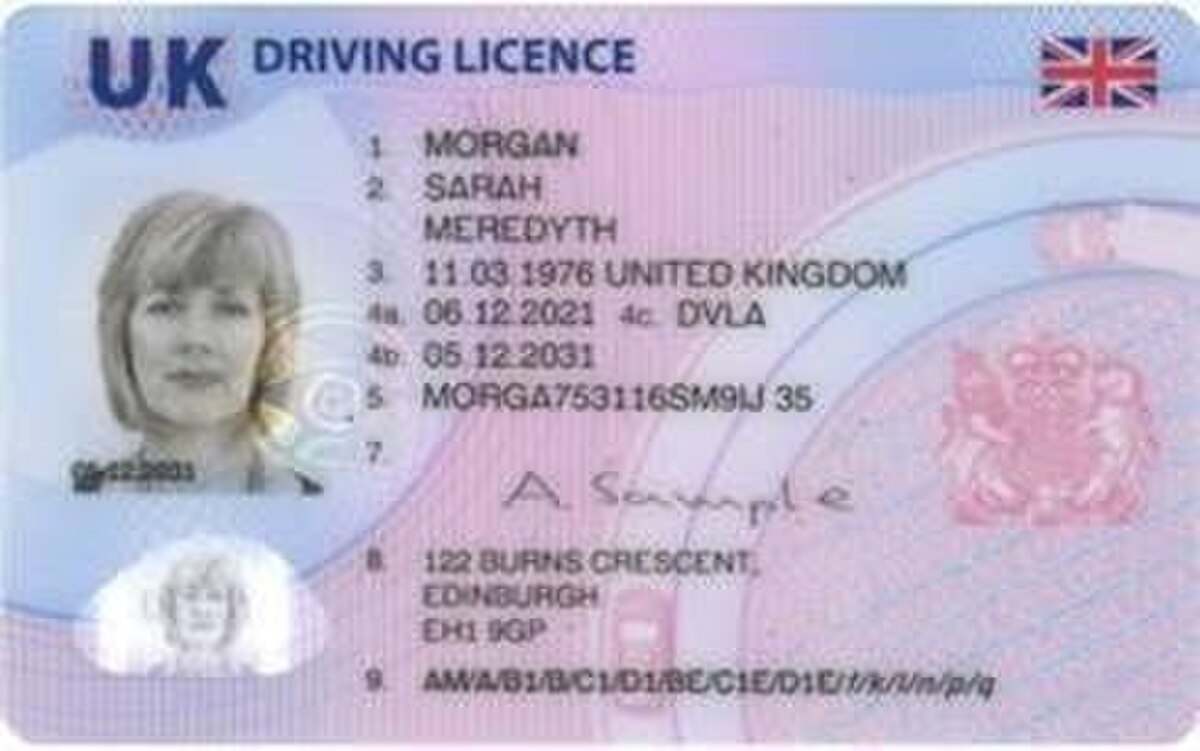
Your new photocard driving licence: what happens and when
DVSA sends your test pass data to DVLA on the day of your test. DVLA then processes and posts your new photocard driving licence automatically. No application is needed and there is no fee. The card arrives within one to three weeks at the address held on your provisional licence record. While you wait, your DVSA pass certificate is proof of your entitlement to drive.
- The photocard shows your licence categories (B for a standard car), any endorsement codes, and the licence issue date. Your two-year probationary clock itself runs from your test pass date, not this issue date.
- The photograph on the card is valid for ten years. Renewing the photo after that is free and does not affect your licence categories or endorsements.
- Replacing a lost or stolen photocard costs £20 and takes up to three weeks. Photograph both sides when it arrives as a backup record.
- If the card arrives with any incorrect details (name, address, date of birth) report the error to DVLA at GOV.UK before using the card; driving on an incorrect licence can complicate insurance claims.
The five behaviours behind most year-one accidents
UK road safety data from STATS19 and research by IAM RoadSmart and the THINK! road safety campaign consistently show that newly qualified drivers face their highest collision risk in the 12 months after passing. The pattern is not random: five specific behaviours account for the majority of year-one incidents. All five are preventable, and none of them was typically assessed in detail on the standard driving test route.
- Mobile phone use: the phone habits that existed before passing carry straight into solo driving, where the risk falls on you alone. At 30 mph a one-second glance at a notification covers 13 metres of road. At 60 mph it covers 27 metres.
- Speeding on unfamiliar roads, particularly at night: the test routes were local and practised many times. New roads feel slower than they are, and night driving removes many of the visual cues that signal speed relative to the environment.
- Driving with peer passengers: a car full of friends is the highest-risk combination for newly qualified drivers. IAM RoadSmart research shows that the distraction is social rather than electronic, and harder to manage precisely because it feels normal and sociable.
- Driving when tired: long journeys, late-night drives home, and early-morning starts after too little sleep all impair reaction time in the same way as alcohol. The test never required sustained motorway driving late at night. Build that exposure gradually.
- Misjudging speed and gaps at junctions: test routes gave time to observe. Real-world junctions with faster-moving vehicles, obstructed sightlines, and impatient traffic queuing behind you are more demanding. Most junction errors in year one come from underestimating the speed of an approaching vehicle on the major road.
The common thread is that these risks rarely appear during lessons or on the test itself, because the route, the presence of an instructor, and the heightened attention that comes with a test all suppress them. Solo driving removes all three safeguards at once. The gap between test-day driving and everyday independent driving is what makes year one the most statistically hazardous period for UK drivers.
| On the driving test | Solo driving in year one | |
|---|---|---|
| Passengers | Examiner only, no social pressure | Friends, family, potential group distraction |
| Routes | Known local roads, practised many times | Unfamiliar roads, motorways, night routes |
| Time of day | Typically daytime, daylight hours | All hours including fatigue-risk late night |
| Mobile phone | Off, inaccessible throughout | Active, notifications arriving, temptation present |
| Alcohol | Zero, always | Legal limit applies (same as experienced drivers) |
| Consequences of error | Minor fault recorded; test continues | Crash, injury, prosecution: no supervisor present |
Motorways: legal from day one, worth preparing for
In England, Scotland and Wales a full Cat B licence holder can drive on motorways from the moment the test pass is confirmed. There is no minimum experience period, no compulsory motorway lesson, and no restriction under the Highway Code specific to newly qualified drivers. The legal position has been the same since the Road Traffic Act 1988 created the current licensing framework. Northern Ireland is different: R plate holders may use motorways but must keep to 45 mph during their mandatory 12-month restricted period. From 1 October 2026 this changes for new learners in Northern Ireland: R plates for 24 months and no 45 mph limit. See new driving rules from October 2026.
Legal permission and practical confidence are different things. Motorway driving involves sustained speeds of 60 to 70 mph, three lanes of traffic, merging from slip roads, and smart motorway variable-speed signs that must be read quickly at distance. Many new drivers find their first motorway trip considerably more demanding than any route on their test. A voluntary post-test motorway session with an Approved Driving Instructor (ADI) in a dual-control car is a low-risk way to build that familiarity before your first solo motorway journey. The Pass Plus scheme includes a motorway module, and some insurers recognise the certificate for a small premium reduction, though that reduction has narrowed as telematics policies have become more common.
Alcohol and drugs: what the limits mean in practice for new drivers
There is no special reduced alcohol limit for new drivers in England, Wales or Scotland. The same legal threshold applies to a newly passed driver as to a driver of 30 years. What is different is how little room a new driver has to absorb the consequence. Driving over the limit carries a mandatory disqualification of at least 12 months for a first offence, plus a fine and a criminal record. For a driver still inside the two-year probation period, a ban that early effectively sends them back to square one, and any return to the road means re-establishing their entitlement from scratch. The practical rule is simple: never drive after drinking in your first years on the road.
| England and Wales | Scotland | |
|---|---|---|
| Blood limit | 80 mg per 100 ml blood | 50 mg per 100 ml blood |
| Breath limit | 35 micrograms per 100 ml | 22 micrograms per 100 ml |
| Urine limit | 107 mg per 100 ml | 67 mg per 100 ml |
| Different for new drivers? | No, same as experienced drivers | No, same as experienced drivers |
| Practical advice in year one | Avoid alcohol entirely when driving | Avoid alcohol entirely when driving |
Building your experience through year one
The driving test certifies that you meet the minimum safe standard on a particular day, on familiar routes, under test conditions. It says nothing about motorways, heavy rain after dark, congested commutes with tailgating traffic behind you, or six hours on a long-haul journey. Year one is where you build exposure to those conditions deliberately rather than encountering them by surprise.
A practical approach is to add new conditions one at a time. Your first motorway trip should be in daylight, in dry conditions, with minimal passengers, on a short stretch you have studied in advance. Your first drive in heavy rain should be on a local route you know well rather than an unfamiliar cross-country journey. Your first drive after dark should be at dusk on a road you have driven in daylight. Combining multiple unfamiliar conditions in one journey, a new road type, at night, in bad weather, with a car full of friends, removes your margin for error. Any one of those conditions is manageable with basic preparation. Several at once is where year-one crashes cluster.
“The test qualifies you. Year one is where you actually learn to drive. Treat every unfamiliar road type as a new skill to practise, not a hurdle to survive.”
Sources and further reading
The figures, fees, and procedures referenced in this article are verifiable on the official gov.uk pages below. PassRates.uk is built on the Driver and Vehicle Standards Agency’s open data, published under the Open Government Licence.
What is the pass rate at your test centre?
Search by centre name, town or postcode to see the latest DVSA figure.
Frequently asked questions
How many penalty points can I get before losing my licence in the first year?
Six points. Under the Road Traffic (New Drivers) Act 1995, your full licence is revoked automatically once your cumulative penalty points reach 6 within the two-year probationary period. This is half the 12-point threshold that applies to experienced drivers. After revocation you revert to provisional licence status and must pass both the theory test and the practical test again to regain a full licence.
What do I need to do about car insurance immediately after passing?
Contact your insurer as soon as you have passed. Any learner driver or provisional licence insurance expires the moment you obtain a full licence. You must convert to a full-licence product before driving away from the test centre. Most conversions take under an hour by phone or online. Do not assume the learner policy still covers you, even if the certificate shows a future end date.
When does my photocard driving licence arrive after passing?
DVLA processes your photocard automatically when test pass data arrives from the DVSA test centre. The card arrives by post within one to three weeks at the address on your provisional licence record. No application or fee is required. Your pass certificate covers you legally while you wait. Make sure your DVLA address is current before you take the test so the card reaches you.
Can I drive on the motorway immediately after passing my test?
Yes, in England, Scotland and Wales there is no restriction on newly qualified full licence holders using motorways. You can drive on a motorway from day one of holding your full licence, unaccompanied, at the national speed limit. Northern Ireland is different: R plate holders may use motorways but must keep to 45 mph during the mandatory 12-month restricted period. From 1 October 2026 this changes for new learners in Northern Ireland: R plates for 24 months and no 45 mph limit. See new driving rules from October 2026. Many new drivers choose to take a voluntary post-test motorway lesson with an ADI before their first solo motorway journey, which is sensible even though it is not legally required.
Is the drink-drive limit lower for new drivers in the UK?
No, the same limit applies to new and experienced drivers in England, Wales and Scotland. In England and Wales it is 80 mg of alcohol per 100 ml of blood; in Scotland 50 mg. What is different for new drivers is the stakes: driving over the limit carries a mandatory driving ban of at least 12 months for anyone, and that ban automatically takes a new driver off the road during the probationary period too. The practical position for any new driver in the first two years is to avoid driving after any alcohol at all.
Do I need to display P plates after passing?
P plates are entirely voluntary in England, Scotland and Wales. No law requires you to display them. They act as a courtesy signal to other road users and can be helpful in the first weeks on unfamiliar routes. Many new drivers use them on motorway trips or busy junctions and remove them once comfortable. Northern Ireland is different: R plates are a legal requirement for 12 months under separate NI legislation (24 months for new learners from 1 October 2026). The full rules and practical advice are in the P plates guide.
Is Pass Plus or any other course required in the first year?
No extra course or test is legally required in England, Scotland or Wales after passing the standard practical test. Pass Plus is a voluntary six-module programme covering motorways, night driving, rural roads, dual carriageways, all-weather conditions, and town driving. Some insurers recognise completion for a small premium reduction, though that discount has narrowed as telematics policies have become more common. The Pass Plus guide breaks down the cost and typical savings in detail.
What is the new driver probationary period and when does it end?
The probationary period under the Road Traffic (New Drivers) Act 1995 runs for two years from the date you pass your first practical test. During this period the revocation threshold is 6 points, not 12. After the two years, the standard 12-point rule applies automatically. If your licence is revoked and you retake the tests, a new two-year probationary period begins when you pass again.
Related guides
Written by Vikas and the PassRates.uk team. Vikas is the software engineer and driving enthusiast who started the site. The figures come straight from the DVSA open dataset; see the methodology.
Source DVSA, Open Government Licence v3.0
Continue reading
North East England and Wales offer lesson rates from £28-33/hr, nearly half the £45-60 charged in London. Regional breakdown, cheapest cities, and total cost comparison for 2026.
No legal requirement for P plates in England, Scotland or Wales. Northern Ireland R plates are mandatory for 1 year. The 6-point new driver probation rule that applies everywhere.