Do You Have to Display P Plates After Passing Your Driving Test?
In England, Scotland and Wales there is no law requiring new drivers to display P plates after passing their test. P plates are a voluntary courtesy signal, not a legal category. What does carry legal force in your first two years is the Road Traffic (New Drivers) Act 1995, which revokes your full licence automatically if you collect 6 penalty points before your second anniversary of passing.
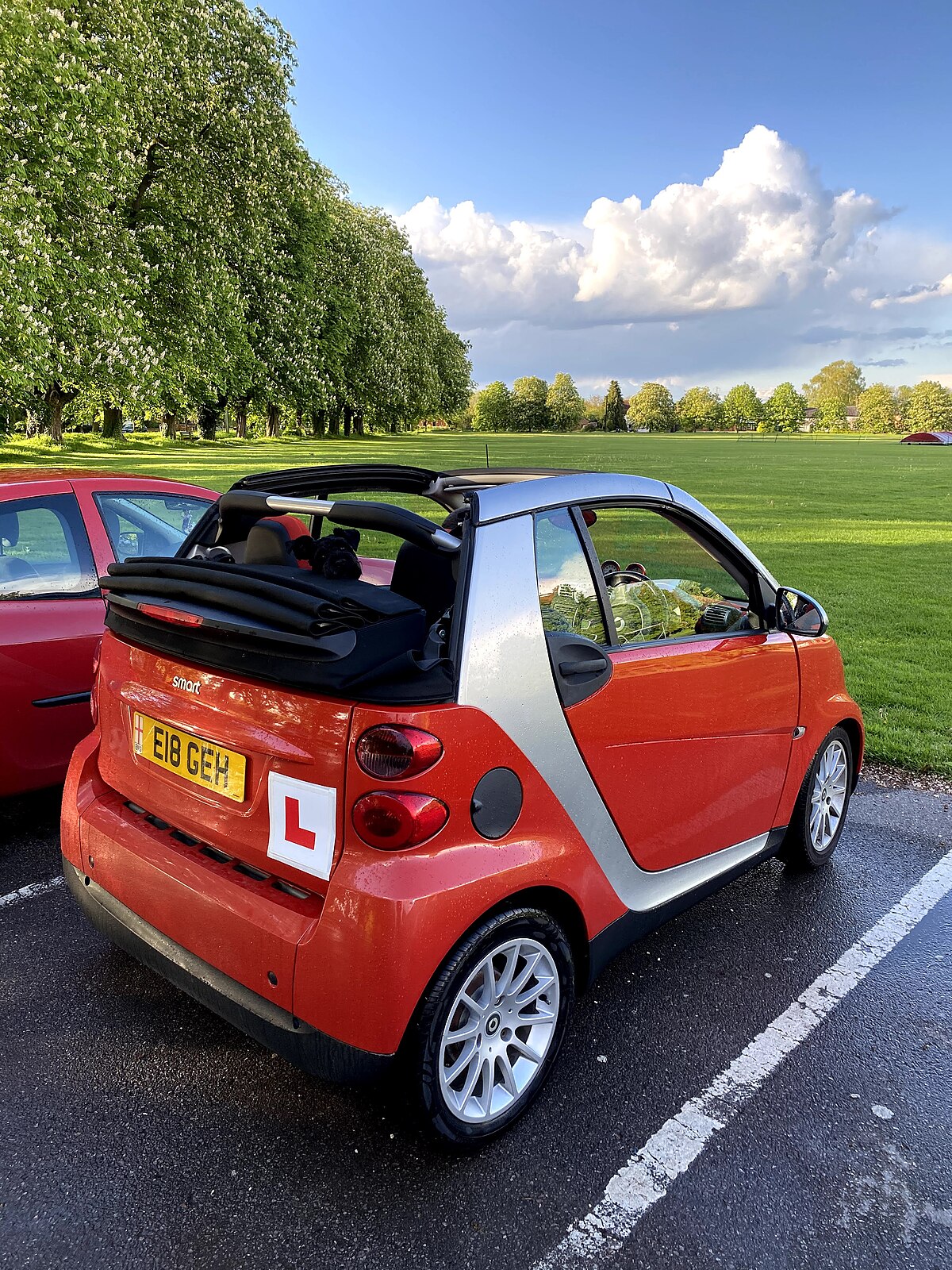
- Legal status (England, Scotland, Wales)
- VoluntaryNo law requires them after passing
- Northern Ireland R plates
- Required12 months now, 24 for new learners from Oct 2026
- Probation period (Great Britain)
- 2 yearsFrom date of first full licence
- Points before licence revocation
- 6Half the normal 12-point limit
- Speed restriction with P plates
- NoneNo restriction in England, Scotland, Wales
- Motorway access after passing
- ImmediateFull national speed limit applies in GB
Are P plates legally required in the UK?
P plates are not legally required in England, Scotland or Wales. The Road Traffic Act 1988, the Motor Vehicles (Driving Licences) Regulations 1999, and the Highway Code all set out rules about L plates while you hold a provisional licence. None of them say anything about P plates after you obtain your full licence. You can display them, ignore them entirely, or use them only on some journeys. There is no legal obligation either way.
The confusion often arises because L plates ARE a genuine legal requirement while you are learning. Once you pass and hold a full licence, that obligation ends. P plates fill the gap as a social convention: they tell other road users that you are newly qualified and that a little extra patience on their part would be appreciated. They work because other drivers recognise them and generally respond to them, not because any law requires it.
| L plates (provisional holder) | P plates (full licence, GB) | R plates (Northern Ireland) | |
|---|---|---|---|
| Legally required? | Yes, while learning on public roads | No, completely voluntary | Yes, for 12 months after passing |
| Who displays them? | Provisional licence holders | New full-licence holders (optional) | New full-licence holders in NI |
| Speed restriction? | No restriction (must obey posted limits) | None | 45 mph maximum (current scheme only) |
| Motorway access? | Yes, with ADI only (since 2018) | Yes, unrestricted from day one | Yes; 45 mph cap ends for new learners from Oct 2026 |
| Alcohol limit | Standard limit (80mg/100ml England/Wales, 50mg/100ml Scotland) | Standard limit applies | Same limit as other NI drivers (a lower R-driver limit is legislated but not in force) |
| How long to display? | Until full licence obtained | No minimum or maximum | Exactly 12 months after passing date |
| Points before revocation | N/A (provisional licence) | 6 points (probationary new driver rule) | 6 points (same threshold applies) |
What the law actually says about P plates
Because P plates have no legal basis, there is also no official specification for how they should look. The green P on a white background is the widely recognised convention, and sticking to that format is the only way other drivers will immediately understand what you are displaying. You could technically show any green letter on a white field and be within the law, but non-standard versions defeat the purpose.
P plates have no formal standing in UK insurance regulation either. An insurer that offers a discount for displaying them is making a commercial marketing choice. An insurer that prices against them would equally be making its own commercial decision. The Financial Conduct Authority's insurance regulations do not assign any rated status to P plates, because they carry no legal status to rate against. Whether to mention P plates to your insurer is worth a quick call, but do not expect a significant pricing difference either way.
The New Drivers Act 1995: the rule that carries real legal force
The piece of law that every newly qualified driver in Great Britain genuinely needs to understand is not about P plates at all. The Road Traffic (New Drivers) Act 1995 creates a probationary regime that runs for the first two years after you obtain your first full driving licence. During that window, if your total penalty points reach 6 or more, your full licence is revoked automatically. No court hearing, no judicial discretion, no warning letter. The revocation happens as a matter of law once the threshold is crossed.
The probationary threshold is half the normal limit. Experienced drivers retain their licence up to 11 points and face disqualification only at 12. New drivers hit revocation at 6. A single conviction for using a mobile phone while driving earns 6 points and triggers revocation in one incident. Two separate speeding offences at 3 points each do the same across two incidents. The probationary period does not restart: it is a fixed two-year window from the date of your first full licence pass.
- 01Conviction and endorsement
You are convicted of a driving offence that carries penalty points: for example 3 points for a standard speeding offence, 3 points for failing to stop at a red light, or 6 points for using a mobile phone while driving. DVLA endorses the points on your licence record at the time of conviction.
- 02Total reaches 6 or more
DVLA tracks your running total. Once points on your licence from any combination of offences reach 6 within the two-year probationary period, the threshold for automatic revocation under Section 3 of the Road Traffic (New Drivers) Act 1995 has been crossed.
- 03DVLA revokes your full licence
DVLA issues a revocation notice. Your full licence is revoked automatically by law. There is no right to make representations before revocation, and no court has discretion to waive it. The revocation applies to the full licence only.
- 04You return to provisional licence status
You must apply for a new provisional licence before you drive again. All provisional licence conditions then apply: you must display L plates, drive only with a supervising qualified driver aged 21 or over (except on a motorcycle), and you cannot drive on a motorway unaccompanied.
- 05Retake both tests to regain a full licence
To obtain a full licence again you must pass the theory test and the practical driving test from scratch, paying the full fees for each. The theory pass from your original attempt is not transferable and the DVSA has no discretion to waive either test.

When to use P plates and when to remove them
Because P plates are voluntary, the only person who can decide whether and when to use them is you. The most common reason instructors recommend them is that other drivers, seeing a P plate, tend to allow more time and more space, particularly at junctions, when pulling out, and when merging. That extra margin is most valuable in the first few weeks after passing, before automatic scanning habits have had time to develop through solo driving experience.
- Use P plates on your first motorway trips. Merging at national speed limit into fast-moving traffic is the moment where new drivers most often benefit from the extra space other drivers allow.
- Use them on unfamiliar routes with busy junctions, bus lanes, and multi-lane town centres. Driver tolerance around a P plate car is measurably higher than around an unmarked car in the same situation.
- Remove them if displaying them makes you more anxious rather than less. Some drivers find extra attention from other road users adds pressure. If that is your experience, remove them.
- You do not need to be consistent. Using P plates on a new commute but removing them on local roads you have driven dozens of times is perfectly legal and sensible.
- There is no minimum or maximum period. Some drivers use them for a fortnight, others for six months. Remove them when you feel ready, on your own timetable.
P plates and your car insurance
P plates do not directly affect your car insurance premium. They carry no legal status and are not a rated factor under any UK insurance pricing framework. The handful of insurers that have historically offered a nominal discount for P plate use are doing so as a marketing choice, not because of any regulatory requirement. Most mainstream insurers do not price for P plates at all.
What does matter to your insurer the moment you pass is that you notify them of the change in your licence status. Learner driver insurance policies cover you as a provisional licence holder. The cover ends when you obtain a full licence. Driving on a learner policy after passing is treated by most insurers as driving uninsured. Uninsured driving at the roadside is a fixed-penalty offence carrying 6 points and a minimum fine of £300, plus the risk of vehicle seizure and a court appearance for more serious cases.
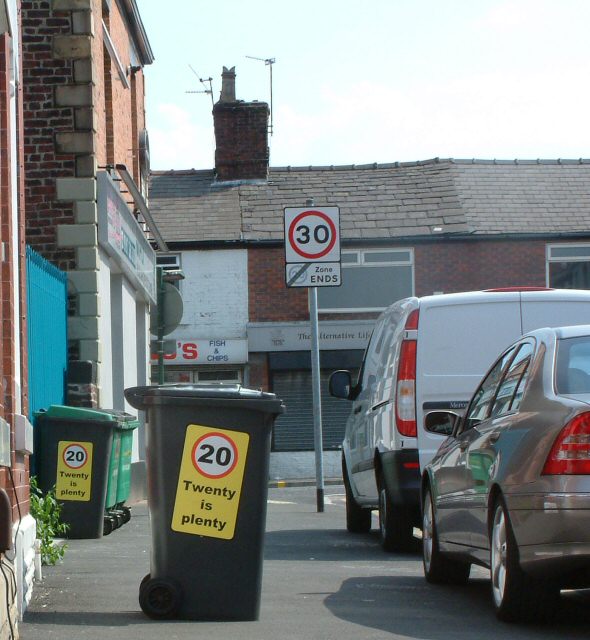
Motorway driving after passing: no restriction in Great Britain
New drivers in England, Scotland and Wales can drive on motorways from the first day after passing their practical test. The national speed limit applies, there is no restriction specific to P plates or to newly qualified drivers, and no post-test motorway lesson is required by law. The position has been the same since the Road Traffic Act 1988. The 2018 change in the law was for provisional licence holders, who are now permitted to drive on motorways with a qualified Approved Driving Instructor. Full licence holders have always been permitted on motorways from day one.
Many new drivers still choose to take a post-test motorway lesson before their first solo motorway trip. The DVSA Pass Plus scheme includes a motorway module, and some independent instructors offer standalone motorway sessions outside that scheme. The reason is practical, not legal: motorway driving requires sustained lane discipline, smart motorway variable speed awareness, and exit slip road decision-making at speeds that feel faster than anything on a standard driving test route. A lesson with an instructor in a dual-control car on a motorway is a low-risk way to build that familiarity.
Northern Ireland: R plates are compulsory, not optional
If you pass your driving test in Northern Ireland, the R plate regime applies to you from day one of holding a full licence. R plates are governed by Northern Ireland legislation that is separate from the Road Traffic Acts covering Great Britain. The two regimes operate independently, and the differences are significant.
- R plates must be displayed for the full 12 months after the date you pass your practical test. This is a legal requirement, not a recommendation.
- During the R plate period the maximum speed on any road is 45 mph, regardless of the posted speed limit. On a 70 mph motorway, an R plate holder is legally restricted to 45 mph.
- R plate holders may drive on motorways, but must keep to the 45 mph limit throughout the R plate period.
- R plate holders are subject to the same drink-drive limit as other Northern Ireland drivers. A lower limit for novice and learner drivers has been legislated but is not yet in force, so check the current position on nidirect before assuming a stricter limit applies.
- Accumulating 6 penalty points during the R plate period triggers automatic licence revocation, on a similar basis to the new-driver probation rules in the rest of the UK.
- After the 12 months, R plates must be removed and the standard full-licence driving conditions apply.
A driver who passes in Great Britain and later moves to Northern Ireland should contact the Driver and Vehicle Agency (DVA) in Northern Ireland about the licence recognition and R plate position. Whether a Great Britain full-licence holder is subject to the R plate regime when they begin living in Northern Ireland depends on circumstances including the timing of the move and licence transfer. DVA publishes guidance on this at nidirect.gov.uk.
“A P plate in England, Scotland or Wales is a courtesy signal to other road users. An R plate in Northern Ireland is the law.”
Sources and further reading
The figures, fees, and procedures referenced in this article are verifiable on the official gov.uk pages below. PassRates.uk is built on the Driver and Vehicle Standards Agency’s open data, published under the Open Government Licence.
What is the pass rate at your test centre?
Search by centre name, town or postcode to see the latest DVSA figure.
Frequently asked questions
Are P plates legally required in England, Scotland or Wales?
No. P plates are entirely voluntary in England, Scotland and Wales. No law requires new drivers to display them after passing the practical test. You can choose to use them, skip them, or put them on and remove them whenever you like. The legal requirement around plates ends when your provisional licence converts to a full licence and you remove your L plates.
Are P plates required in Northern Ireland?
No, but R (Restricted) plates are required in Northern Ireland for the full 12 months after you pass your practical test. R plates carry real legal restrictions: a 45 mph maximum speed on all roads (motorways included, where R drivers may drive but must keep to 45 mph) and the same drink-drive limit as other NI drivers (a lower novice limit has been legislated but is not yet in force). They are set by separate Northern Ireland legislation, distinct from the voluntary P plate system in the rest of the UK.
How long do I have to display P plates?
There is no set period. You can display P plates for a few days, a few weeks, or several months. There is also no minimum: you can choose not to use them at all. Remove them whenever you feel your driving confidence no longer requires the extra patience signal they provide to other road users.
Do P plates affect my car insurance?
P plates have no direct impact on your car insurance premium. They are not a legally rated factor, and most UK insurers do not price for them. The insurance change that does matter after passing is that you must notify your insurer immediately and switch from a learner policy to a full-licence policy before driving unaccompanied. Driving on a learner policy after passing is likely to be treated as uninsured.
Can I drive on the motorway with P plates on?
Yes. In England, Scotland and Wales there is no motorway restriction for new drivers or for P plate holders. You can drive on motorways from the first day you hold a full licence, at the national speed limit, unaccompanied. Northern Ireland is slightly different: R plate holders may use motorways but must keep to the 45 mph R plate limit for the full 12-month period. From 1 October 2026 this changes for new learners in Northern Ireland: anyone whose provisional licence starts on or after that date gets R plates for 24 months, no 45 mph limit, and a late-night passenger limit for the first six months. See new driving rules from October 2026.
What happens if I get 6 penalty points in my first two years of driving?
Your full licence is revoked automatically under the Road Traffic (New Drivers) Act 1995. There is no court hearing and no discretion to waive the revocation. After revocation you revert to provisional licence status and must apply for a new provisional before driving again. To regain a full licence you must pass both the theory test and the practical driving test from scratch, paying the full fees for each.
What is the 45 mph rule for new drivers?
The 45 mph maximum speed applies only to R plate holders in Northern Ireland, not to new drivers in England, Scotland or Wales. In Great Britain there is no speed restriction specific to newly passed drivers or to P plate holders. You are subject to the same posted speed limits as any other driver from day one of holding a full GB licence.
Do I need to tell my insurer I passed my test?
Yes, immediately. Learner driver insurance covers you as a provisional licence holder only. That cover ends the moment you obtain a full licence. You must contact your insurer, cancel the learner policy, and arrange full-licence car insurance before driving unaccompanied. Many new drivers add themselves to a parent's car insurance policy as a named driver initially; others take out their own policy. Either way, the switch must happen before your first solo drive.
Related guides
Written by Vikas and the PassRates.uk team. Vikas is the software engineer and driving enthusiast who started the site. The figures come straight from the DVSA open dataset; see the methodology.
Source DVSA, Open Government Licence v3.0
Continue reading
New drivers are far more likely to crash in year one than any later period. The 6-point revocation rule, insurance update, the five crash-risk behaviours, and motorway readiness: everything for your first 12 months.
DVSA cancelled your practical driving test? Here is exactly what you are owed, how to trigger priority rebooking, and how to claim a refund - step by step.