Is Pass Plus Worth It in 2026? The Real Numbers
Pass Plus costs around £150 to £200 for six hours of post-test training. Whether it pays back in insurance savings depends on your annual premium and insurer: for drivers paying more than £1,750 a year, the maths can stack up; below that, the road safety training value matters more than any financial return.
- Typical course cost
- £150-£2006 hours minimum; instructor-set price
- Insurance discount range
- 5-15%Year one only, where offered by insurer
- Break-even premium
- ~£1,750/yrAt 10% discount and £175 mid-cost course
- Avg first-year premium (17-18yo)
- ~£2,500UK average 2024 (ABI estimate)
- Discount eligibility window
- 12 monthsFrom practical test pass, most insurers
- Government subsidy
- NoneScotland's scheme ended 2015; none in England or Wales
How much does Pass Plus cost in 2026?
Pass Plus costs around £150 to £200 for the minimum six-hour course. DVSA registers the scheme and sets its structure, but instructors set their own fees, so prices vary by region and provider. London and south-east providers generally charge at or above £200; Welsh and northern instructors are often at the lower end of that range. If you are continuing with the same instructor who taught you for your test, you will typically pay their standard hourly rate (around £30 to £38 per hour), so six hours comes to £180 to £228.
There is no government subsidy for Pass Plus in England or Wales. Scotland operated a Saltire scheme that offered a grant of up to £500 until 2015, but that ended. Nothing comparable exists now. Some driving schools bundle Pass Plus with a lesson package and advertise a reduced price; check the itemised cost before booking, as the discount usually reflects bulk-booking savings on lesson hours rather than a reduced Pass Plus fee.
Does the insurance saving cover the course cost? The numbers
The financial case for Pass Plus comes down to three numbers: what your first-year insurance actually costs, what percentage your specific insurer offers for Pass Plus completion, and what the course costs you. The comparison below shows the outcome at a 10 percent discount (a figure cited by several insurers who still offer Pass Plus recognition) against a mid-range course cost of £175.
| Annual premium | Saving at 10% | Course cost | Net result | |
|---|---|---|---|---|
| Very low (e.g. older returner) | £1,000 | £100 | £175 | -£75 (loss) |
| Low (22-25 yr old, modest car) | £1,500 | £150 | £175 | -£25 (marginal) |
| Break-even point | £1,750 | £175 | £175 | Breaks even |
| Moderate (18-21 yr old) | £2,000 | £200 | £175 | +£25 (small gain) |
| Typical 17-18 yr old (UK avg) | £2,500 | £250 | £175 | +£75 (clear gain) |
| High (young male, powerful car) | £3,000 | £300 | £175 | +£125 (strong gain) |
The numbers show the financial case only stacks up once your premium is above roughly £1,750 per year at a 10 percent discount rate. Younger drivers on high premiums, typically 17 to 20-year-olds paying £2,000 to £3,000 in year one, are the group most likely to see a clear financial return. Adult learners in their late 20s or 30s often pay much lower premiums, and for them the financial return is marginal or negative at that discount percentage. The training value, covered below, then becomes the primary justification.
Which insurers offer a Pass Plus discount in 2026?
The Pass Plus insurance discount landscape has narrowed over the past decade. DVSA endorses the scheme but does not maintain a live public register of participating insurers. As of 2025-26, the providers most consistently cited as offering Pass Plus recognition include Direct Line Group policies (Direct Line, Churchill, Privilege) and LV=. Some broker-arranged and regional policies also process Pass Plus completion as a rating factor, which may appear as a visible line-item discount or as a softer influence on the quoted premium.
Several large insurers have moved away from Pass Plus discounts as telematics policies have taken over the young-driver segment. For under-25s, Aviva, Admiral, and most price-comparison aggregator products now route through telematics quotes first, meaning the traditional Pass Plus discount no longer appears as a named line item. The actuarial logic is straightforward: real-time driving data from a device predicts risk more accurately than a six-hour course certificate.
What Pass Plus training covers: the six modules
The Pass Plus scheme has a fixed structure set by DVSA. All six modules are covered in the minimum six hours, with the instructor free to spend more time on any area where the driver needs it. There is no formal test: the instructor signs off each module once they are satisfied with the driver's competence. Pass Plus explained covers the module content in detail; the summary below shows what each module targets. The night-driving module matters because the UK test runs in daylight only, so most new drivers reach the road never having been assessed after dark.
- Module 1 (town driving): complex urban junctions, one-way systems, bus lanes, pedestrians, cyclists, and tight residential streets
- Module 2 (all-weather driving): rain, spray, surface water, low sun, and reduced-visibility conditions
- Module 3 (rural driving): country lanes, blind bends, farm vehicles, animals on the road, and limited-width passing places
- Module 4 (night driving): beam selection, pedestrian spotting, fatigue awareness, and dealing with oncoming headlight dazzle
- Module 5 (dual carriageway driving): lane discipline at 60 to 70 mph, slip-road merging, overtaking and gap selection
- Module 6 (motorway driving): the main draw for most candidates -- merging from slip roads, lane discipline, smart motorway gantry rules, exit timing and high-speed gap management
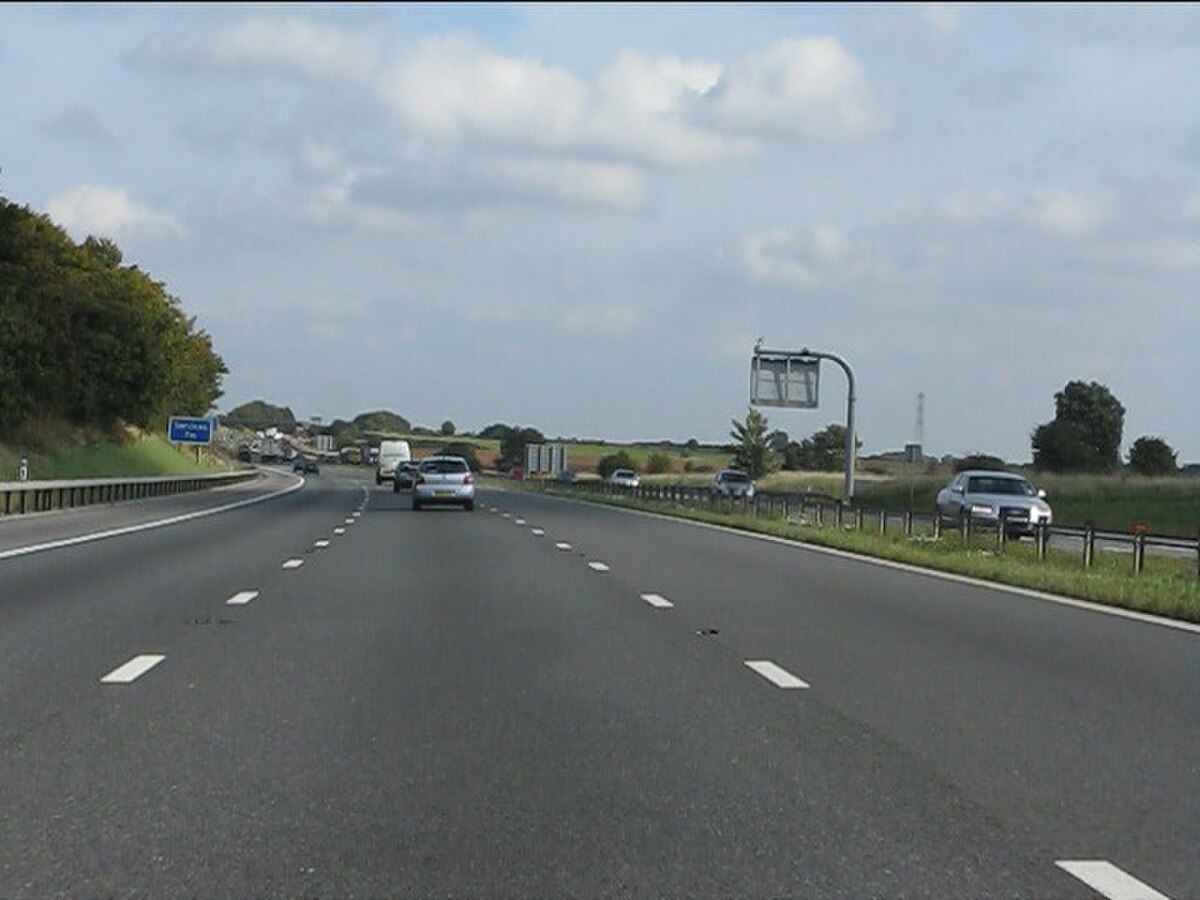
The motorway module: the main reason drivers choose Pass Plus
The standard DVSA category B practical test does not include motorway driving. Many candidates pass their test having driven on A-roads and dual carriageways, but without ever merging onto a motorway or driving in three lanes of traffic at 70 mph. Pass Plus module 6 fills that gap with a real motorway session in a dual-control car, with an instructor alongside for feedback and correction.
The module covers merging from a slip road when the carriageway is moving at speed, maintaining safe following distances (the standard two-second rule extends to four seconds in wet conditions at motorway speed), selecting and holding a lane correctly rather than drifting from lane two to lane three out of habit, and reading smart motorway variable speed limit gantry signs. For any driver who will use motorways regularly, this session is a genuine safety investment entirely separate from any insurance consideration. Our motorway driving after passing guide covers what the first solo motorway journey looks like.
Pass Plus vs telematics insurance: which saves more?
For most young drivers in 2026, a telematics policy (black-box insurance) saves more money than a Pass Plus discount in year one. A telematics policy typically cuts the base premium by 20 to 30 percent versus an equivalent non-telematics policy for the same driver, with further reductions at renewal if the driving score is strong. Pass Plus at 10 percent of a £2,500 premium saves £250. Telematics at 25 percent on the same premium saves £625. On pure financial return, the comparison is not close.
The tradeoff is in use restrictions. Most telematics policies include nighttime curfews (commonly 11pm to 5am or midnight to 6am), annual mileage caps, and the possibility of policy cancellation if driving scores remain poor over several months. Some charge for excess mileage at a rate that can wipe out the initial saving. Pass Plus has none of those restrictions once the certificate is issued: you drive as and when you like. For drivers who work evenings, travel for social occasions at night, or regularly cover long distances, telematics may cost more in practice than the headline saving suggests.
| Pass Plus | Telematics (black box) | |
|---|---|---|
| Year-one saving (typical) | 5-15% where offered | 20-30% vs non-telematics policy |
| Year-two onwards saving | None (year-one discount only) | Continues if driving score is good |
| Cost to driver | £150-£200 course fee | Device usually free with policy |
| Driving curfew | None | Typically 11pm-5am or midnight-6am |
| Mileage cap | None | Often 6,000-10,000 miles per year |
| Training benefit | 6 hours structured instruction | None |
| Risk of mid-term cancellation | None | Yes, if score stays poor |
When Pass Plus is worth it in 2026
The answer splits into two cases: whether you are judging by financial return alone, or by total value including road safety training.
- Your insurer offers a Pass Plus discount and your annual premium is above £1,750: the financial return is positive and the training is a bonus on top
- You passed your test without doing motorway driving and you plan to use motorways regularly: the motorway module alone is worth the cost as a safety investment, regardless of any insurance benefit
- You passed in an unusually rural area and lack experience of complex urban driving (or vice versa): the targeted modules fill real gaps the practical test did not cover
- Your annual premium is below £1,500 and your insurer does not offer a specific Pass Plus discount: individual refresher lessons targeted at your actual weak areas are likely cheaper and more efficient than the full six-module course
- Your insurer offers a telematics policy and you are comfortable with the curfew and mileage terms: the telematics saving will almost always exceed the Pass Plus saving in year one, so take the black box instead
How to book and complete Pass Plus
- 01Confirm your insurer's discount
Before booking, call your insurer and confirm they offer a Pass Plus discount, the exact percentage, and whether there is a deadline from your practical test pass date. Get this in writing or by email.
- 02Find a Pass Plus registered instructor
Search the DVSA's Find a driving school or instructor service and filter for Pass Plus. Your existing instructor may already be registered. If not, any registered ADI authorised to deliver Pass Plus will do.
- 03Agree the schedule and fee
Most providers run three two-hour sessions or two three-hour sessions. Confirm the total price and what happens if a module needs more time than planned. Some instructors charge by the module rather than the full six-hour package.
- 04Complete all six modules
Your instructor signs off each module once they are satisfied with your competence. There is no formal fail: if a module needs more work, it is extended. The certificate is only issued once all six are signed off.
- 05Collect your Pass Plus certificate
Keep the certificate permanently. Most insurers apply the discount at your first renewal without asking for it again, but some request proof; having the original avoids any argument.
- 06Notify your insurer
Call your insurer and tell them you have completed Pass Plus. Ask when the discount is applied: at the next renewal, or pro-rata during the current policy term. Most apply it at renewal.
“Pass Plus is genuinely worth it if you will drive on motorways and your premium is high. For everyone else, the training value is real but the insurance numbers do not always work in your favour. Confirm the discount with your insurer before you book.”
Sources and further reading
The figures, fees, and procedures referenced in this article are verifiable on the official gov.uk pages below. PassRates.uk is built on the Driver and Vehicle Standards Agency’s open data, published under the Open Government Licence.
What is the pass rate at your test centre?
Search by centre name, town or postcode to see the latest DVSA figure.
Frequently asked questions
Is Pass Plus worth it for a 17-year-old?
For most 17-year-olds, yes, on two conditions: your insurer offers a Pass Plus discount, and your annual premium is high enough that the saving exceeds the course cost. A typical 17-year-old paying £2,500 in first-year insurance would save around £250 at a 10 percent discount, making a £175 course a clear financial gain. Add the motorway training benefit (relevant for any driver who will use motorways) and the case is strong. Confirm the discount with your insurer before booking.
Which insurers offer a Pass Plus discount in 2026?
The insurer landscape changes often, so no list stays accurate for long. As of 2025-26, Direct Line Group policies (Direct Line, Churchill, Privilege) and LV= have been cited as offering Pass Plus recognition. Many large insurers, particularly those leading with telematics products for young drivers, no longer offer a named Pass Plus discount. Always call your insurer directly and get a confirmed percentage before booking the course.
How long does a Pass Plus insurance discount last?
The discount applies in year one only. At your first renewal, your no-claims discount and a year of claims-free driving usually produce a larger premium reduction than the Pass Plus credit anyway, so the one-year limit is less of a loss than it sounds. After year one the certificate no longer influences your premium, regardless of which insurer you use.
Can I do Pass Plus more than 12 months after passing my test?
You can take the course at any time, but most insurers apply the discount only if you complete within 12 months of your practical test pass date. Outside that window the course still has genuine training value, particularly the motorway module, but the insurance financial return is unlikely. Check your insurer's specific eligibility terms if you are near or past the 12-month mark.
Is Pass Plus better than a black-box telematics policy?
Telematics policies typically save more money in year one: around 20 to 30 percent versus a non-telematics policy, compared to the Pass Plus discount of 5 to 15 percent. However, telematics policies include curfews (often 11pm to 5am) and mileage caps that can erode the saving for drivers who travel at night or cover long distances. Pass Plus imposes no ongoing restrictions. For most young drivers on standard patterns, telematics saves more money. For drivers with evening travel needs, the comparison shifts.
Is there a test at the end of Pass Plus?
No. Pass Plus has no formal test or exam. Your instructor assesses you continuously across all six modules and signs off each one once you demonstrate satisfactory competence. You cannot formally fail, but if the instructor is not satisfied with a module they extend it rather than sign it off. The DVSA-registered certificate is issued once all six modules are complete.
Does Pass Plus include motorway driving?
Yes. Module 6 is specifically motorway driving and is the most frequently cited reason new drivers choose Pass Plus. The standard DVSA category B practical test does not include a motorway section, so many drivers pass their test having never merged onto a motorway. The Pass Plus motorway module covers merging from slip roads, lane selection and discipline, smart motorway gantry signs, safe following distances at speed, and exit timing, all with an instructor in a dual-control car.
Can I do Pass Plus with a different instructor from the one who taught me?
Yes. Any DVSA-registered ADI who is authorised to deliver Pass Plus can take you through the scheme. You are not required to use your original instructor. If your original instructor does not offer Pass Plus, search the DVSA Find a driving school or instructor service and filter for Pass Plus providers in your area.
Every candidate behind these numbers passed a theory test first. Nationally 44.8% of attempts clear it.
Following distances, courtesy, priority and how to behave around other road users. All 14 DVSA topics are free to practise, with no sign up. See the theory pass rate by centre or the full practice hub.
Related guides
Written by Vikas and the PassRates.uk team. Vikas is the software engineer and driving enthusiast who started the site. The figures come straight from the DVSA open dataset; see the methodology.
Source DVSA, Open Government Licence v3.0
Continue reading
Black box insurance cuts first-year premiums 30-50% for UK drivers under 25, but renewal outcomes vary sharply. We cover who benefits, curfew rules, and when to switch back to standard cover in 2026.
December and January offer the shortest UK driving test waits and cleaner slot availability. DVSA pass-rate data by month shows which periods have lower demand and why.