How to Check If a Driving Instructor Is Registered UK
To check whether a driving instructor is registered in the UK, search the free DVSA public register at gov.uk/find-driving-schools-and-lessons using their name, postcode or registration number. Paying for lessons with anyone who is not on that register is illegal under Section 123 of the Road Traffic Act 1988, and DVSA is currently enforcing against a wave of unregistered instructors advertising on social media.
- ADI register check
- FreeDVSA public register at gov.uk/find-driving-schools-and-lessons. No account needed.
- Legal requirement
- Section 123Road Traffic Act 1988: illegal to charge for driving instruction without ADI or PDI registration
- ADI badge colour
- GreenFully qualified Approved Driving Instructor. Must be displayed in the car windscreen.
- PDI badge colour
- PinkTrainee instructor. Allowed up to 40 hours of paid instruction while completing ADI training.
- ADI renewal
- Every 4 yearsInstructors must pass a standards check to renew. An expired registration means the instructor is no longer legally registered.
- DVSA enforcement
- ActiveDVSA prosecutes unregistered instructors. Reports go to fraudreferrals@dvsa.gov.uk.
How to check if a driving instructor is registered
DVSA maintains a public register of every Approved Driving Instructor (ADI) currently authorised to teach. You do not need an account to search it. Go to gov.uk/find-driving-schools-and-lessons, enter the instructor's name and postcode, and their registration number and badge expiry will appear if they are registered. You can also search by registration number alone if you have it from their badge.
Every registered ADI's green badge carries a six-digit registration number. Before your first lesson, or before you hand over any payment, ask the instructor to show you their badge and then cross-reference the number on the register. This takes about 30 seconds. If the name on the badge does not match the person in front of you, or the number returns no result, do not proceed.
- 01Go to the DVSA register
Visit gov.uk/find-driving-schools-and-lessons on your phone or computer. No account needed.
- 02Search by name or registration number
Enter the instructor's full name and postcode, or type the six-digit number from their badge directly into the register search.
- 03Check the badge colour and expiry
A valid result will show a green ADI badge (fully qualified) or a pink PDI/trainee badge (legally authorised but still training). Confirm the badge has not expired.
- 04Look for the physical badge in the car
On your first lesson, confirm the badge is displayed in the instructor's windscreen. ADIs are required by law to display it. The registration number should match what you checked online.
- 05If you cannot find them on the register
Do not proceed. An instructor not on the register cannot legally charge you for lessons. Contact DVSA at fraudreferrals@dvsa.gov.uk to report a potentially unregistered instructor.
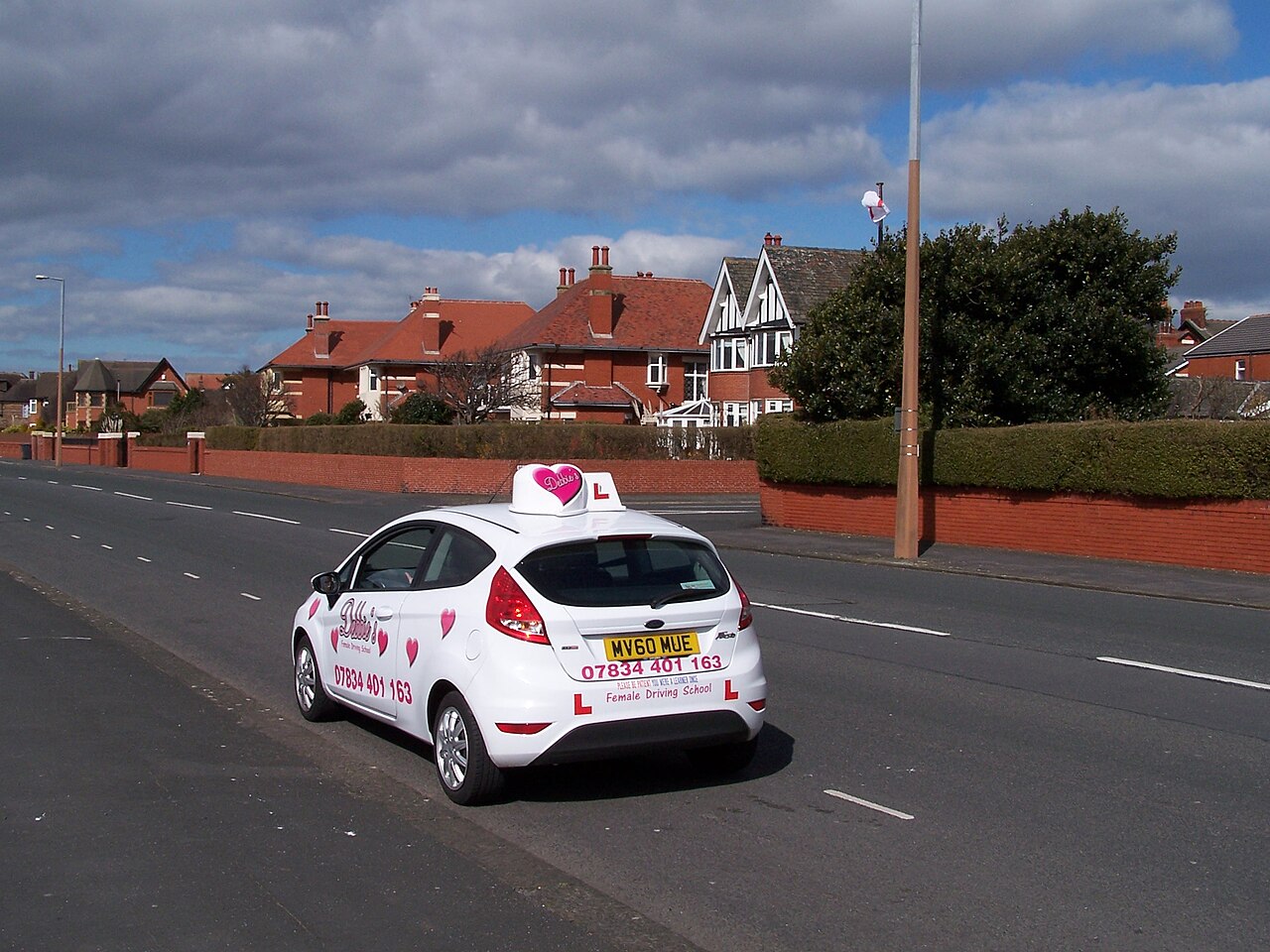
ADI green badge vs PDI pink badge: what is the difference?
There are two types of registered instructor who can legally charge you for lessons. An ADI (Approved Driving Instructor) has passed all three parts of the DVSA qualifying process: a written theory and hazard perception test, a practical driving ability test, and an instructional ability test. They hold a green badge. An ADI must pass a standards check every four years to keep their registration, so an up-to-date green badge is a genuine quality signal, not just a box-tick.
A PDI (sometimes called a trainee instructor) is someone who has passed parts one and two but has not yet completed part three. They hold a pink badge and are permitted to give a maximum of 40 hours of paid instruction while they work towards full qualification. Their pink badge carries a different number series and an earlier expiry date, and DVSA limits how many hours they can teach you on it. The 40-hour cap is a consumer protection: DVSA does not want learners spending an entire course with someone who has not yet demonstrated they can teach to the required standard.
| ADI (green badge) | PDI / trainee (pink badge) | |
|---|---|---|
| Legally authorised to charge | Yes | Yes, up to 40 paid hours |
| DVSA test stage | All 3 parts passed | Parts 1 and 2 passed; part 3 in progress |
| Standards check | Every 4 years | Not applicable (trainee) |
| Badge display required | Yes, in windscreen | Yes, in windscreen |
| Searchable on DVSA register | Yes | Yes |
| Typical cost to learner | Market rate (avg ~£38/hr) | Often reduced rate during training |
Red flags before and during a lesson
Most unregistered instructors do not advertise themselves as illegal. They price lessons attractively, communicate on WhatsApp only, and rely on the learner not knowing what to look for. These are the most common warning signs.
- No badge visible in the car windscreen, even after you ask
- Cash only, no receipt, no business name or address given
- Price significantly below the local market (national average is around £35 to £42 per hour)
- Contact only through a personal social media profile or messaging app, no website or registered school
- Car has no dual controls (legal, but almost every professional instructor uses them)
- Instructor asks you to meet in a car park and then drives you somewhere before handing over the wheel, rather than starting from your home
- Lesson advertised on TikTok, Instagram or Facebook Marketplace with no mention of ADI registration
- Instructor cannot or will not tell you their registration number
- Badge is laminated, printed on paper, or otherwise looks home-made
Fake instructor scams on social media
With booking wait times running at around 20 weeks nationally and the cost of a full licence rising above £2,400 on average, some learners are looking for shortcuts. Scammers have noticed. The Driving Instructors Association (DIA) has issued a specific consumer alert about unregistered instructors advertising on TikTok, some of them also targeting learners with offers to sell fake licences or remove penalty points for cash. These are serious criminal offences, not just consumer complaints.
The social media pattern is consistent: a short video showing someone driving confidently, a price 30 to 50 per cent below market rate, and contact via WhatsApp or DM. Some advertise in learner driver Facebook groups. The videos may use the hashtag #passdrivingtest, which carries tens of millions of views and has no vetting. DVSA's enforcement programme is active, but new accounts appear faster than old ones are removed. Your own 30-second check on the DVSA register is the most reliable protection.
What to do if your instructor turns out not to be registered
If you discover mid-course, or after lessons have already taken place, that your instructor is not on the DVSA register, stop paying immediately and do not attend further lessons. The money you have already paid is unlikely to be recovered through DVSA, but you may be able to claim through your bank if you paid by card (Section 75 of the Consumer Credit Act for purchases over £100, or chargeback for smaller amounts).
- Report to DVSA by emailing fraudreferrals@dvsa.gov.uk with the instructor's name, phone number and any other details
- Report to Action Fraud (0300 123 2040 or actionfraud.police.uk) if you believe you have been defrauded
- Report to Trading Standards via the Citizens Advice helpline (0808 223 1133) for illegal commercial activity
- If your licence number was shared, contact DVLA on 0300 790 6802 to flag potential identity misuse
- Contact your bank or card provider about a chargeback or Section 75 claim if you paid by card
Any driving you did with an unregistered paid instructor is still valid in the sense that you sat behind the wheel. DVSA does not have a mechanism to invalidate a learner's log or require them to restart. However, any test bookings made using a fraudulent account created on your behalf (some scammers offer to book tests for learners) should be reported to DVSA, because those bookings may have been made in breach of the 2026 booking rules.
“An ADI or PDI badge in the windscreen is not optional paperwork. It is the only legal proof that you can charge someone to learn to drive.”
Finding a registered instructor: next steps
The DVSA register at gov.uk/find-driving-schools-and-lessons is the safest starting point. You can filter by postcode and distance, see each instructor's ADI number, and check whether they are currently registered. Larger franchise schools (BSM, AA Driving School, RED Driving School) employ ADIs and run their own vetting, so booking through a franchised school adds one more layer of accountability.
For what to look for beyond registration, the related guide choosing a driving instructor in the UK covers quality signals: pass rates by instructor, whether you need a specialist (automatic, anxious drivers, impairments), and how to read lesson reviews. Once you have found someone registered and credible, our free theory test practice tools give you structured revision so your practical lessons build on solid knowledge rather than filling gaps the instructor has to patch one by one. DVSA's own research found that learners who completed structured theory preparation before lessons needed fewer hours overall.
Sources and further reading
The figures, fees, and procedures referenced in this article are verifiable on the official gov.uk pages below. PassRates.uk is built on the Driver and Vehicle Standards Agency’s open data, published under the Open Government Licence.
What is the pass rate at your test centre?
Search by centre name, town or postcode to see the latest DVSA figure.
Frequently asked questions
Is it illegal to charge for driving lessons without being registered?
Yes. Under Section 123 of the Road Traffic Act 1988 it is a criminal offence to receive payment for driving instruction in a motor vehicle unless you are registered as an ADI or have a PDI (trainee) licence. The learner who pays is not committing an offence, but the instructor is. DVSA actively prosecutes unregistered instructors.
Can I check a driving instructor's badge number online?
Yes. DVSA's public register at gov.uk/find-driving-schools-and-lessons is free and requires no account. You can search by name and postcode, or by the six-digit registration number printed on the instructor's badge. The result will confirm whether the registration is current and what type of badge they hold.
What does a pink badge mean for a driving instructor?
A pink badge means the instructor is a PDI (trainee driving instructor) who has passed the first two parts of the ADI qualifying process but has not yet completed part three (the instructional ability test). A PDI is legally authorised to charge for lessons but is limited to 40 hours of paid instruction. They must display the pink badge in their windscreen just like an ADI.
What should I do if my driving instructor does not have a badge in the car?
Ask the instructor directly to show you their badge. If they cannot produce a green ADI badge or a pink PDI badge, do not proceed with the lesson or make any payment. Report the instructor to DVSA at fraudreferrals@dvsa.gov.uk. If money has already changed hands, contact Action Fraud on 0300 123 2040.
How do I find a registered driving instructor near me?
Use the DVSA public register at gov.uk/find-driving-schools-and-lessons. Enter your postcode and it will return a list of registered ADIs and approved schools in your area. You can also check the DVSA's approved school list or contact franchised schools like BSM, AA Driving School and RED, which run their own instructor vetting.
Can a friend teach me to drive if I pay them?
No, not legally. If your friend receives any form of payment, goods or services in return for giving you driving instruction, they are committing an offence under Section 123 RTA 1988 unless they are a registered ADI or hold a PDI licence. Voluntary private practice (where no payment changes hands) with a qualified licence holder who is 21 or over and has held a full licence for at least 3 years is legal.
What is the difference between an ADI and a driving school?
An ADI is an individual instructor registered with DVSA. A driving school is a business that employs or franchises one or more ADIs. When you book through a school, check that the individual instructor assigned to you is on the DVSA register, not just the school itself. Large franchise schools are generally reliable, but the school's registration does not automatically mean every instructor working under that name is active.
How often does a driving instructor have to renew their ADI registration?
ADIs must renew every four years and must pass a DVSA standards check as part of that renewal. If an instructor's badge has expired, they are no longer legally registered even if they still have the physical badge. The DVSA register will show the current expiry date, so always check that the badge is not just present but still valid.
Related guides
- Lessons and instructorsDriving lesson costs 2026Read guide
- Lessons and instructorsCheapest places to learn to driveRead guide
- Lessons and instructorsLessons before theory testRead guide
- Lessons and instructorsLearn to drive from YouTube and TikTokRead guide
- Lessons and instructorsLessons to passRead guide
- Lessons and instructorsHow Many Driving LessonsRead guide
Written by Vikas and the PassRates.uk team. Vikas is the software engineer and driving enthusiast who started the site. The figures come straight from the DVSA open dataset; see the methodology.
Source DVSA, Open Government Licence v3.0
Continue reading
Junctions and mirrors are the most-recorded UK driving test fault categories (DVSA 2024-25 rank data): the categories, why they dominate, and how to fix each.
DVSA trialled its new Driver Services Platform at Durham in July 2026 and published a 3-months-on review of its 2026 booking rule changes. Here is what both mean for learners booking today.