Theory test, Road signs

Warning signs

Triangles warn. A red-bordered triangle warns of a hazard ahead, such as a bend, a junction, a crossing or a steep hill, so you have time to slow down and look. The picture inside tells you what the hazard is. Tap any sign below for the full detail, or take the road signs short test.

Warning signs exist to buy you time. A red-bordered triangle tells you a hazard is coming up, far enough ahead that you can ease off, check your mirrors and be ready to act before you reach it. The picture inside the triangle tells you what the hazard is, and the signs are kept simple so you can read them at speed. They do not order you to do anything, the way an order sign does, but ignoring them is how avoidable faults happen, because you arrive at the hazard with no plan.

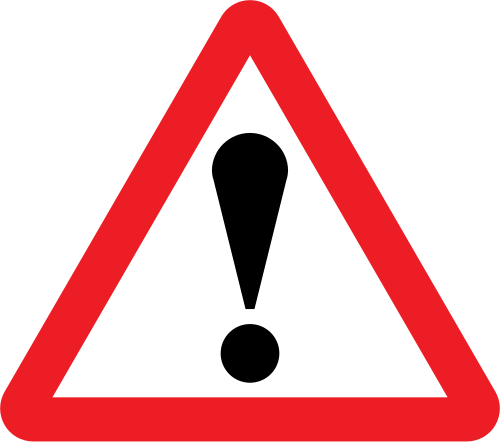
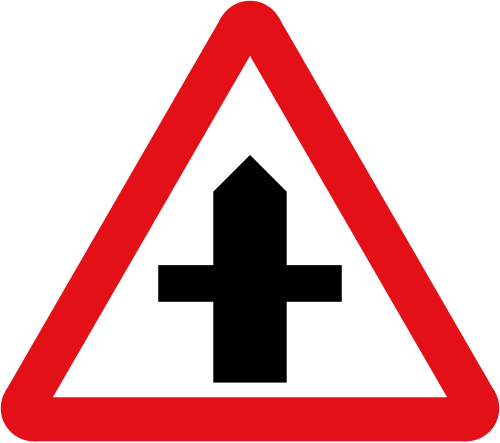
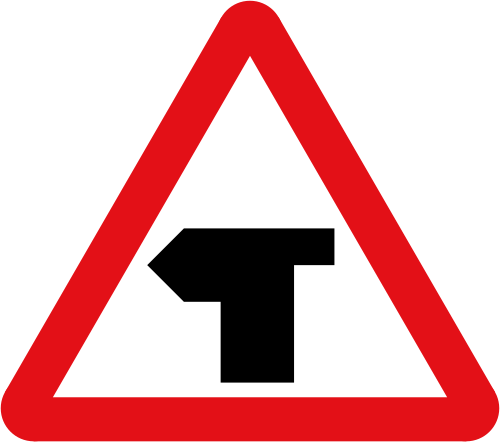
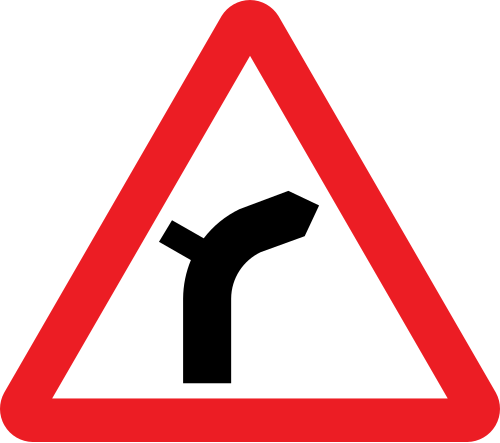
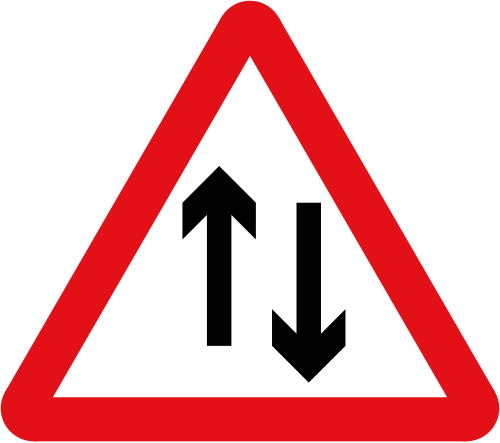
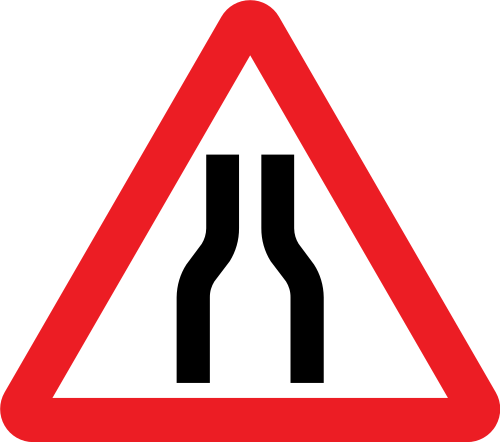
The warnings that come up most are bends (a single curve, or a double bend that turns the other way after the first), junctions (a crossroads, a T-junction, or a staggered junction where the side roads do not line up), and crossings and steep hills, where an upward or downward arrow tells you which way the gradient runs. Others warn that the road narrows, that the surface may be slippery, or that you are about to meet two-way traffic after a one-way stretch. When a hazard has no standard symbol, the triangle shows a single exclamation mark with a small plate underneath that spells the danger out in words.

Warning signs are the backbone of the hazard-perception part of the theory test, which scores you on spotting developing hazards early, and they matter just as much on the practical, where reacting in good time to a bend or a junction is what a calm, safe drive looks like. Tap any sign above for the detail and the look-alikes worth knowing, or take the road signs short test to check you can read them at a glance.

Every warning signs and what it means
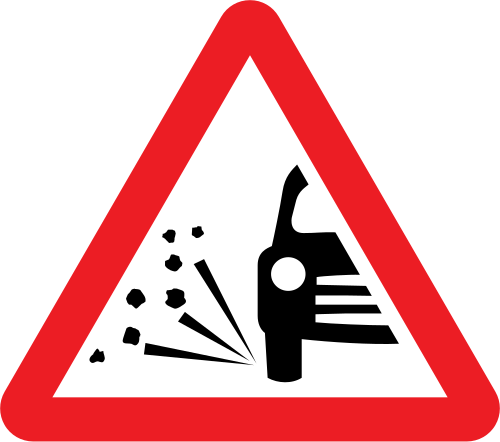
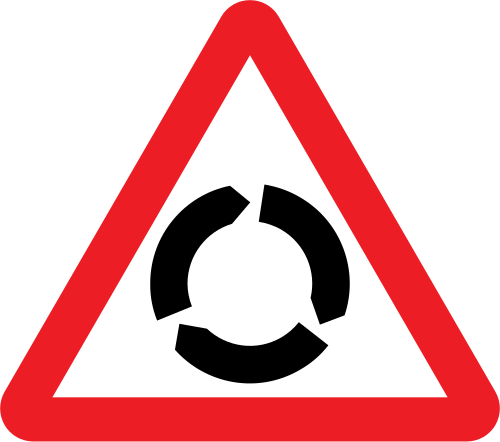
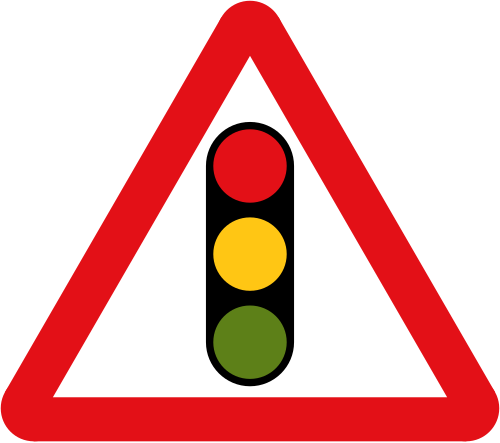
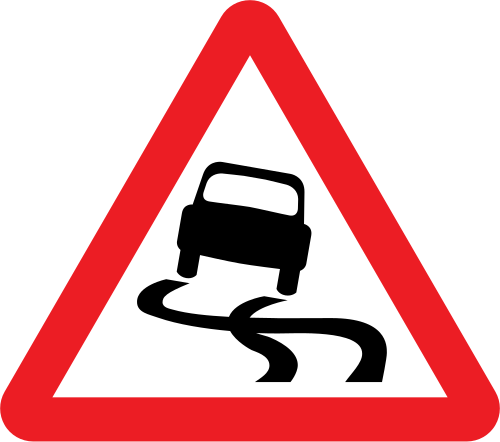
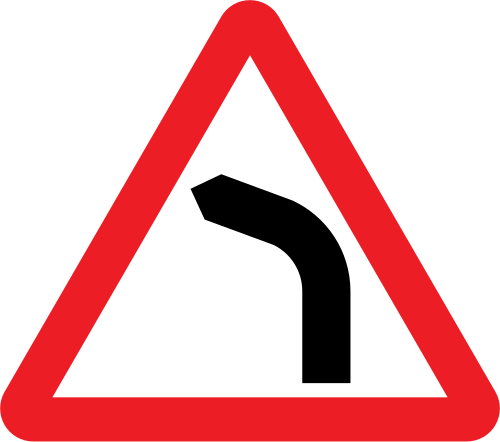
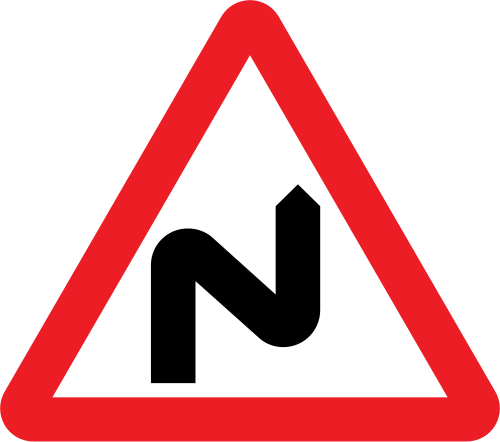
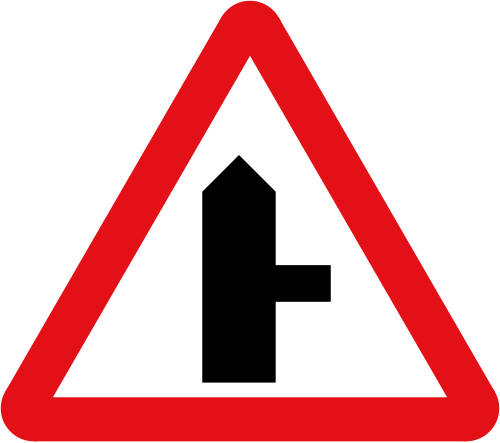
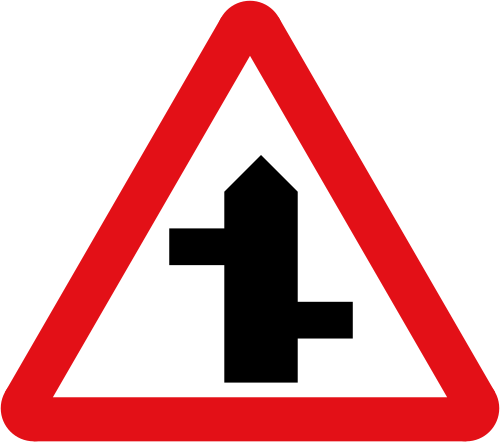
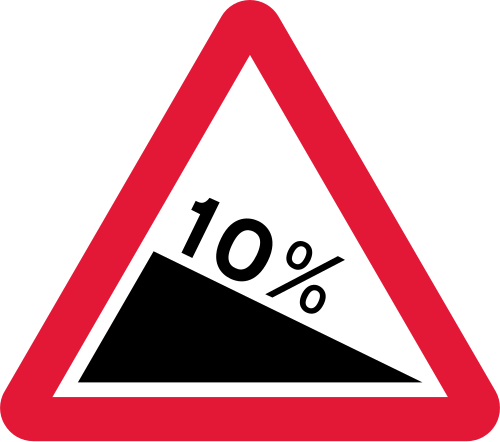
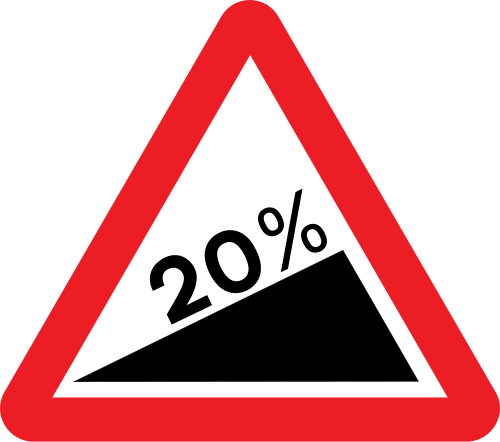
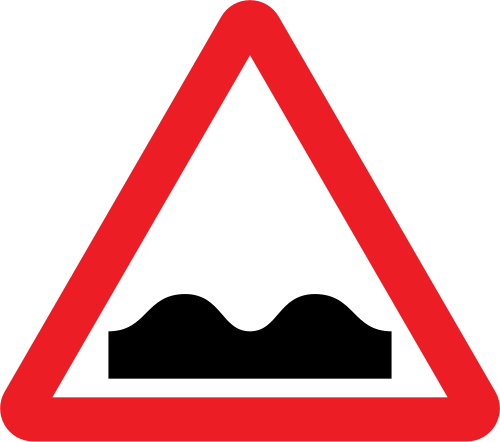
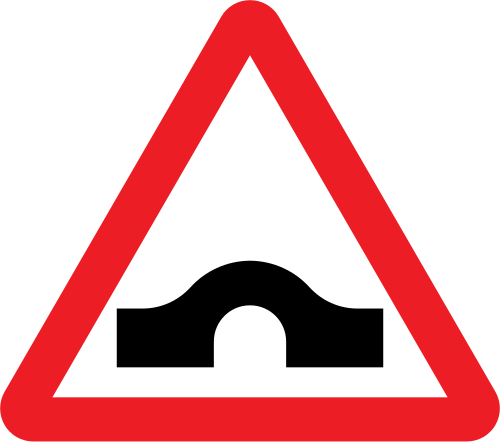
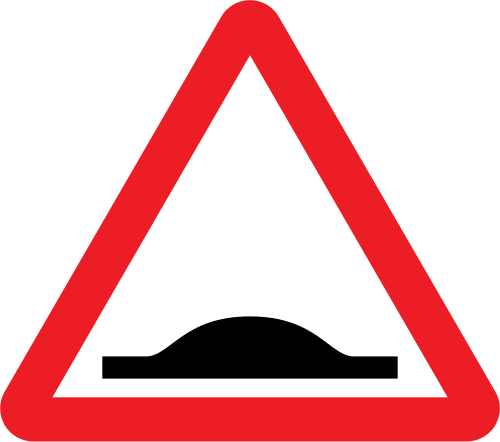
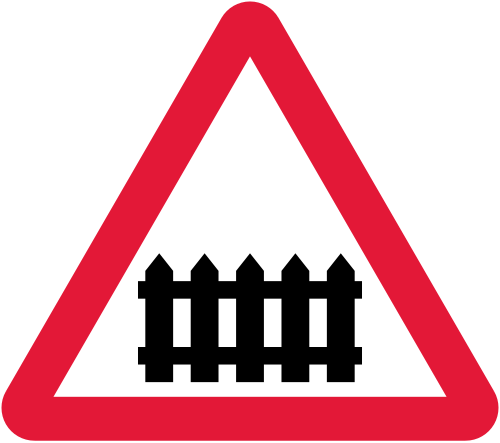
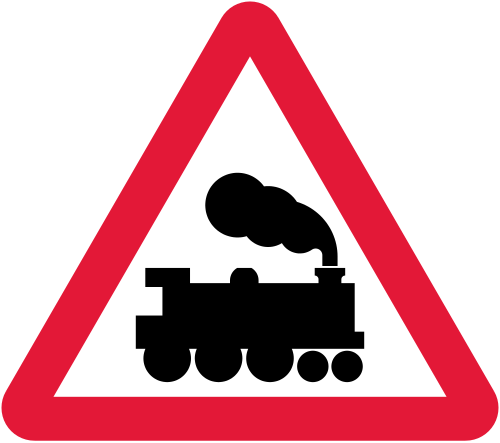
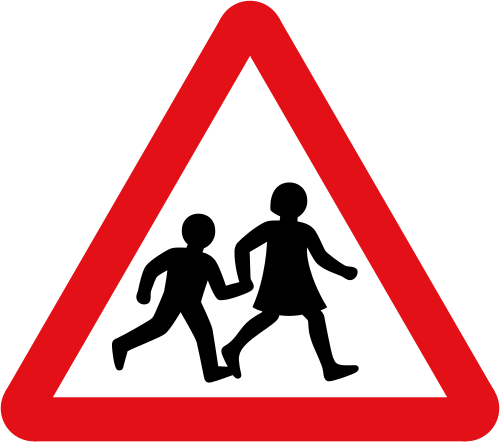
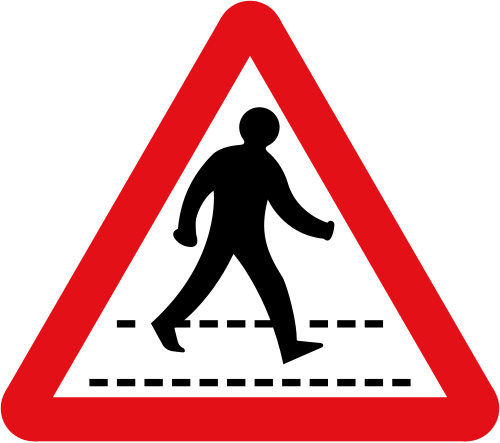
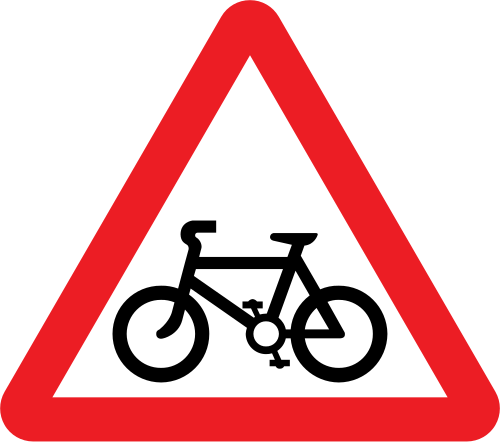
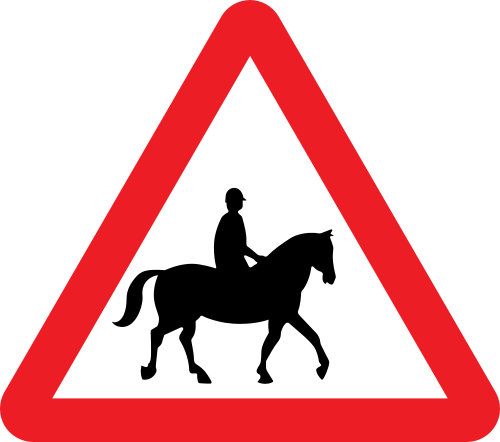
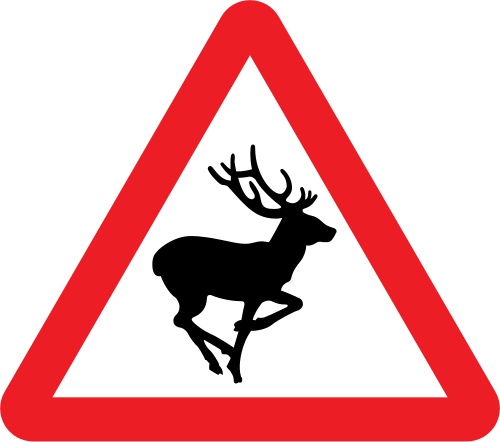
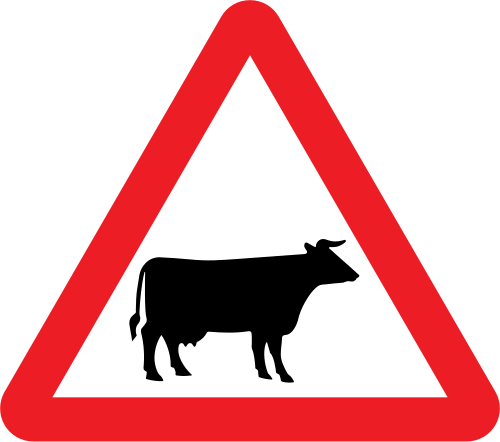
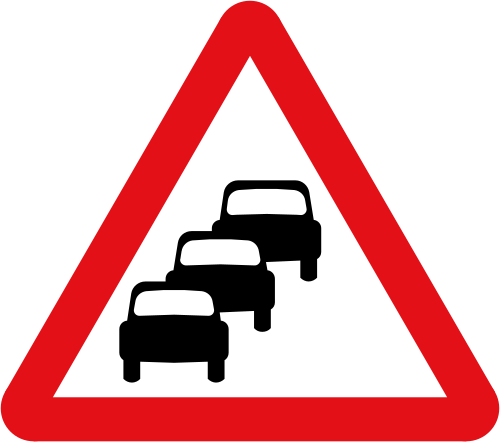
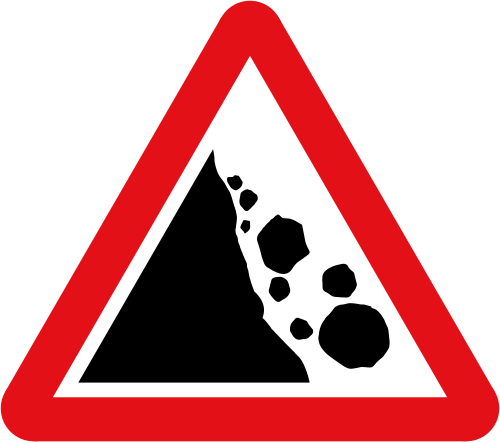
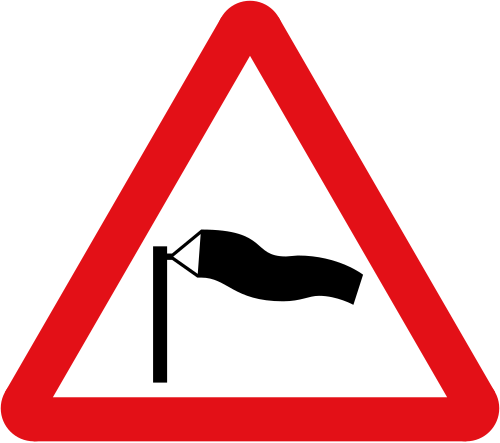
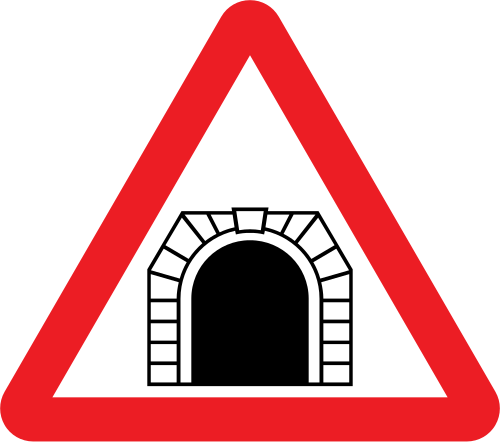
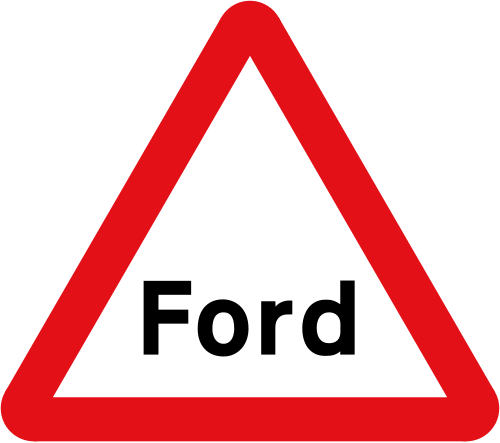
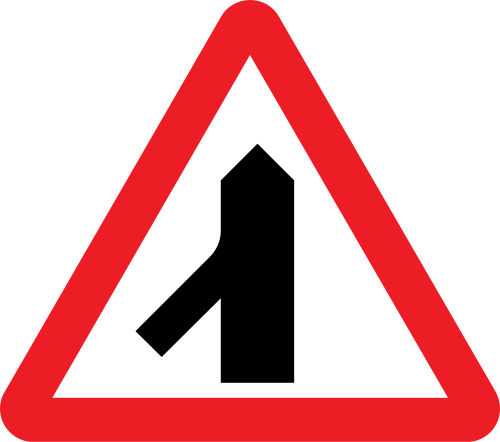
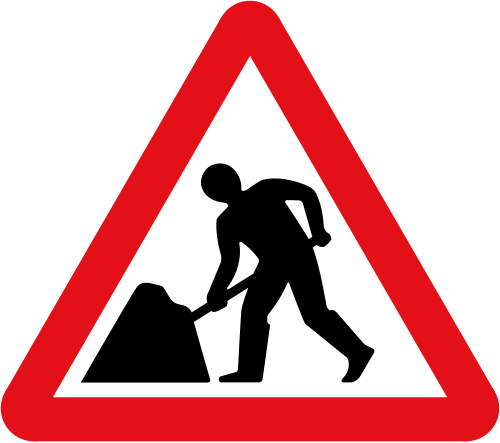
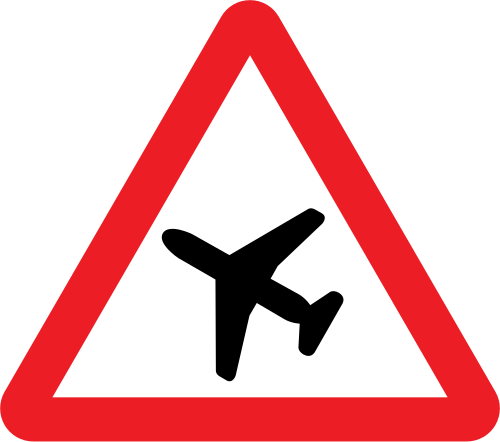
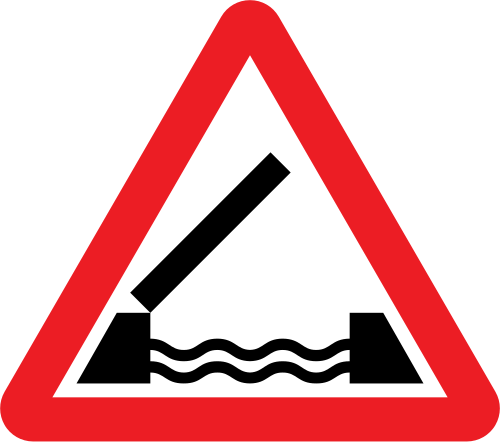
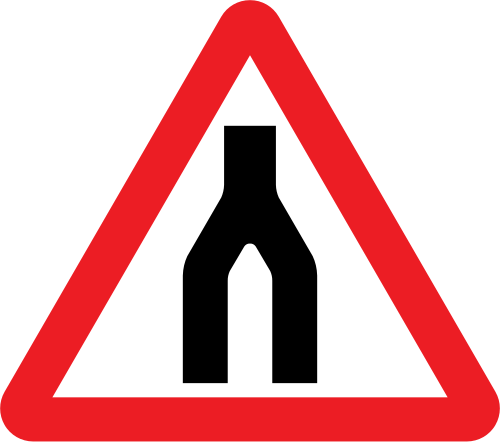
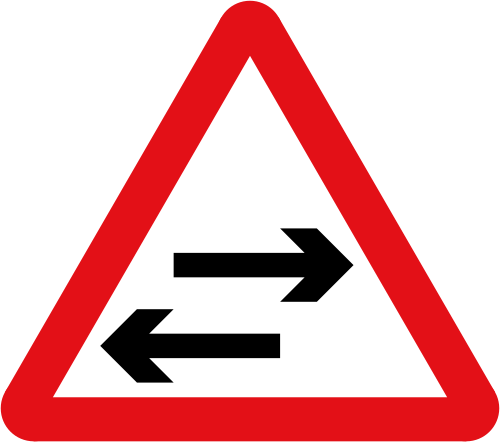
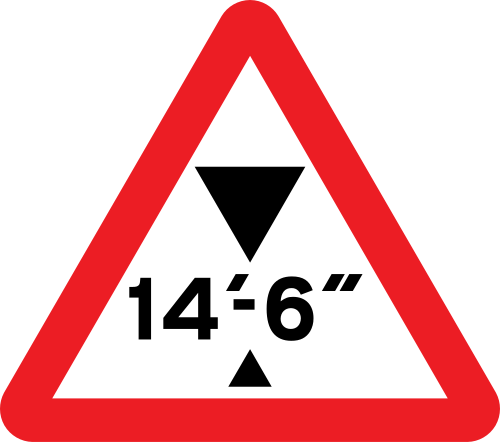
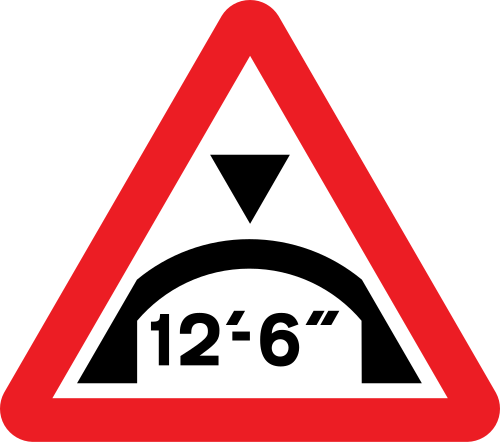
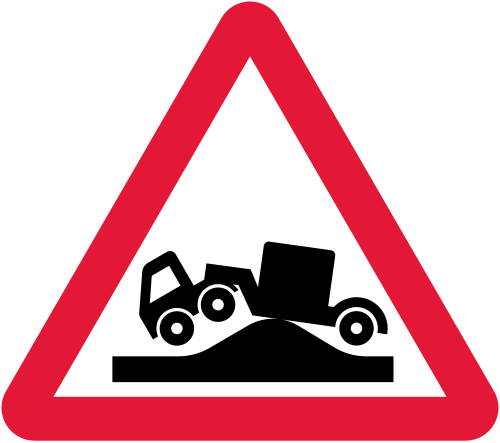
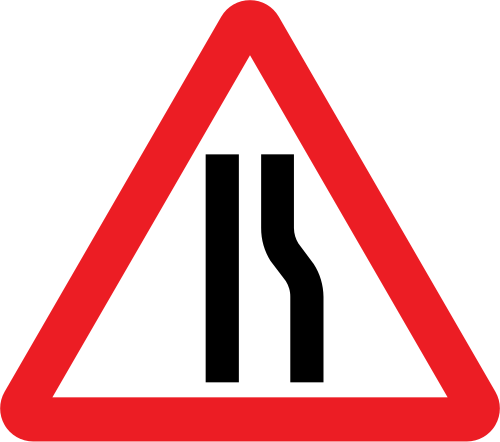
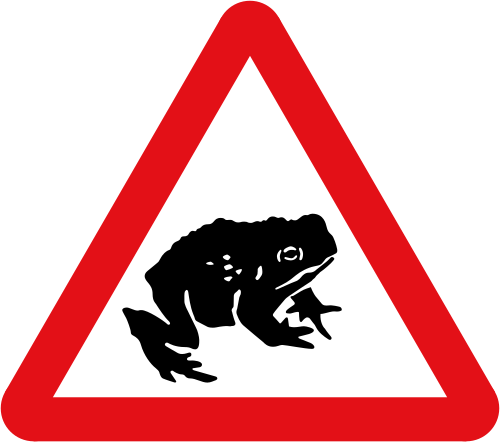
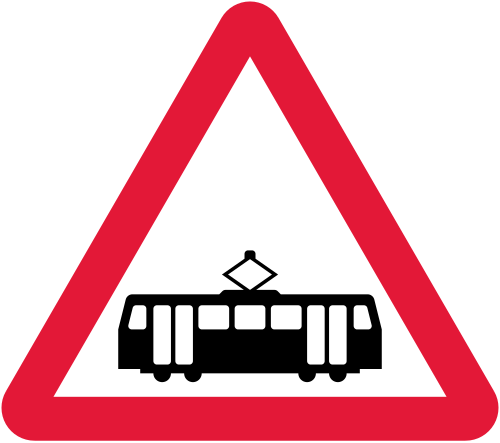
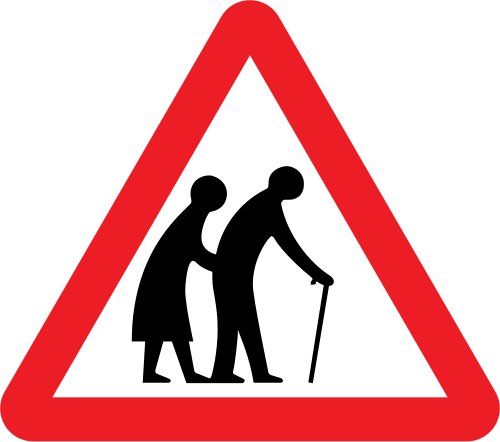
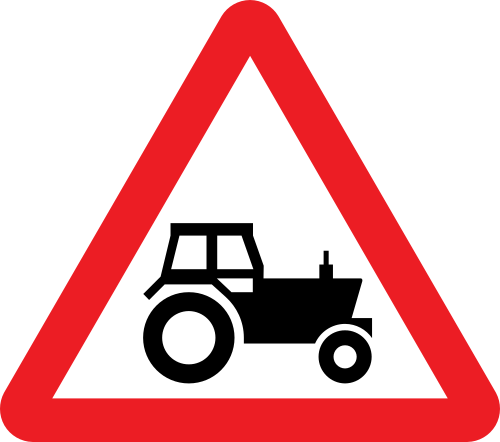
Other dangerOther dangerA hazard ahead that has no specific sign of its own. A small plate underneath usually says what it is.Crossroads aheadCrossroads aheadCrossroads ahead, where traffic may cross or join from both sides.T-junction aheadT-junction aheadT-junction ahead. The road you are on ends and you must turn left or right.Roundabout aheadRoundabout aheadA roundabout is ahead. Be ready to give way to traffic from your right.Bend aheadBend aheadA sharp bend ahead, in the direction the arrow shows.Two-way trafficTwo-way trafficTwo-way traffic ahead. You are about to meet traffic coming towards you, often after a one-way section.Traffic signals aheadTraffic signals aheadTraffic signals ahead that you may not be able to see yet.Road narrowsRoad narrowsThe road narrows ahead on both sides, so there may not be room for two vehicles.Slippery roadSlippery roadThe road surface may be slippery ahead.Pedestrians in roadPedestrians in roadPedestrians may be in the road ahead, often where there is no pavement.Bend to the leftBend to the leftA sharp bend to the left ahead.Double bendDouble bendA double bend ahead, first one way then the other.Side roadSide roadA side road joins ahead, and traffic may pull out or be waiting to.Staggered junctionStaggered junctionStaggered junction ahead, with side roads on each side that do not line up.Steep hill downwardsSteep hill downwardsA steep downhill ahead. The figure shows how steep the gradient is.Steep hill upwardsSteep hill upwardsA steep uphill ahead.Uneven roadUneven roadThe road surface is uneven ahead.Hump bridgeHump bridgeA hump bridge ahead, where the road rises sharply.Road humpsRoad humpsRoad humps ahead, placed to slow traffic.Level crossing with barrierLevel crossing with barrierA level crossing with a barrier or gate ahead.Level crossing without barrierLevel crossing without barrierA level crossing with no barrier or gate ahead.School or children crossingSchool or children crossingChildren may be crossing ahead, often near a school.Zebra crossing aheadZebra crossing aheadA zebra crossing is ahead.Cycle route aheadCycle route aheadA route used by cyclists crosses or joins ahead.Horse ridersHorse ridersRiders on horseback may be in the road ahead.Wild animalsWild animalsWild animals such as deer may be in the road ahead.Farm animalsFarm animalsCattle or other farm animals may be in the road ahead.Queues likelyQueues likelyTraffic queues are likely ahead.Falling or fallen rocksFalling or fallen rocksThere is a risk of falling or fallen rocks ahead.Side windsSide windsStrong cross winds are likely.Tunnel aheadTunnel aheadThere is a tunnel ahead.FordFordA ford, a place where a stream crosses the road, is ahead.Traffic merging from leftTraffic merging from leftTraffic merges from the left ahead, and neither road has priority.Road worksRoad worksRoad works are ahead.Loose chippingsLoose chippingsThere are loose chippings on the road surface.Low-flying aircraftLow-flying aircraftThere may be low-flying aircraft or sudden aircraft noise.Opening or swing bridgeOpening or swing bridgeThere is an opening or swing bridge ahead.TramsTramsTrams operate or cross ahead.Frail or disabled pedestriansFrail or disabled pedestriansFrail or disabled pedestrians are likely to cross the road ahead.Agricultural vehiclesAgricultural vehiclesSlow agricultural vehicles, such as tractors, are likely to be in the road.Dual carriageway endsDual carriageway endsThe dual carriageway ends ahead, so you will meet oncoming traffic.Two-way traffic crosses aheadTwo-way traffic crosses aheadTwo-way traffic crosses a one-way road ahead.Available headroomAvailable headroomThere is a height restriction ahead, and the safe headroom is shown.Arch bridge headroomArch bridge headroomThere is an arched bridge ahead, lower at the sides than in the middle, with the headroom shown.Risk of groundingRisk of groundingLong, low vehicles risk grounding on a hump bridge or level crossing ahead.Road narrows on the rightRoad narrows on the rightThe road narrows on the right-hand side ahead.Migratory toad crossingMigratory toad crossingMigratory toads cross the road ahead, usually in spring.
Other kinds of sign

Test yourself

The theory test asks you to recognise signs like these. Try the road and traffic signs short test (with an easy and a hard set), or read the signs revision notes.

Sign meanings are based on Know Your Traffic Signs and The Highway Code. The sign images are official Department for Transport signs (Crown copyright), reused under the Open Government Licence and the public domain via Wikimedia Commons. Always check the current Highway Code on gov.uk. Not affiliated with or endorsed by the DVSA.