Birmingham Driving Test Centre Pass Rates: All Five Sites Compared (2024-25)
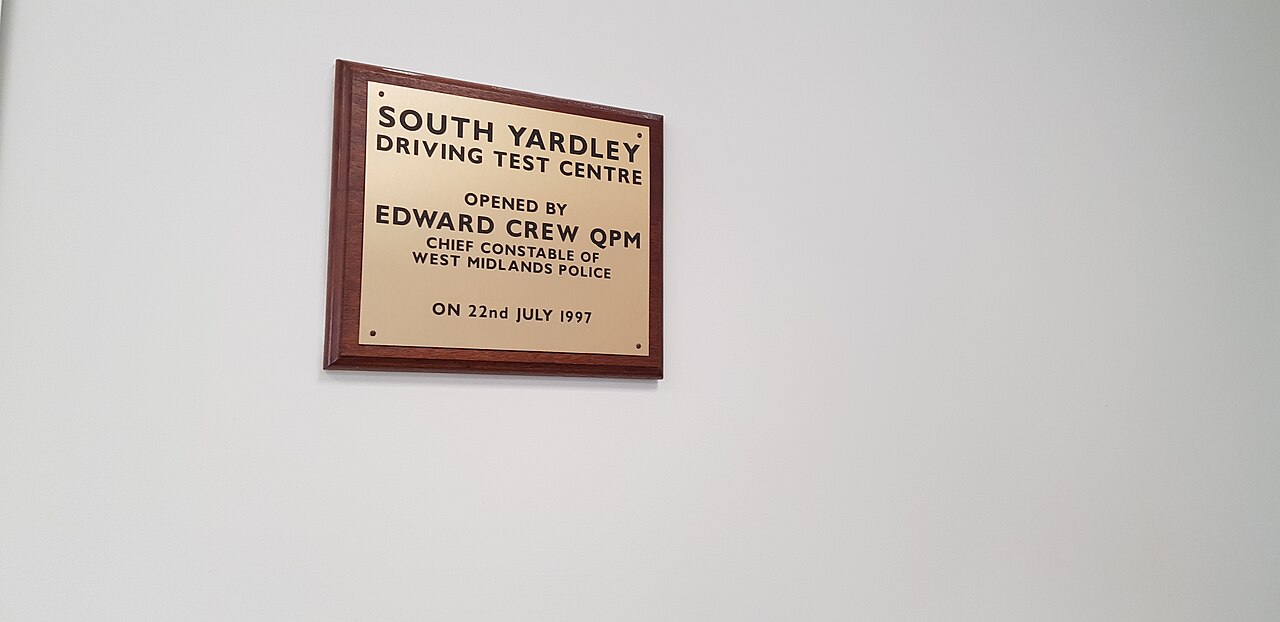
Birmingham has five active DVSA driving test centres in 2024-25 and a 16.5 percentage point gap separates the best from the worst. Shirley returned 58.1% on 9,582 tests, placing it 9.4 points above the national average. South Yardley returned 41.6% on 12,709 tests, 7.1 points below. For candidates in the city deciding where to book, the choice of test centre is one of the most controllable variables in the preparation process.
- Best in city
- 58.1%Shirley, on 9,582 tests in 2024-25
- Weakest in city
- 41.6%South Yardley, on 12,709 tests in 2024-25
- City-wide pass rate
- 45.4%70,559 tests across all five centres
- Gap within the city
- 16.5ppShirley vs South Yardley, same year, same DVSA rules
Five centres, one city, a 16.5 percentage point gap
Birmingham is one of the UK's largest practical test markets. The five centres with published 2024-25 data, Shirley, Kings Heath, Kingstanding, Garretts Green and South Yardley, conducted a combined 70,559 car tests in the year. That is more than the entire test volume of many counties and gives the city-level figures strong statistical reliability. The combined pass rate of 45.4% across those 70,559 tests sits 3.3 percentage points below the national average of 48.7%. Birmingham as a city is a harder-than-average environment for the driving test, but the variation within the city is larger than the gap between Birmingham and the national average.
Three additional Birmingham centres, Wyndley, Sutton Coldfield and Cocks Moors Woods, appear in older DVSA data but have no published 2024-25 figures, most likely because they are no longer operating independently as full-volume test venues. This article covers only the five centres with verified 2024-25 data, each of which conducted at least 8,000 tests in the year and therefore produces figures with a 95% confidence interval of approximately plus or minus 1.1 percentage points or better.
Birmingham test centre pass rates ranked 2024-25
Shirley: why it consistently outperforms the rest of Birmingham
Shirley's 58.1% pass rate in 2024-25 makes it the 37th highest-performing centre of 263 high-confidence UK sites. It has been improving steadily: 44.9% in 2017-18, 49.0% in 2021-22, 50.0% in 2022-23, 53.2% in 2023-24 and now 58.1%, a gain of 13.2 percentage points over seven years. The gender split follows the national pattern: male candidates passed at 59.1% across 5,810 tests and female candidates at 56.6% across 3,772 tests, a 2.5 percentage point gap that is close to the national norm of approximately 2 percentage points. First-time candidates at Shirley returned 59.9% across 4,680 tests, actually higher than the overall rate, which reflects a cohort of well-prepared candidates sitting at that venue.
The road environment around Shirley, in the southern suburbs of Birmingham and bordering Solihull, tends to feature lower traffic density than the city centre routes used by Garretts Green and South Yardley. Residential roads, less congested arterial routes and roundabouts with clearer sight lines characterise the test area. These conditions do not make the test easier in a regulatory sense, examiners apply identical standards citywide, but they produce a test environment where candidates who are competent but not yet highly experienced under pressure are more likely to perform consistently. Shirley is worth considering for any candidate whose training has been on quieter suburban or semi-rural roads rather than heavily trafficked urban circuits.
Kings Heath: the near-average option
Kings Heath at 47.0% on 8,488 tests in 2024-25 sits within 1.7 percentage points of the national average. It is the closest Birmingham has to a representative UK test experience. The centre has improved from 41.9% in 2017-18 through 39.1% in 2018-19, a brief dip, to 44.2% in 2022-23, 44.5% in 2023-24 and now 47.0%. Male candidates passed at 48.9% across 4,589 tests and female candidates at 44.7% across 3,899 tests, a 4.2 percentage point gender gap that is somewhat wider than the national norm. First-time candidates returned 46.3% on 4,004 tests.
Garretts Green and South Yardley: the harder end of the scale
Garretts Green returned 42.0% on 21,871 tests in 2024-25, making it the third-lowest result in Birmingham and 6.7 percentage points below the national average. It is also the city's highest-volume centre, so its figure carries significant statistical weight. Male candidates passed at 44.3% on 12,771 tests and female candidates at 38.8% on 9,100 tests, a gap of 5.5 percentage points that is considerably wider than the national average gender difference of approximately 2 points. First-time candidates returned 39.9% on 8,651 tests, lower than the overall 42.0%, suggesting that less-experienced candidates are disproportionately affected by the test environment there. The centre is covered in full detail, including historical data back to 2008-09, in our dedicated Garretts Green guide.
South Yardley at 41.6% on 12,709 tests is the city's lowest 2024-25 result. It represents a slight deterioration from 42.4% in 2023-24. The historical trend tells a more encouraging story: 34.1% in 2017-18, 32.8% in 2018-19, 31.7% in 2019-20, recovering to 39.7% in 2021-22 and 2022-23 and reaching 42.4% in 2023-24 before the modest dip to 41.6% this year. The gender split is similarly wide: male 44.1% on 7,702 tests versus female 37.6% on 5,007 tests, a 6.5 point gap. First-time candidates returned 39.4% on 5,275 tests. South Yardley's test routes traverse some of the busiest east Birmingham roads, with significant HGV and bus traffic and complex junction sequences that place a premium on confident, consistent observation discipline.
How Birmingham centre pass rates have shifted since 2017-18
Comparing 2017-18 to 2024-25 across all five centres reveals a consistent upward trend, though from very different starting points. Kingstanding has recorded the most dramatic recovery: from 36.9% in 2017-18 to 44.6% in 2024-25, a gain of 7.7 percentage points. South Yardley improved by 7.5 points from its 2017-18 figure of 34.1%. Kings Heath gained 5.1 points and Shirley gained 13.2 points, though Shirley was already closer to the national average in 2017-18. Garretts Green has made the slowest progress, moving just 1.9 points from 40.1% to 42.0% over seven years, and still sits 6.7 points below the national figure.
Nearby centres outside Birmingham: the wider West Midlands picture
For candidates who have some flexibility over which centre they book and whose instructor is willing to prepare them for a different area, the picture outside Birmingham is mixed. Dudley at 8.3 miles returned 45.7% on 11,354 tests and Redditch at 12.2 miles returned 46.7% on 4,660 tests, both below the national average but above the Birmingham city-wide rate of 45.4%. Lichfield, 14.3 miles to the north, returned 48.6% on 8,490 tests, essentially at the national average, and on a large enough sample to be statistically reliable. It is the best-performing centre within reasonable travel distance for central and north Birmingham candidates.
The two closest alternatives in the opposite direction are considerably worse. Wednesbury at 7.5 miles returned 36.4% on 8,335 tests in 2024-25, the lowest result of any major centre in the region. Wolverhampton at 12.3 miles returned 33.4% on 11,719 tests, putting it among the most difficult pass rate environments in the UK. Candidates from south or west Birmingham who are tempted to switch away from Garretts Green or South Yardley should be aware that Wednesbury and Wolverhampton both post significantly lower pass rates than the Birmingham centres they might be trying to avoid.
Which Birmingham centre should you book?
- 01Match the centre to where you train
Pass rate data tells you about population-level outcomes; your individual result depends far more on the specific roads you have actually practised on. If your instructor operates in the south-east of Birmingham and you have spent 30 or 40 hours on the roads around Kings Heath and Hall Green, a comparison pass rate is only useful if Shirley's test routes are also in your regular training area. The worst outcome is booking Shirley for its higher pass rate and arriving having never driven those roads under pressure.
- 02For candidates with route flexibility: Shirley first, Lichfield second
If your instructor covers a wide area and your training would be equally representative of either environment, the data supports Shirley as the first choice for a Birmingham candidate, at 58.1% it sits 16.5 percentage points above South Yardley in 2024-25. Lichfield at 14.3 miles from the city centre is the best nearby alternative outside Birmingham, returning 48.6%, at the national average, on a reliable 8,490-test sample.
- 03Avoid Wednesbury and Wolverhampton as escape routes
Candidates considering a switch away from Garretts Green or South Yardley to avoid those centres lower pass rates should note that Wednesbury (36.4%, 7.5 miles) and Wolverhampton (33.4%, 12.3 miles) both post lower figures than either Birmingham centre. Switching to either of those for their wait time or slot availability would mean accepting a statistically harder environment, not an easier one.
- 04Gender gap matters most at South Yardley and Garretts Green
The gender gap in pass rates is widest at the two below-average Birmingham centres. South Yardley shows a 6.5 percentage point gap between male (44.1%) and female (37.6%) candidates. Garretts Green shows a 5.5 point gap. If you are a female candidate and your instructor has flexibility on centre selection, the Shirley data is particularly relevant: female candidates there returned 56.6% in 2024-25, versus 37.6% at South Yardley, an 18-point difference.
- 05Check wait times before committing to a centre
High-volume centres like Garretts Green (21,871 tests) and Kingstanding (17,909 tests) tend to have longer wait times than lower-volume sites. Shirley (9,582 tests) and Kings Heath (8,488 tests) are smaller and may offer shorter queues at certain points in the year. Use the DVSA booking service to compare availability across all five centres before committing, particularly if your test date flexibility is limited.
Sources and further reading
The figures, fees, and procedures referenced in this article are verifiable on the official gov.uk pages below. PassRates.uk is built on the Driver and Vehicle Standards Agency’s open data, published under the Open Government Licence.
What is the pass rate at your test centre?
Search by centre name, town or postcode to see the latest DVSA figure.
Frequently asked questions
What is the pass rate at Birmingham driving test centres?
In 2024-25, Birmingham's five active centres ranged from 41.6% at South Yardley to 58.1% at Shirley. Kings Heath returned 47.0%, Kingstanding 44.6% and Garretts Green 42.0%. The combined city-wide pass rate across all 70,559 tests was 45.4%, which is 3.3 percentage points below the national average of 48.7%.
Which Birmingham driving test centre has the highest pass rate?
Shirley is the highest-performing Birmingham centre in 2024-25 with a 58.1% pass rate on 9,582 tests. It is 9.4 percentage points above the national average and 16.5 points above South Yardley, the city's weakest centre. Shirley has been improving consistently since 2017-18, when it returned 44.9%.
Which Birmingham driving test centre has the lowest pass rate?
South Yardley returned the lowest 2024-25 pass rate of Birmingham's five active centres at 41.6% on 12,709 tests, 7.1 percentage points below the national average. Garretts Green is close behind at 42.0% on 21,871 tests. Both are below average by a similar margin, though Garretts Green has the larger test volume and is covered separately in our dedicated guide.
Is Birmingham a hard city to pass the driving test in?
Yes, on average. The city-wide pass rate of 45.4% across 70,559 tests in 2024-25 is 3.3 percentage points below the national average of 48.7%. However, the range within Birmingham is wide: Shirley at 58.1% is well above average, and only Garretts Green and South Yardley are well below it. The city's difficulty level depends strongly on which centre you attend.
Is Shirley easier than Garretts Green for the driving test?
The published data shows Shirley at 58.1% versus Garretts Green at 42.0% in 2024-25, a 16.1 percentage point difference. Both centres apply identical DVSA standards: the difference reflects the candidate population and road environment at each site. Shirley's southern suburban roads carry less commercial traffic and fewer complex junctions than the east Birmingham routes used by Garretts Green, which contributes to outcomes at a population level.
Are there better alternatives to Birmingham test centres nearby?
The best-performing alternative within reasonable travel distance is Lichfield at 14.3 miles from central Birmingham, which returned 48.6% on 8,490 tests in 2024-25, essentially at the national average. Wednesbury (7.5 miles, 36.4%) and Wolverhampton (12.3 miles, 33.4%) both perform worse than any Birmingham centre and should not be considered as easier alternatives.
How has the Birmingham driving test pass rate changed over time?
All five Birmingham centres have improved since 2017-18. The most dramatic gains are at Shirley (44.9% to 58.1%, up 13.2pp), Kingstanding (36.9% to 44.6%, up 7.7pp) and South Yardley (34.1% to 41.6%, up 7.5pp). Garretts Green has improved the least, from 40.1% to 42.0%, a gain of just 1.9 percentage points over seven years.
Every candidate behind these numbers passed a theory test first. Nationally 44.8% of attempts clear it.
Sign shapes and colours, road markings and what each one tells you to do. All 14 DVSA topics are free to practise, with no sign up. See the theory pass rate by centre or the full practice hub.
Related guides
Written by Vikas and the PassRates.uk team. Vikas is the software engineer and driving enthusiast who started the site. The figures come straight from the DVSA open dataset; see the methodology.
Source DVSA, Open Government Licence v3.0
Continue reading
1 Oct 2026: Northern Ireland gets 2-year R plates and a 6-month learning minimum. England, Scotland and Wales: no changes on that date. What each rule means.
Norris Green driving test centre in Liverpool recorded a 38.7% pass rate in 2024-25 on 13,265 tests, 10.0 percentage points below the national average. Pass rate history, gender split, comparison with Speke and other nearby centres, and preparation advice for candidates in Liverpool.