Preston Driving Test Centre Pass Rate 2024-25
Preston driving test centre in Lancashire recorded a 53.7% pass rate in 2024-25, 5 percentage points above the national average of 48.7%. After reaching an all-time high of 61.1% in 2022-23, the rate has settled back into the mid-50s range that characterised Preston's pre-pandemic years, leaving it consistently above average but at a more typical level than the recent peak.
- Pass rate 2024-25
- 53.7%on 11,380 tests at Preston, Lancashire
- Above UK average
- 5.0ppnational average 48.7%, 2024-25
- First-time pass rate
- 53.8%on 5,922 first-attempt candidates
- Gender gap
- 1.1ppmen 54.2% vs women 53.1%, 2024-25
The 2024-25 result in context
A pass rate of 53.7% at Preston means that more than half of all candidates pass on the day. At the national average of 48.7%, just under half do. On the 11,380 tests conducted at Preston in 2024-25, the 5-percentage-point advantage over the national average translates to roughly 570 additional passes compared with what the national rate would predict at the same test volume.
The gender gap at Preston stands at 1.1 percentage points, with men at 54.2% and women at 53.1%. This is notably smaller than the national gender gap of 1.9 percentage points and places Preston among the more gender-equal centres in England. The first-time pass rate of 53.8% is virtually identical to the overall figure of 53.7%, which suggests that candidates sitting the test for the first time at Preston are arriving with preparation levels similar to those of retakers at this centre.
How Preston compares to nearby Lancashire centres
Preston sits above the national average, but the surrounding Lancashire centres span a wide range. Bolton, which falls within the Greater Manchester area to the south-east of Preston, recorded 56.7% in 2024-25 and leads the local group. Chorley, just south of Preston, returned 48.3%, close to the national average. Nelson, Blackburn with Darwen and several other nearby centres all came in below 50%. The bar chart below places Preston in the context of its nearest neighbours.
The gap between Preston (53.7%) and Chorley (48.3%) is notable given the geographic proximity of the two centres. Chorley sits roughly 10 miles south of Preston and shares broadly similar road characteristics. The 5.4-percentage-point difference between them reflects the kind of centre-to-centre variation that appears throughout DVSA data: neighbouring centres on similar road types frequently return meaningfully different pass rates, driven by local test-route selections, traffic distributions across the day, and the specific candidate cohort each centre attracts.
Pass rate history at Preston
Preston has consistently returned above-average pass rates in the published DVSA data. The centre sat in the 52-55% range through the pre-pandemic years from 2016-17 to 2019-20, rose to 56.9% in 2021-22, then reached a high of 61.1% in 2022-23 before returning toward the 53-57% range in the two most recent years. The 2022-23 peak of 61.1% is the highest figure in the published record for this centre and was partly driven by the post-pandemic pattern of rising pass rates that affected many centres nationally.
The downward move from 61.1% in 2022-23 to 53.7% in 2024-25 follows a pattern seen nationally: the post-pandemic period produced elevated pass rates that have since moderated as candidate volumes recovered and the cohort composition normalised. At Preston, the 2024-25 figure of 53.7% on 11,380 tests is consistent with the pre-pandemic range, suggesting the centre has returned to its historical baseline rather than experiencing a deterioration.
Test volumes at Preston have grown steadily, from around 7,000-8,400 tests per year in the pre-pandemic period to 11,380 in 2024-25. Sustaining an above-average pass rate across a growing candidate base is a more robust outcome than achieving it at a small centre, where random variation in the candidate cohort can move the headline figure by several percentage points from year to year.
Gender breakdown at Preston
Male candidates passed at 54.2% at Preston in 2024-25, based on 6,644 tests. Female candidates passed at 53.1% on 4,736 tests, producing a gap of 1.1 percentage points. This is substantially smaller than the national gender gap of 1.9 percentage points, making Preston one of the more equitable centres in the published data. The reasons behind national gender differences in pass rates are not formally documented by the DVSA, but the smaller gap at Preston may reflect the candidate mix, local instructor practices, or test-route characteristics at this centre.
For female candidates preparing at Preston, the 53.1% baseline means that roughly one in two women who sit the practical test here pass on the day. The test format and pass criteria are identical for all candidates regardless of gender. The 1.1-percentage-point difference at Preston is small enough to be within the normal range of variation at a centre of this size and should not be interpreted as a meaningful structural disadvantage.
The road environment around Preston
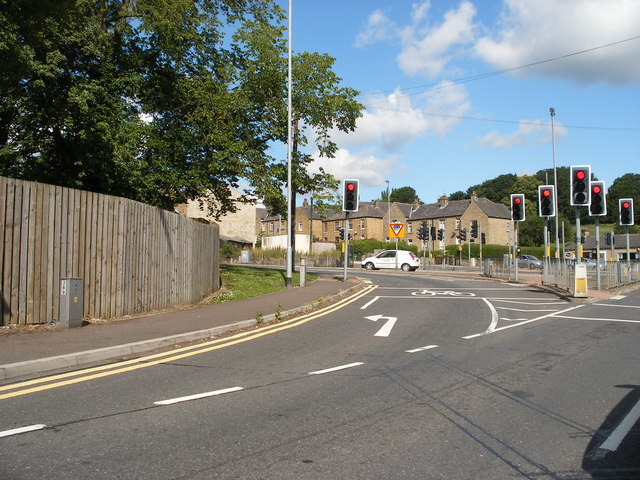
Preston is a city with a mix of urban centre roads, suburban residential streets, and access to the national motorway network. The following factors are the most relevant to candidates preparing for a practical test at the Preston DVSA centre.
- City centre road complexity: Preston city centre contains one-way systems, bus lanes, traffic lights and pedestrian crossings. Correct lane discipline, safe observation at traffic lights and smooth progress through gyratory sections are standard assessment points on urban test routes.
- Bus lanes and road markings: Preston has bus lane infrastructure on several main routes. Candidates must identify bus lane hours from signage, understand when the restriction applies and position correctly in the general traffic lane during restricted periods.
- Dual carriageway sections: the A6 and associated roads near Preston can include dual carriageway segments on some test routes. Joining and leaving a dual carriageway, maintaining safe following distance at speed, and making correct lane decisions are skills that carry higher risk of serious faults if executed poorly.
- Residential area positioning: the suburban road network around Preston includes streets with parked vehicles on both sides. Safe passing positions, continuous pedestrian observation and correct use of mirrors throughout are assessed throughout residential sections.
- Roundabouts: Preston has a mix of simple and multi-exit roundabouts at key junctions. Correct lane selection on approach, clear indication on exit and appropriate yielding to circulating traffic are assessed points where minor faults accumulate.
Preparing for your test at Preston
Preston's above-average pass rate is encouraging for candidates, but it does not mean the test is easy. The DVSA applies the same pass criteria at every centre and the city-centre road environment requires genuine competence across a range of skills. The preparation steps below are designed around the specific road environment candidates encounter at Preston.
- 01Familiarise yourself with Preston city centre roads
Ask your instructor to include lessons in the city centre and on the main arterial routes that the Preston test centre draws on. One-way systems, bus lanes and gyratory sections reward prior familiarity. Knowing the road layout in advance lets you focus on observation and control rather than navigation during the test itself.
- 02Practise bus lane and road marking awareness
Bus lanes in Preston have specific operating hours. Practise identifying bus lane signs and understanding when restrictions apply, so you can position correctly without hesitation during the test. An incorrect entry into a bus lane during operating hours is a potential serious fault.
- 03Work on dual carriageway confidence
If your test route includes a dual carriageway section, safe joining and exiting, correct lane use and safe following distances are all assessed. Ask your instructor to cover dual carriageway driving in lessons before your test date if you are not already confident at higher speeds.
- 04Build roundabout consistency
Work through the main roundabouts on Preston test routes with your instructor until your approach lane, signal and exit sequence is reliable without prompting. On test day you need the sequence to be automatic so you can keep your attention on observation while executing the manoeuvre.
- 05Complete a full mock test on the local roads
A mock test with your instructor on the roads around Preston is the best preparation for the real experience. Aim for at least one full mock in the two weeks before your test, working through the complete format including independent driving. Ask for a thorough debrief so you know exactly what to work on before the actual test.
Booking and what to expect on test day
The DVSA practical test at Preston follows the standard format used at every test centre in Great Britain. You begin with an eyesight check reading a number plate at a set distance. The examiner then asks one vehicle safety question (the show me, tell me section), after which you drive for approximately 40 minutes. Around 20 minutes of that time is independent driving, in which you follow a sat-nav or road signs without instruction from the examiner. One standard manoeuvre is included: bay parking (forward or reverse), parallel parking, or pulling up on the right and reversing.
Passing requires no more than 15 minor driving faults and zero serious or dangerous faults. A single serious or dangerous fault results in a fail regardless of the rest of the test performance. The examiner will provide a printed debrief sheet listing all faults recorded, which serves as a useful tool for targeted practice if you need to rebook.
Bookings are made through the DVSA booking service on the gov.uk website. You will need your provisional driving licence number and your theory test pass certificate number. Theory test certificates are valid for two years from the date of the result and your practical test must be completed within that window. Test slot availability at Preston varies across the year. With a high annual test volume, slots tend to be reasonably available across weekday mornings, and checking for cancellation slots can surface earlier appointments than the initial booking search returns.
Sources and further reading
The figures, fees, and procedures referenced in this article are verifiable on the official gov.uk pages below. PassRates.uk is built on the Driver and Vehicle Standards Agency’s open data, published under the Open Government Licence.
What is the pass rate at your test centre?
Search by centre name, town or postcode to see the latest DVSA figure.
Frequently asked questions
What is the pass rate at Preston driving test centre?
Preston driving test centre recorded a 53.7% pass rate in 2024-25, based on 11,380 practical car tests. This is 5 percentage points above the national average of 48.7% for the same year.
Is Preston driving test centre hard?
By pass rate, Preston is above average. Its 53.7% rate in 2024-25 is comfortably above the national average of 48.7%. The city-centre road environment includes one-way systems, bus lanes and roundabouts that require confident handling, but the overall pass rate suggests candidates at Preston are well prepared.
How does Preston compare to other nearby centres?
Among the main Lancashire and adjacent centres, Bolton recorded the highest rate in the local group at 56.7% in 2024-25. Preston followed at 53.7%. Chorley (48.3%), Nelson (47.9%) and Blackburn with Darwen (47.8%) all came in near or just below the national average of 48.7%.
What is the first-time pass rate at Preston?
The first-time pass rate at Preston in 2024-25 is 53.8%, based on 5,922 candidates sitting the practical test for the first time. This is virtually identical to the overall pass rate of 53.7%, suggesting that first-time candidates at Preston are arriving with preparation comparable to retakers.
What is the gender pass rate difference at Preston?
Male candidates passed at 54.2% at Preston in 2024-25 (6,644 tests) and female candidates at 53.1% (4,736 tests), a gap of 1.1 percentage points. This is smaller than the national gender gap of 1.9 percentage points, making Preston one of the more gender-equal centres in Lancashire.
How has the Preston pass rate changed over time?
Preston has consistently returned above-average pass rates. The centre ran in the 52-55% range from 2016-17 to 2019-20, rose to 56.9% in 2021-22, peaked at 61.1% in 2022-23, then moderated to 56.7% in 2023-24 and 53.7% in 2024-25. The 2024-25 figure is consistent with the pre-pandemic historical range for this centre.
Where is Preston driving test centre?
Preston driving test centre is located in Preston, Lancashire, in north-west England. The centre serves candidates from Preston city and the surrounding areas. Bookings are made through the DVSA booking service on the gov.uk website using your provisional driving licence number and theory test pass certificate number.
Related guides
Written by Vikas and the PassRates.uk team. Vikas is the software engineer and driving enthusiast who started the site. The figures come straight from the DVSA open dataset; see the methodology.
Source DVSA, Open Government Licence v3.0
Continue reading
Peterborough driving test centre in Cambridgeshire recorded a 50.2% pass rate in 2024-25, slightly above the national average of 48.7%. Pass rate history, gender breakdown, nearby centre comparison, and preparation tips for Peterborough candidates.
Gillingham driving test centre in Medway, Kent recorded a 57.2% pass rate in 2024-25, more than 8 percentage points above the national average of 48.7%. Pass rate history, gender breakdown, nearby centre comparison, and preparation tips for Gillingham candidates.