Minimum Time Gap on a Wet Road UK: 4 Seconds (Highway Code Rule 126)
The minimum time gap you should leave when following a vehicle on a wet road is 4 seconds, exactly double the 2-second rule that applies in dry conditions. This answer comes from Highway Code Rule 126 and is a standard DVSA theory test question, so knowing it precisely (not just roughly) matters both for your licence and for your safety.
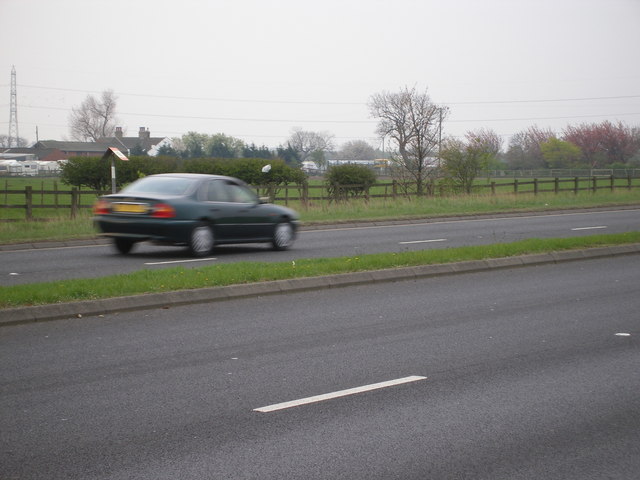
- Wet road minimum gap
- 4 secondsHighway Code Rule 126: double the dry gap
- Dry road minimum gap
- 2 secondsThe standard "2-second rule" in good conditions
- Wet braking distance at 60 mph
- ~110 mvs 55 m in dry conditions (approximately double)
- Ice/snow gap multiplier
- 10xHighway Code: at least 10 times the dry stopping distance
- Highway Code rule
- Rule 126The definitive reference for following distance in UK law
- Theory test topic
- YesStandard multiple-choice question in the DVSA question bank
The exact answer: 4 seconds on a wet road
Highway Code Rule 126 sets out following distances for UK roads. In dry conditions, the rule is at least a 2-second gap from the vehicle in front. When the road is wet, that minimum doubles to at least 4 seconds. The wording used in DVSA theory test questions is typically: "What is the minimum time gap you should leave when following a vehicle on a wet road?" with the correct answer being 4 seconds.
The doubling is not an approximation or guideline range. Highway Code Rule 126 states clearly that in wet conditions you should allow at least double the dry gap. If you are driving on a road where the 2-second rule gives you a 40-metre gap in dry weather, you need an 80-metre gap the moment the road is wet. At motorway speeds the difference in metres is very large.
The reason is physics rather than caution for its own sake. A car travelling at 60 mph on a dry road needs roughly 55 metres to stop under full braking once the driver has reacted. On a wet road the same car needs approximately 110 metres, because the film of water between the tyres and the road surface reduces grip. Reaction time (the thinking distance component) stays the same regardless of road surface: at 60 mph, your car travels about 18 metres during a typical 0.7-second reaction. It is the braking distance that roughly doubles on a wet road, which is why the gap rule doubles with it.
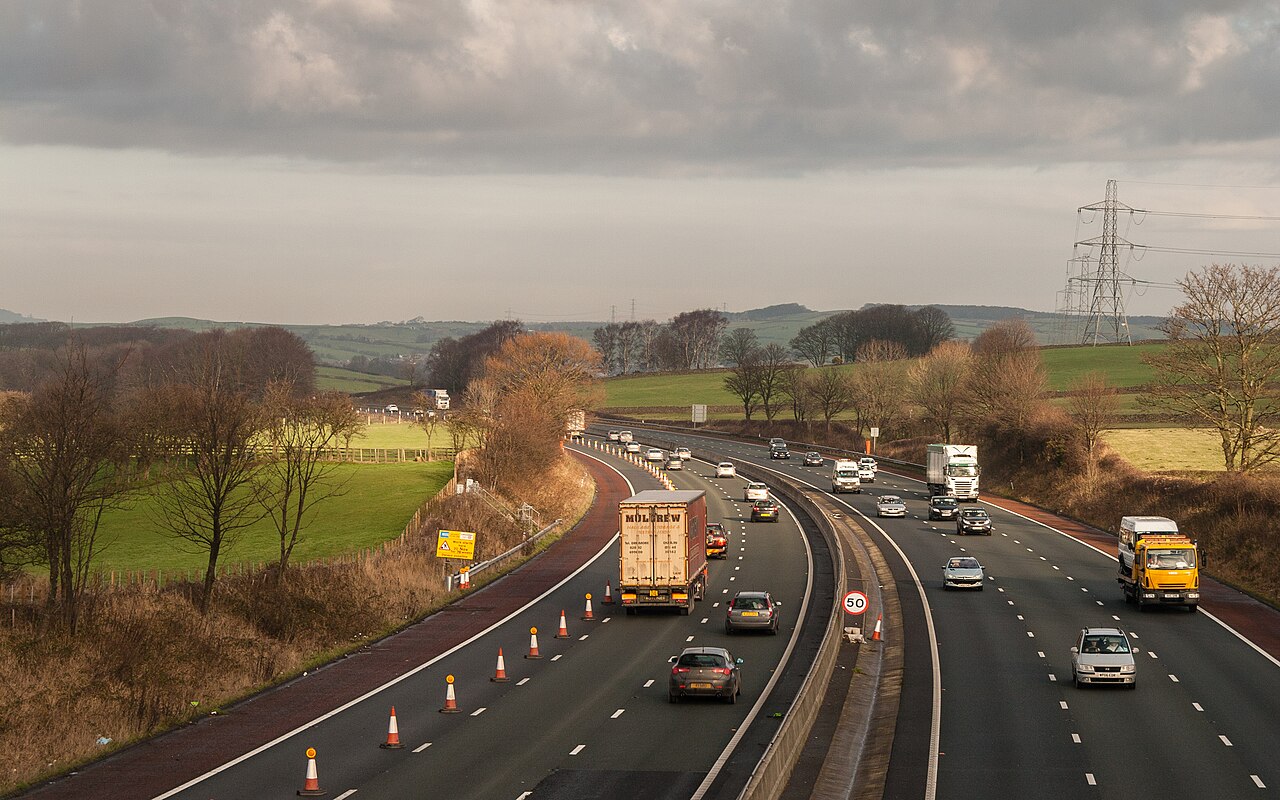
Stopping distances at common UK speed limits (dry vs wet)
The Highway Code stopping distance table covers dry roads only. In wet conditions, the braking distance component roughly doubles. These figures combine the unchanged thinking distance with the extended wet braking distance:
At 70 mph on a wet motorway the stopping distance is approximately 171 metres, or roughly 38 car lengths. A 4-second time gap at 70 mph corresponds to about 125 metres of clear road ahead of you, which falls short of the full stopping distance. This is why Rule 126 says "at least" 4 seconds in the wet: the 4-second figure is the floor, not a guaranteed safety margin at all speeds. Reducing speed is the other half of managing wet-weather following distance.
How to measure 4 seconds while driving
Estimating time gaps while driving requires a reliable method because visual distance judgement is unreliable, especially at motorway speeds. The standard technique is to pick a fixed point on the road ahead, such as a lamp post, road sign, bridge support, or lane marking, and then count from the moment the car in front passes it to the moment you reach the same point.
- 01Choose a fixed reference point
Pick something stationary: a lamp post, a white road marking, a cats-eye line, or a bridge support. It must be a point you can clearly see the car in front pass.
- 02Watch the car in front pass it
The moment the rear of the vehicle ahead clears your chosen reference point, start counting.
- 03Count to four at a steady pace
Count "one thousand and one, one thousand and two, one thousand and three, one thousand and four." Each "one thousand and..." takes close to one second. The full phrase acts as a metered count rather than a fast number sequence.
- 04Check your position at four
When you finish counting, you should not yet have reached the reference point. If you have already passed it, you are too close and need to ease back.
- 05Repeat as conditions change
Speed changes, traffic bunching, and varying rain intensity all shift the gap you are holding. Re-check every few minutes on a wet road, not just once when you join the carriageway.
The mnemonic "only a fool breaks the two-second rule" is well known. In wet conditions the equivalent reminder is "four seconds in the wet" and it is worth making it habitual. On fast roads in heavy rain many drivers still maintain a 2-second gap from habit, which is why rear-end collisions increase sharply in wet motorway conditions.
Conditions beyond wet roads: fog, ice and snow
Highway Code Rule 126 gives a specific minimum for wet roads (at least double the dry gap) but explicitly notes that greater distances are needed in adverse conditions such as fog, ice and snow. The guidance is that in icy or snowy conditions you should allow up to 10 times the normal stopping distance. At 60 mph on ice, stopping distances can exceed 700 metres: keeping any meaningful gap to the car in front becomes primarily about reducing speed rather than managing gap length.
- Fog: if you can see 100 metres ahead, you are already inside the stopping distance at motorway speeds. Rule 235 requires fog lights when visibility falls below 100 metres and the gap to the car in front should be adjusted to match your actual visibility range.
- Ice: the braking distance at 30 mph on ice can be as long as 90 metres or more, roughly six times the dry figure. The 4-second rule gives less than 20 metres of gap at 30 mph, which is completely inadequate on ice. Treat any icy surface as requiring extreme reduction in speed and greatly extended following distance.
- Aquaplaning: in very heavy rain or standing water, tyres can lose contact with the road surface entirely. The gap rule cannot protect you from aquaplaning; only reducing speed below the point where water displacement is a risk can do that. For most car tyres, aquaplaning risk begins around 70 mph but can occur at lower speeds on worn tyres or deep standing water.
- Motorway spray: in heavy rain on motorways, spray from lorries can reduce visibility to near zero in seconds. Leave a gap that accounts not just for braking distance but for the 1-2 seconds you may be effectively blind passing through a spray cloud.
Is this on the theory test?
Yes. The wet-road following distance is one of the most frequently tested Highway Code questions in the DVSA theory test. It appears in several different phrasings, including the straightforward "What is the minimum time gap you should leave when following a vehicle on a wet road?" and longer scenario versions such as "The conditions are good and dry. When should you use the 2-second rule?" (answer: only in dry conditions, not in wet). The question is also presented in the form "What's the minimum time gap you should leave when following a vehicle on a wet road?" which is simply the direct question from Rule 126.
The related query "the conditions are good and dry. when should you use the two-second rule?" also appears in the DVSA bank and is testing whether candidates understand that the 2-second rule is specifically a dry-conditions rule. The answer is: use the 2-second rule only when conditions are good and dry, and switch to at least 4 seconds when the road is wet. This distinction is a common trap in the multiple-choice section.
Understanding the underlying reason (wet braking distances roughly double) helps you answer any variant of the question rather than relying on memorising the exact number. If you know that wet roads need double the gap because braking distances double, you will not be caught out by a rephrased version.
Highway Code Rule 126 in context
Rule 126 is part of the "General rules, techniques and advice for all drivers and riders" section of the Highway Code. The rule covers all following-distance situations for drivers and riders and is backed up by Rule 227 (driving in adverse weather conditions). Rule 126 states that you should allow at least a 2-second gap in good, dry conditions, at least double in wet conditions, and leave even more space when conditions are worse such as fog or ice.
The Highway Code is not itself legislation, but driving without due care and attention is an offence under Section 3 of the Road Traffic Act 1988. Tailgating on a motorway can also be caught under careless driving provisions, and fixed-camera systems on some smart motorways can record following-distance violations. There is no specific minimum-distance offence in UK law (unlike some European countries), but a collision caused by following too closely will be treated as evidence of careless driving.
For learner drivers preparing for the theory test, Rule 126 is worth reading in full alongside the stopping-distance table in the Highway Code. The table gives dry stopping distances by speed (20 mph through 70 mph) and the note on wet conditions makes clear that these dry figures should be treated as a baseline, not the whole picture.
| Condition | Minimum time gap | At 60 mph (metres) | |
|---|---|---|---|
| Dry and good | 2 seconds | Approx 33 metres | |
| Wet road | 4 seconds (minimum) | Approx 67 metres | |
| Fog (below 100m visibility) | Match your visibility distance | Less than 100 metres | |
| Ice or snow | Up to 10x dry gap | Up to 730 metres in extreme cases |
“The 4-second rule on a wet road is one of the most frequently violated Highway Code rules in everyday UK driving. Most drivers default to the dry-road gap from habit, not from a deliberate decision.”
Common errors and how to avoid them
Drivers who know the rule still apply it inconsistently. The most common pattern is adjusting the gap when they first join a wet road, then letting it close as traffic flow normalises and the gap becomes harder to hold without other drivers cutting in. On motorways, holding a 4-second gap in heavy rain often means vehicles pull into the space from adjacent lanes. The correct response is to ease back further and re-establish the gap, not to treat the cutting-in as permission to close the original gap.
- Not adjusting for light rain vs heavy rain: the 4-second minimum applies to any wet road. Some drivers only increase the gap in very heavy rain, treating light drizzle as equivalent to dry conditions. Even a light covering of rain, particularly the first rain after a dry spell when road surfaces carry an oily residue, significantly reduces grip.
- Confusing gap closing with safe following: a large, stable gap feels unsafe to many drivers because other vehicles fill it. The solution is not to give up the gap but to increase speed marginally so the gap moves forward with traffic, or to accept that the space will be filled and immediately re-establish distance behind the new vehicle.
- Relying on the vehicle in front as a warning: some drivers follow closely to use the car ahead as a hazard detector, watching their brake lights as an early warning. This does not account for the wet braking distance: by the time you see brake lights and react, you may already be inside the stopping distance.
- Forgetting to recalculate after speed changes: the 4-second gap at 30 mph produces a much shorter physical distance than at 70 mph. Speed changes do not require you to adjust the time figure (still 4 seconds) but do mean the physical gap changes automatically. If you are braking to slow down in traffic, the time gap will compress: ease back before it narrows to under 4 seconds.
Sources and further reading
The figures, fees, and procedures referenced in this article are verifiable on the official gov.uk pages below. PassRates.uk is built on the Driver and Vehicle Standards Agency’s open data, published under the Open Government Licence.
What is the pass rate at your test centre?
Search by centre name, town or postcode to see the latest DVSA figure.
Frequently asked questions
What is the minimum time gap on a wet road?
The minimum time gap when following a vehicle on a wet road is 4 seconds. This is exactly double the 2-second gap required in dry conditions. The rule comes from Highway Code Rule 126 and is a standard DVSA theory test question. Count "one thousand and one, one thousand and two, one thousand and three, one thousand and four" between the car in front passing a fixed point and you reaching the same point.
Is the minimum time gap on a wet road a theory test question?
Yes. The wet-road following distance appears in multiple forms in the DVSA theory test question bank. The standard wording is "What is the minimum time gap you should leave when following a vehicle on a wet road?" with 4 seconds as the correct answer. Variant questions test whether you know the 2-second rule applies only in dry conditions and must be doubled in wet ones.
What Highway Code rule covers the wet road gap?
Highway Code Rule 126 covers following distances for all road conditions. It sets the 2-second minimum for dry conditions and specifies that in wet conditions you should leave at least double, so a minimum of 4 seconds. For icy, snowy or foggy conditions, Rule 126 requires even greater gaps, with ice and snow potentially needing up to 10 times the dry stopping distance.
How do I measure 4 seconds while driving?
Pick a fixed point on the road: a lamp post, road sign, bridge pillar or lane marking. When the rear of the vehicle in front passes the point, start counting "one thousand and one, one thousand and two, one thousand and three, one thousand and four." If you pass the same point before finishing the count, you are following too closely and need to ease off the accelerator to increase the gap.
What is the stopping distance at 60 mph on a wet road?
At 60 mph on a wet road, the overall stopping distance is approximately 128 metres. This combines the unchanged thinking distance (about 18 metres at a typical 0.7-second reaction time) with a wet braking distance of around 110 metres, roughly double the 55-metre dry braking distance. The Highway Code stopping-distance table covers dry roads only; multiply the braking distance component by approximately two to estimate wet-road values.
Does the 4-second rule apply on motorways?
Yes. The 4-second wet-road rule applies on all road types, including motorways. On a motorway at 70 mph in wet conditions, 4 seconds corresponds to about 125 metres of clear space ahead of you. This is the minimum; at higher motorway speeds in heavy rain or spray, increasing the gap further is advisable. The 2-second rule for dry motorway driving remains the baseline in good conditions.
What gap should I leave in fog or on ice?
Highway Code Rule 126 requires significantly more than the 4-second wet-road gap in fog, ice or snow. In fog, adjust your gap so you could stop within the distance you can see clearly. In icy conditions, stopping distances can be up to 10 times the dry figure, so at 30 mph you may need 90 metres or more to stop safely. Reducing speed is the primary tool in these conditions: at slower speeds the time gap translates into a manageable physical distance.
Why does the following distance double in wet conditions?
In wet conditions, a film of water between the tyre and the road surface reduces friction. This means tyres cannot transmit braking force as efficiently, so the car takes longer to slow from the same speed. The thinking (reaction) distance is unchanged because your reaction time does not depend on road conditions. The braking distance roughly doubles because the deceleration rate roughly halves on a wet surface. Highway Code Rule 126 doubles the minimum time gap to compensate for this extended braking phase.
Related guides
- Speed and following distanceUK Speed LimitsRead guide
- Speed and following distanceTwo-Second RuleRead guide
- Speed and following distanceLane DisciplineRead guide
- Junctions and priorityJunctions and PriorityRead guide
- Junctions and priorityCrossroadsRead guide
- Junctions and priorityBox JunctionsRead guide
Written by Vikas and the PassRates.uk team. Vikas is the software engineer and driving enthusiast who started the site. The figures come straight from the DVSA open dataset; see the methodology.
Source DVSA, Open Government Licence v3.0
Continue reading
Belvedere driving test centre in south-east London recorded a 38.3% pass rate in 2024-25, more than 10 percentage points below the national average of 48.7%. Pass rate history, gender breakdown, nearby centre comparison, and what to expect for Belvedere candidates.
Chichester DVSA test centre passes 64.2% of candidates in 2024-25 on 5,295 tests, ranking it 3rd in the UK. Pass rate history, nearby centres comparison and tips for West Sussex learners.