Texas DMV warm up test
A shorter 20 question run pulled from across the TX bank, for a first look before the full sitting. Each answer is tied to the rule it tests. No signup, no email.
20 questions, 30 minutes. The timer starts when you begin, and answers are shown at the end.
How the real Texas exam is graded
TxDPS publishes a 70 percent pass mark and nothing else: no question count and no time limit, so both the length and the allowance on this paper are ours. The claim circulating online that the Texas test stops after 10 wrong answers appears in no DPS source, and DPS issues the exam to driver education schools as a printed PDF, which could not end early even if it wanted to.
This paper allows 30 minutes. That allowance is ours, not TxDPS's, because no published limit exists for this test.
What is specific to Texas
Texas requires driver education of every first-time applicant under 25, not just teenagers, unless the applicant holds a valid license from another state. Every applicant who takes a driving test must first complete the Impact Texas Drivers video course for their age group, dated within 90 days of the test. There is no points system on a Texas license at all: instead a driver becomes a habitual violator at four convictions in 12 months. Drivers under 18 face a total wireless ban including hands-free, and the adult supervising a learner commits a criminal offense if they sleep, are intoxicated or are otherwise not paying attention. Posted limits run to 85 mph on some highways, the highest in the country, and annual safety inspections for non-commercial vehicles ended on January 1, 2025.
How many attempts do you get?
Three examinations of each element per application, then a new application and fee. DL-7 also keeps the application open for 90 days after a failed first attempt; when those 90 days are up, or a third exam is failed, you reapply and pay again.
Source: Transportation Code s. 521.161(d); Texas Driver Handbook DL-7 (rev. January 2026), checked September 25, 2026.
Every question in this Texas warm up run, with answers
All 122 questions this paper draws from, each with the correct answer, why it is correct, and the Texas statute or handbook section it was drafted against. The paper itself picks a randomized subset and shuffles the options, so reading the list through is review rather than a shortcut.
1. An eight-sided (octagonal) sign always means:
- Railroad crossing
- Yield
- Stop (correct answer)
- Do not enter
Answer: Stop. The octagon is reserved for STOP alone. Shape is deliberately unique so the sign is readable in fog, at night, or when snow covers the face.
Source: Federal MUTCD, 11th Edition (FHWA)
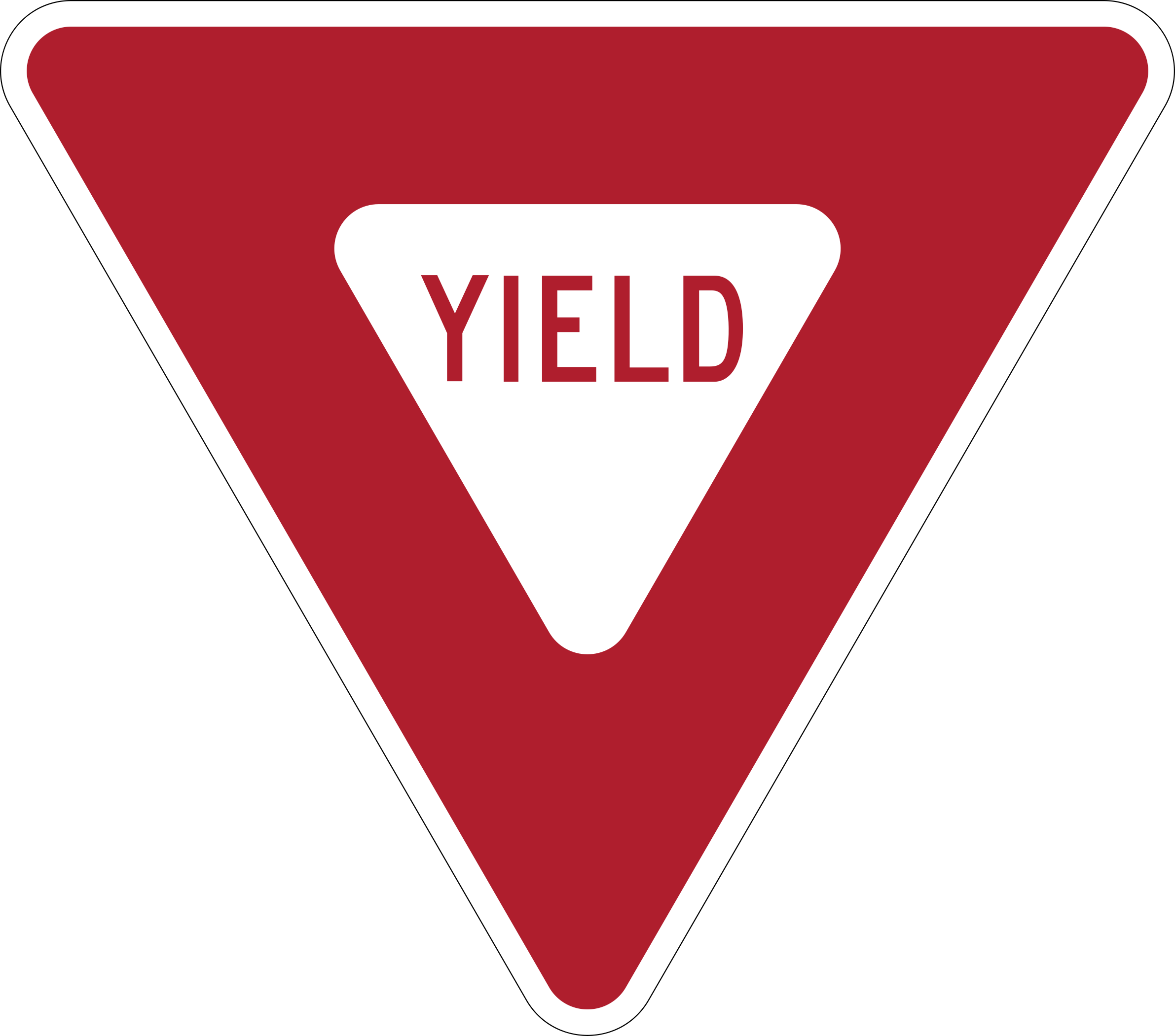
2. A downward-pointing triangle means:
- Merge ahead
- School zone
- Stop
- Yield (correct answer)
Answer: Yield. The inverted triangle is used only for YIELD. Slow down, yield to traffic and pedestrians already there, and stop if you need to.
Source: Federal MUTCD, 11th Edition (FHWA)
3. A diamond-shaped sign tells you:
- A warning about conditions ahead (correct answer)
- The direction to a service
- A recreational area
- A regulation you must obey
Answer: A warning about conditions ahead. Diamonds are warning signs. They tell you something ahead needs attention, such as a curve, a dip or a merge, rather than imposing a rule.
Source: Federal MUTCD, 11th Edition (FHWA)
4. A five-sided sign shaped like a house pointing upward indicates:
- A hospital
- A school zone or school crossing (correct answer)
- A hill
- A weigh station
Answer: A school zone or school crossing. The pentagon is used for school advance warning and school crossings. Expect children, reduced limits and crossing guards.
Source: Federal MUTCD, 11th Edition (FHWA)
5. A round sign warns of:
- A rest area
- A roundabout
- A railroad crossing ahead (correct answer)
- A dead end
Answer: A railroad crossing ahead. The circular yellow sign carrying a large X and two Rs is the advance warning for a railroad crossing. Look, listen and be ready to stop.
Source: Federal MUTCD, 11th Edition (FHWA)
6. What does an orange sign or work-zone marking mean?
- A hospital route
- A scenic byway
- A recreational area
- Roadwork or a temporary traffic control zone (correct answer)
Answer: Roadwork or a temporary traffic control zone. Orange is reserved for construction and maintenance. Fines are commonly increased in these zones and workers may be close to live lanes.
Source: Federal MUTCD, 11th Edition (FHWA)
7. A blue sign on a highway generally indicates:
- Where to find gas, food or lodging (correct answer)
- A speed limit
- A recreational site
- A warning
Answer: Where to find gas, food or lodging. Blue is the services color. Brown marks recreation and cultural sites, green gives directions and distances.
Source: Federal MUTCD, 11th Edition (FHWA)
8. A fluorescent yellow-green sign is used for:
- Roadwork
- Pedestrian, bicycle and school warnings (correct answer)
- Exit numbers
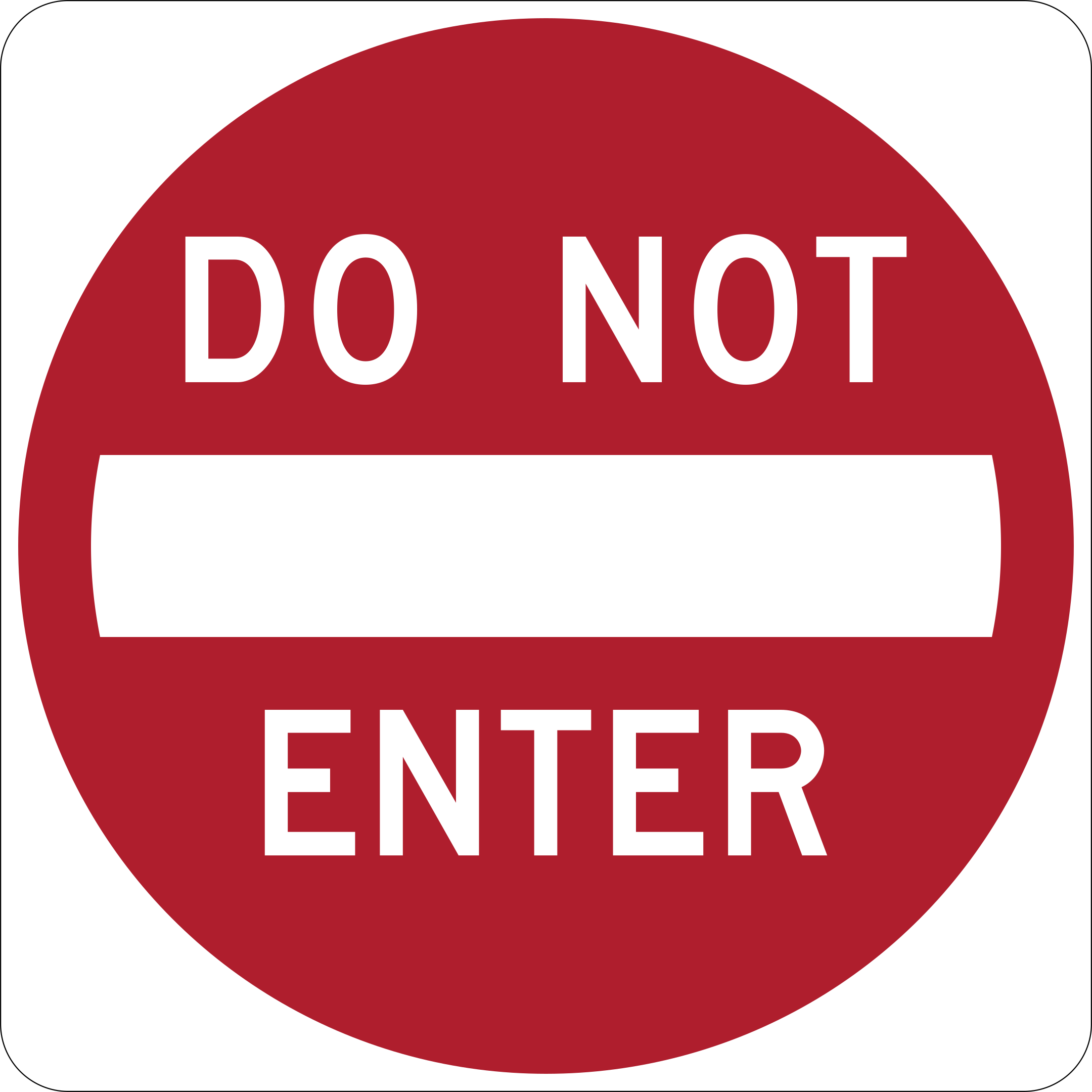
- Toll booths
Answer: Pedestrian, bicycle and school warnings. That distinctive yellow-green was introduced specifically for vulnerable road user warnings, so it stands apart from ordinary yellow warnings.
Source: Federal MUTCD, 11th Edition (FHWA)
9. A solid yellow line on your side of the center line means:
- A bike lane begins
- You may pass when clear
- You must not pass (correct answer)
- The road narrows
Answer: You must not pass. Yellow separates traffic moving in opposite directions. Solid on your side means passing is prohibited. Broken on your side means you may pass when it is safe.
Source: Federal MUTCD, 11th Edition (FHWA)
10. White lane lines separate:
- Traffic moving in the same direction (correct answer)
- The road from the shoulder only
- Parking bays only
- Traffic moving in opposite directions
Answer: Traffic moving in the same direction. White separates lanes traveling the same way; yellow separates opposing flows. Getting this the wrong way round is a common test mistake.
Source: Federal MUTCD, 11th Edition (FHWA)
11. A diamond symbol painted in a lane indicates:
- A turning lane
- A reserved lane, such as high occupancy vehicle (correct answer)
- A bus stop
- A bike lane
Answer: A reserved lane, such as high occupancy vehicle. The painted diamond marks a preferential lane, most often high occupancy vehicle. Signs at the entry state the occupancy required and the hours it applies.
Source: Federal MUTCD, 11th Edition (FHWA)
12. Two solid yellow lines down the center of the road mean:
- Parking is permitted
- Either direction may pass
- Neither direction may pass (correct answer)
- The lane is closed
Answer: Neither direction may pass. A double solid yellow prohibits passing in both directions. You may still cross it to turn into a driveway where local rules allow.
Source: Federal MUTCD, 11th Edition (FHWA)
13. A white rectangular sign most often carries:
- A direction to a town
- A tourist attraction
- A warning
- A regulation you must obey (correct answer)
Answer: A regulation you must obey. White rectangles are regulatory: speed limits, turn restrictions, lane use. Ignoring one is a traffic offense rather than poor judgment.
Source: Federal MUTCD, 11th Edition (FHWA)
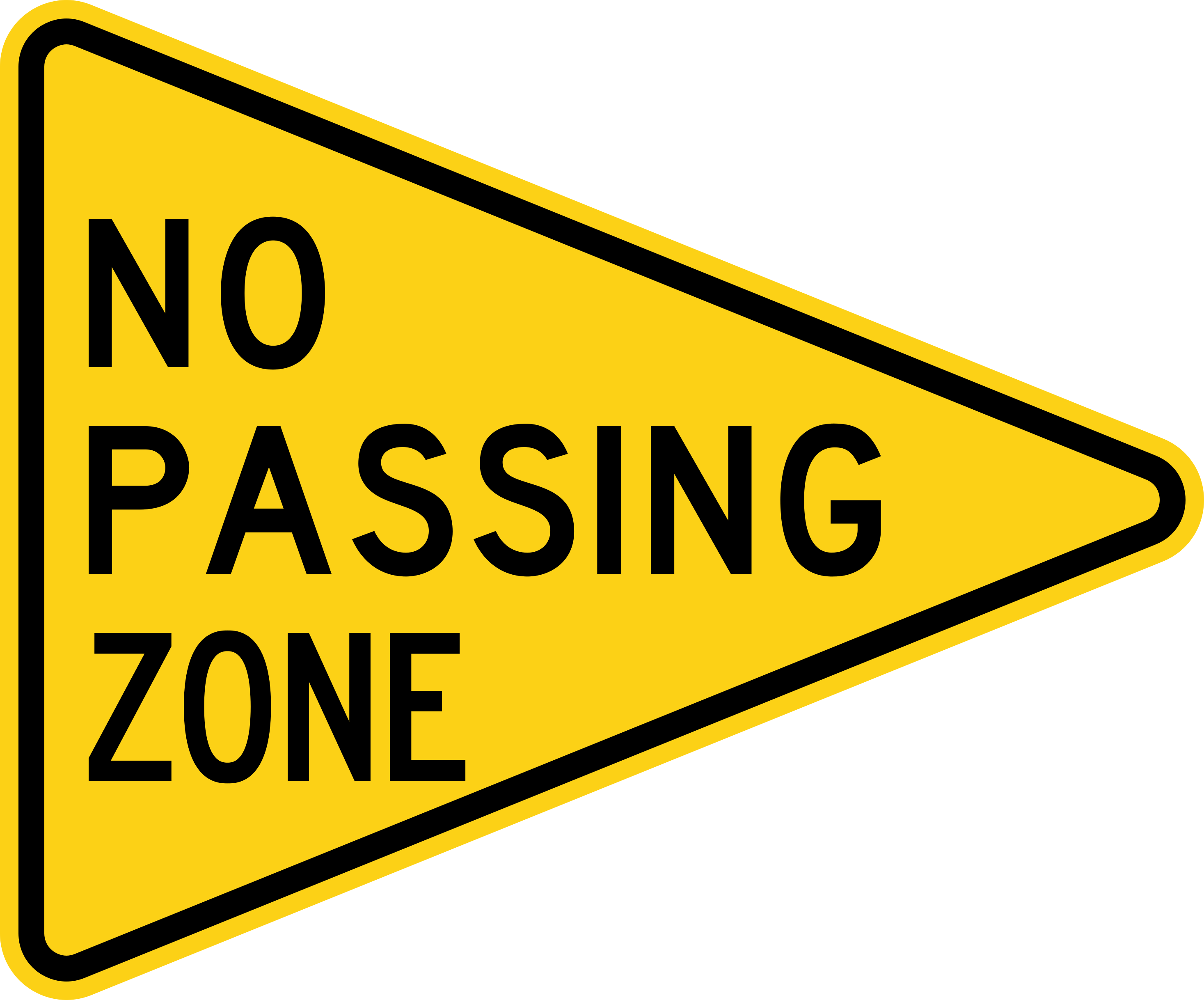
14. A yellow pennant-shaped sign on the left side of the road means:
- No passing zone (correct answer)
- School ahead
- Divided highway
- Merging traffic
Answer: No passing zone. The pennant is the only sign posted on the left, marking the start of a no passing zone. It faces you at the beginning of the restricted stretch.
Source: Federal MUTCD, 11th Edition (FHWA)
15. A flashing red traffic signal means:
- Proceed with caution without stopping
- Stop, then go when it is safe (correct answer)
- The signal is out of order, ignore it
- Stop and wait for it to turn green
Answer: Stop, then go when it is safe. A flashing red is treated exactly like a stop sign: come to a full stop, yield to traffic and pedestrians, then proceed when clear.
Source: Uniform Vehicle Code, traffic control signal indications
16. A flashing yellow traffic signal means:
- Yield to pedestrians only
- Stop before proceeding
- Slow down and proceed with caution (correct answer)
- The light is about to turn red
Answer: Slow down and proceed with caution. Flashing yellow means proceed with caution. You do not have to stop, but you have no automatic priority either.
Source: Uniform Vehicle Code, traffic control signal indications
17. Two vehicles reach an uncontrolled intersection at the same time. Who goes first?
- The vehicle on the left
- The larger vehicle
- The faster vehicle
- The vehicle on the right (correct answer)
Answer: The vehicle on the right. Where no sign or signal controls the intersection and both arrive together, the driver on the left yields to the driver on the right.
Source: Uniform Vehicle Code, right of way at intersections
18. At a four-way stop, who has priority?
- Whoever arrives first (correct answer)
- Whoever is turning right
- The largest vehicle
- Whoever signals first
Answer: Whoever arrives first. First to arrive is first to go. If two arrive together, the vehicle on the right proceeds first, and drivers going straight take precedence over turning traffic.
Source: Uniform Vehicle Code, stop intersections
19. You are turning left at a green light with no arrow. You must:
- Turn immediately, the green gives you priority
- Yield to oncoming traffic and pedestrians (correct answer)
- Wait for the light to turn yellow
- Sound the horn and proceed
Answer: Yield to oncoming traffic and pedestrians. A circular green releases you into the intersection without handing you any claim on the gap. Wait out the oncoming line, let anyone in the crosswalk finish, and turn only when the whole maneuver fits.
Source: Uniform Vehicle Code, vehicle turning left
20. An emergency vehicle approaches with lights and siren. You should:
- Stop immediately wherever you are
- Move to the left lane
- Speed up to clear the intersection
- Pull over to the right and stop until it passes (correct answer)
Answer: Pull over to the right and stop until it passes. Work your way over to the right-hand curb or shoulder, then hold still until it has gone by. Freezing in a live lane, or halfway through an intersection, leaves the crew nowhere to get around you.
Source: Uniform Vehicle Code, operation on approach of emergency vehicles
21. When entering a roundabout in the United States you yield to:
- Traffic already circulating, approaching from your left (correct answer)
- Traffic approaching from your right
- Nobody, roundabouts are uncontrolled
- Traffic waiting to enter
Answer: Traffic already circulating, approaching from your left. US roundabouts run counterclockwise, so circulating traffic reaches you from the left. Yield to it, enter in a gap, and signal right as you leave.
Source: Federal MUTCD, 11th Edition (FHWA)
22. Your street runs out where it meets a larger road at a T-intersection. You must:
- Sound the horn and merge
- Yield to whatever is already on the through road (correct answer)
- Proceed, as the through road yields to you
- Stop only if a sign tells you to
Answer: Yield to whatever is already on the through road. The street that terminates gives up priority to the one that carries on. That holds whether or not a stop sign is posted.
Source: Uniform Vehicle Code, right of way at T-intersections
23. A steady yellow light means:
- Yield to pedestrians only
- Speed up to clear the intersection
- The light is about to turn red, stop if you safely can (correct answer)
- Stop immediately in all circumstances
Answer: The light is about to turn red, stop if you safely can. Yellow warns that red is next. Stop if you can do so safely; if you are too close to stop without harsh braking, continue through.
Source: Uniform Vehicle Code, traffic control signal indications
24. You are leaving a driveway and entering the roadway. You must:
- Proceed, as you have priority once moving
- Yield only to vehicles, not pedestrians
- Sound the horn and go
- Yield to all traffic and pedestrians on the road and sidewalk (correct answer)
Answer: Yield to all traffic and pedestrians on the road and sidewalk. Coming out of private property, an alley or a lot puts you last in the order. Every vehicle already on the road goes first, and so does anybody walking across the driveway mouth before you reach the curb line.
Source: Uniform Vehicle Code, entering roadway from private drive
25. At a railroad crossing with no gates or lights, you must:
- Slow, look both ways and listen before crossing (correct answer)
- Stop every time regardless of conditions
- Cross only if another vehicle goes first
- Proceed without slowing, trains always signal
Answer: Slow, look both ways and listen before crossing. Passive crossings put the responsibility on you. Slow down, look along the track in both directions, listen, and never start across unless you can clear the far rail.
Source: Federal MUTCD, 11th Edition (FHWA)
26. A pedestrian is crossing at an unmarked crosswalk at an intersection. You:
- Have priority, as the crosswalk is unmarked
- Must yield to the pedestrian (correct answer)
- May proceed if they have not stepped off the curb
- Must sound the horn first
Answer: Must yield to the pedestrian. Paint is not what creates the crossing. At an intersection like this one the legal crosswalk is there whether or not lines were ever put down, so somebody stepping into it goes ahead of you.
Source: Uniform Vehicle Code, pedestrians right of way in crosswalks
27. The three-second rule is used to judge:
- Reaction time to a hazard
- How long to signal before turning
- A safe following distance (correct answer)
- How long to wait at a stop sign
Answer: A safe following distance. Pick a fixed object ahead. When the vehicle in front passes it, count three seconds; if you reach it sooner, you are too close. Add seconds in rain, at night or behind a large vehicle.
Source: NHTSA defensive driving guidance
28. Total stopping distance is made up of:
- Reaction distance only
- Following distance plus braking distance
- Braking distance only
- Perception distance, reaction distance and braking distance (correct answer)
Answer: Perception distance, reaction distance and braking distance. You have to see the hazard, decide to act, then let the brakes do their work. Speed lengthens all three, and braking distance grows fastest.
Source: NHTSA and FMCSA stopping distance guidance
29. If you double your speed, your braking distance is roughly:
- Four times as long (correct answer)
- Unchanged
- Doubled
- Tripled
Answer: Four times as long. Braking distance rises with the square of speed, so twice the speed is about four times the distance. This is why small speed increases matter so much.
Source: NHTSA stopping distance guidance
30. You are being passed by another vehicle. You should:
- Brake hard
- Speed up to shorten the maneuver
- Maintain or slightly reduce speed and hold your lane (correct answer)
- Move onto the shoulder
Answer: Maintain or slightly reduce speed and hold your lane. Hold a steady line and let them complete the pass. Accelerating strands them alongside; swerving onto the shoulder throws up debris and loses grip.
Source: Uniform Vehicle Code, overtaking and passing
31. When merging onto a freeway you should:
- Merge at whatever speed you reach the end
- Signal only after you have merged
- Stop at the end of the ramp and wait for a gap
- Use the ramp to match the speed of traffic, then merge into a gap (correct answer)
Answer: Use the ramp to match the speed of traffic, then merge into a gap. The ramp gives you room to build up to whatever the lane you are joining is doing. Run out of ramp while stationary and you have to pull into fast moving traffic with no speed of your own, which is the hardest merge there is.
Source: Uniform Vehicle Code, entering controlled access highways
32. A basic speed law means:
- You must never drive faster than is safe for the conditions, even below the limit (correct answer)
- The limit applies only in daylight
- Speed limits are advisory
- You may always drive the posted limit
Answer: You must never drive faster than is safe for the conditions, even below the limit. The posted limit is a ceiling for ideal conditions. In fog, rain or heavy traffic, the safe speed is lower, and driving the posted limit can still be an offense.
Source: Uniform Vehicle Code, basic speed rule
33. Passing another vehicle becomes illegal when:
- You are on a two-lane road
- You are approaching a hill crest or curve where you cannot see far enough ahead (correct answer)
- The vehicle ahead is slower than the limit
- It is after dark
Answer: You are approaching a hill crest or curve where you cannot see far enough ahead. Passing needs enough clear sight distance to complete the maneuver and return. Crests, curves, intersections and railroad crossings all remove that.
Source: Uniform Vehicle Code, limitations on overtaking
34. The safest lane position on a multi-lane highway for ordinary driving is:
- Whichever lane is emptiest
- The far left lane
- The right-hand lanes, keeping left for passing (correct answer)
- The center lane at all times
Answer: The right-hand lanes, keeping left for passing. Keep right except to pass. Sitting in the left lane obstructs faster traffic and encourages undertaking, which is where many highway collisions begin.
Source: Uniform Vehicle Code, driving on right side of roadway
35. You are driving in a work zone where the limit is reduced. If you exceed it:
- No penalty applies to work zones
- You only receive a warning
- The normal fine applies
- Fines are commonly doubled (correct answer)
Answer: Fines are commonly doubled. Most states double fines in an active work zone, and many add points. Workers are often within a few feet of live traffic with no barrier.
Source: FHWA work zone safety guidance
36. The blind spots around a large truck are commonly called:
- No-Zones (correct answer)
- Shadow areas
- Blind corners
- Dead zones
Answer: No-Zones. The No-Zones sit directly in front, directly behind, and along both sides, with the right side by far the largest. If you cannot see the driver in their mirror, they cannot see you.
Source: FMCSA No-Zone guidance
37. A large truck is making a right turn ahead of you. You should:
- Pass on its right, it has swung left
- Stay back, as it may swing wide left before turning right (correct answer)
- Sound the horn to hurry it
- Pull alongside to see better
Answer: Stay back, as it may swing wide left before turning right. Long vehicles swing wide to clear the corner. Moving into the gap on their right puts you exactly where the trailer will finish. This is a classic squeeze collision.
Source: FMCSA sharing the road guidance
38. Why should you allow a motorcycle a full lane?
- To keep them in your blind spot
- It is a courtesy only
- Riders need the full width to maneuver around surface hazards (correct answer)
- Motorcycles are wider than they appear
Answer: Riders need the full width to maneuver around surface hazards. A rider moves within the lane to dodge potholes, gravel, oil and debris that a car would ride over. Sharing the lane removes the space they need.
Source: NHTSA motorcycle safety guidance
39. A stopped school bus on an undivided road has its red lights flashing and its stop arm extended. You must:
- Slow to 20 mph and pass
- Stop only if you are behind it
- Pass on the left with caution
- Stop, in both directions (correct answer)
Answer: Stop, in both directions. On an undivided road, traffic in both directions stops and stays stopped until the lights stop flashing and the arm folds. Divided roads with a physical barrier are treated differently by state.
Source: Uniform Vehicle Code, overtaking school buses
40. You are turning right and a cyclist is traveling straight in a bike lane to your right. You should:
- Turn first, you are the larger vehicle
- Yield to the cyclist before turning across the bike lane (correct answer)
- Sound the horn and turn
- Speed up to turn ahead of them
Answer: Yield to the cyclist before turning across the bike lane. The cyclist going straight has priority over the turning vehicle. Turning across their path is the classic right hook, one of the most common bike collisions.
Source: Uniform Vehicle Code, turning across a bicycle lane
41. A blind pedestrian with a white cane, or someone led by a guide dog, steps into the road. You must:
- Proceed if they have stopped walking
- Sound the horn to alert them
- Stop and give them the right of way (correct answer)
- Drive slowly around them
Answer: Stop and give them the right of way. Every state gives absolute right of way to a pedestrian who is blind or visually impaired. Sounding the horn can startle and disorient them.
Source: Uniform Vehicle Code, blind pedestrian right of way
42. You are following a motorcycle. Your following distance should be:
- The same as for a car
- Irrelevant below 40 mph
- Shorter, motorcycles stop slower
- Longer than for a car (correct answer)
Answer: Longer than for a car. A motorcycle can stop very quickly and can go down on a bad surface. Extra space gives you time to react to either.
Source: NHTSA motorcycle safety guidance
43. Hydroplaning happens when:
- Tires ride on a film of water and lose contact with the road (correct answer)
- The engine draws in water
- The windshield fogs over
- Brakes overheat in the wet
Answer: Tires ride on a film of water and lose contact with the road. Above a certain speed on standing water the tire cannot clear it and rides on top. Steering and braking do almost nothing until the tires touch road again.
Source: NHTSA wet weather driving guidance
44. If you begin to hydroplane you should:
- Brake hard immediately
- Ease off the accelerator and hold the wheel straight (correct answer)
- Accelerate to regain grip
- Steer sharply toward the shoulder
Answer: Ease off the accelerator and hold the wheel straight. Braking or steering while the tires are floating achieves nothing and causes a sudden lurch when grip returns. Ease off, hold your line, let speed fall.
Source: NHTSA wet weather driving guidance
45. The most slippery road conditions usually occur:
- During fog
- After several hours of heavy rain
- In the first few minutes of rain after a dry spell (correct answer)
- Only when the temperature is below freezing
Answer: In the first few minutes of rain after a dry spell. Oil and rubber build up on dry roads and float to the surface when rain first falls. Prolonged rain then washes it away, so the first few minutes are the worst.
Source: NHTSA wet weather driving guidance
46. In dense fog you should use:
- Hazard lights while moving
- Parking lights only
- High beam headlights
- Low beam headlights (correct answer)
Answer: Low beam headlights. High beams bounce off water droplets and glare straight back at you. Low beams throw light under the fog. Hazard lights while moving hide your braking and turning.
Source: NHTSA reduced visibility guidance
47. Black ice is most likely to form:
- On bridges, overpasses and shaded stretches (correct answer)
- Only where snow has been cleared
- On south-facing hills
- In the middle of a straight, open road
Answer: On bridges, overpasses and shaded stretches. A bridge deck loses heat from above and below, so it freezes before the road either side of it. Shaded stretches stay frozen long after open road has thawed.
Source: FHWA road weather management guidance
48. Your rear wheels begin to skid to the right. You should steer:
- Left, against the skid
- Right, in the direction the rear is sliding (correct answer)
- Straight ahead and brake hard
- Right while braking
Answer: Right, in the direction the rear is sliding. Steer where you want the front to go, which means into the direction of the slide. Stay off the brakes; sudden braking makes a rear skid worse.
Source: NHTSA skid recovery guidance
49. When driving at night you should:
- Increase speed, roads are emptier
- Look directly at oncoming headlights to judge distance
- Look toward the right edge of your lane to avoid glare (correct answer)
- Use high beams at all times
Answer: Look toward the right edge of your lane to avoid glare. Staring into oncoming lights destroys your night vision for several seconds. Glance toward the right edge line and use it to hold your position.
Source: NHTSA night driving guidance
50. You must dim your high beams when:
- Approaching oncoming traffic or following another vehicle (correct answer)
- Only in built-up areas
- Never, high beams improve safety
- Only when a vehicle is directly ahead
Answer: Approaching oncoming traffic or following another vehicle. High beams blind an oncoming driver and fill the mirrors of a driver you are following. Most states set a distance for each, commonly around 500 feet oncoming and 200 to 300 feet following.
Source: Uniform Vehicle Code, use of multiple beam lights
51. Parking downhill with a curb, you should turn your front wheels:
- It makes no difference
- Toward the curb (correct answer)
- Away from the curb
- Straight ahead
Answer: Toward the curb. Downhill, turn the wheels toward the curb so a rolling vehicle is stopped by it. Uphill with a curb, turn away so the vehicle rolls back into it.
Source: Uniform Vehicle Code, parking on a grade
52. Driving while very tired affects you in a way most similar to:
- Driving with the radio loud
- Driving in the rain
- Driving under the influence of alcohol (correct answer)
- Driving an unfamiliar vehicle
Answer: Driving under the influence of alcohol. Fatigue slows reaction and impairs judgment much like alcohol, and a microsleep of a few seconds covers a long distance at highway speed. The only fix is sleep.
Source: NHTSA drowsy driving research
53. What is the only thing that reduces blood alcohol concentration?
- Eating a large meal
- Coffee
- A cold shower
- Time (correct answer)
Answer: Time. The liver clears alcohol at a roughly fixed rate. Coffee makes an impaired driver more awake but no less impaired, which can be more dangerous.
Source: NHTSA impaired driving guidance
54. Anti-lock brakes (ABS) are designed to:
- Let you keep steering while braking hard (correct answer)
- Replace the parking brake
- Prevent skids on ice entirely
- Shorten stopping distance on every surface
Answer: Let you keep steering while braking hard. ABS stops the wheels locking so you retain steering. On loose gravel or snow it can lengthen the stop slightly, and the pedal pulsing is normal, so hold firm pressure.
Source: NHTSA braking systems guidance
55. A front tire blows out at speed. You should:
- Brake hard immediately
- Grip the wheel, ease off the accelerator and let the vehicle slow (correct answer)
- Steer sharply onto the shoulder
- Accelerate to regain control
Answer: Grip the wheel, ease off the accelerator and let the vehicle slow. A blowout pulls the vehicle toward the failed tire. Hard braking makes that pull far worse. Hold the wheel firmly, come off the power, and steer gently to the shoulder as speed drops.
Source: NHTSA tire safety guidance
56. Your brakes fail. Your first action should be:
- Shift straight into park
- Switch off the engine immediately
- Pump the pedal, then use the parking brake gradually (correct answer)
- Steer into oncoming traffic to slow down
Answer: Pump the pedal, then use the parking brake gradually. Pumping can rebuild pressure in a hydraulic system. If it does not, apply the parking brake progressively, downshift, and steer for a clear run-off. Switching off the engine can lock the steering.
Source: NHTSA emergency handling guidance
57. The accelerator sticks open. You should:
- Pull the parking brake hard
- Turn off the road immediately at speed
- Switch off the ignition at once
- Shift to neutral and brake, steering to a safe stop (correct answer)
Answer: Shift to neutral and brake, steering to a safe stop. Neutral disconnects the engine from the wheels so brakes and steering keep working. Cutting the ignition at speed can lose power steering and lock the column.
Source: NHTSA emergency handling guidance
58. You are involved in a crash with injuries. You must first:
- Stop, and call for medical and police help (correct answer)
- Exchange details and leave
- Photograph the scene before anything else
- Move all vehicles off the road
Answer: Stop, and call for medical and police help. Stopping is a legal duty and summoning help comes before anything else. Leaving the scene of an injury crash is a serious offense in every state.
Source: Uniform Vehicle Code, duty to stop at a crash
59. Your vehicle breaks down on a highway. You should:
- Stand behind the vehicle to warn traffic
- Move it as far right as possible, switch on hazard lights, and stay clear of live lanes (correct answer)
- Leave it in a live lane with hazard lights on
- Walk along the roadway to the nearest exit
Answer: Move it as far right as possible, switch on hazard lights, and stay clear of live lanes. Get the vehicle as far from live lanes as you can, put the hazards on, and get yourself somewhere safe. Standing behind a vehicle on a shoulder is a common way pedestrians are struck.
Source: NHTSA roadside safety guidance
60. Your vehicle begins to leave the pavement onto a soft shoulder. You should:
- Accelerate to climb back onto the road
- Steer sharply left at once
- Brake hard and steer back immediately
- Ease off the accelerator, keep straight, then steer back gently at lower speed (correct answer)
Answer: Ease off the accelerator, keep straight, then steer back gently at lower speed. Jerking the wheel back at speed is what turns a drop onto the shoulder into a rollover or a head-on. Slow first, then rejoin gently.
Source: NHTSA run-off-road recovery guidance
61. You approach a crash scene where people are helping. You should:
- Slow down, move over if you can, and keep the lane clear (correct answer)
- Speed past quickly
- Sound the horn to warn others
- Stop in the traffic lane to offer help
Answer: Slow down, move over if you can, and keep the lane clear. Blocking a lane at a crash scene stops emergency vehicles reaching it. Slow down, give the scene a lane where possible, and keep moving unless directed to stop.
Source: Move Over laws, adopted in every state
62. Your headlights fail suddenly at night. You should:
- Continue at the same speed
- Try the high beams and hazard lights, and pull over safely (correct answer)
- Follow the vehicle ahead closely to use its lights
- Switch on the interior light
Answer: Try the high beams and hazard lights, and pull over safely. Try the high beams, since a different circuit may still work, put on hazard lights so you remain visible, and get off the road. Following closely to borrow light removes your own reaction space.
Source: NHTSA vehicle lighting guidance
63. A red circle with a diagonal slash over a symbol means:
- Services related to the symbol
- A warning about the symbol
- The action shown is prohibited (correct answer)
- The action shown is required
Answer: The action shown is prohibited. Red with a slash always prohibits. The symbol tells you what is banned, such as a U-turn, a right turn or trucks.
Source: Federal MUTCD, 11th Edition (FHWA)
64. A yellow sign showing a curved arrow with a posted number means:
- A distance to the next exit
- A weight limit for the bridge
- A mandatory maximum speed limit
- An advisory safe speed for the curve (correct answer)
Answer: An advisory safe speed for the curve. The number on a warning sign is advisory: the recommended speed to take the feature safely in good conditions. The legal limit remains the posted regulatory limit.
Source: Federal MUTCD, 11th Edition (FHWA)
65. A solid white line along the edge of the travel lane marks:
- The edge of the roadway (correct answer)
- A bus lane
- A pedestrian crossing
- A passing zone
Answer: The edge of the roadway. The white edge line marks where the travel lane ends and the shoulder begins. It is a useful reference for holding your position at night and in fog.
Source: Federal MUTCD, 11th Edition (FHWA)
66. A sign reading DO NOT ENTER means:
- The road is closed for road work
- You are facing traffic coming toward you and must not proceed (correct answer)
- The road is private
- You must yield before entering
Answer: You are facing traffic coming toward you and must not proceed. DO NOT ENTER marks the wrong-way end of a one-way road or an exit ramp. Seeing one means you are about to drive into oncoming traffic.
Source: Federal MUTCD, 11th Edition (FHWA)
67. A sign showing a truck on a downward slope warns of:
- A truck stop
- A truck route
- A steep descent where heavy vehicles need care (correct answer)
- A weigh station ahead
Answer: A steep descent where heavy vehicles need care. This warns of a steep grade. Descend in a lower gear so the engine helps hold your speed, rather than riding the brakes until they fade.
Source: Federal MUTCD, 11th Edition (FHWA)
68. A traffic signal is completely dark because of a power failure. You should treat the intersection as:
- Uncontrolled, with no obligation to stop
- A yield for the smaller road only
- A green light in your favor
- An all-way stop (correct answer)
Answer: An all-way stop. A dark signal is treated as an all-way stop in nearly every state. Stop, then proceed in turn.
Source: Uniform Vehicle Code, inoperative traffic signals
69. A center lane marked with a solid yellow line on the outside and a broken yellow line on the inside, on both sides, is:
- A two-way left turn lane (correct answer)
- A reversible bus lane
- A breakdown lane
- A passing lane
Answer: A two-way left turn lane. That marking identifies a shared center lane used only for left turns from either direction. It must never be used to travel along or to pass.
Source: Federal MUTCD, 11th Edition (FHWA)
70. You want to pass a bicycle on a two-lane road but cannot give safe clearance. You should:
- Pass on the right
- Pass anyway, keeping as far left as possible
- Wait behind until it is safe to pass with proper clearance (correct answer)
- Sound the horn until they move over
Answer: Wait behind until it is safe to pass with proper clearance. A bicycle is entitled to the lane. If you cannot give the clearance your state requires, commonly three feet, you wait. Squeezing past is what causes most car and bicycle collisions.
Source: State minimum passing distance laws; NHTSA bicycle safety guidance
71. You arrive at this sign. What must you do?
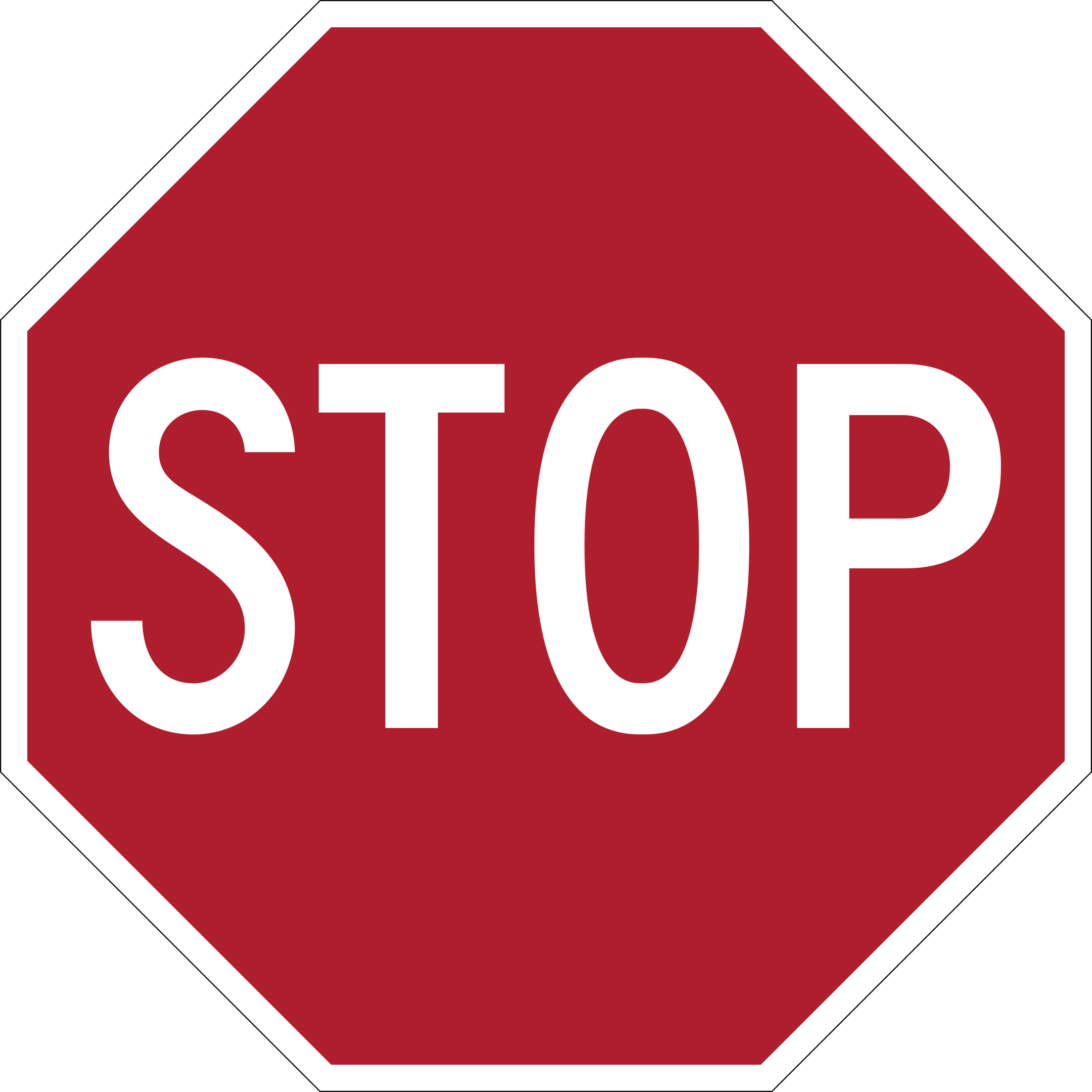
- Come to a complete stop, then go when the way is clear (correct answer)
- Stop only if another vehicle is already waiting
- Yield to traffic on your left and proceed
- Slow down and continue if nothing is coming
Answer: Come to a complete stop, then go when the way is clear. Stop (R1-1). The duty is a complete stop, wheels no longer turning, at whichever of these you reach first: a painted stop line, the near edge of the crosswalk, or the point where you can finally see along the cross street. Rolling through slowly breaches it even on an empty road. Yield (R1-2) is the only other non-rectangular red sign and requires slowing, not stopping. Stop Ahead (W3-1) is a yellow diamond and is only a warning that a stop sign is coming, not an instruction to stop where it stands.
Source: MUTCD R1-1
72. This sign requires you to:
- Stop completely every time
- Slow down, be ready to stop, and let traffic already there go first (correct answer)
- Maintain speed because you have the right of way
- Stop only when a pedestrian is present
Answer: Slow down, be ready to stop, and let traffic already there go first. Yield (R1-2). Priority belongs to whatever is already using the road you want, vehicles and pedestrians alike. Slow enough to hand it over, stop if that is what handing it over takes, and move in only on a gap you have actually seen. Stop (R1-1). Also Yield Ahead (W3-2), which is a yellow diamond containing the same triangle and only warns of a yield sign further on.
Source: MUTCD R1-2
73. Seeing this sign facing you means:
- The road ahead is private property
- The road ahead is closed for construction
- You are about to drive the wrong way into oncoming traffic (correct answer)
- Only local traffic may continue
Answer: You are about to drive the wrong way into oncoming traffic. Do Not Enter (R5-1). Entry in this direction is banned outright, because the lanes past the sign run at you rather than with you. Wrong Way (R5-1a), which is the second-chance sign you meet further in if you ignored this one. Do Not Enter faces you at the entrance; Wrong Way faces you once you are already headed down the roadway against traffic.
Source: MUTCD R5-1
74. This is the only sign of its shape. It marks:
- A narrow bridge ahead
- The end of a divided highway
- A merge from the right
- The start of a no passing zone, posted on the left side of the road (correct answer)
Answer: The start of a no passing zone, posted on the left side of the road. No Passing Zone (W14-3). From this pennant until the solid yellow line beside your lane ends, the sight distance is too short to complete a pass, so overtaking is prohibited for the whole stretch. Do Not Pass (R4-1). This is the only pennant-shaped sign in the manual and the only warning sign mounted on the LEFT side of the road, so it faces the driver who would be tempted to pass.
Source: MUTCD W14-3
75. A round yellow sign is used for exactly one thing. It warns of:

- A railroad crossing ahead (correct answer)
- A roundabout ahead
- A school zone ahead
- A curve ahead
Answer: A railroad crossing ahead. Grade Crossing Advance Warning (W10-1). Tracks cross the pavement somewhere past this sign. Come down to a speed you could stop from, and check the rails both ways rather than waiting for something to tell you a train is coming. The crossbuck (R15-1) at the crossing itself. W10-1 is the only round warning sign in the manual and is the one exception to the orange rule inside work zones, where it stays yellow.
Source: MUTCD W10-1
76. This sign sits at the crossing itself. It means:
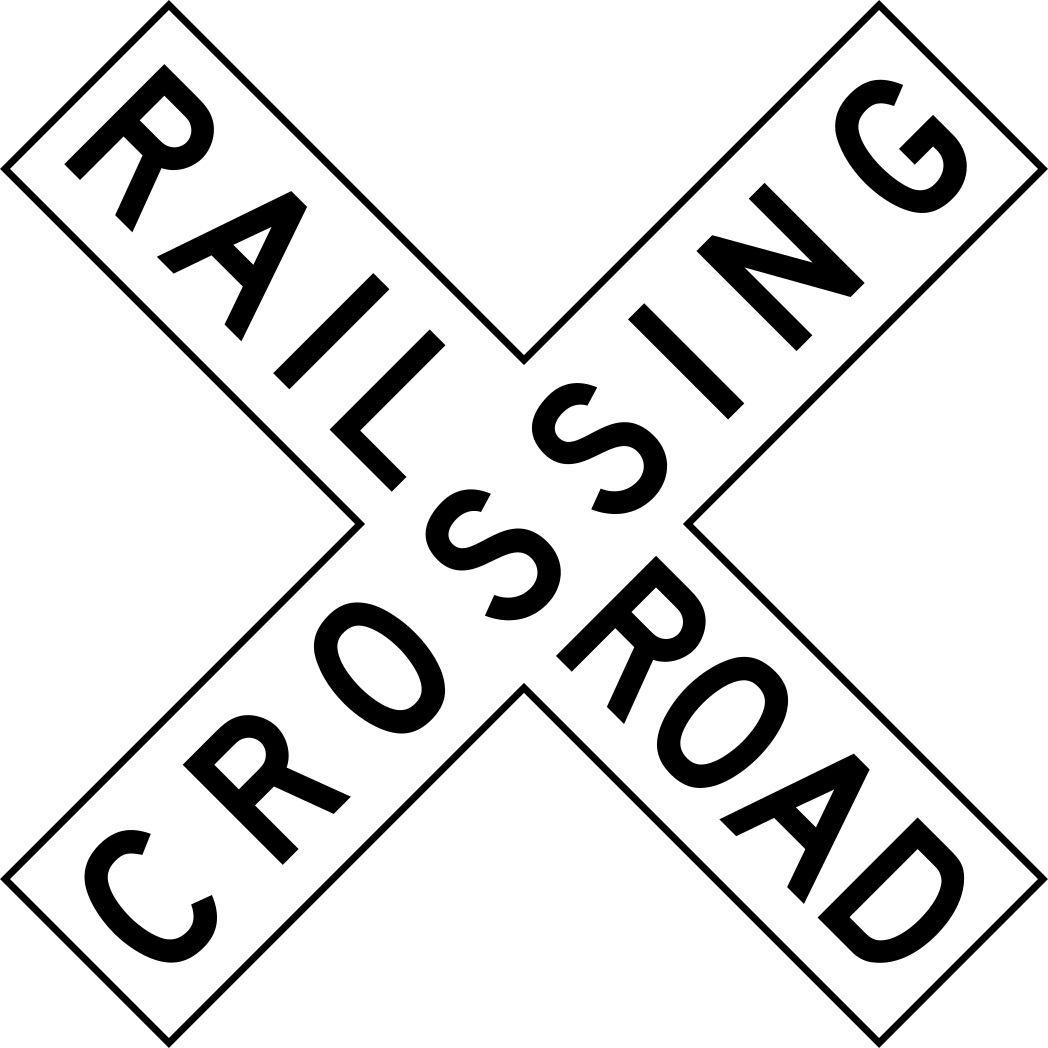
- The tracks are no longer in use
- Trains have right of way and you must yield (correct answer)
- The crossing is closed to traffic
- Stop here on every approach regardless of trains
Answer: Trains have right of way and you must yield. Grade Crossing (Crossbuck) (R15-1). You are at the tracks, not approaching them. In most states the crossbuck itself carries the duty to yield, and rail traffic holds the right of way at every crossing. Being read as advisory. MUTCD Section 8B.04 makes a YIELD sign the default traffic control device for Crossbuck Assemblies, so a crossbuck with a yield sign carries a legal duty to yield, and a crossbuck with a STOP sign requires a full stop.
Source: MUTCD R15-1
77. This shape and color are reserved for one situation. It marks:

- A residential speed zone
- A hospital zone
- A school zone or school crossing (correct answer)
- A playground
Answer: A school zone or school crossing. School (S1-1). Warns that a school, school zone or school crossing is at or near this point. The pedestrian warning sign (W11-2), which is a diamond. S1-1 is the only pentagon-shaped sign in normal use, and MUTCD 11th Edition Section 7B.01 paragraph 05 makes fluorescent yellow-green mandatory for school warning signs, whereas it is optional for pedestrian and bicycle signs. Note the old S2-1 School Crossing sign no longer exists: under Section 7B.02 the S1-1 sign does all four jobs depending on the plaque under it.
Source: MUTCD S1-1
78. An orange sign of this shape tells you:
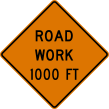
- A detour is mandatory
- The road surface has changed
- A permanent hazard is ahead
- You are entering a temporary work zone (correct answer)
Answer: You are entering a temporary work zone. Road Work Ahead (W20-1). Crews and equipment are at work somewhere on the road past this sign, and the layout you meet may no longer match the markings under your wheels. Yellow warning signs generally. Orange means temporary traffic control, and MUTCD Section 6H.02 requires it for TTC warning signs. W20-1 is normally the first advance sign in a work zone.
Source: MUTCD W20-1
79. This sign means:

- There is a stop sign beyond your sight line, so start slowing now (correct answer)
- Traffic ahead is stopped
- Stopping is prohibited beyond this point
- Stop where the sign stands
Answer: There is a stop sign beyond your sight line, so start slowing now. Stop Ahead (W3-1). There is an octagon beyond this point that a driver at speed will not pick out in time. Lose the speed here so the stop itself is unhurried. The Stop sign itself (R1-1). Answering that you must stop at W3-1 is the single most common sign-test error. It contains a red octagon but it is a warning sign.
Source: MUTCD W3-1
80. This sign warns that:
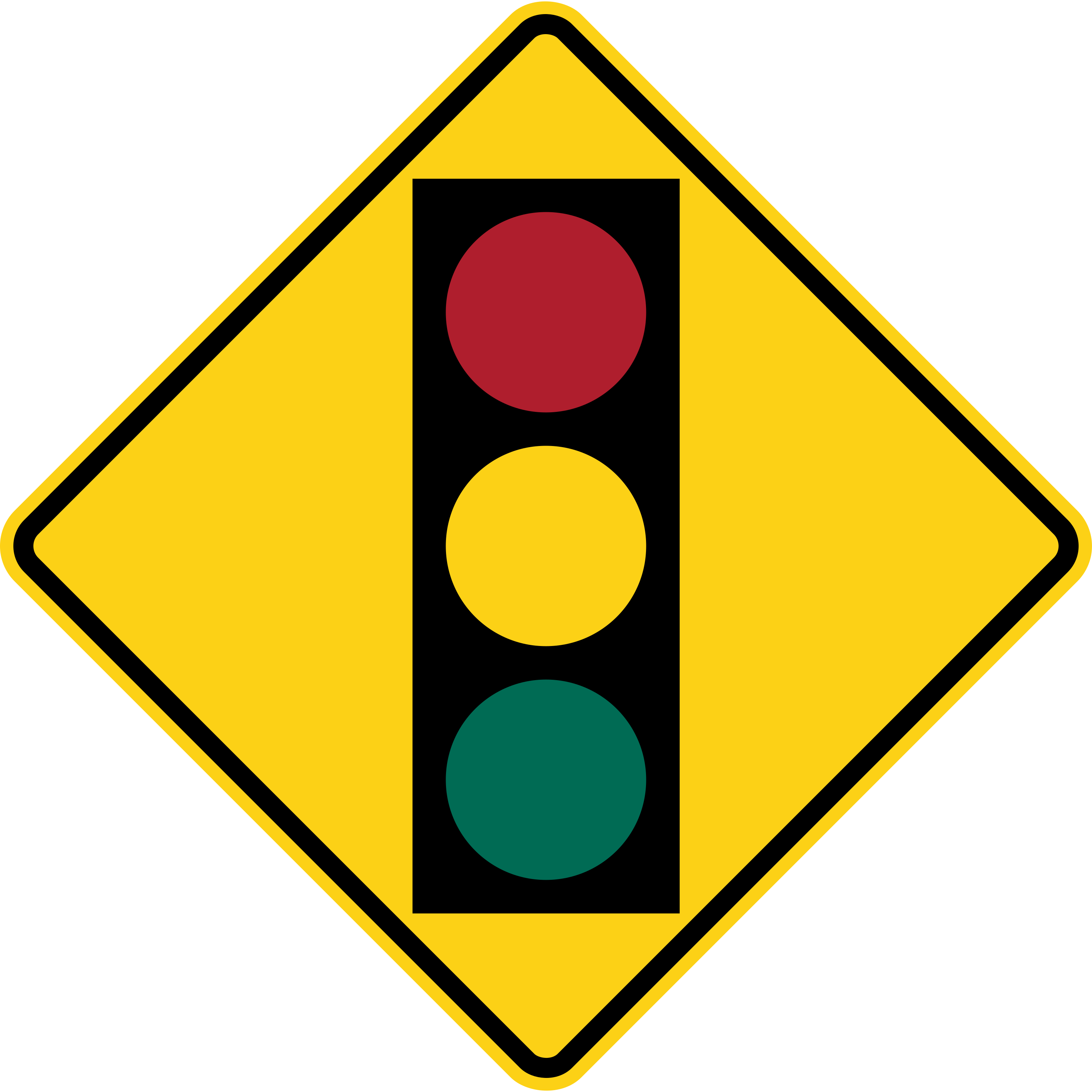
- The signal ahead is out of service
- You may turn on red ahead
- A signal you cannot see yet controls the next intersection (correct answer)
- A police checkpoint is ahead
Answer: A signal you cannot see yet controls the next intersection. Signal Ahead (W3-3). There is a signal head past the crest or the bend, sited where drivers reach it with little time to react. Cover the brake. Be Prepared To Stop (W3-4), the word-message version usually paired with it, and Ramp Meter Ahead (W3-7).
Source: MUTCD W3-3
81. This sign means:
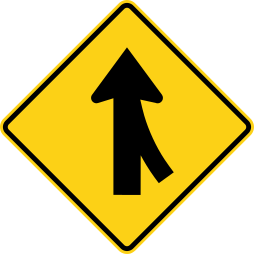
- Your lane ends and you must move over
- A passing lane is being added
- Two-way traffic begins
- Another roadway feeds into yours ahead, so make room for it (correct answer)
Answer: Another roadway feeds into yours ahead, so make room for it. Merge (W4-1). Two traffic streams join ahead and drivers on both must adjust speed and position. Added Lane (W4-3), where the entering traffic gets its own lane and nobody has to merge. In a merge the lanes converge; in an added lane they stay parallel.
Source: MUTCD W4-1
82. This sign means:
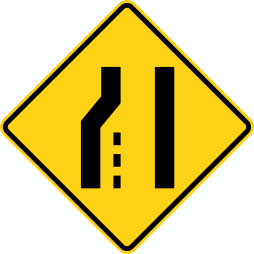
- Your lane ends ahead and you must merge (correct answer)
- The road narrows but all lanes continue
- A shoulder is closed ahead
- A lane is being added ahead
Answer: Your lane ends ahead and you must merge. Lane Ends (W4-2). One of the through lanes ends ahead and its traffic must move over. Merge (W4-1). Lane Ends puts the obligation on the lane that is disappearing.
Source: MUTCD W4-2
83. This sign means:
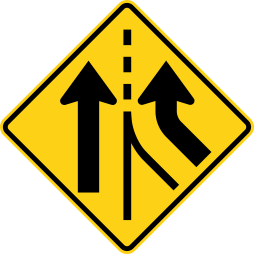
- Traffic ahead is merging into a single lane
- A lane is added, so joining traffic does not have to merge into yours (correct answer)
- Your lane ends ahead
- A passing lane is closing
Answer: A lane is added, so joining traffic does not have to merge into yours. Added Lane (W4-3). A whole extra lane opens on the entry side, so joining traffic has somewhere to go and nobody has to change lanes or yield. Merge (W4-1). Candidates say they must yield; with an added lane there is nothing to yield to.
Source: MUTCD W4-3
84. This sign warns you that ahead:
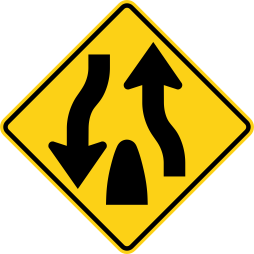
- The shoulder is no longer paved
- The road becomes one way
- The median ends and you will meet oncoming traffic on the same pavement (correct answer)
- The highway ends at an intersection
Answer: The median ends and you will meet oncoming traffic on the same pavement. Divided Highway Ends (W6-2). The median ends ahead and you will be facing two-way traffic on a single roadway. Divided Highway begins (W6-1). This is the one that matters: after W6-2 there is oncoming traffic in the lane beside you.
Source: MUTCD W6-2
85. This sign means:
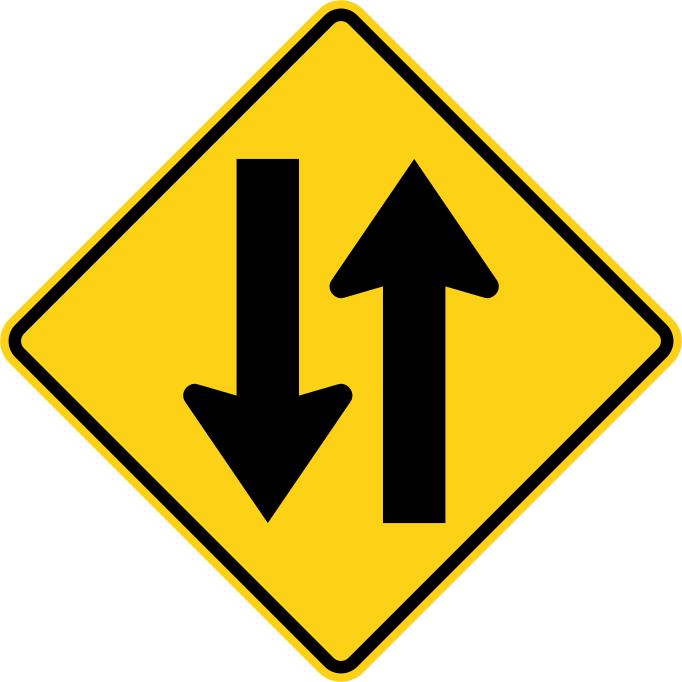
- Two lanes merge ahead
- A passing lane begins ahead
- A one way road is ahead
- The roadway ahead carries traffic in both directions (correct answer)
Answer: The roadway ahead carries traffic in both directions. Two-Way Traffic (W6-3). Oncoming vehicles use the next lane over from here, with nothing but paint between the two streams. One Way (R6-1) reversed in the mind, and the Two-Direction Large Arrow (W1-7). W6-3 warns of oncoming traffic in the next lane.
Source: MUTCD W6-3
86. This sign warns that the road ahead:
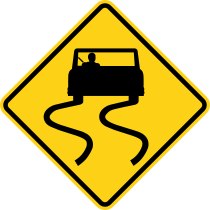
- Loses grip when wet, so slow down before you need to brake (correct answer)
- Is under construction
- Has loose gravel
- Floods in heavy rain
Answer: Loses grip when wet, so slow down before you need to brake. Slippery When Wet (W8-5). Grip falls away sharply on this stretch once it is wet, so brake, steer and accelerate one at a time and none of them hard. Bridge Ices Before Road (W8-13), which is a specific cold-weather hazard, and Grooved Pavement (W8-15), which mainly affects motorcycles.
Source: MUTCD W8-5
87. This sign means:
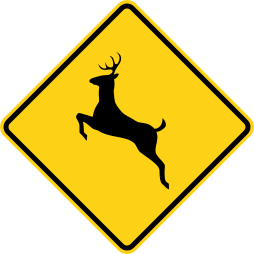
- A wildlife refuge is nearby
- Animals cross here and you should expect more than one (correct answer)
- Hunting is permitted alongside the road
- Livestock are fenced off the roadway
Answer: Animals cross here and you should expect more than one. Deer Crossing (W11-3). A known route for deer and other large game across the pavement, busiest at first light and again at dusk. One animal in the road is usually followed by a second. The other large-animal signs in the same family, W11-4, W11-16 through W11-22, which use cattle, moose, elk, sheep and other silhouettes. The tested action is identical for all of them.
Source: MUTCD W11-3
88. This sign means:
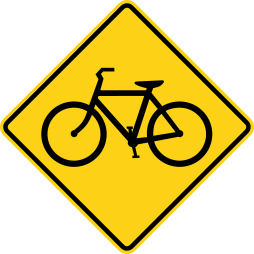
- A bike path crosses under the road
- A bike lane begins
- Cyclists may be in or crossing the roadway ahead (correct answer)
- Bicycles are prohibited ahead
Answer: Cyclists may be in or crossing the roadway ahead. Bicycle (W11-1). Watch for bicycles entering or crossing the roadway ahead. No Bicycles (R5-6), which bans them. Note the 11th Edition dropped the SHARE THE ROAD legend from W16-1P, which now reads IN ROAD.
Source: MUTCD W11-1
89. This sign warns of:

- A road joining from one side only
- A T intersection where your road ends
- A railroad crossing ahead
- A four way intersection ahead (correct answer)
Answer: A four way intersection ahead. Cross Road (W2-1). Another road cuts straight across yours just ahead, so traffic can arrive from the left and the right at once. The railroad advance warning sign (W10-1), which is a yellow circle with an X, not a cross-shaped symbol in a diamond. Also Side Road (W2-2), where the road joins from one side only.
Source: MUTCD W2-1
90. This sign means:

- A side road joins from the right
- The road you are on ends ahead and you must turn (correct answer)
- A divided highway begins
- Traffic from both directions merges
Answer: The road you are on ends ahead and you must turn. T Intersection (W2-3). The road you are on ends ahead at a T intersection; you must turn left or right. Dead End (W14-1) and the Two-Direction Large Arrow (W1-7). At a T you can still go somewhere; at a dead end you cannot.
Source: MUTCD W2-3
91. This sign warns of:
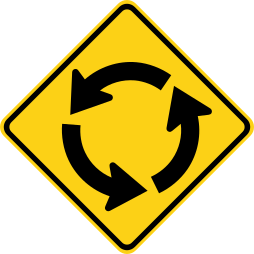
- A cul-de-sac
- A U-turn lane ahead
- A traffic circle or roundabout ahead (correct answer)
- A curve to the right
Answer: A traffic circle or roundabout ahead. Circular Intersection (Roundabout Ahead) (W2-6). A circulating intersection is coming up. Entry runs on gaps: everything already going around the island holds priority, so slow enough to take a gap rather than make one. The black-and-white roundabout directional sign (R6-4) at the island itself, and the ROUNDABOUT plaque (W16-12aP) which is text, not a symbol.
Source: MUTCD W2-6
92. This sign means:
- Passing is allowed only on the right
- Slower traffic must move right
- The lane ahead is closed
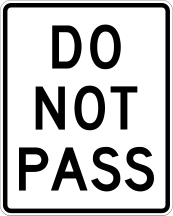
- Passing is prohibited from this point until a sign says otherwise (correct answer)
Answer: Passing is prohibited from this point until a sign says otherwise. Do Not Pass (R4-1). Passing is prohibited from this point until a sign or marking permits it again. The No Passing Zone pennant (W14-3), which is yellow, triangular, and posted on the left-hand side of the road. R4-1 is the regulatory version on the right; the pennant is the warning version facing you across the road.
Source: MUTCD R4-1
93. This sign tells you to:
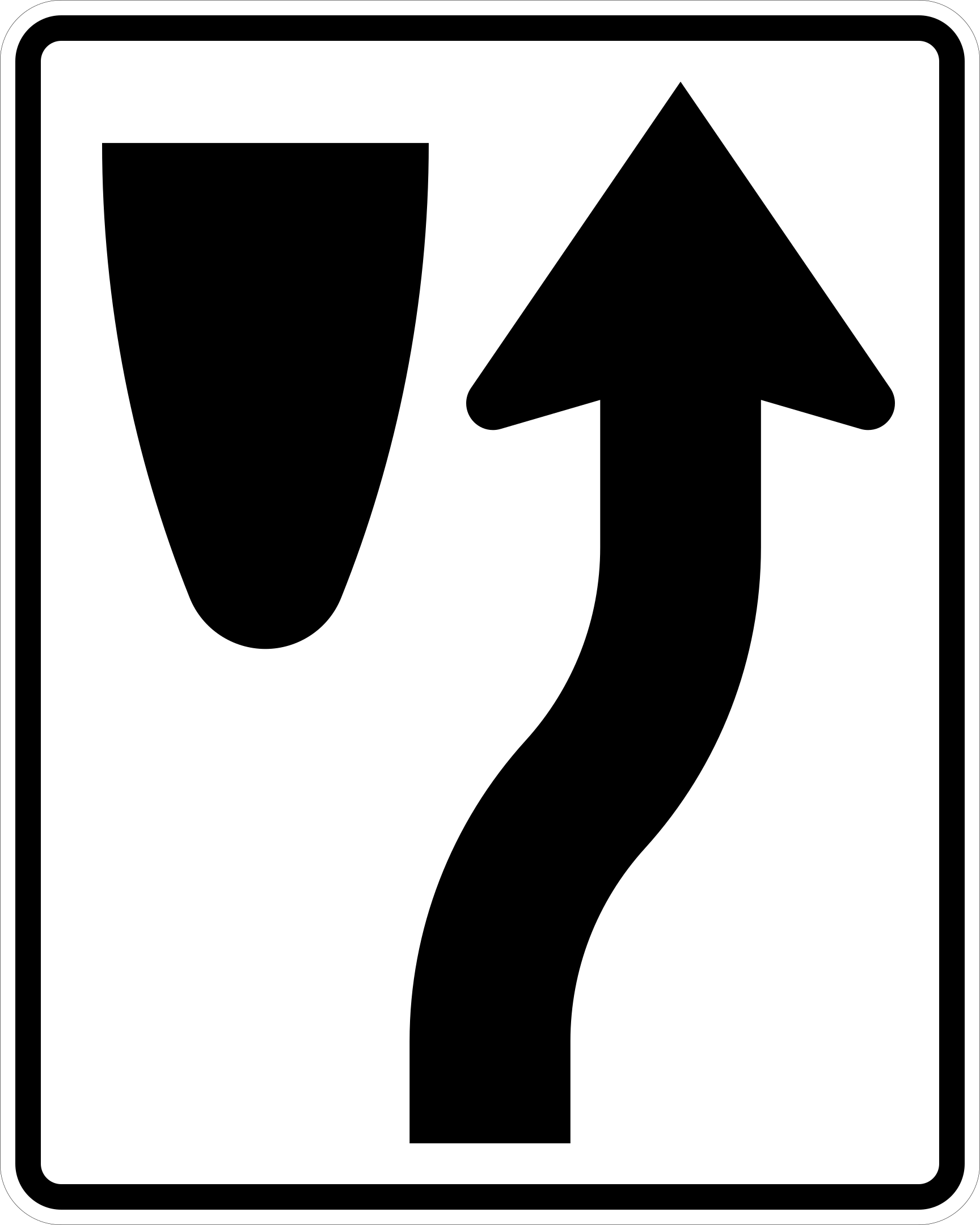
- Keep the obstacle it marks on your left as you go past (correct answer)
- Yield to traffic on the right
- Exit at the next ramp
- Move into the right lane
Answer: Keep the obstacle it marks on your left as you go past. Keep Right (R4-7). The divider immediately ahead has to finish up on your left. Keep to its right-hand side, and note the sign is mounted on the hazard itself, so it applies where you read it rather than further on. Slower Traffic Keep Right (R4-3), which is about speed, not about an obstruction. Also the Keep Left version (R4-8), which is the same sign mirrored.
Source: MUTCD R4-7
94. Where this sign is posted:
- You may turn on red after a complete stop
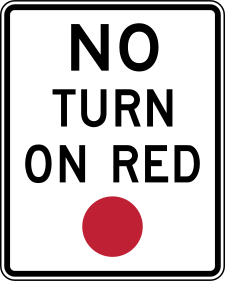
- You must wait for a green signal before turning (correct answer)
- Turns are banned at all times
- Only left turns are banned on red
Answer: You must wait for a green signal before turning. No Turn On Red (R10-11). Stopping does not buy the turn here. Where the default rule would let you go right on red after a full stop, or left on red from one one-way street onto another, this sign cancels the permission until the light turns green. The default rule, which in most states permits a right turn on red after a full stop. Also confused with No Right Turn (R3-1), which bans the turn at all times, not just on red.
Source: MUTCD R10-11
95. This sign appearing in front of you means:
- A detour begins here
- You have missed your exit
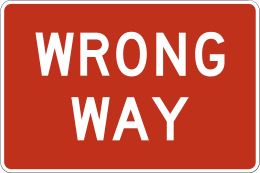
- You have entered a one way road facing the wrong direction and must turn around (correct answer)
- The road ahead is one way in your direction
Answer: You have entered a one way road facing the wrong direction and must turn around. Wrong Way (R5-1a). Every lane around you faces the other way. Stop, then back out or turn around before you meet a vehicle head on. Do Not Enter (R5-1). Also mistaken for a warning; it is the last regulatory sign before a head-on situation.
Source: MUTCD R5-1a
96. This sign means:
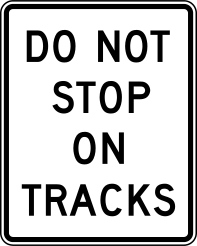
- Trains no longer use these tracks
- Stopping is allowed if a signal is red
- Stop before the tracks every time
- Do not enter the crossing unless you can clear it completely (correct answer)
Answer: Do not enter the crossing unless you can clear it completely. Do Not Stop On Tracks (R8-8). The rails have to stay clear even when the traffic beyond them has stopped moving. Hold on the approach until there is room for your whole vehicle on the far side. Stop Here On Red (R10-6), which tells you where to stop. R8-8 tells you where not to.
Source: MUTCD R8-8
97. A sign in this color carries:
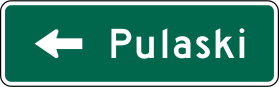
- Directions, distances and destinations (correct answer)
- A traffic law you must obey
- A motorist service such as fuel or lodging
- A warning about the road ahead
Answer: Directions, distances and destinations. Destination sign (D1-1, D1-2, D1-3). Names the places reached by the route and the direction to take. Distance signs (D2 series), which give mileage rather than a turn direction.
Source: MUTCD D1-1, D1-2, D1-3
98. A sign in this color tells you about:
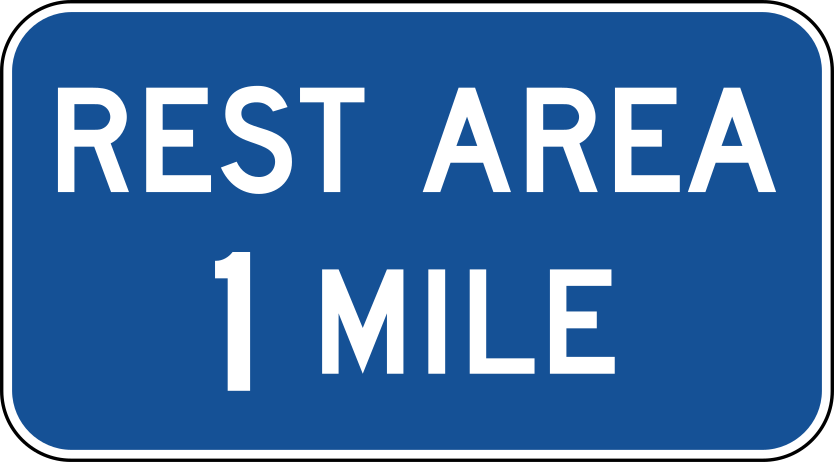
- A temporary work zone
- Motorist services such as rest areas and hospitals (correct answer)
- A recreational or cultural site
- A regulation you must follow
Answer: Motorist services such as rest areas and hospitals. Rest Area (D5-1, D5-1a, D5-2). Directs road users to a rest area and how far it is. Green guide signs. Blue is reserved for road-user services, tourist information and evacuation routes under MUTCD Section 1D.05.
Source: MUTCD D5-1, D5-1a, D5-2
99. What grade do you need to pass a Texas knowledge exam?
- 70 percent (correct answer)
- 80 percent
- 90 percent
- 60 percent
Answer: 70 percent. The Texas Driver Handbook states that a grade of 70 percent or better passes any knowledge exam, and the same threshold is set by rule in the Administrative Code.
Source: Texas Driver Handbook DL-7 (rev. January 2026), Chapter 1; 37 TAC s. 15.52
100. Who must complete a driver education course before a first Texas license?
- Applicants under 18 only
- Every first-time applicant under 25 (correct answer)
- Every applicant regardless of age
- Nobody, it is optional
Answer: Every first-time applicant under 25. Texas requires driver education of every first-time applicant younger than 25, not just teenagers. Adults moving from other states are frequently caught out by this.
Source: Transportation Code s. 521.1601
101. What must every Texas applicant complete before taking the driving exam?
- A vision therapy assessment
- A defensive driving course
- The Impact Texas Drivers video course (correct answer)
- A first aid certificate
Answer: The Impact Texas Drivers video course. All applicants must complete the Impact Texas Drivers course appropriate to their age group before sitting the driving exam. There are separate age-banded versions.
Source: Texas Driver Handbook DL-7, Chapter 1
102. How does Texas track repeat traffic offenders?
- A demerit system reset annually
- By insurance record only
- A points system, with suspension at 12 points
- There is no points system; four convictions in 12 months makes you a habitual violator (correct answer)
Answer: There is no points system; four convictions in 12 months makes you a habitual violator. Texas has no driver license points system. Instead a person is a habitual violator on four or more convictions from separate incidents within 12 consecutive months, or seven or more within 24 months.
Source: Transportation Code s. 521.292(b)
103. How many supervised practice hours does a Texas learner need?
- 30 hours, 10 at night (correct answer)
- 40 hours, 10 at night
- 50 hours, 10 at night
- 20 hours, 5 at night
Answer: 30 hours, 10 at night. Texas requires 30 hours of behind-the-wheel practice with at least 10 at night, alongside 7 hours of in-car instruction and 7 hours of in-car observation in the driver education course.
Source: Texas Driver Handbook DL-7; TxDPS graduated licensing requirements
104. The adult supervising a Texas learner driver commits an offense if they:
- Change the radio station
- Are asleep, intoxicated or otherwise not attentive (correct answer)
- Sit in the back seat
- Hold an out-of-state license
Answer: Are asleep, intoxicated or otherwise not attentive. The accompanying person must be 21 or over, hold a license for that vehicle type, have at least a year of experience and occupy the seat beside the driver. Being asleep or intoxicated is itself an offense.
Source: Transportation Code s. 521.222(d)
105. You fail the Texas knowledge exam. How many attempts do you get per application?
- One
- Two
- Three (correct answer)
- Unlimited
Answer: Three. An application is held for 90 days after a failure. After 90 days, or after three failed exams, a new application and fee are required.
Source: Texas Driver Handbook DL-7 (rev. January 2026)
106. Under Texas zero tolerance, a driver under 21 commits an offense with:
- A BAC of 0.05 or higher
- A BAC of 0.08 or higher
- A BAC of 0.02 or higher
- Any detectable amount of alcohol (correct answer)
Answer: Any detectable amount of alcohol. Texas zero tolerance means any detectable amount of alcohol in a minor operating a vehicle, even where they are not intoxicated under the DWI statute. Suspensions escalate with each offense.
Source: Texas Driver Handbook DL-7, Chapter 10; Alcoholic Beverage Code s. 106.041
107. Texas Move Over law requires you to change lanes or slow to:
- 20 mph below the limit (correct answer)
- The posted limit
- 30 mph in all cases
- 10 mph below the limit
Answer: 20 mph below the limit. If you cannot safely change lanes away from a stopped vehicle, you must slow to 20 mph below the posted limit. The law covers emergency vehicles, tow trucks, highway maintenance and utility vehicles, not just police.
Source: Transportation Code s. 545.157
108. A Texas signal shows no indication at all. Texas statute says you treat it as:
- Uncontrolled
- A green light
- A four-way stop sign (correct answer)
- A yield sign
Answer: A four-way stop sign. Texas law is explicit: a signal that displays no indication at all is treated as a stop sign, so you stop and proceed in turn.
Source: Transportation Code s. 544.007(i)
109. When does Texas allow a left turn while the light is a steady red?
- At any intersection after stopping
- Only where a sign permits it
- Never
- From a one-way street onto another one-way street, after stopping (correct answer)
Answer: From a one-way street onto another one-way street, after stopping. After a complete stop, Texas permits a right turn on red and a left on red from a one-way onto a one-way, unless a sign prohibits it.
Source: Transportation Code s. 544.007(d)
110. A driver under 18 in Texas may use a wireless device:
- Not at all, except in an emergency (correct answer)
- For navigation only
- When stopped at a light
- Hands-free only
Answer: Not at all, except in an emergency. Texas bars any use of a wireless communication device by a driver under 18, including hands-free. The only carve-out is a genuine emergency.
Source: Transportation Code s. 545.424
111. Red lights start flashing on a school bus ahead of you, on an undivided Texas road. Traffic must stop:
- Only from behind
- From either direction (correct answer)
- Only if children are visible
- Only on roads under 40 mph
Answer: From either direction. Texas requires drivers approaching from either direction to stop. A first offense carries a fine between $500 and $1,250.
Source: Transportation Code s. 545.066
112. Who must wear a motorcycle helmet in Texas?
- Only passengers
- Everyone, with no exceptions
- Riders under 21, and others unless they meet an exemption (correct answer)
- Nobody, helmets are optional
Answer: Riders under 21, and others unless they meet an exemption. Texas law demands protective headgear, then lifts that duty for riders of 21 and over who either finished an approved operator training course or are covered by the health insurance plan the statute describes. An officer may not stop a rider solely to check.
Source: Transportation Code s. 661.003
113. A first-time Texas Class M motorcycle applicant must:
- Hold a Class C license for two years
- Be at least 18
- Pass a written test only
- Complete an approved rider training course, at any age (correct answer)
Answer: Complete an approved rider training course, at any age. Every first-time Class M applicant must furnish evidence of completing an approved motorcycle operator training course, regardless of age.
Source: Transportation Code s. 521.148(a)
114. A restricted Texas Class M license issued at 15 limits the rider to a motorcycle of no more than:
- 250cc (correct answer)
- 400cc
- 500cc
- 125cc
Answer: 250cc. A special restricted Class M at 15 caps engine size at 250 cubic centimeters. The restriction lifts automatically at 16.
Source: Transportation Code s. 521.224(b) to (e)
115. What is the highest posted speed limit found in Texas?
- 80 mph
- 85 mph (correct answer)
- 70 mph
- 75 mph
Answer: 85 mph. The statutory prima facie limit outside urban districts is 70 mph, but Texas permits higher posted limits after an engineering study, and some stretches are posted at 85 mph, the highest in the country.
Source: Transportation Code s. 545.352(b) and s. 545.353
116. Driving on the improved shoulder in Texas is:
- Permitted for right turns only
- Always prohibited
- Permitted only in specific listed situations, when necessary and safe (correct answer)
- Permitted whenever traffic is heavy
Answer: Permitted only in specific listed situations, when necessary and safe. Texas lists the permitted situations, including stopping or parking, avoiding a collision, and allowing another vehicle to overtake. Outside those, shoulder driving is an offense.
Source: Transportation Code s. 545.058(a)
117. In Texas, a child under 18 riding in the open bed of a pickup truck is:
- Permitted below 35 mph
- Permitted with a seat belt fitted
- Permitted on any road
- Prohibited (correct answer)
Answer: Prohibited. It is an offense to operate an open-bed pickup or flatbed while a child younger than 18 occupies the bed, with limited exceptions.
Source: Transportation Code s. 545.414(a)
118. What is the minimum liability insurance required in Texas?
- 25/50/20
- 30/60/25 (correct answer)
- 50/100/50
- 20/40/15
Answer: 30/60/25. Texas requires $30,000 for injury or death of one person, $60,000 per collision, and $25,000 for property damage. Driving uninsured starts at a $175 fine.
Source: Transportation Code s. 601.072(a-1)
119. Since 1 January 2025, non-commercial vehicles in Texas:
- Require inspection only on sale
- Still require an annual safety inspection
- No longer require an annual safety inspection (correct answer)
- Require inspection every two years
Answer: No longer require an annual safety inspection. The annual safety inspection requirement for non-commercial vehicles ended on 1 January 2025. Owners instead pay an annual Inspection Program Replacement Fee. Emissions testing continues in certain counties.
Source: House Bill 3297 (88th Legislature, 2023), effective 1 January 2025
120. Texas bans texting while driving:
- Only for drivers under 18
- Only on highways
- Only in school zones
- Statewide, and the ban preempts local rules (correct answer)
Answer: Statewide, and the ban preempts local rules. The statewide ban on reading, writing or sending an electronic message while driving preempts local ordinances. Handheld use is separately banned in school crossing zones.
Source: Transportation Code s. 545.4251(b)
121. A Texas driver license issued to an adult is normally valid for:
- 8 years (correct answer)
- 10 years
- 4 years
- 6 years
Answer: 8 years. A Texas license expires on the first birthday after the eighth anniversary of the application, and an in-person renewal is required at least every 16 years.
Source: Transportation Code s. 521.271(a)(1)
122. How many questions are on the Texas Class C knowledge exam?
- 40
- DPS does not publish a question count (correct answer)
- 20
- 30
Answer: DPS does not publish a question count. The Texas Department of Public Safety does not publish the number of questions on the Class C knowledge exam in the handbook or on its website. What it does publish is the pass mark of 70 percent, so revise to that standard rather than to a count you have seen quoted elsewhere.
Source: Texas Driver Handbook DL-7 (rev. January 2026); dps.texas.gov, checked September 2026
Other Texas practice tests
Original practice questions written from the rules themselves, not the examination questions TxDPS uses. TxDPSneither runs this site nor endorses it.