Guides
The practice tests cover the traffic law. These guides cover everything around the tests that decides whether the day goes to plan: the paperwork at the counter, whether you can sit the knowledge exam at home, what a learner permit lets you do, how the road test is marked, what a failed attempt costs and what a move does to a license you already hold.
Each guide gives the rule for Florida, Texas, California and New York side by side, names the agency page or statute it comes from, shows the date the figures were last checked, and says so plainly when an agency publishes nothing at all. That last part matters more than it sounds: several of the numbers most often repeated about these tests have no official source behind them.
Before the permit test
The two questions that decide whether test day happens at all: what the counter will ask to see, and whether you have to be at a counter in the first place.
What to bring to the DMV for your permit test
The under-18 stack and the 18-and-over stack for Florida, Texas, California and New York, including REAL ID and name changes.
Can you take the permit test online in Florida, Texas, California, or New York?
Florida, Texas, California, and New York have different rules. In Florida and New York, age decides if an online test is available.
On test day
How the behind-the-wheel test is marked and what ends it early, and what a failed knowledge test costs you in money, days and remaining attempts.
After the test, or after a move
What a learner permit lets you do once it is in your hand, and what a move across a state line does to a license you already hold.
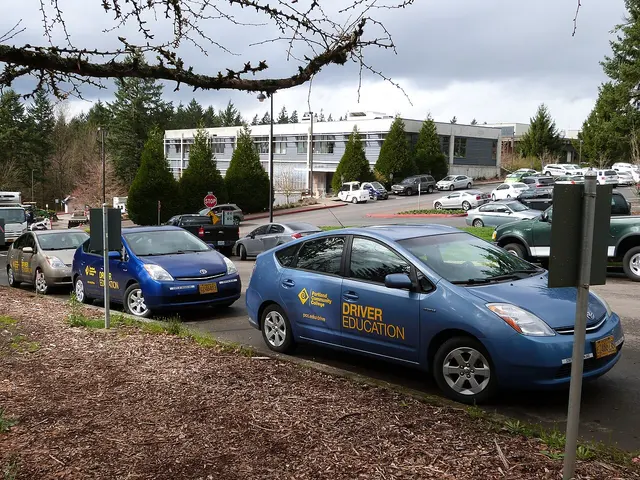
What can you do with a learner's permit?
Who must sit beside you, which hours are legal, and when Florida, Texas, California and New York let you move up.
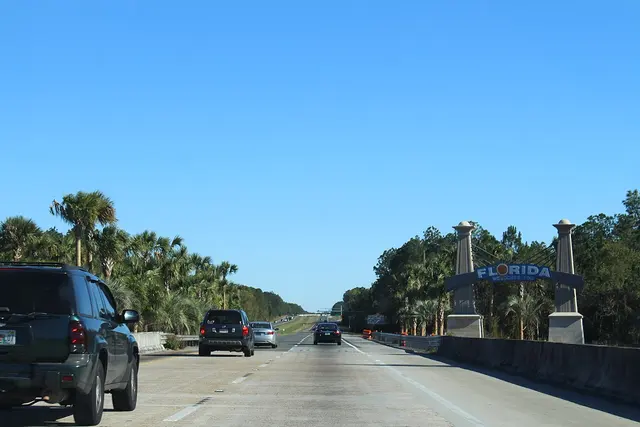
Moving to a new state, do you have to retake the written test?
Florida may skip both exams, Texas skips them at 18 or older, California still gives the knowledge test, and New York residents must exchange within 30 days.
The path from permit to license, in order
Florida, Texas, California and New York all run the same five stages: a knowledge test, a learner permit, a stretch of supervised practice, a road test, and a first license with limits that depend on age and state. What differs is the age each stage opens and how long each clock runs. Florida issues a learner’s license at 15, and a driver under 18 then holds it for 12 months, or until turning 18, while logging 50 hours of practice with at least 10 at night before a Class E license at 16. Texas also starts at 15, but only after the classroom phase of driver education, and asks for six months on the learner license plus 30 hours of practice with 10 at night, on top of the in-car hours inside the course. California starts later, at 15 years and 6 months with driver education, and asks for a six month hold, 50 hours with 10 at night, and 6 hours of professional training before the drive test. New York sets 16 as the minimum for both a permit and a junior Class DJ license, but an applicant under 18 must hold the permit at least six months before scheduling the road test, bring an MV-262 on which a parent or guardian certifies 50 supervised hours, at least 15 after sunset, and complete the five-hour pre-licensing course (MV-278) or driver education (MV-285) before that test. A full Class D license follows at 18, or at 17 with driver education.
The holding periods matter most to anyone who starts late. Florida, Texas and California set 16 as the earliest age for a license of your own, so a teen who takes the permit on the first possible day reaches 16 with the hold already served. New York starts later: its permit opens at 16, so the six month hold puts the earliest road test at 16 and a half. Start at 15 and a half in Florida or Texas and the clocks separate: a Florida teen must still hold the learner’s license a full 12 months, which points to 16 and a half, while a Texas teen on a six month hold can reach the provisional stage on their 16th birthday. Each state then sets its own restrictions on the license that follows, so the guide on permit rules carries the timeline for all four.
Four knowledge tests that only look alike
The permit test is the stage people search about most, and it is where the four states differ most in what they are willing to publish. Florida publishes a complete answer: 50 questions, 40 correct to pass. Texas publishes a pass mark of 70 percent and no question count anywhere, so no honest source can tell you how many questions you may miss there. California’s live pages state an 80 percent pass mark and no question count; the counts in circulation, 36 questions for adults and 46 for applicants under 18, trace to a DMV research report dated December 2006. New York asks 20 questions and requires at least 14 right, including at least 2 of the 4 road-sign questions; 17 out of 20 still fails if only 1 sign answer is right. So “how many can I miss” has one exact answer in Florida, a conditional answer in New York, an arithmetic answer with a caveat in California, and no answer at all in Texas. The state pages spell each one out.
If you are 18 or older, read the rules twice
Most of what is written about permits assumes a 16 year old, and adults lose time following it. Turning 18 removes many teen requirements, but not everything falls away on the same birthday. Florida still requires a department-approved driver education course for a learner’s license at any age, and an adult loses the online exam option rather than gaining it, because Florida’s online route is for applicants under 18 only. Texas requires a driver education certificate of every first-time applicant younger than 25. California drops its driver education requirement at 18 entirely. New York does not require parental consent, an MV-262 hour log or a six month permit hold at 18. Its online permit test is only for applicants under 18, so adults take it in an office, and the five-hour pre-licensing course or driver education (MV-285) is still required before the road test at any age, though an adult may take that course online through DMV’s pilot program, which is open only at 18 and over. The guides flag the adult case wherever it changes the answer.
How to read a guide
Every guide opens with the answer, then works through the state detail, then applies the rule to named people in worked examples, because “what happens to me” is usually the real question. Figures carry the date they were confirmed on the agency’s own page. Where an agency publishes nothing, the guide says that instead of filling the gap with a number from a commercial site, and it tells you who to ask. If you only need one state’s answer, each guide links down to the matching state page, and each state has its own practice tests built from its own handbook rules.
Where the figures on this page come from
- FLHSMV, licensing requirements for teens and graduated driver license laws
- FLHSMV, Class E Knowledge Exam and Driving Skills Test
- Texas Driver Handbook DL-7, revised January 2026
- TxDPS, Texas Provisional License as a Teen
- California Driver's Handbook (DL 600), getting an instruction permit and driver's license
- California DMV, instruction and learner permits
- New York State Driver's Manual, Chapter 1: Driver Licenses
- New York State DMV, Learner Permit
- New York State DMV, Schedule and Take a Road Test
- New York State DMV, Complete Pre-Licensing Requirements
- New York State DMV, The Driver Pre-Licensing Course
- New York State DMV, Prepare For and Take Your Permit Test
- New York State Senate, Vehicle and Traffic Law section 502
- New York State Senate, Vehicle and Traffic Law section 507
Card photos: The Bushranger, CC BY-SA 4.0; Phillip Pessar, CC BY 2.0; Ian Poellet, CC BY-SA 4.0; Oregon Department of Transportation, CC BY 2.0; Ellin Beltz, CC BY-SA 3.0; Michael Rivera, CC BY-SA 4.0, via Wikimedia Commons.
Looking for the tests instead? Pick your state.