How is the DMV road test scored, and what fails it immediately?
Written by Vikas. Figures last confirmed 2026-09-25.
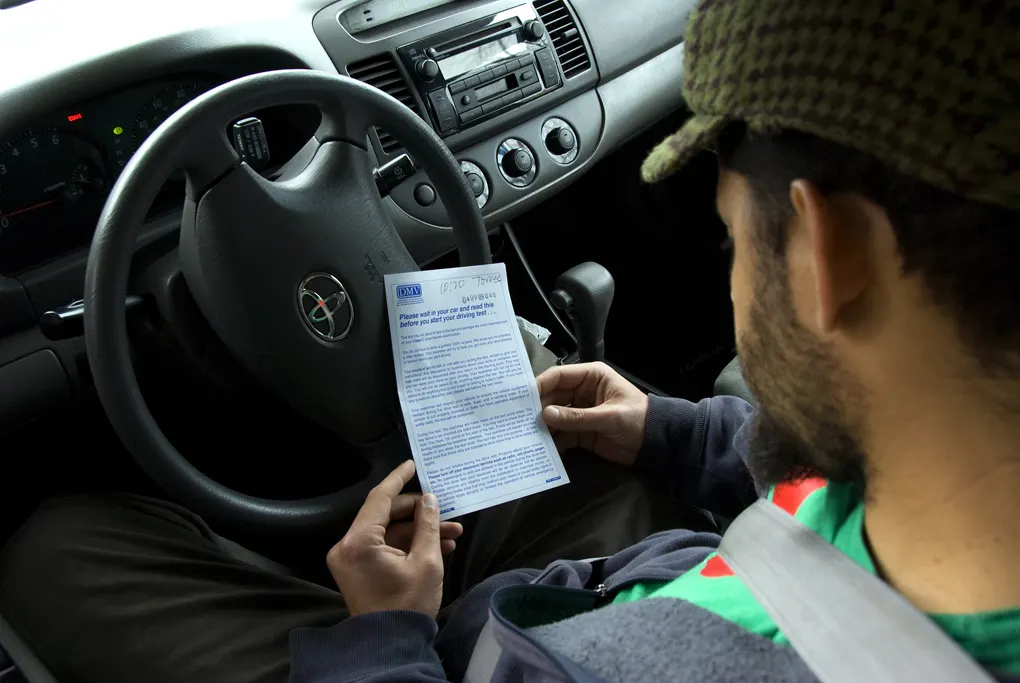
Florida fails the Class E driving exam at 31 penalty points, and form HSMV-71110, which the rule behind that number adopts, prints the weight of each group of mistakes. Texas will not approve the application when more than 30 points come off, but publishes no value for any single error. California fails a standard Class C drive test on any critical-error mark, on 4 or more misses among pre-drive items 9 to 14, or on a 16th maneuver error. New York publishes Class D road test error categories, but no point values or pass threshold.
Where do you book the behind-the-wheel test?
Florida gives the Class E skills test at a driver license service center, through an approved third-party provider, or in a high school driver education class that takes part in DELAP, where the teacher enters your result. Under Florida Statutes s. 322.56(2), a third-party test has to be the same test the state would give. FLHSMV publishes no statewide wait. Its Miami-Dade and Broward FAQ tells first-time applicants in high-demand areas to expect to book 3 to 5 weeks ahead.
The Class E page sets the gate: hold the learner license for 12 months from issue, or be 18. Under s. 322.12(1), FLHSMV may waive the knowledge and skills tests if you surrender a valid license from another state, a Canadian province, or the U.S. Armed Forces and apply for an equal or lower class. The statute says may, so the waiver is not automatic.
Texas makes you apply first. Its scheduling FAQ says the Customer Service Center cannot book, move, or cancel a road test, and Texas Scheduler asks for the driver license number DPS assigned you. Slots open up to 180 days ahead. Bring the driving test fee or the receipt, which DPS says is good for only 90 days. The DPS fee page lists original Class C fees ($16 under 18, $33 from 18 to 84, each including a $1 administrative fee) and has no line for a Class C drive test, so no separate price is given here.
No Impact Texas Drivers certificate, no drive test. The 2-hour teen video is for ages 15 to 17 in a teen or parent-taught course. The 1-hour adult video is for ages 18 to 24 who must take adult driver education, and for everyone 25 or older. DPS says the certificate is valid for 90 days and must come after your behind-the-wheel driver education, and third-party testers require it too. DL-60 puts the drive itself at about 20 minutes.
In California, book at dmv.ca.gov/make-an-appointment. On test day the handbook asks for your permit or license, a car that is safe to drive, and proof of insurance and registration. Unless you already hold a license, you also bring a California-licensed driver who is 18 or older, or 25 or older if you are a minor. That driver does not ride along: only the examiner does, with exceptions for training, service animals, and certain law enforcement cases. An interpreter may help with the pre-drive check but not on the drive. A rental must list you on the contract and must not exclude drive tests. Recording devices are prohibited, and one that cannot be switched off must be blocked.
Under 18, California Vehicle Code s. 12814.6 adds a 6-month permit hold, 50 hours of supervised practice with at least 10 in darkness, and driver education plus driver training. The Teen Driver Roadmap puts that training at 6 hours with a licensed driving school.
New York books the road test online at nyrtsscheduler.com or by phone at 1-518-402-2100, using the learner permit, a ZIP code, and at least one unused road test. You need an MV-278 or MV-285 certificate number unless you completed the approved online pre-licensing course, which the provider reports to DMV electronically. DMV's road test page puts the earliest date at 3 to 5 weeks out, up to 10 weeks during summer and school breaks, with no waiting lists, and tests run almost always on weekdays. You do not have to test in your home county.
Under 18, New York adds its own hold: at least 6 months from the date the learner permit was issued before you can schedule a road test, and time the permit spent suspended or revoked does not count toward it (Vehicle and Traffic Law s. 501-b(1)(d)). At 18 or older there is no such wait once you hold the permit, have met the pre-licensing requirement, and have an unused road test.
| Florida | 50 hours, of which at least 10 must be at nightFLHSMV graduated licensing requirements; Florida Statutes s. 322.05(3); form HSMV 71143, checked September 25, 2026A parent, legal guardian or other responsible adult 21 or older signs form HSMV 71143 for the hours. That adult need not hold a license, but whoever rode along must have been a licensed driver 21 or older. |
| Texas | 30 hours, of which at least 10 must be at nightTxDPS, Texas Provisional License as a Teen; 16 TAC s. 84.500, checked September 25, 2026On top of 7 hours of in-car instruction and 7 hours of in-car observation within the driver education course (16 TAC s. 84.500). The DPS page labels both blocks in-car observation, describing 7 hours driving for the instructor and 7 hours watching the instructor. |
| California | 50 hours, of which at least 10 must be at nightCalifornia Driver's Handbook (DL 600); Vehicle Code s. 12814.6, checked September 25, 2026Under-18 applicants only. The supervisor is a California-licensed driver 25 or over, except that a parent, spouse, guardian or licensed or certified driving instructor can be any age. Plus 6 hours of professional training and a 6 month permit hold. Adults have no supervised hours requirement. |
| New York | 50 hours, of which at least 15 must be after sunsetVehicle and Traffic Law s. 502(2); New York State DMV, Complete Pre-Licensing Requirements and form MV-262 (3/25), checked September 25, 2026Required of junior (DJ and MJ) permit holders and of 17-year-olds using driver education to get Class D. A parent or guardian certifies them on form MV-262, which goes to the examiner at every road test, and hours with a driving school instructor or driver education teacher count toward the 50. DMV publishes no hour requirement for applicants 18 and over. |
Applicants under 18. Each row cites its own source.
| State | Published fail line | What ends it early | Retest |
|---|---|---|---|
| Florida | 31 or more penalty points. Each weight is printed on form HSMV-71110 (rev. 10/13), which the rule adopts. | A crash, a dangerous action, a traffic-law violation, lack of cooperation, or refusing directions. | $20 after a fail. No published wait. No pass within 5 attempts in 1 year: a 1-year suspension. |
| Texas | More than 30 points deducted (DL-7). No value is published for any single error, and DL-60 prints no total. | DL-60: a dangerous or illegal maneuver stops the test. DL-7 also lists breaking the law, refusing instructions, and a crash. | 3 exams per application. After a fail the application is held 90 days. Then, or after 3 fails, a new application and fee. |
| California | Any critical mark, 4 or more misses on pre-drive items 9 to 14, or more than 15 maneuver errors. | Any critical mark fails. DMV does not say whether the drive ends at that moment. | $9. Minors sit out the 14 days after the fail date. Teen Driver Roadmap: 15 days, 3 attempts, then reapply. |
| New York | DMV lists Class D scoring errors in five categories, but publishes no point values or pass threshold. | The public Class D scoring summary does not identify which mistakes end a test early. | Two road tests included in the fee. $10 for up to two more (VAT 503(2)(b)). At least a 14-day wait after a fail, no age split. |
Florida Administrative Code rule 15A-1.015 and form HSMV-71110; Florida Statutes s. 322.12; DL-7 (rev. January 2026), DL-60 (rev. 03-2026) and Texas Transportation Code s. 521.161; DL 32 (rev. 4/2021), the DPE and pre-drive criteria, the handbook, the Teen Driver Roadmap, and the fees page; the New York DMV road test and Road Test Results pages, Vehicle and Traffic Law s. 503, and the New York Driver's Manual Chapters 5 and 7. Checked September 25, 2026.
What does the examiner check on the car before it moves?
A refused car is not a scored drive. Florida will not give the test if the horn, rear-view mirror, turn signals, steering, brakes, tires, brake lights, or taillights are defective, or if the car has no driver-side wiper, no working headlights, glass cracked enough to block the view, an expired tag, no doors, front doors that do not open from both sides, no fixed seats, or no way to give hand signals. A low-speed vehicle with a top speed of 20 to 25 mph is refused too. Registration and insurance are required, and no passengers may ride along.
DL-60 has the Texas specialist check for two plates, front and back (a single out-of-state or temporary plate is accepted, dealer plates are not), a working speedometer, horn, front and rear turn signals, brake lights, and seat belts, at least one rearview mirror, driver and front passenger doors that open normally, unexpired registration, inspection, and insurance, and wipers, headlights, and taillights when weather or time of day calls for them. The scheduling FAQ adds that you need not be named on the policy but cannot be an excluded driver, and that both metal plates plus the buyer's receipt can stand in for a missing registration sticker.
California checks 19 numbered items on DL 32. Items 1 to 8 are equipment: the driver window must open, the windshield must give a clear view (the handbook warns that cracks may postpone the test), there must be at least 2 mirrors with one outside on the left, both brake lights must work, each tire needs 1/32 inch of tread in any 2 adjacent grooves, the pressed brake pedal needs 1 inch of clearance from the floor, and the horn must carry 200 feet. A donut spare is not allowed. A mechanical failure on items 1 to 8 or 15 to 17, or a parking brake that will not set, reschedules the test.
New York checks the car before the drive starts. DMV's road test checklist calls for valid registration, inspection and insurance, two permanent plates and no in-transit tag, and a vehicle that is clean and works properly. One companion comes too: over 18 if they drive you to the site, over 21 if you drive there yourself on the permit, and carrying a physical license rather than a mobile ID. No other passengers ride along, and a junior permit holder also hands the examiner a signed MV-262 before the drive begins.
- Items 1 to 8: equipment
Driver window, windshield, mirrors, turn signals, brake lights, tires, foot brake, and horn. A failure reschedules the test.
- Items 9 to 14: what you must find and show
Parking brake, arm signals, wipers, defroster, emergency flashers, and headlights. Missing 4 or more is unsatisfactory, which is a fail. In bad weather, items 11 to 14 must also work or the test is rescheduled.
- Items 15 to 17: more equipment
Passenger door, glove box, and seat belts. A failure reschedules the test, as with items 1 to 8.
- Items 18 and 19: on the sheet only
Head restraint and automated technology appear on DL 32. The criteria page sets no requirement for either.
Item numbers from sample DL 32 (rev. 4/2021) and the Pre-Drive Checklist criteria page.
Which maneuvers does each state actually test?
Florida lists 14 maneuvers, and its form prices each mistake
The Class E page names 14 maneuvers. The ones with numbers attached: a three-point turn in a space 20 to 40 feet wide, a 50-foot back at slow speed with your head turned to the rear (no mirror, no camera monitor), a turn signal on for the final 100 feet, and a following gap of at least 4 seconds. The rest are straight-in parking centered in the space, parking uphill and downhill with and without a curb, a quick stop on command, lane choice at crossings, yielding, stop signs, traffic lights, passing, lane keeping, and posture.
| Maneuver | FAIR mark | BAD mark | DISQUALIFIED |
|---|---|---|---|
| Straight-in parking | 5: two attempts to park | 10: car not fully inside the stall | Climbing onto or over the curb |
| Quick stop | 5: more than 50 feet to stop | 10: swerving considerably | Losing control of the car |
| Backing | 4: backing faster than 10 mph | 8: using the mirror or camera when you could look through the rear window | Never looking to the rear, in a mirror, or at the camera |
| Three-point turn | 4: no signal before starting | 8: backing more than once on a street 30 feet or wider | Driving a tire up and over the curb or sidewalk |
| Stop sign | 2: stopping at the wrong place | 4: not looking both ways before starting | Not coming to a complete stop |
Numbers are the penalty points printed beside each heading on HSMV-71110 (rev. 10/13), which Florida Administrative Code rule 15A-1.015 incorporates. The form calls the three-point turn TURNABOUT. The BAD headings for straight-in parking, quick stop, and stop signs also list "two under FAIR"; the backing and turnabout BAD headings do not. 31 points fails.
Texas grades four skills and a short list of maneuvers
DL-7 grades every driving exam on control, observation, positioning, and signaling, then lists skills you may be tested on. Three carry numbers: a quick stop from about 20 mph without skidding, a back of about 60 feet kept slow and straight, and a turn signal 100 feet before a turn or lane change (DL-60). DL-7 lets you use the backup camera when parallel parking, and the camera and mirrors when backing, but not an automated parking function for either. DL-60's graded list is backing in a straight line, parallel parking, intersections, turns, ordinary stops, vehicle control, observing traffic, vehicle position, and signals.
DL-60's checklist asks you to stop fully behind the crosswalk or limit line, look over your shoulder before a turn or lane change, and begin and end each turn in the correct lane. Show one identity document before the drive. Once it starts, the specialist will not make conversation, and no pets or extra passengers may ride.
California scores the maneuver, then a critical box can erase it
DL 32 scores a parking lot, backing, intersections, turns, business and residential stretches, and lane changes, and marks a traffic check on nearly every one. For backing, pull to the curb and back in a straight line for 3 vehicle lengths, staying within 3 feet of the curb, with no more than 1 correction; any forward movement counts as one. Look over your right shoulder through the rear window. A camera cannot be your only check, and a third attempt to back is scored as examiner intervention, a critical error.
Signal at least 100 feet before a turn. For a right turn, enter the bike lane within 200 feet of the turn; for a left, enter a two-way center left-turn lane within 200 feet. Driving farther than 200 feet in either lane is a critical lane violation. Stop within about 6 feet of the limit line, or of the corner if there is no line, with no part of the car in the intersection, and keep the wheels straight while you wait to turn left. Freeway scoring applies only on a supplemental drive test.
New York lists scoring errors, without publishing their values
DMV's Class D scoring summary covers leaving the curb, turns and intersections, parking and backing, driving in traffic, and vehicle control. It names errors such as missing a blind-spot check, parking too far from the curb, following too closely, and braking abruptly. The Driver's Manual says parallel parking is part of every road test and that an examiner may ask for a three-point turn. Its advice to park within 1 foot of the curb is not a published scoring cutoff. DMV gives no point values, overall pass threshold, or list of mistakes that end a test early. Practice driving is not allowed at New York State road test sites.
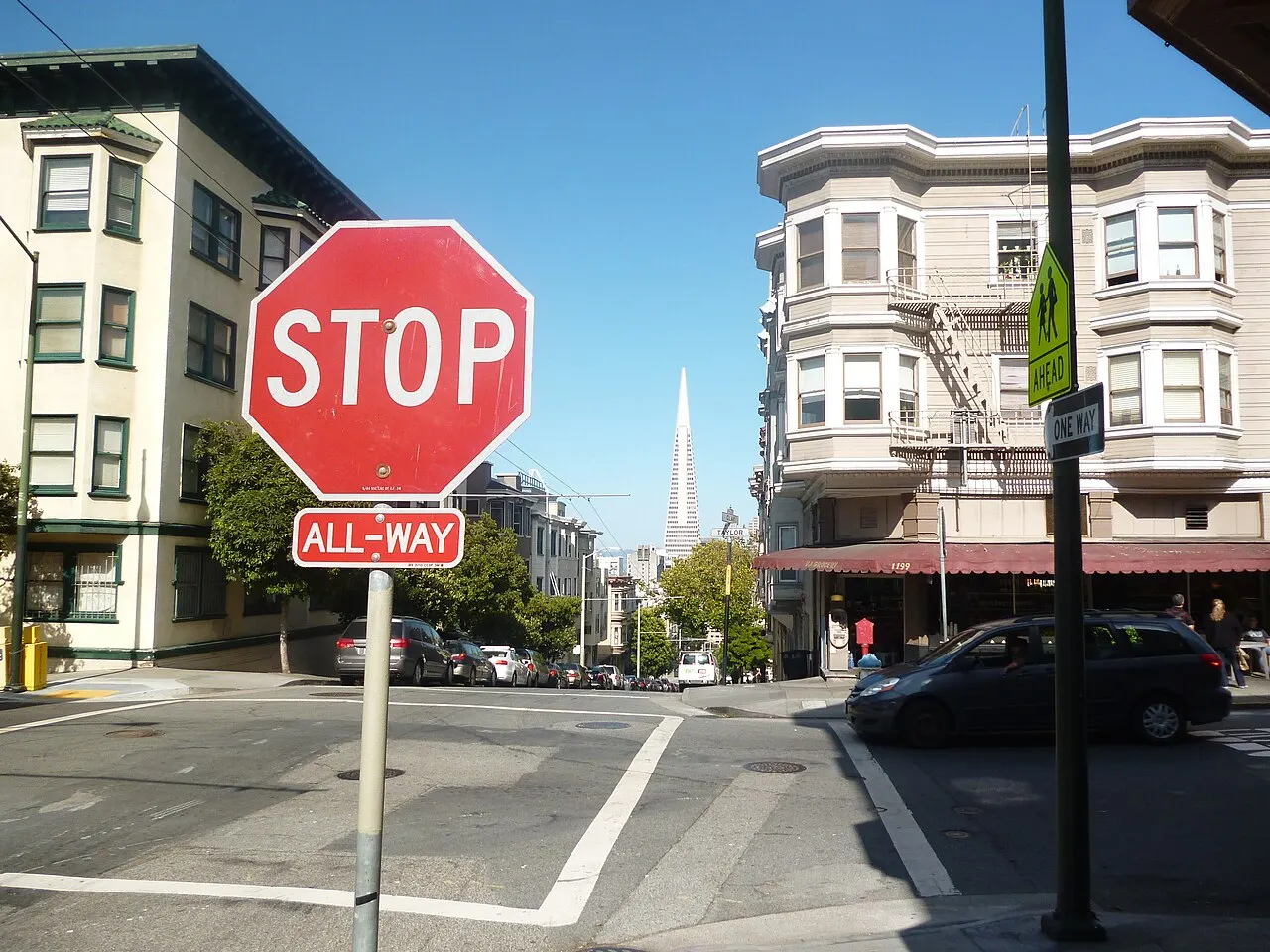
How does each state turn mistakes into a score?
Florida adds points. Florida Administrative Code rule 15A-1.015(1), effective June 3, 2014, fails any applicant who scores 31 or more penalty points and adopts form HSMV-71110 (rev. 10/13) as the record of the exam. The form is posted with the rule on flrules.org and prints a value beside each group of errors: 1 to 5 points for a FAIR mark and 2 to 10 for a BAD mark, depending on the maneuver. The FLHSMV Class E page never mentions points.
Texas deducts points but does not say how many per error. DL-7, revised January 2026, says the application will not be approved with more than 30 points deducted, and it grades control, observation, positioning, and signaling. Neither DL-7 nor DL-60 gives the deduction for any mistake, so you cannot tally your own drive. Texas Transportation Code s. 521.161 requires the driving demonstration and sets no score.
California counts errors, not points. DL 32 (rev. 4/2021) passes you with no more than 3 errors on pre-drive items 9 to 14, no mark in the critical driving error section, and no more than 15 errors on the scoring maneuvers.
New York publishes a Class D scoring summary that names errors across five categories. It does not give a point value for each error, an error limit, or a pass threshold. If you fail, your permit remains valid until its expiration date, and you must wait at least 14 days before another road test. The published error descriptions can guide your practice, but they cannot be used to calculate a passing score.
California also bars driver-assist features on the test: no automated parallel parking, lane-departure assist, or adaptive cruise control. A backup camera or blind-spot monitor may stay on, but the examiner still expects you to check the mirrors and turn your head.
What ends the test immediately?
In Florida, rule 15A-1.015(2) ends the test for a crash, a dangerous driving action, a traffic-law violation, a lack of cooperation, or refusing to follow directions, and HSMV-71110 has a matching DISQUALIFICATION line at the top. Some errors on the form carry no points and sit under a DISQUALIFIED heading instead: not coming to a complete stop at a stop sign, entering an intersection on red, never looking to the rear, in a mirror, or at the camera while backing, or forcing others to stop because you did not yield. Separately, rule 15A-1.015(3) suspends the driving privilege for 1 year if you have not passed within 5 attempts in 1 year.
In Texas, DL-60 says a dangerous or illegal maneuver at any point stops the test immediately and is an automatic failure. DL-7 adds breaking the law, refusing instructions, driving dangerously, and a crash to the reasons an application is not approved. Neither document names specific maneuvers. Running a red light is illegal, so it qualifies. A missed mirror check is on DL-60's practice checklist and is not described as a reason to stop.
In California, one mark in the critical driving error section fails the test. The DPE criteria list examiner intervention (including 3 attempts to back), avoidable contact with a vehicle, object, cyclist, pedestrian, or animal, and driving over a curb or onto a sidewalk. Going through a stop sign, a flashing red, or a right turn on red faster than a brisk walk (4 mph) is critical; a full stop and then a legal right on red is not. So are not stopping for a red light or a red ramp meter, ignoring lane markings, passing a school bus with flashing red lights, not pulling over for an emergency vehicle, making someone take evasive action, and blocking an intersection.
The list goes on: no mirror or shoulder check on a lane change, merge, backing, right turn with a bike lane, or pull from the curb; a stall in an intersection, or 3 stalls from poor clutch use; 10 mph over the limit, or 10 mph under it when conditions do not call for it; no wipers, defroster, or headlights when weather or darkness requires them; more than 200 feet in a bike lane or center turn lane; and a turn from the wrong lane.
New York's public Class D scoring summary lists driving errors, including failure to yield and poor reactions to emergencies, but does not mark any as an automatic stop or failure. DMV separately requires a registered, inspected, insured vehicle with permanent plates before the test can begin.
The 4 mph stop, the 15-error cap, and the 10 mph band exist only on California's sheet. Florida fails at 31 points or ends the test on the grounds in its rule. Texas fails at more than 30 points off or stops the test for a dangerous or illegal maneuver, and it prints no value for any single error. New York lists Class D scoring errors, but does not publish point values or a pass threshold.
What do you leave with, and when can you test again?
In Florida, s. 322.12(2) says a learner license holder pays no fee for passing the driving exam and no replacement-license fee under s. 322.17(2). Each skills test after a failed one costs $20 under s. 322.12(1); when a tax collector gives it, the tax collector keeps the $20 less the state general revenue service charge. No statute, rule, or FLHSMV page sets a wait between attempts, and the Class E page only asks you to study or practice first. An applicant caught cheating must retake the exam (s. 322.12(3)(b)).
A Florida pass through a third party can be followed by a no-fee mandatory re-test, without prior notice, at a driver license or tax collector office. The license is issued once that re-test is passed, and failing it means a re-exam fee at your next attempt.
In Texas you learn pass or fail at the end, with feedback on what to improve. After a fail, DL-60 says the application is held at the office for 90 days; after 90 days, or after 3 failed tests, you file a new application and pay again. Texas Transportation Code s. 521.161(d) is the source of the 3: each paid application covers three examinations of each element. The 90 days is how long the file lasts, not a required gap, and DPS publishes no minimum wait between drive tests. After a pass, DL-7 says you get a temporary license good for 45 days or until the card arrives.
In California, a Class C behind-the-wheel retest is $9 on the fees page, with no age split. The wait does split. The handbook makes minors wait 14 days, not counting the day of the failure, and s. 12814.6(a)(5) sets a floor of not less than two weeks for the provisional program. The Teen Driver Roadmap says 15 days and 3 attempts before you reapply, without saying which day the 15 count from. The handbook states no drive-test wait for applicants 18 or older.
After a California pass, the Teen Driver Roadmap says you leave with a temporary paper license and the card follows by mail. For the first 12 months of a provisional license, s. 12814.6(b) bars driving between 11 p.m. and 5 a.m. and carrying passengers under 20 unless a licensed parent or guardian, a licensed driver 25 or older, or a licensed or certified driving instructor is with you. The statute lists narrow exceptions, such as a documented medical, school, or work necessity.
In New York, the learner permit/license fee includes two non-commercial road tests. After two failed tests, another $10 covers up to two more under Vehicle and Traffic Law s. 503(2)(b). After a fail the permit stays valid until its own expiration date, and DMV's road test page sets a 14-day minimum wait before the next attempt, with no age split. Results post online after 6 p.m. on test day; after a pass, an interim license is available online and the photo card follows by mail in about two weeks.
A newly issued New York Class D license carries a 6-month probation after the road test. Speeding, a speed contest, reckless driving, following too closely, or two other moving violations during probation can bring a 60-day suspension and another 6-month probation. A qualifying conviction during the second period can bring revocation for at least 6 months. A first phone or texting conviction during probation brings a 120-day suspension. Junior (Class DJ) drivers face separate penalties and regional driving restrictions, which end at 18 or after an MV-285 upgrade to Class D.
- Day 0The fail
Not counted in the wait. One critical mark, 4 misses on pre-drive items 9 to 14, or a 16th maneuver error makes the result unsatisfactory.
- Days 1 to 14The handbook wait
Minors wait these 14 days. The statute requires not less than two weeks.
- Day 15First day the handbook allows
The Teen Driver Roadmap says 15 days without saying where the count starts, so Day 16 meets both readings.
- Attempt 3Then you reapply
The roadmap allows 3 behind-the-wheel attempts, then a new application. Each retest is $9.
What if you already hold a license from another state?
You may never see a score sheet. Florida may waive both tests for a valid license from another state, a Canadian province, or the U.S. Armed Forces at an equal or lower class (s. 322.12(1)). DL-60 says Texas does not require a drive test for a renewal, or for anyone over 18 who surrenders an out-of-state license that is valid or has been expired no more than 2 years, though DPS may require one at any time. Under 18, Texas Transportation Code s. 521.165(d) bars DPS from waiving the driving test.
DL-60 does require a drive test if you were never licensed in a U.S. state or territory, if your Texas or out-of-state license has been expired more than 2 years, if a medical condition may affect your driving, if a restriction needs a test to come off, or if a court ordered one. California's handbook testing section describes the drive test for an original license and says nothing about a license from another state, so ask DMV rather than assume a waiver.
New York residents must exchange an out-of-state license within 30 days. DMV's exchange page requires a photo license that is valid or expired less than 24 months and was issued at least 6 months before the New York application. Form ID-44 says a certified driving record can show longer prior licensing when the current card was issued within the past 6 months. DMV may waive the written and road tests for qualifying applicants. The Driver's Manual's older 1-year expiration limit is out of date; use the current exchange page.
New York's Drivers from Other Countries page directs foreign-license holders seeking a New York license to take the written test, complete the 5-hour course, and pass a road test. Form ID-44 also allows possible test waivers for select foreign jurisdictions, without naming them. Canadian provinces are included on the out-of-state exchange page. A license expired 24 months or more does not meet that page's exchange rule.
What does one real fail look like in each state?
Florida: Maya Chen, 17, fails on points, not on one mistake
- 1Maya's learner license was issued March 18, 2025, so her 12-month hold ends March 18, 2026. She is 17.
- 2On April 2, 2026 the family car has an expired tag. The examiner does not give the test, so nothing is scored. No Florida source says whether a refused car counts toward the attempt limit.
- 3On April 9, 2026, in a car with a current tag, she backs 50 feet watching the camera screen when she could have looked through the rear window (8 points). On the three-point turn, on a street 36 feet wide, she backs up twice (8). Her quick stop takes more than 50 feet (5). Her straight-in park leaves the car partly outside the stall (10).
- 4That is 8 + 8 + 5 + 10 = 31 points. Rule 15A-1.015 fails a score of 31 or more, so she fails by landing exactly on the line.
- 5Her next skills test costs $20 under s. 322.12(1), with no published wait. This was her first scored test; the 1-year suspension applies only if she has not passed within 5 attempts in a year.
Outcome. No single mistake failed Maya; the total did. Had she rolled through a stop sign, HSMV-71110 would have marked it DISQUALIFIED with no points needed.
California: Andre Brooks, 17, at an all-way stop
- 1Andre's permit was issued January 8, 2026, so the 6-month hold in s. 12814.6(a)(2) is met on July 8, 2026. His 50 practice hours, 12 of them after dark, are signed off, and he has finished driver education and 6 hours of professional training.
- 2On Wednesday, July 8, 2026, his mother, who is 44 and licensed in California, drives him to the test and waits outside the car. His pre-drive check is clean, and by the last turn he has 6 maneuver marks, well under 15.
- 3At an all-way stop he rolls through at about 8 mph, faster than the 4 mph the criteria allow. The examiner marks the critical driving error section, and DL 32 is unsatisfactory.
- 4Not counting July 8, the handbook's 14 days run July 9 through July 22, so Thursday, July 23 is the first day it allows. Counted from July 9, the roadmap's 15 days run through July 23, so he books Friday, July 24, which satisfies both. The retest is $9, and this was attempt 1 of 3.
Outcome. Six maneuver errors would have passed. The one critical mark did not.
Texas: Jordan Hale, 19, and two 90-day clocks
- 1Jordan has never held a license. Because he is under 25, he completes the 6-hour adult driver education course. He applies and pays at DPS on August 3, 2026, so Texas Scheduler accepts his assigned driver license number. DPS says that payment is good for only 90 days and prints the expiration date on the receipt; 90 days out is November 1.
- 2Two days earlier, on August 1, 2026, he had watched the 1-hour adult video. DPS says the certificate is valid for 90 days, which runs out at the end of October.
- 3On September 15, 2026 his car passes the DL-60 check. Partway through the roughly 20-minute drive he goes through a red light. DL-60 says a dangerous or illegal maneuver stops the test at once as an automatic failure, so the 30-point line in DL-7 never comes into play.
- 4DL-60 says his application is now held 90 days, with 2 of its 3 driving attempts left under s. 521.161(d). DPS does not say whether those 90 days run from the application or from the fail, so he goes by the date on his receipt and books October 20, before both the receipt and the video certificate run out. A third failed test means a new application and fee.
Outcome. A red light ended the test, not a point count. After that, the earlier of the two 90-day clocks, the payment receipt and the video certificate, decides how long Jordan has to retest before he must redo something.
New York: Sofia Martinez, 17, reviews the error categories after a fail
- 1Sofia's Class DJ permit was issued January 12, 2026 in Nassau County, Long Island, so her 6-month hold ends July 12, 2026. Her MV-262 already shows 50 hours, 15 of them after sunset, signed by her father.
- 2She books through nyrtsscheduler.com on July 12 and is offered August 18. Her mother, licensed and over 21, comes along as the one companion the road test requires; no one else rides in the car.
- 3On the drive she is asked for a three-point turn and parallel parks, aiming for the manual's 1-foot curb position. After 6 p.m., the online result shows a fail. DMV's Class D scoring summary describes possible errors in parking, turning, observation, traffic decisions, and vehicle control, but publishes no point values or pass threshold.
- 4Her permit stays valid, and this is her first attempt, so no extra fee applies; the application already covers two road tests. She waits the 14-day minimum and books her second attempt for September 2.
Outcome. She can use DMV's published error descriptions to guide her practice before the second test. The public summary does not give enough numbers to calculate a passing score.
Does one mistake fail the road test?
It can, in all three states. Florida ends the test for a crash, a dangerous action, a traffic-law violation, lack of cooperation, or refusing directions, and its score sheet marks some errors, such as not stopping fully at a stop sign, as DISQUALIFIED. Otherwise Florida fails a finished test at 31 penalty points. California fails you for any mark in the critical driving error section, including a stop faster than 4 mph or driving 10 mph over the limit. Texas stops the test for a dangerous or illegal maneuver; otherwise it fails an applicant who loses more than 30 points.
Does Florida publish how many points each mistake is worth?
Yes, though not on the page most people read. Florida Administrative Code rule 15A-1.015 adopts form HSMV-71110 (rev. 10/13), and the form, posted with the rule on flrules.org, prints the points beside each group of errors: for example 8 for using the mirror or camera on the 50-foot back when you could look through the rear window, and 10 for leaving the car partly outside the stall. The FLHSMV Class E page lists the maneuvers and gives no points. The fail line is 31.
Is a rolling stop an automatic fail in California?
Yes, if you pass the stop sign faster than a brisk walk. The DPE scoring criteria set that at 4 mph, at a stop sign, a flashing red light, or a right turn on red, and score it as a critical driving error. DL 32 says any mark in that section fails the test, even with 15 or fewer maneuver errors. A full stop followed by a legal right on red, where no sign prohibits it and it is safe, is not that error.
Does Texas have a point limit on the drive test?
Yes. The Texas Driver Handbook (DL-7, revised January 2026) says your application will not be approved if more than 30 points are deducted on the driving exam. DPS does not publish how many points any error costs, and How to Prepare for a Drive Test (DL-60, revised March 2026) prints no total at all, which is why the number is hard to find. The 70 percent figure in DL-7 is the knowledge exam pass mark, not the drive test.
How soon can I take the test again?
Florida publishes no wait. Each skills test after a fail costs $20, and not passing within 5 attempts in a year brings a 1-year suspension under rule 15A-1.015(3). Texas holds the application 90 days after a fail and allows 3 examinations per application, with no minimum gap published. California makes minors wait 14 days, not counting the failure day, and the Teen Driver Roadmap calls it 15 days. The handbook states no wait for applicants 18 or older. The Class C retest fee is $9 at any age.
If the car fails the inspection, did I fail the drive test?
Not on any of these pages. Florida says the test will not be given, California says it will be rescheduled, and Texas requires the car to pass its inspection before the test begins. None of them describes a refused car as a failed test, and none says whether it counts toward an attempt limit. Bring a second car only if it meets the same list.
Does a third-party pass in Florida mean the license is issued that day?
Not always. Florida Statutes s. 322.56 lets FLHSMV accept a third-party skills result and requires its contracts to let the department retest a random sample of those drivers. The Class E page says a customer who passed through a third party may be picked, without prior notice, for a no-fee mandatory re-test. The license is issued after that re-test is passed at a driver license or tax collector office. Failing it means a re-exam fee at the next attempt.
Can I use the backup camera on the test?
It depends on the state. Florida's Class E page says not to use the rear-view mirror or camera monitor on the 50-foot back, and HSMV-71110 scores doing so, when you could look through the rear window, at 8 points. California allows a backup camera and a blind-spot monitor, but the DPE criteria say a camera cannot be your only check, and skipping the mirror and shoulder check while backing is a critical error. Texas DL-7 lets you use the backup camera when parallel parking, and the camera and mirrors when backing, but not an automated parking function.
Does New York publish a road test score sheet?
DMV publishes a Class D scoring summary with errors in five categories: leaving the curb, turns and intersections, parking and backing, driving in traffic, and vehicle control. It does not publish the point value of each error or a pass threshold. The Driver's Manual says parallel parking is part of every road test and that an examiner may ask for a three-point turn. Practice driving is not allowed at New York State road test sites.
How soon can I retake a failed road test in New York?
At least 14 days, with no age split, and your permit stays valid until its own expiration date. The learner permit/license fee includes two road tests; after two fails, $10 under Vehicle and Traffic Law s. 503(2)(b) covers up to two more. Results post online after 6 p.m. on test day.
Sources
- FLHSMV, Class E Knowledge Exam and Driving Skills Test (maneuvers, 12-month hold, vehicle refusal list, testing options, third-party re-test)
- FLHSMV, Driver License Exams (third-party mandatory re-test, s. 322.56)
- FLHSMV, Miami-Dade and Broward appointment FAQ (3 to 5 weeks for original licensing in high-demand areas)
- Florida Administrative Code rule 15A-1.015, Driving Ability, Demonstration: Scoring Criteria (31 points, termination grounds, 5 attempts in 1 year; effective June 3, 2014)
- FLHSMV form HSMV-71110, Record of Driving Examination (rev. 10/13), incorporated by rule 15A-1.015
- Florida Statutes s. 322.12, Examination of applicants (skills retest fee, waiver, learner fee exemption, cheating)
- Florida Statutes s. 322.56, Contracts for administration of driver license examination
- Florida Statutes s. 322.05 (50 hours, 10 at night, for applicants 16 and 17)
- Texas DPS form DL-60, How to Prepare for a Drive Test (rev. 03-2026)
- Texas Driver Handbook, DL-7 (rev. January 2026), Chapter 1, The Driving Exam (30-point line, graded skills, camera use)
- Texas DPS, Section 2: Scheduling a Road Test
- Texas DPS, Schedule your Driving Test Appointment
- Texas DPS, Impact Texas Drivers (ITD) Program
- Texas DPS, Texas Provisional License as a Teen (30 hours of practice, 10 at night)
- Texas DPS, Driver License Fees
- Texas Transportation Code s. 521.161 and s. 521.165
- California DMV, Driving Performance Evaluation (DPE) Scoring Criteria
- California DMV, Pre-Drive Checklist (Safety Criteria)
- California DMV form DL 32, Driving Performance Evaluation Score Sheet (rev. 4/2021), sample
- California Driver's Handbook, Section 3: The Testing Process
- California DMV, Teen Driver Roadmap (15-day retake wait, 3 attempts, $9 retake, temporary license)
- California DMV, Licensing Fees (Class C behind-the-wheel retest)
- California Vehicle Code s. 12814.6, provisional licensing and the two-week drive-test wait
- New York State DMV, Schedule and Take a Road Test (booking, 3-to-5-week typical wait, 14-day retest wait, results after 6 p.m., two road tests included)
- New York State DMV, Road Test Results (Class D scoring error categories and descriptions)
- New York State DMV form RT-3 (4/25), Schedule Your Road Test by Phone or Internet
- New York State Driver's Manual (MV-21), Chapter 5: Intersections and Turns (three-point turn)
- New York State Driver's Manual (MV-21), Chapter 7: Parallel Parking (wheels within 1 foot of the curb)
- New York Vehicle and Traffic Law s. 503, Period of validity of drivers' licenses, learners' permits and applications; required fees (two road tests included, $10 for up to two more)
- New York Vehicle and Traffic Law s. 501-b, Additional restrictions on certain learners' permits and drivers' licenses (6-month permit hold under 18)
- New York Vehicle and Traffic Law s. 510-b, Suspension and revocation for violations committed during probationary periods
- New York Vehicle and Traffic Law s. 510, Suspension, revocation and reissuance of licenses and registrations (phone and texting penalties)
- New York Vehicle and Traffic Law s. 510-c, Suspension and revocation of learner's permits and driver's licenses for violations committed by holders of class DJ or class MJ learner's permits or licenses
- New York State DMV, Complete Pre-Licensing Requirements (supervised practice, MV-262, permit hold)
- New York State DMV, The Driver Pre-Licensing Course (certificate and online course rules)
- New York State DMV form MV-262 (3/25), Certification of Supervised Driving
- New York State DMV, Exchange Your Out-of-State Driver License
- New York State DMV, Drivers from Other Countries
- New York State DMV, New Driver Restrictions (6-month probation)
- New York State Driver's Manual (MV-21), Chapter 2: How to Keep Your License (junior and probationary penalties)
- New York State DMV form ID-44 (2/26), How to Apply for a New York: Learner Permit, Driver License, Non-Driver ID Card