What happens if you fail the permit test
Written by Vikas. Figures last confirmed 2026-09-25.
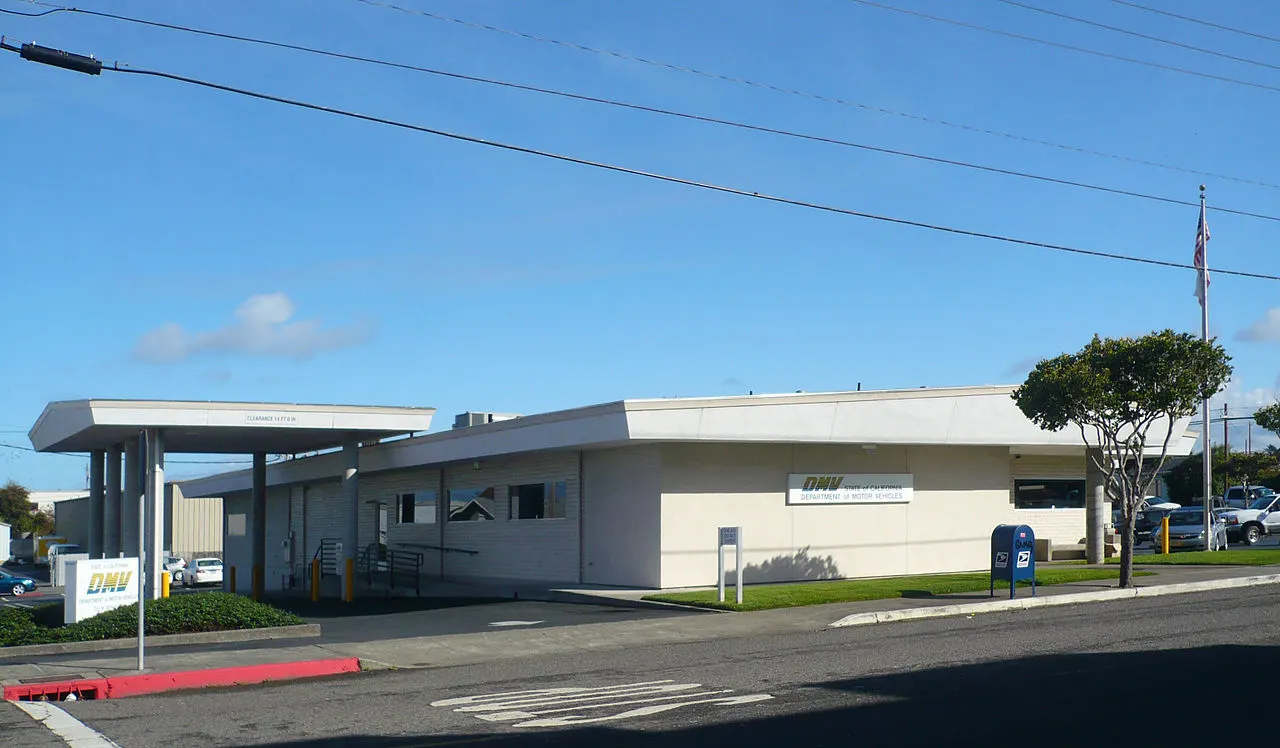
You take it again. What changes is the wait, the fee, and how many tries the application has left. Florida publishes no waiting period and no statewide cap, and charges $10 for every knowledge test after a failed first one. Texas holds the application 90 days after a first miss and ends it after three failed exams or when those 90 days run out. California allows three attempts, lists no knowledge retest fee, and makes applicants under 18 wait seven days. New York gives two knowledge attempts for the $10 application fee and publishes no in-office wait.
A failed knowledge test is not a failed road test. Florida prices the two retests at $10 and $20. California makes minors wait seven days after the written test and 14 days after the drive test, and it prints three different prices for the drive retest. Texas gives no driving exam to someone applying only for a learner license. Use the row for the test you just failed.
| Rule | Florida | Texas | California | New York |
|---|---|---|---|---|
| Wait | None published | None published. The 90 days is a deadline, not a sit-out. | 7 days if under 18, not counting the fail day. None published at 18 or over. | No in-office wait published by NY DMV. |
| Attempts on this application | No statewide cap. Three tests with a third-party administrator or a DELAP school, then a state or tax collector office. | Three examinations of each element under s. 521.161(d). The handbook says three failed exams. | Three on that knowledge test, then you reapply. | Two attempts for the $10 application fee, then a new fee. |
| Fee for the next knowledge test | $10 for each test after a failed first one. A tax collector office adds $6.25 per visit. | No retest line. A new application repeats the license fee: $16 under 18, $33 at 18 to 84. | No retest line. The $46 Class C fee covers three examinations in 12 months. | Nothing extra for attempt 2. Attempt 3 needs a new $10 application fee (VAT 503(2)(a)). |
| Pass mark you missed | 40 of 50, which is 80 percent | 70 percent. The question count is not published. | 80 percent. Under 18, no more than 8 misses. No question count published. | 14 of 20, plus at least 2 of the 4 road-sign questions. |
Florida: Class E exam page, fee schedule, ss. 322.12(1) and 322.135(1)(c), the third-party knowledge agreement (rev. July 15, 2022) and the DELAP specialist contract. Texas: Driver Handbook DL-7 (rev. January 2026) and Transportation Code s. 521.161(d). California: handbook testing section, instruction permits page, FFDL 19, Licensing Fees, and Vehicle Code s. 14900(a). New York: New York State Driver's Manual (MV-21), Chapter 1, Prepare For and Take Your Permit Test, and VAT 503(2)(a).
Florida's $10 is the knowledge retest. The skills retest is $20. California's Licensing Fees page lists $9 for a driving retest and no knowledge retest at all. Its driver licenses page says the drive retest is $7, and Vehicle Code s. 14900(b) sets $5. Stay on the knowledge column until you are booking the car.
How soon can you retake the permit test?
Florida publishes no waiting period. Section 322.12(1) sets the $10 and never mentions days, and the Class E page, the fee schedule and the third-party agreement are silent too. The Class E page asks a driver who fails the skills test to study or practice before coming back. It says nothing like that about the knowledge exam. The real limit is an open seat at a service center, a tax collector office or an administrator.
Texas publishes no waiting period either. DL-7 (January 2026) holds the application 90 days if you miss the knowledge and driving exams on the first try, and requires a new application and fee after those 90 days or after three failed exams. That 90 days is a shelf life, not a sit-out. Section 521.161(d) adds no 24-hour or 7-day wait, so the next open appointment is the earliest retake.
California splits by age. The handbook allows three knowledge attempts, then a new application, and makes minors wait seven days, not counting the fail day. FFDL 19 gives the same seven days, and Vehicle Code s. 12814.6(a)(5), part of the under-18 program, says not less than one week. None of the three says whether the seventh waiting day is itself open for a retest. Adults get no knowledge wait. Offices still stop knowledge testing after 4:30 p.m. and within 30 minutes of closing.
New York ties the written-test fee to two attempts, not to a published calendar wait. The $10 application fee covers the knowledge test no more than twice under Vehicle and Traffic Law s. 503(2)(a); after two failures, another application fee is required. NY DMV does not publish an in-office waiting period between attempts. The pass rule is also stricter than a single total score: applicants need 14 of 20 and at least 2 of the 4 road-sign answers right, as stated in Chapter 1 of the New York State Driver's Manual (MV-21).
- Fail dateNot counted
The next calendar day is day 1.
- Days 1 to 6Too soon
Too soon under the handbook, FFDL 19 and s. 12814.6(a)(5).
- Day 7Unclear
One week has passed, but DMV does not say whether the seventh waiting day is open for a retest.
- Day 8Clear on every reading
The first date no published wording rules out. Each new fail starts the count again.
- After attempt 3New application
Waiting does not buy a fourth try on the old fee.
Sofia Nguyen, 16, failed in a California office on Friday, September 4, 2026
- 1Sofia is 16. A parent signed the application and the $46 Class C fee is paid. On Friday, September 4, 2026 she fails the knowledge test at a field office. Licensing Fees lists no knowledge retest charge, and the application fee is nonrefundable.
- 2September 4 does not count, so her seven waiting days are Saturday, September 5 through Friday, September 11. DMV does not say whether the seventh day is open, so she books Monday, September 14, 2026, which satisfies every reading. That is attempt 2, on the same application and fee.
- 3She fails again on September 14. The seven days restart and run September 15 through 21. The earliest date that satisfies every reading is Tuesday, September 22, 2026. That is attempt 3 of 3.
- 4If September 22 ends in a fail, she has used the three attempts the handbook allows before she must reapply. Vehicle Code s. 14900(a) tied three examinations to the fee she paid, so attempt 4 needs a new application and another $46 at the current Licensing Fees rate.
Outcome. Each fail costs Sofia at least a week, not a fee. The third fail costs the application, and she pays $46 again before attempt 4. DMV publishes no knowledge retest surcharge.
What does the next attempt cost, and when do you pay again?
Florida prices each knowledge miss by itself. Section 322.12(1) charges $10 for each knowledge test after a failed first test, and $20 for each skills test after a failed first skills test. The fee schedule prints the same rows, knowledge retest $10 and skill retest $20. The first sitting is not a retest. Every sitting after a fail is, including the one you pass, so fail, fail, pass is $20 in knowledge fees, not $10.
At a tax collector office, s. 322.135(1)(c) adds a $6.25 service fee, charged no more than once per visit. Veterans who show a DD Form 214 or a VA identification card are exempt, and the fee schedule extends that to veterans who have shown proof before. Budget $16.25 for a knowledge retest at a tax collector office. A state service center charges the $10 alone.
The $48 original Class E fee pays for the credential, learner license included, not for a miss. Section 322.12(2) says a learner-license holder pays no fee for passing the driving exam. FLHSMV publishes no cap on what a third-party administrator charges. The administrator agreement only makes the company pay the state for each re-exam, so any checkout total above $10 is the company's own price.
Texas lists no knowledge retest line. A learner license under 18 is $16. A new Class C at 18 to 84 is $33, and at 85 or older it is $9. The $1 administrative fee is already inside those figures, and DL-7 Table 1 shows the under-18 learner fee as $15 plus $1. You pay before any exam, and you pay again only when you file a new application.
California lists $46 for an original Class C, $9 for a driving retest, and no knowledge retest. The application fee is nonrefundable and valid 12 months. Section 14900(a) still recites $30 from January 1, 2010, and says that payment buys three examinations within 12 months. DMV does not explain the gap up to $46. Pay the $46 on the table. A knowledge miss adds nothing until the third fail.
New York prices a first permit on an age-banded DMV chart, $64.25 to $102.50 for a Class D or DJ depending on age and county, and that total already includes the $10 application fee. Under Vehicle and Traffic Law s. 503(2)(a) the $10 covers the knowledge test no more than twice, and a second failure means a new application fee. The fees page lists no separate written retest charge. Road tests follow s. 503(2)(b): no additional fee for up to two, then $10 for up to two more once the first two are failed. NY DMV requires a wait of at least 14 days after a failed road test. Do not treat the written-test application fee as a road-test retake fee.
Brianna Cole, 17, three online misses, then a Florida tax collector office
- 1Brianna is 17, so she may take the Class E knowledge exam online through an approved third-party administrator, with a notarized Parent Proctoring Form. She fails on Thursday, September 3, 2026. That is her initial test, so no $10 is due yet. No Florida rule makes her wait a day.
- 2She fails again on September 10 and September 17. Those are subsequent tests at $10 each, $20 so far. Section IV.D.4 of the administrator agreement limits applicants to three knowledge tests through a third party, so her fourth sitting has to be at a driver license service center or tax collector office.
- 3She passes at a tax collector office. That sitting still follows a failed first test, so it is another $10. Four sittings with three retests come to $30 under the statute, because the passing retest counts.
- 4At the tax collector office s. 322.135(1)(c) adds the $6.25 service fee once for that visit. Brianna is not a veteran, so the exemption does not apply. FLHSMV does not publish what the administrator charged her for the three online sittings.
Outcome. The state fees are $30 in retests plus the $6.25 service fee, $36.25 in all. Nothing in the sequence required a waiting day. Any vendor charge above $10 per retest is the vendor's price, not a fee the statute sets.
How many failures end the application?
| Florida | No published waiting period and no statewide cap on knowledge exam attempts, but failing the driving skills test five times within a year brings a one-year suspensionFlorida Statutes s. 322.12(1); Florida Administrative Code rule 15A-1.015(3); FLHSMV Class E Knowledge Exam page; FLHSMV Third-Party Administrator Knowledge Agreement, section IV.D.4, checked September 25, 2026Rule 15A-1.015(3) suspends the driving privilege for one year when an applicant fails to pass the driving test within five attempts in a one-year period. For the knowledge exam, third-party administrators may give an applicant three tests in total (agreement section IV.D.4), after which the next one is at a driver license service center or tax collector office. Otherwise a fail costs money rather than time: s. 322.12(1) charges $10 for each later knowledge test and $20 for each later skills test. |
| Texas | Three examinations of each element per application, then a new application and feeTransportation Code s. 521.161(d); Texas Driver Handbook DL-7 (rev. January 2026), checked September 25, 2026DL-7 also keeps the application open for 90 days after a failed first attempt; when those 90 days are up, or a third exam is failed, you reapply and pay again. |
| California | Three attempts per application, then you must reapplyCalifornia Driver's Handbook (DL 600), the testing process, checked September 25, 2026Applicants under 18 must also wait seven days before retaking a failed knowledge test, not counting the day of the failure. DMV's Provisional Licensing fact sheet (FFDL 19, revised July 2019) gives the same wait and lets a provisional applicant miss no more than 8 questions. |
| New York | Two knowledge test attempts per $10 application fee, then a new feeVehicle and Traffic Law s. 503(2)(a); New York State DMV, Prepare For and Take Your Permit Test, checked September 25, 2026DMV publishes no waiting period between written test attempts at an office. An applicant under 18 who passes the online permit test and goes to an office within 3 business days has to take it again there. |
The statewide retake line for each state. Florida's line is not the third-party cap, which only moves you to an office.
Florida has no statewide cap. The limits are on the channel. The July 15, 2022 administrator agreement allows three knowledge tests with a third-party administrator, after which you must test at a driver license service center or tax collector office. The DELAP specialist contract gives three attempts in a high school class, then a state or tax collector office. A fourth attempt is allowed, at $10, just not with the administrator or school that gave the first three.
Section 521.161(d) gives three examinations of each element once the fee is paid. The elements listed in s. 521.161(b) are the vision and knowledge tests, the driving demonstration, and any added exam DPS finds necessary. Fail the third examination and you file a new application with the fee. The statute counts by element, so a knowledge miss and a driving miss are not written as one shared pile of three.
DL-7 closes the file at 90 days or at three failed exams, and never works through a case of two knowledge fails plus one driving fail. For a learner license the gap hardly matters, because the driving exam is not required to get one. Vision and knowledge are what can end that application. The driving exam comes later, with the provisional license.
Kevin Tran, 16, Houston, Tuesday, September 8, 2026
- 1Kevin is 16 and has finished the classroom part of driver education. At the Driver License Center on Veterans Memorial Drive he pays the $16 from DL-7 Table 1, $15 plus the $1 administrative fee, before the exam. He fails the Class C knowledge exam that day.
- 2The application is held 90 days. Ninety days after September 8, 2026 is Monday, December 7, 2026. DL-7 does not say whether December 7 is still inside the hold, so he should not plan on December 8 with this fee. No DPS page makes him wait 24 hours before the next try.
- 3He fails again on September 22 and a third time on October 6. That is the third failed exam, so DL-7 and s. 521.161(d) both require a new application and fee, even though December 7 has not arrived. The new learner fee is another $16, so two applications cost $32. There is still no separate retest charge.
- 4Phase One has not started. It requires six months on a learner license, a hardship license, or both, before a provisional license, and that clock cannot start before the learner license exists. Impact Texas Drivers belongs to the driving exam, which is a later appointment.
Outcome. Three knowledge fails cost a second $16 and start a new 90-day file. A pass on September 22 would have kept the original $16 and issued a learner license that expires on his 18th birthday. The 30-point road score plays no part in this fail.
California ends the application on the third fail of the same knowledge test. The handbook and the driver licenses page both say so. Vehicle Code s. 12509(b) adds a second clock: you must qualify for and be issued the permit within 12 months of the application date. Run out of attempts or run out of months, and the next sitting needs a new application and fee.
New York gives two knowledge-test attempts for the $10 application fee. After both attempts are used without a pass, Vehicle and Traffic Law s. 503(2)(a) requires a new application fee. The statute does not make written-test failures one shared count with road tests: non-commercial road tests have their own two included attempts, then a separate $10 fee for up to two more.
How should you use the gap before the next sitting?
Write down the score, the date, and where you tested before you leave. Florida is 50 questions with 40 correct needed, so 10 misses still passes and the 11th fails that sitting. No FLHSMV page checked here says the screen stops early. DL-7 states 70 percent and, across its 91 pages, never states a Class C question count. California states 80 percent and, for applicants under 18 only, a limit of 8 misses in FFDL 19. Do not study toward a miss number an official page does not print.
New York's mark has two parts. The New York State Driver's Manual (MV-21), Chapter 1, requires 14 correct answers out of 20 and at least 2 correct answers among the 4 road-sign questions. Neither the manual nor DMV's permit test page says how an office reports the result, so if you are not told how the sign questions went, assume either part could have failed you. A total of 14 is not enough if the sign cutoff is missed, so review the manual's sign chart, Road Signs You Must Know, as well as the chapters the test covers.
A Florida score of 34 means six more correct answers were needed. The third-party program page says the testing system builds a timed 60-minute, 50-question exam from a bank of about 800 questions, and that offices and tax collectors use the same system. Online, any question left blank at 60 minutes is marked wrong. A memorized set is not the next draw. DL-7 publishes no Texas knowledge time limit.
In Texas, study the subjects s. 521.161(b) names: highway signs in English, traffic law, bicyclists, and wireless and other distractions, plus vision. The grade is 70 percent on any knowledge exam. Some driver education courses remove the office Class C exam for applicants under 25, but that does not erase a fail you already have. In California the handbook bans testing aids such as the handbook itself and a phone. eLearning will not help either: it is for certain Class C renewals, and original applicants do not qualify.
- Keep the score and the date
Florida compares with 40 of 50. California under 18 compares with 8 misses. Texas publishes a percentage only.
- Name the channel
Florida's third test with an administrator moves you to an office. California has tested first-time applicants only in offices since January 3, 2025.
- Count the real wait
California minors: seven days, skipping the fail date. Florida, Texas and New York publish no in-office knowledge wait. California offices still stop at 4:30 p.m.
- Count the attempt
Texas and California: attempt 3 is the last on this fee. Florida offices have no published cap, at $10 a sitting after a fail.
- Time the Florida set
The online administrator exam is 60 minutes, and a blank counts as wrong.
- Leave the road test out of this week
A knowledge fail does not start Florida's 12-month learner hold, Texas Phase One, or California's six-month permit hold. Those run from the permit, which you get only after you pass.
Holds: Florida Class E page (learner license held 12 months from issue, or age 18). Texas DL-7 Phase One (six months). California Vehicle Code s. 12814.6(a)(2) (permit held not less than six months).
Does a failed online test count the same as an office test?
In California the question no longer arises on a first permit. The December 28, 2023 DMV release allowed two online attempts, then a DMV office for the third, with questions from the same handbook pool. A notice DMV posted on its Online Learning page in January 2025 closed that at-home test to new driver's license applicants from January 3, 2025, and no DMV page checked on September 25, 2026 reopens it. All three attempts on an original application are now office sittings, started before 4:30 p.m.
A California minor who fails on a Friday cannot come back on Monday, because the seven-day wait outlasts the weekend. Florida's online exam is only for applicants under 18, through a third-party administrator, with a Parent Proctoring Form. Those sittings count toward the three-test administrator cap. Texas runs no DPS at-home exam, but s. 521.1655 lets a licensed driver education provider, online ones included, give the vision, sign and traffic law parts. DPS does not say whether a fail there counts toward the three examinations in s. 521.161(d).
A Florida third-party pass can still send you back. The Class E page, citing s. 322.56(3)(b) and (e), says anyone who passes through an administrator may be picked for a no-fee mandatory re-test without prior notice. The statute authorizes random examinations and an annual test of a random sample of the administrator's drivers. The no-fee detail is the department's. The free part ends there: a failed spot check puts you back on the paid re-exam schedule for the sitting after it.
What happens if you fail the road test instead?
| Florida skills test | Texas driving exam | California drive test | New York road test | |
|---|---|---|---|---|
| When it is given | After 12 months on a learner license, or at 18. | Not required for a learner license. Only after the other exams are passed. | Minors: permit held at least 6 months, plus the practice rules. | Under 18: junior permit held at least 6 months before scheduling. |
| Wait after a fail | None published. Study or practice, then return. | None published. The application is held 90 days. | Under 18: 14 days, not counting the fail day. At 18 or over: another day. No multi-day adult wait is published. | At least 14 days after a failed test. |
| Attempts | No pass within 5 attempts in 1 year brings a 1-year suspension under rule 15A-1.015(3). | Three failed tests or 90 days, then a new application and fee. | Three, then the application ends. | Two non-commercial road tests included, then up to two more per $10 fee. |
| Fee | $20 for each skills test after a failed first one, plus $6.25 per visit at a tax collector office. | No retest line unless the application has ended. | Fees page $9. Driver licenses page $7. Statute $5. | Two non-commercial tests included. After those, $10 for up to two more (VAT 503(2)(b)). |
Florida Class E page, ss. 322.12(1) and 322.135(1)(c), and Florida Administrative Code rule 15A-1.015(3). Texas DL-7 and form DL-60 (rev. March 2026). California handbook, driver licenses page, FFDL 19, Licensing Fees, s. 12814.6(a)(5), and s. 14900(b). New York State Department of Motor Vehicles (NY DMV), Schedule and Take a Road Test, and VAT 503(2)(b).
Florida tests a three-point turn in a 20 to 40 foot space, backing 50 feet without the mirror or camera, signaling for the last 100 feet, and a following distance of at least four seconds. The examiner will not start the test for a defective horn, tires or lights, an expired tag, front doors that do not open from inside and out, no driver-side wiper, or a low-speed vehicle with a top speed of 20 to 25 mph. The page does not say whether a rejected car uses up the $20. Ask before you pay again.
Texas refuses the license for more than 30 points deducted, a law violation, a refused instruction, dangerous driving, or a crash. DL-60 (March 2026) stops the test at once for a dangerous or illegal maneuver and promises feedback on where you need to improve. Use that list. The form also holds the application 90 days and requires a new application and fee after 90 days or three failed tests. The $10 exam fee in DL-7 is for moving to a higher license class or removing a restriction, not for this retest.
California prints three drive-retest prices. Licensing Fees says $9. The driver licenses page says $7, with a 14-day wait for minors, not counting the fail day, and a new test on another day for adults. Three drive fails end the application. The handbook and FFDL 19 limit the 14 days to minors, and s. 12814.6(a)(5) says not less than two weeks. Section 14900(b) says $5. All three amounts were on official pages on September 25, 2026, so ask the window which one it collects.
New York treats road-test retakes differently from permit-test retakes. The first two non-commercial road tests are included, and after a fail you must wait at least 14 days before another test. Once those two included tests are used, Vehicle and Traffic Law s. 503(2)(b) sets $10 for up to two more. DMV posts the result online after 6 p.m. on the test day, and a failed non-commercial road test leaves the learner permit valid until its expiration date. This is a road-test rule, separate from the $10 application fee that covers two written attempts.
- 1Ask if the attempt counted
California reschedules a drive test when the car fails its requirements, such as tread under 1/32 inch. Florida does not say whether a rejected car costs the $20. Get the answer before you leave.
- 2Keep the feedback
Texas DL-60 and the Florida Class E page both say the examiner goes through your mistakes. Those notes are worth more than another pass through the handbook.
- 3Use the road-test wait, not the permit wait
California minors: 14 days, skipping the fail date. California adults: another day. Florida and Texas publish no wait; New York requires at least 14 days.
- 4Match the fee to the state text
Florida is $20, plus $6.25 per visit at a tax collector office. Texas has no retest line until the application ends. California may collect $9, $7, or $5.
- 5Check the New York road-test count
DMV posts the result online after 6 p.m. that day. Two non-commercial road tests are included. After a fail, wait at least 14 days; after two failed tests, the statute sets $10 for up to two more.
What do the agencies still not publish?
- A same-day knowledge ban, apart from California's office cutoff after 4:30 p.m. and within 30 minutes of closing. Florida, Texas and New York publish no in-office wait, and California publishes none for adults.
- Whether California's seventh waiting day is open for a minor's retest. The handbook and FFDL 19 say seven days, the statute says one week, and none says which side of day 7 the retest falls on.
- A Texas question count. DL-7 states 70 percent and stops, so any exact Class C miss number is not from DPS.
- A California question count. The instruction permits page gives 80 percent, and FFDL 19 caps applicants under 18 at 8 misses, but neither says how many questions the test has.
- One California drive-retest price. The fees page says $9, the driver licenses page says $7, and s. 14900(b) says $5.
- A cap on what a Florida third party charges. The state figures are $10 and $20. The room, the webcam session and the car are priced by the company, not FLHSMV.
- A Florida or California sentence putting a failed knowledge test on the driving record. Texas does: DL-7 puts your exam results into the Driver License System as part of your permanent driving record. DL-7 does not call a fail a conviction.
- A rule that a fail sends you back to class. Cheating is different: Florida s. 322.12(3)(b) says an applicant found to have cheated during, or gotten around, any part of the exam must retake it.
Can you retake the permit test the same day you fail it?
Florida publishes no waiting period, and neither does Texas DL-7. Section 521.161 gives three examinations and no 24-hour rule, so the Texas limit is an appointment. California minors wait seven days, not counting the fail day, under the handbook, FFDL 19 and Vehicle Code s. 12814.6. California publishes no knowledge wait at 18 or over, but in-office testing stops after 4:30 p.m. and within 30 minutes of closing, so a late fail is not a same-day retake even for an adult.
How much is the second knowledge test?
Florida charges $10 for each knowledge test after a failed first one, under s. 322.12(1) and the fee schedule. At a tax collector office s. 322.135(1)(c) adds a $6.25 service fee once per visit, and veterans with proof are exempt. Texas publishes no knowledge retest fee, and neither does California, where the $46 Class C fee covers three examinations. A new $46 is due when you reapply after the third fail, not after the first.
How many failures force a new application and a new fee?
Texas allows three examinations of each element per application under s. 521.161(d), and DL-7 also closes the file after 90 days or three failed exams, whichever comes first. California allows three attempts on a knowledge test, and the third fail makes the application invalid. Florida publishes no statewide cap. It does stop the third-party channel at three knowledge tests, after which you test at a state or tax collector office, still at $10 a sitting.
Does a failed permit test go on your driving record?
Texas has a direct sentence on this point. DL-7 says every exam result goes on your application and then into the Driver License System, where it stays on your permanent driving record. It does not call the fail a conviction or assign points. Florida and California do not say, on the pages checked here, whether a failed knowledge test shows on your driving record.
If the first tries were online, is the next one free?
Not in Florida. Three tests with an administrator move the next test to an office, and every test after a failed first one is $10 wherever you sit it. California no longer gives a first-time applicant an online try: since January 3, 2025 all three attempts on the $46 application are office sittings, and a third fail means you reapply. Texas runs no DPS at-home exam.
Do you have to retake driver education because you failed?
No rule checked here sends you back to class for a failed knowledge test. Texas requires driver education before a first license if you are under 25, and Impact Texas Drivers before the driving exam. Florida s. 322.1615(1)(c) requires an approved driver education course before the learner license is issued. California eLearning is only for eligible noncommercial Class C renewals and original applicants do not qualify, so it cannot replace a failed permit test.
What changes if you fail the road test instead?
Florida charges $20 per skills retest and publishes no wait, but rule 15A-1.015(3) suspends the privilege for a year if you have not passed within 5 attempts in 1 year. Texas uses the 90-day hold and the three-fail rule, and more than 30 points deducted fails the exam, though a learner license needs no driving exam at all. California minors wait 14 days, not counting the fail day, and adults book another day. The drive retest is $9 on the fees page, $7 on the driver licenses page, and $5 in s. 14900(b).
You turn 18 during the California wait. Do you still sit out the week?
The seven-day knowledge wait and the 14-day drive wait are written for minors, and s. 12814.6 is the provisional program for people under 18. DMV publishes no rule for a birthday that falls during the wait. Waiting out the full seven days is the choice no published rule contradicts, and it costs at most a week. The three-attempt cap does not reset on that birthday: two fails already on the application still leave only one try.
How many New York permit-test attempts does the $10 fee cover?
The $10 application fee, which is already inside the age-banded total you pay for a first permit, covers up to two knowledge-test attempts under Vehicle and Traffic Law s. 503(2)(a). After a second failure, a new application fee is required before the next attempt. NY DMV publishes no waiting period between in-office written-test attempts, and its fees page lists no separate retest charge.
What is the New York written-test pass rule?
The New York State Driver's Manual (MV-21), Chapter 1, says you need at least 14 correct answers out of 20 and at least 2 of the 4 road-sign questions correct. Meeting the overall count alone does not pass if you miss too many road-sign questions.
What is the rule in Florida, Texas, California or New York?
Each state’s answer on its own page, with the agency source and the date it was checked.
- What happens if you fail the permit test in Florida?
- What happens if you fail the permit test in Texas?
- What happens if you fail the permit test in California?
- What happens if you fail the permit test in New York?
Sources
- FLHSMV, Class E Knowledge Exam and Driving Skills Test (50 questions, 40 to pass, online under 18 with a Parent Proctoring Form, 12-month learner hold, skills maneuvers, vehicle defects, random no-fee re-test)
- FLHSMV, Fees (knowledge retest $10, skill retest $20, original Class E $48, tax collector service fee $6.25 and veteran exemption)
- FLHSMV, Third Party Administrator program (timed 60-minute, 50-question exam from a bank of about 800, used by offices and third parties)
- FLHSMV, Third-Party Administrator Knowledge Agreement, rev. July 15, 2022 (s. IV.D.4 three tests, then an office; s. IV.G.8 60-minute limit, blanks marked incorrect; s. VI.F re-exam fees)
- FLHSMV, DELAP specialist contract, 3/2022 (s. 15.B: three Class E knowledge attempts, then a state or tax collector office)
- Florida Statutes s. 322.12 (2026), examination fees, learner skills-test fee exemption, cheating retake
- Florida Administrative Code rule 15A-1.015 (no pass within 5 skills attempts in 1 year: 1-year suspension)
- Florida Statutes s. 322.135 (2026), $6.25 tax collector service fee, once per visit, veteran exemption
- Florida Statutes s. 322.1615 (2026), learner license requirements, approved driver education course
- Florida Statutes s. 322.56 (2026), third-party exams, random examinations and random sample testing
- Texas Driver Handbook, DL-7, revised January 2026 (70 percent, 90-day hold, three failed exams, learner fee Table 1, no driving exam for a learner license, 30-point driving fail, examinations on the driving record)
- Texas Transportation Code ss. 521.161 and 521.1655, examination of applicants, three examinations of each element, testing by driver education providers
- Texas DPS, Driver License Fees (learner license $16, Class C $33 at 18 to 84 and $9 at 85 or older, no knowledge retest line)
- Texas DPS form DL-60, How to Prepare for a Drive Test, rev. March 2026 (90-day hold, three failed tests, immediate fail for a dangerous or illegal maneuver, feedback after the test)
- California Driver's Handbook, The Testing Process (three knowledge attempts, seven-day minor wait, 14-day minor drive wait, no testing aids, vehicle requirements)
- California DMV, Instruction and Learner's Permits (80 percent, no in-office tests after 4:30 p.m.)
- California DMV Fast Facts FFDL 19, Provisional Licensing, rev. July 2019 (under 18: no more than 8 misses, 7-day knowledge wait, 14-day drive wait)
- California DMV, Licensing Fees ($46 original Class C, $9 driving retest, no knowledge retest row)
- California DMV, Driver's licenses (three attempts per knowledge test, application invalid after three fails, no knowledge tests within 30 minutes of closing, $7 drive retest, 14-day minor wait, adult retest on another day, nonrefundable fee valid 12 months)
- California DMV, Online learning (eLearning limited to noncommercial Class C renewals; original applicants do not qualify)
- California DMV news release, December 28, 2023 (online test twice, then an office; same question pool)
- California DMV, Online Learning page with the January 2025 notice ending online knowledge testing for new applicants from January 3, 2025 (archived January 24, 2025)
- California Vehicle Code s. 14900 (fee covers three examinations in 12 months; extra fee only for added driving skill tests)
- California Vehicle Code s. 12814.6 (six-month permit hold; not less than one week after a failed written test, two weeks after a failed driving test)
- California Vehicle Code s. 12509 (qualify for and be issued the instruction permit within 12 months of the application)
- New York State Department of Motor Vehicles, New York State Driver's Manual (MV-21), Chapter 1: Driver Licenses (20 questions, 14 correct, at least 2 of the 4 road-sign questions)
- New York State Department of Motor Vehicles, Prepare For and Take Your Permit Test (online test under 18, office retest for anyone who visits within 3 business days of an online pass, no stated wait between office attempts)
- New York State Department of Motor Vehicles, Driver License and Learner Permit Fees and Refunds (first-permit total by age and residence, no written retest fee)
- New York Vehicle and Traffic Law s. 503 (application fee, two knowledge attempts, road-test attempts and retake fee)
- New York State Department of Motor Vehicles, Schedule and Take a Road Test (6-month wait under 18, results after 6 p.m., permit valid after a fail, 14-day wait, extra fees after two fails)