What can you do with a learner's permit?
Written by Vikas. Figures last confirmed 2026-09-25.
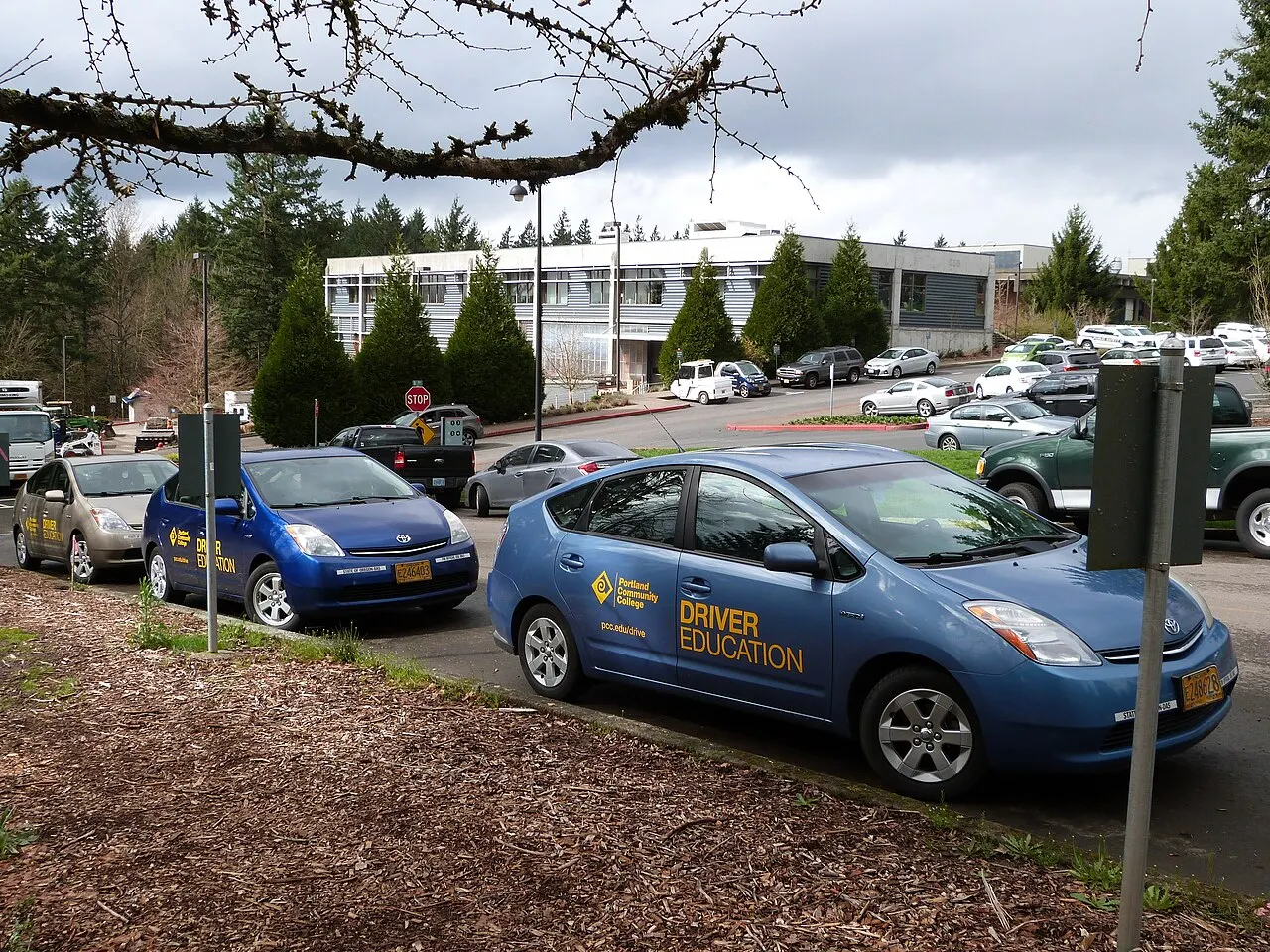
A learner permit lets you practice on a public road with a qualified adult in the car. It does not let you drive alone. Florida calls the card a learner's driver license. Texas calls it a learner license. California calls it an instruction permit. New York calls the card a learner permit, issued as a junior permit (Class DJ) under 18. The front-seat rule, the hours, the phone rule and the wait before the next license are different in each state.
Can you drive alone with a learner permit?
No. Florida section 322.1615(2) requires a qualifying driver with you at all times. Texas section 521.222(d) allows driving only while you carry the learner license and a qualifying person sits in the seat beside you. California sections 12509(d) and 12814.6(a)(1) require the permit in your immediate possession and a supervising driver. A school run is not an exception: FLHSMV's teen FAQ answers that exact question with the at-all-times rule. New York Vehicle and Traffic Law section 501(5)(a) requires a supervising driver at least 21 years old, licensed for that vehicle, with you at all times, and section 501-b(1)(a) allows no one but that supervisor in the front seat.
| Florida | Texas | California | New York | |
|---|---|---|---|---|
| Official name | Learner's driver license | Learner license | Instruction permit | Learner permit (junior permit, Class DJ, under 18) |
| Drive alone | No. Accompanied at all times. s. 322.1615(2) | No. Qualifying adult beside you. s. 521.222(d) | No. Immediate supervision. ss. 12509(d), 12814.6(a)(1) | No. Supervisor 21 or older with you at all times. VAT 501(5)(a) |
| Who can get it | At least 15, after the written, vision and hearing exams and the approved driver education course. s. 322.1615(1) | 15 or older and under 18, after the classroom phase (per DPS, the first 6 hours on the concurrent method or all 24 on the block method), the school attendance rule and every exam except the driving test. s. 521.222(a) | 15 and a half with driver education, or over 17 and a half. s. 12509(a) | 16, with parental consent at 16 or 17 unless 17 with a driver education certificate (MV-285). VAT 502(2) |
| Next card | Class E at 16. Under 18, a 12 month hold first. s. 322.05(1), (2) | Class C, marked provisional under 18, after at least 6 months. ss. 521.204, 521.123 | Provisional license from 16 to under 18, after at least 6 months. s. 12814.6(a) | Class DJ junior license at 16, after a 6 month hold and 50 supervised hours, 15 after sunset, on form MV-262. Full Class D at 18, or at 17 with approved driver education (MV-285) and the same hold and hour certification. VAT 501-b(1)(d), 502(2) |
Florida Statutes ss. 322.1615 and 322.05. Texas Transportation Code ss. 521.222, 521.204 and 521.123. California Vehicle Code ss. 12509 and 12814.6. New York Vehicle and Traffic Law ss. 501, 501-b and 502. Checked September 25, 2026.
Who has to sit in the front passenger seat?
Florida section 322.1615(2) requires a driver with a valid license for that type of vehicle, age 21 or older, in the closest seat to your right. A 20-year-old fails. A 21-year-old in the back seat fails. The section sets no years-of-experience minimum.
Texas section 521.222(d) requires a license for that type of vehicle, age 21 or older, and at least one year of driving experience, in the seat beside you. A parent licensed 11 months ago fails. Under section 521.222(g), that adult commits an offense by sleeping, being intoxicated as defined in Penal Code section 49.01, or doing anything that stops them watching and responding to your driving. Subsection (h) gives a defense only if a second qualified adult was also in that seat and was not in violation.
Under 18, California section 12814.6(a)(1) requires a California-licensed driver, 25 or older, whose driving privilege is not on probation. The age floor does not apply to a parent, spouse, guardian, or licensed or certified driving instructor. The California license requirement still does. The same paragraph limits permit driving to taking or practicing driver training. At 18 or older, section 12509(d) requires a California-licensed driver 18 or older, with a license of the right class, not on probation, seated where they can help you control the car.
New York Vehicle and Traffic Law section 501(5)(a) requires a supervising driver at least 21 years old with a license valid in New York for that vehicle, and section 501-b(1)(a) allows no one else in the front seat. Which adults qualify then depends on where you are driving. Upstate, any licensed driver who clears the age and license test can supervise from 5 a.m. to 9 p.m., and after 9 p.m. it must be a parent, guardian, person acting in place of a parent, driver education teacher, or driving school instructor. New York City allows only that same list, in daytime only, and the car must have dual controls. On Long Island the same list applies during the day, plus an adult the parent, guardian, or person acting in place of a parent authorizes in writing. A 19-year-old sibling never qualifies anywhere in the state.
- Florida: licensed for that vehicle, 21 or older, closest seat to your right
Section 322.1615(2). No experience minimum is written there.
- Texas: licensed for that vehicle, 21 or older, at least 1 year of driving experience
Section 521.222(d). Carry the learner license. The adult must stay awake, sober and attentive under s. 521.222(g).
- California under 18: California license, not on probation, 25 or older
Section 12814.6(a)(1). The age floor drops for a parent, spouse, guardian, or licensed or certified instructor.
- California at 18 or older: California license of the right class, 18 or older, not on probation
Section 12509(d). They must be able to help you control the car from the driver compartment.
- New York: licensed for that vehicle, 21 or older, alone in the front seat
Sections 501(5)(a) and 501-b(1)(a). Under 18, who else qualifies depends on the region: upstate, any such adult from 5 a.m. to 9 p.m.; New York City and Long Island need a parent, guardian, person in loco parentis, driver education teacher, or driving school instructor (Long Island also accepts an adult any of the first three authorizes in writing), and New York City also requires a car with dual controls.
Ivy Castillo, Tampa, and a sister who is licensed but too young
- 1Ivy turns 15 on January 14, 2026 and is issued a Florida learner's driver license on March 2, 2026.
- 2On June 20, 2026 she wants a practice drive that ends at 9:40 p.m. Her sister is 19 and licensed. Her father is 44 and licensed for the car.
- 3Section 322.1615(2) requires age 21 in the closest seat to her right, so the sister cannot supervise and the father can. The 3 month mark was June 2, 2026, so her limit is now 10 p.m. A drive ending at 10:10 p.m. would break section 322.1615(3).
Outcome. Ivy can make the June 20 drive with her father in the front right seat, finished by 10 p.m., and she cannot make it alone. The earliest Class E date is March 2, 2027, when the 12 month hold in section 322.05(2) ends; she turned 16 on January 14, 2027. She also needs the 50 certified hours in section 322.05(3), at least 10 at night.
What hours of the day can you drive?
Florida section 322.1615(3) limits a learner's license to daylight hours, then to 10 p.m. once 3 months have passed since issue. It gives no clock time for daylight, and it has no work exception. So any night hours for the section 322.05(3) certification can only be driven after month 3 and before 10 p.m.
The 11 p.m. limit belongs to the Class E license, not the learner card. Under 17, section 322.16(2) requires a licensed driver 21 or older with you after 11 p.m. and before 6 a.m., unless you are driving directly to or from work. At 17, section 322.16(3) moves that window to after 1 a.m. and before 5 a.m.
Texas puts no clock on the learner license itself. Section 545.424(a-1) bars any driver under 18 from driving after midnight and before 5 a.m. unless the trip is for work, a school-related activity or a medical emergency, and subsection (d) counts a family member's work on the family farm as work. Subsection (c) switches that limit off while you are accompanied as section 521.222(d)(2) requires, so a supervised learner can practice after midnight.
California puts no night limit on the instruction permit. The night rule starts with the provisional license: for the first 12 months, section 12814.6(b)(1) bars driving from 11 p.m. to 5 a.m. unless a licensed parent or guardian, a licensed driver 25 or older, or a licensed or certified instructor is supervising. Section 12814.6(b)(2) lists exceptions for medical, school, work and family necessity, each backed by a signed statement you carry, and one for an emancipated minor.
Section 545.424(c) turns off the midnight to 5 a.m. limit and the passenger cap while a learner is accompanied as section 521.222(d)(2) requires. It does not turn off the phone ban. A driver under 18 still may not use a wireless device, hands-free included, except in an emergency.
New York's night rule depends on where you are, not just the clock. A junior (Class DJ) permit holder may drive from 5 a.m. to 9 p.m. upstate with any supervisor who is 21 or older and licensed for the vehicle. In New York City that daytime window needs a parent, guardian, person in loco parentis, driver education teacher, or driving school instructor, in a car with dual controls. Long Island takes the same people plus an adult the parent, guardian, or person in loco parentis authorizes in writing. From 9 p.m. to 5 a.m., New York City and Long Island permit driving stops completely; upstate it continues only with a parent, guardian, person in loco parentis, driver education teacher, or driving school instructor. The 15 after-sunset hours certified on form MV-262 have to fit inside whichever window applies.
Malik Chen, Staten Island, and an evening drive that only works upstate
- 1Malik turns 16 on February 3, 2026 and is issued a Class DJ learner permit in Staten Island, in Richmond County, one of the five boroughs, on February 10, 2026.
- 2He wants an evening practice drive on May 4, 2026 in Staten Island that would run past 9 p.m. His cousin is 24 and holds a license valid in New York for the car, but is not his parent, guardian, or a driving instructor.
- 3New York City stops junior permit driving completely from 9 p.m. to 5 a.m., so the plan fails on timing alone. Earlier that evening the cousin still cannot supervise, because daytime supervision inside the five boroughs is limited to a parent, guardian, person in loco parentis, driver education teacher, or driving school instructor in a car with dual controls.
- 4The next weekend the family drives upstate to Onondaga County instead. There, any driver 21 or older with a license valid in New York for the car may supervise between 5 a.m. and 9 p.m., so the cousin takes him out that afternoon.
Outcome. Malik cannot drive with his cousin as supervisor in Staten Island, day or night. Upstate, the same cousin can supervise him from 5 a.m. to 9 p.m., and that afternoon drive counts toward the required 50 hours. He still needs 15 hours after sunset. His 6 month holding period ends on August 10, 2026; he must also complete the pre-licensing course or driver education before the road test.
Who else can ride with you, and can you use a phone?
Florida section 322.1615 does not cap other passengers, and Florida has no phone ban aimed at learners. Section 316.305 bars typing or reading texts, email and instant messages while the vehicle is being operated, and a stationary vehicle is not being operated. Voice communication that does not need manual entry of multiple characters is an exception. Section 316.306 separately bans handheld use in a school zone, a school crossing, or a work zone while workers are present.
While a Texas learner is supervised, section 545.424(c) removes the cap of one passenger under 21 who is not a family member. The phone ban stays. Subsections (a) and (f) bar a handheld or hands-free wireless device for anyone under 18, except in an emergency. Under subsection (g), a first fine is at least $25 and not more than $99. After a previous conviction under subsection (a) or (b), it is at least $100 and not more than $200.
California sets no passenger count on the permit. For the first 12 months of a provisional license, section 12814.6(b)(1) bars passengers under 20 unless a qualifying supervisor is along. Under 18, section 23124 bans driving while using a phone or other wireless device, even hands-free, except for emergency purposes. The base fine is $20 for a first offense and $50 after that, and subsection (d) bars a stop made only to check it.
New York limits who can ride along on a junior (Class DJ or MJ) permit, not just who sits up front. Vehicle and Traffic Law section 501-b(1) allows no more than one passenger under 21 who is not immediate family, unless the supervising driver is the parent, guardian, person in loco parentis, or a driver education or driving school instructor, in which case more under-21 passengers are allowed. Every occupant needs a seat belt or an approved child restraint. New York separately bans holding a phone or other wireless device to talk, text, browse, or take images while driving, except to call 911 or contact medical, fire, or police personnel about an emergency. A junior permit holder's first phone or device conviction brings a 120-day suspension, and the first-offense fine is $50 to $200 plus a surcharge.
Can you drive on a highway or a freeway?
None of the four car-permit rules bans a freeway or an interstate outright. Florida section 322.1615 limits the supervisor and the hours. Texas section 521.222(d) authorizes operation on a highway while its two conditions are met, and the TDLR log for the 30 supervised hours includes a 5 hour expressway and freeway block. California sections 12509(d) and 12814.6(a)(1) exclude motorcycles and motorized bicycles, and 12509(d) also excludes motorized scooters. New York bars every permit holder, of any age, from a short list of specific roads instead of freeways generally: streets inside New York City parks, bridges and tunnels run by the Triborough Bridge and Tunnel Authority, DMV road test areas, and four Westchester County parkways, the Taconic State, Saw Mill River, Hutchinson River and Cross County. None of the four keeps an ordinary freeway off limits.
The freeway ban people quote belongs to the motorcycle instruction permit. Section 12509.5(c) keeps that rider off freeways with full access control and no grade crossings, out of darkness, and without passengers other than a qualified instructor. It does not apply to a car permit.
For a Florida learner, the dusk sky matters more than the bridge: no driving after daylight for the first 3 months, then nothing after 10 p.m.
Can you drive out of state with a permit?
None of the four learner statutes says the card works in another state, so the rules of the state you drive in decide. Each state's own nonresident rule starts at an age that leaves a 15-year-old permit holder outside it.
Florida section 322.04(1)(c) exempts a nonresident at least 16 with a valid noncommercial driver license from their home state or country, for a vehicle that needs a Class E license. It does not name a learner permit or anyone under 16. Texas section 521.030(b) lets a nonresident 16 or older drive a Class C or Class M type of vehicle if the home license permits that type. California section 12502(a)(1) covers a nonresident over the age of 18 with a valid home license.
Leaving California raises a second limit that already applies at home. The supervisor for a California instruction permit must be California-licensed under sections 12509(d) and 12814.6(a)(1). A parent with only a Florida or Texas license does not qualify. Florida and Texas ask only for a license valid for that type of vehicle, with no home-state condition.
New York DMV says its permit, junior or not, can be used in another state if that state's law allows it. An out-of-state learner permit can be used inside New York only if the holder is at least 16, the permit is valid outside its home state, and the driver follows both the issuing state's restrictions and New York's general permit restrictions. Drivers under 18 must also follow New York's regional junior permit restrictions. New York will not exchange an out-of-state learner permit for one of its own.
What happens if you are stopped while breaking a permit rule?
Florida section 322.1615(4) makes a supervisor or hours violation subject to the civil penalty for a moving violation in chapter 318. Section 318.18(3)(a) sets that at $60 when no court appearance is required, and section 318.18(12)(a) adds $35 in court costs for a moving infraction, so $60 is not the total. The license clock matters more. Under section 322.05(2), a license before 18 needs 12 months on the learner card with no moving traffic conviction, or 12 months plus traffic school with adjudication withheld. FLHSMV's teen FAQ says a moving violation conviction delays the license until one year from the conviction date.
Texas section 521.222 names no fine, including for the supervisor offense in subsection (g). Section 521.461 makes a chapter 521 violation with no specific penalty a misdemeanor with a fine of not more than $200. The phone fine is the separate range in section 545.424(g). That section sets no fine for the night and passenger rules, and subsection (e) bars a stop made only to check any part of it. Separately, section 521.292(a)(8) requires DPS to suspend the license of a driver under 18 convicted of two or more moving violations within 12 months.
California section 12509 names no fine for driving without a supervisor. On the provisional license, a first violation of the night or passenger rule in section 12814.6(b)(1) brings 8 to 16 hours of community service or a fine of not more than $35 under subsection (e). A second brings 16 to 24 hours or not more than $50. Service not finished within 90 days becomes the fine. Subsection (f) keeps the conviction off the point count, and subsection (c) bars a stop made only to check the restriction. The under-18 phone fine in section 23124 is a $20 base, then $50.
A New York junior permit violation can lead to suspension. Vehicle and Traffic Law section 510-c requires a 60-day suspension of a Class DJ or MJ permit or license after one serious traffic violation (normally three points or more) or two other traffic violations. Another violation meeting that threshold within 6 months of restoration brings a 60-day revocation. A junior permit holder convicted of a cell phone or portable device violation faces a 120-day suspension; a second conviction within 6 months of restoration brings revocation for at least a year. Under the general point system, a driver license may be suspended if 11 points build up within 24 months.
How long is the permit valid, and when can you move up?
Section 322.1615 sets no expiration date for a Florida learner's license, and the FLHSMV teen pages checked do not give one, so read the date printed on your card. The 12 months in section 322.05(2) is a holding period before a license under 18, not an expiration. FLHSMV's teen page puts it as 12 months or your 18th birthday, whichever comes first. The 50 hours with 10 at night and the Class E driving skills test still come before the license.
- Age 15Learner's license
Daylight hours only. Licensed driver, 21 or older, in the closest seat to your right.
- After 3 monthsUntil 10 p.m.
Same supervisor. This is the only window for the 10 night hours.
- 12 months and age 16Class E license
No moving conviction during the hold, or traffic school with adjudication withheld, plus the 50 hour certification and the driving skills test.
- Under 17, then 17Class E night limit
Under 17, no driving after 11 p.m. and before 6 a.m. At 17, after 1 a.m. and before 5 a.m. A licensed driver 21 or older with you, or a direct trip to or from work, lifts it.
A Texas learner license expires on your 18th birthday if you are a U.S. citizen, national, permanent resident, refugee or asylee, under section 521.271(a)(3). For anyone else, section 521.271(a-3) sets the earliest of the 18th birthday, the first birthday after the application date, or the end of lawful presence. Section 521.222 issues the learner license only from 15 to under 18. A Class C license before 18 needs age 16, 6 months on the learner license, the driver education certificate, the school attendance rule and the exams under section 521.204. Section 521.123 marks it provisional, and section 521.271(a)(2) ends the provisional license on the 18th birthday.
TDLR requires 30 hours of behind-the-wheel practice, at least 10 at night, with an adult who meets section 521.222(d)(2), certified by a parent or guardian. Only 2 hours a day count toward the 30, and TDLR says the practice cannot be finished in fewer than 15 calendar days. The course also has 7 hours of behind-the-wheel instruction and 7 hours of in-car observation on top of the 30.
Owen Price, Austin, and an aunt who is old enough but newly licensed
- 1Owen, a U.S. citizen born April 4, 2010, gets a Texas learner license on January 15, 2026. Under section 521.271(a)(3) it expires on his 18th birthday, April 4, 2028.
- 2On February 20, 2026 he wants freeway practice. His cousin is 20 and has been licensed for 8 months. His aunt is 23 and has been licensed since January 10, 2025.
- 3Only the aunt meets section 521.222(d): licensed for the car, 21 or older, and licensed for more than a year. The cousin fails on age and on experience. The freeway block is part of the TDLR log, and only 2 hours count toward the 30 that day. His phone stays off even with her beside him.
Outcome. Owen can drive on February 20 with his aunt in the seat beside him. He turns 16 on April 4, 2026, but the 6 month hold runs to July 15, 2026, the earliest date for a provisional Class C if the course, the school attendance rule and the driving exam are done. If his aunt falls asleep, she commits the offense in section 521.222(g), and the cousin cannot supply the subsection (h) defense because he does not meet section 521.222(d)(2).
Section 12509(c) allows driving on a California permit for up to 24 months from the application date, and subsection (b) says you must qualify for and be issued the permit within 12 months of applying. DMV says the application and fee are valid for 12 months, and its Teen Driver Roadmap says the permit is good for up to one year from the application date, so plan on DMV's 12 months. Under 18 there is a second gate: Fast Facts 19 says the permit cannot be used until behind-the-wheel training starts and the instructor signs it. If the application expires before you have 6 months on the permit, you reapply, get cumulative credit for the time already held, and bring both the expired and the new permit to the drive test.
Before a provisional license, section 12814.6(a) requires 6 months on the permit, one of the driver education and training paths, and 50 hours of supervised practice, at least 10 during darkness. Section 280 defines darkness as half an hour after sunset to half an hour before sunrise, plus any time a person or vehicle 1,000 feet away is not clearly visible. A parent, spouse, guardian or licensed or certified instructor certifies the hours. After a failed written test you wait at least one week, and after a failed driving test at least two weeks.
Section 12509(a)(5) also allows a permit to anyone over 17 and a half. DMV says that between 17 and a half and 18 you can get the permit without the driver education and training certificates, but you cannot take the driving test until 18. It is not a way around the drive test.
Sofia Ramirez, Los Angeles, and an uncle licensed only in Arizona
- 1Sofia, born October 1, 2010, turns 15 and a half on April 1, 2026, applies with her driver education certificate, and is issued an instruction permit that day. She cannot practice on it until her first professional lesson on April 8, 2026, when the instructor signs it.
- 2Her mother is 44, holds a California license and is not on probation. Her brother is 22 with a California license. Her uncle is 50 and holds only an Arizona license. The mother qualifies. The brother is under 25 and is not a parent, spouse, guardian or instructor, so he does not. The uncle is old enough but not California-licensed, so he does not either.
- 3She turns 16 on October 1, 2026, the same day she reaches 6 months on the permit. She still needs the 50 hours, 10 in darkness, the education and training path, and a passed drive test.
Outcome. If Sofia passes on October 10, 2026, section 12814.6(b)(1) restricts her until October 10, 2027: no driving from 11 p.m. to 5 a.m., and no passenger under 20, unless a licensed parent or guardian, a licensed driver 25 or older, or a licensed or certified instructor is supervising. A 19-year-old friend is a passenger under 20. The phone ban in section 23124 lasts until she turns 18 on October 1, 2028.
- 15 and a halfInstruction permit
With driver education. Usable once the instructor signs it at the first lesson. The supervisor holds a California license. Over 17 and a half, the certificates can wait but the drive test waits until 18.
- 6 months and age 16Provisional license
50 hours, 10 in darkness, education and training done, driving test passed.
- First 12 monthsNight and passengers
11 p.m. to 5 a.m., and passengers under 20, need a qualifying supervisor or a listed exception.
- Age 18Phone ban ends
Section 23124 stops applying. A restriction or suspension already imposed under section 12814.6(g) runs to the end of its term.
A New York learner permit runs for about 5 years, tied to your date of birth and the day you applied, so check the date on the card rather than assume a fixed term. The 6 months in Vehicle and Traffic Law section 501-b(1)(d) is a holding period before a road test can be booked, not an expiration, and it does not run while the permit is suspended or revoked. Before that road test, a junior (Class DJ) holder needs the 50 supervised hours, at least 15 after sunset, certified on form MV-262, plus the 5-hour Pre-Licensing Course or a 48-hour driver education program. New York publishes no comparable hour requirement once you hold the permit at 18 or older, though the 21-and-older supervisor rule still applies.
| Florida | 50 hours, of which at least 10 must be at nightFLHSMV graduated licensing requirements; Florida Statutes s. 322.05(3); form HSMV 71143, checked September 25, 2026A parent, legal guardian or other responsible adult 21 or older signs form HSMV 71143 for the hours. That adult need not hold a license, but whoever rode along must have been a licensed driver 21 or older. |
| Texas | 30 hours, of which at least 10 must be at nightTxDPS, Texas Provisional License as a Teen; 16 TAC s. 84.500, checked September 25, 2026On top of 7 hours of in-car instruction and 7 hours of in-car observation within the driver education course (16 TAC s. 84.500). The DPS page labels both blocks in-car observation, describing 7 hours driving for the instructor and 7 hours watching the instructor. |
| California | 50 hours, of which at least 10 must be at nightCalifornia Driver's Handbook (DL 600); Vehicle Code s. 12814.6, checked September 25, 2026Under-18 applicants only. The supervisor is a California-licensed driver 25 or over, except that a parent, spouse, guardian or licensed or certified driving instructor can be any age. Plus 6 hours of professional training and a 6 month permit hold. Adults have no supervised hours requirement. |
| New York | 50 hours, of which at least 15 must be after sunsetVehicle and Traffic Law s. 502(2); New York State DMV, Complete Pre-Licensing Requirements and form MV-262 (3/25), checked September 25, 2026Required of junior (DJ and MJ) permit holders and of 17-year-olds using driver education to get Class D. A parent or guardian certifies them on form MV-262, which goes to the examiner at every road test, and hours with a driving school instructor or driver education teacher count toward the 50. DMV publishes no hour requirement for applicants 18 and over. |
Florida and California certify 50 hours, at least 10 at night (darkness, in California's wording), for applicants under 18. Texas certifies 30 hours, at least 10 at night, on top of the course's 7 instruction hours and 7 observation hours. New York also certifies 50 hours, at least 15 after sunset, for a junior (Class DJ) permit holder, on form MV-262. Texas section 521.222 does not issue this learner license at 18, and New York publishes no comparable hour count for an applicant who is 18 or older.
Can I drive to school alone if I have a learner permit?
No. Florida section 322.1615(2) requires a licensed driver who is at least 21 in the closest seat to your right at all times, and FLHSMV's teen FAQ applies that to the drive to school. Texas section 521.222(d) allows the trip only while a qualifying adult sits beside you and you carry the learner license. California sections 12509 and 12814.6 require the permit on you and a licensed supervisor. None of the three has a school exception.
Can I drive at 1 a.m. if a parent is with me?
In Florida, no. After 3 months, section 322.1615(3) stops a learner's license at 10 p.m. even with the adult in the car, and the first 3 months are daylight hours only. In Texas, yes, if that parent meets section 521.222(d)(2), because section 545.424(c) turns the midnight to 5 a.m. limit off while you are accompanied that way. A California instruction permit has no night limit, so a parent who meets the supervisor rule can ride along. The 11 p.m. to 5 a.m. limit starts on the provisional license and lasts 12 months.
Can my 19-year-old brother supervise?
For a learner under 18, no in all three. Florida requires 21. Texas requires 21 or older, a license for that vehicle, and at least one year of driving experience. California requires a California license and age 25 or older unless the supervisor is your parent, spouse or guardian, or a licensed or certified instructor, and a brother is none of those. The one exception is a California permit holder who is 18 or older: section 12509(d) accepts a California-licensed driver 18 or older who is not on probation.
Can I use a hands-free phone on a permit?
Florida has no phone ban aimed at learners. Section 316.305 bars typing and reading texts and similar messages while driving and allows voice use that does not need manual entry of multiple characters, and section 316.306 bans handheld use in school zones, school crossings and active work zones. Texas bars any wireless device for a driver under 18, hands-free included, except in an emergency, with a first fine of at least $25 and not more than $99. California section 23124 bars a driver under 18 from using a phone, even hands-free, except for emergency purposes, with a $20 base fine the first time.
How long do I hold the permit before the next license?
In Florida, while under 18, at least 12 months with no moving conviction, or 12 months plus traffic school with adjudication withheld, and you must be 16, under section 322.05, plus 50 hours with 10 at night. Texas requires at least 6 months and age 16 under section 521.204, plus the driver education course and the 30 practice hours. California, under 18, requires at least 6 months, 50 hours with 10 in darkness, and a driver education and training path under section 12814.6. At 18 the Florida hold no longer applies.
Does my permit let me drive in another state?
None of the Florida, Texas or California learner statutes says it does. The state you drive in decides, and the nonresident rules here start at 16 in Florida and Texas and over 18 in California, so a 15-year-old on a permit is outside all three. A California permit also needs a California-licensed supervisor wherever you drive. New York DMV leaves it to the other state too: its permit works there only if that state's law allows it.
What if my California permit expires before the 6 months are finished?
DMV says the application and fee are valid for 12 months. If the application expires before you have held the permit for the 6 months the drive test requires, you reapply, you get cumulative credit for the time already held, and you bring both the expired permit and the new one to the test. Section 12509(c) separately caps driving on a permit at 24 months from the application date, and subsection (b) says the permit must be issued within 12 months of applying.
Can my 19-year-old cousin supervise me on a New York junior permit?
No. New York requires a supervising driver at least 21 years old with a license valid for the vehicle, alone in the front seat with you, under Vehicle and Traffic Law sections 501(5)(a) and 501-b(1)(a). Whether that adult can also be your cousin depends on the region and the hour: upstate, any qualifying adult may supervise from 5 a.m. to 9 p.m. New York City limits daytime supervision to a parent, guardian, person in loco parentis, driver education teacher, or driving school instructor, in a car with dual controls. Long Island adds an adult your parent, guardian, or person in loco parentis authorizes in writing, so a cousin who is 21 or older can qualify there with that note. Both regions bar junior permit driving entirely from 9 p.m. to 5 a.m.
Can I drive alone to school on a New York permit?
No. New York requires a supervising driver at least 21 years old, licensed for the vehicle, with you at all times, under Vehicle and Traffic Law section 501(5)(a). There is no school exception, and a junior permit holder in New York City needs that supervisor to be a parent, guardian, person in loco parentis, driver education teacher, or driving school instructor in a car with dual controls, even in the daytime.
Sources
- Florida Statutes s. 322.1615, learner's driver license (2026)
- Florida Statutes s. 322.05, persons not to be licensed (2026)
- Florida Statutes s. 322.16, license restrictions (2026)
- Florida Statutes s. 322.04, persons exempt from obtaining a driver license (2026)
- Florida Statutes s. 316.305, wireless communications devices (2026)
- Florida Statutes s. 316.306, handheld devices in school and work zones (2026)
- Florida Statutes s. 318.18, amount of penalties (2026)
- FLHSMV, licensing requirements for teens and driving curfews
- FLHSMV, teen licensing frequently asked questions
- Texas Transportation Code chapter 521, including ss. 521.030, 521.123, 521.204, 521.222, 521.271, 521.292 and 521.461
- Texas Transportation Code s. 545.424, operation by a person under 18
- Texas DPS, Texas learner license as a teen (classroom hours: 6 concurrent or 24 block)
- Texas Department of Licensing and Regulation, parent-taught behind-the-wheel instruction
- Texas Department of Licensing and Regulation, Getting Started with Parent-Taught Driver Education (7 hours of in-car observation, 7 behind the wheel, 30 practice with 10 at night)
- TDLR Form DES150N, 30 hour behind-the-wheel log
- California Vehicle Code s. 12509, instruction permits
- California Vehicle Code s. 12814.6, provisional licensing
- California Vehicle Code s. 12509.5, motorcycle instruction permit
- California Vehicle Code s. 280, darkness
- California Vehicle Code s. 12502, nonresident drivers
- California Vehicle Code s. 23124, wireless device, driver under 18
- California DMV, instruction and learner permits
- California DMV, Teen Driver Roadmap (permit good for up to one year from the application date)
- California DMV, Fast Facts 19, Provisional Licensing (rev. July 2019): permit not valid until training starts and the instructor signs it
- New York Vehicle and Traffic Law s. 501, Drivers' Licenses and Learners' Permits
- New York Vehicle and Traffic Law s. 501-b, Additional Restrictions on Certain Learners' Permits and Drivers' Licenses
- New York Vehicle and Traffic Law s. 502, Requirements for Licensing
- New York Vehicle and Traffic Law s. 510-c, Suspension and Revocation of Learner's Permits and Driver's Licenses for Violations Committed by Holders of Class DJ or Class MJ Learner's Permits or Licenses
- New York State DMV, Learner Permit Restrictions
- New York State DMV, Learner Permits
- New York State DMV, Complete Pre-Licensing Requirements
- New York State DMV, form MV-262 (3/25), Certification of Supervised Driving
- New York State DMV, Cell Phone Use and Texting
- New York State DMV, The Graduated License Law and Restrictions for Drivers Under 18
- New York State DMV, Driving in New York State (out-of-state permits)
- New York State DMV, The New York State Driver Point System