What does the Do Not Stop On Tracks sign mean?
The Do Not Stop On Tracks sign (MUTCD R8-8) is a railroad crossing sign under the federal Manual on Uniform Traffic Control Devices, the national standard the states build from. The rails have to stay clear even when the traffic beyond them has stopped moving. Hold on the approach until there is room for your whole vehicle on the far side.
Source: MUTCD 11th Edition, Part 8, Table 8B-1, checked 2026-09-09.
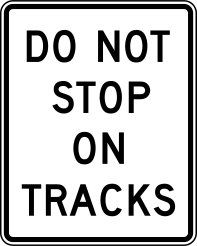
What shape and color is the Do Not Stop On Tracks sign?
| MUTCD code | R8-8 |
|---|---|
| Group | Railroad crossing signs |
| Shape | Vertical rectangle |
| Color | White background, black legend and border |
What a vertical rectangle means. Usually regulatory: a law you must obey. Speed limits, turn restrictions and parking rules take this shape.
What white means. Regulatory. A black legend on a white background is a law, not advice.
Railroad crossing signs. Advance warning, crossbuck and the passive versus active distinction. Rare on the road, common on the test, and the questions turn on who has right of way.
Where is this sign put, and why is it missing at many crossings?
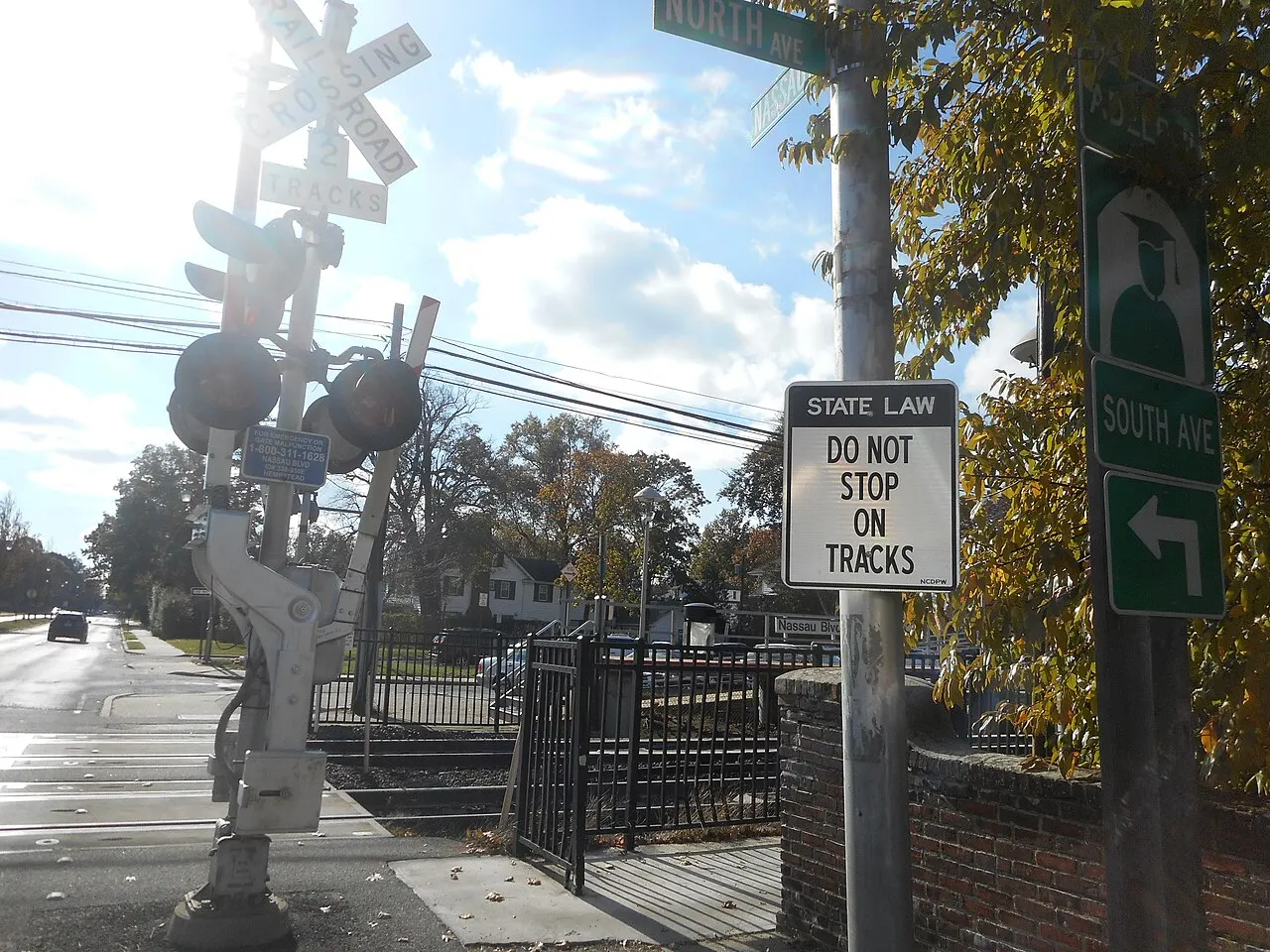
Section 8B.07 says R8-8 should be used where queues are likely to back onto the tracks, such as a STOP or YIELD sign past the crossing, a circular intersection past it, or a pre-signal at the crossing. It should stand on the right, on the near or far side, whichever drivers can see better. It may be posted on both sides of the track, and a divided road or one-way street may add a second one on the left. Table 8B-1 sets the minimum size at 24 by 30 inches on a conventional road. Figure 8B-1 shows the legend alone, so the State Law header on the Garden City sign is a local addition.
What do you do when the far side is full and the light is green?
- 1Measure the gap past the far rail
Your whole vehicle has to fit clear of the tracks, not just the hood.
- 2Wait on the approach if it does not
Hold the near line. Edging onto the rails to save the green is the move the sign forbids.
- 3Cross in one movement
Once you commit, do not stop on the rails. A second track can hide another train.
| Law | What it forbids, even on a green |
|---|---|
| New York VTL 1176 | Driving onto the tracks without enough undercarriage clearance or without room for your vehicle on the opposite side. The section prints no fine. |
| California 22526(d) | Entering unless the far side has room for your vehicle and any railway vehicle. Under 22526(f) it is not a safe-operation violation, and a peace officer's notice to appear makes it a stopping violation. No point count is printed. |
| Florida 316.1576 | Driving through without room to clear the crossing without stopping or blocking other traffic or a train. First time: $500 or 25 hours of community service, plus 6 points. Second: $1,000, 6 more points, and suspension of up to 6 months. |
Priya in Garden City, 16-foot car, 12-foot gap
- 1On April 2, 2026 at 2:15 p.m. the railroad lights are dark and the signal past the tracks is green. The sign matches the photo.
- 2Priya's car is 16 feet long. Clear pavement past the far rail is about 12 feet, with six cars stacked beyond. She holds the near line until two cars move and about 25 feet opens, then crosses without stopping on the rails.
Outcome. VTL 1176 made the green irrelevant while the gap was 12 feet. Waiting cost one light cycle. Entering would have left the back 4 feet of the car over the tracks, the backup Section 8B.07 is written for.
Section 545.302(a)(8) bars stopping, standing, or parking on a railroad track, and (c)(1) bars parking within 50 feet of the nearest rail except briefly to load or unload. Subsection (f) exempts a stop needed to avoid conflict with other traffic or to obey the law, an officer, or a traffic control device. That is not the same duty as refusing to enter until the far side can hold you.
- "Green means go." New York, California, and Florida all keep the ban when a signal says proceed.
- "Wait on the rails if the light changes." The wait belongs on the approach.
- "It applies only when the railroad lights flash." None of the three statutes depends on the crossing lights.
- "California files this like an ordinary moving violation." Section 22526(f) says it is not a safe-operation violation and prints no points.
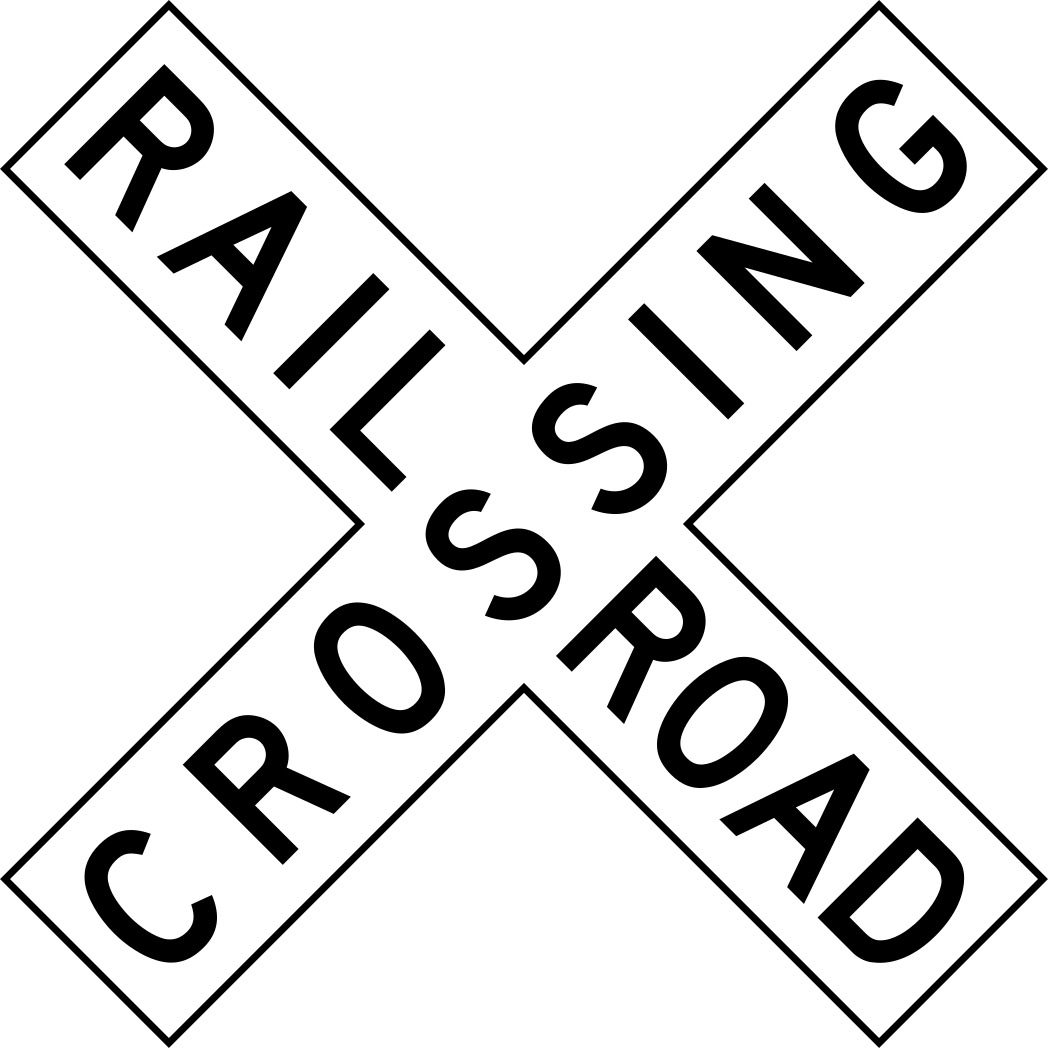
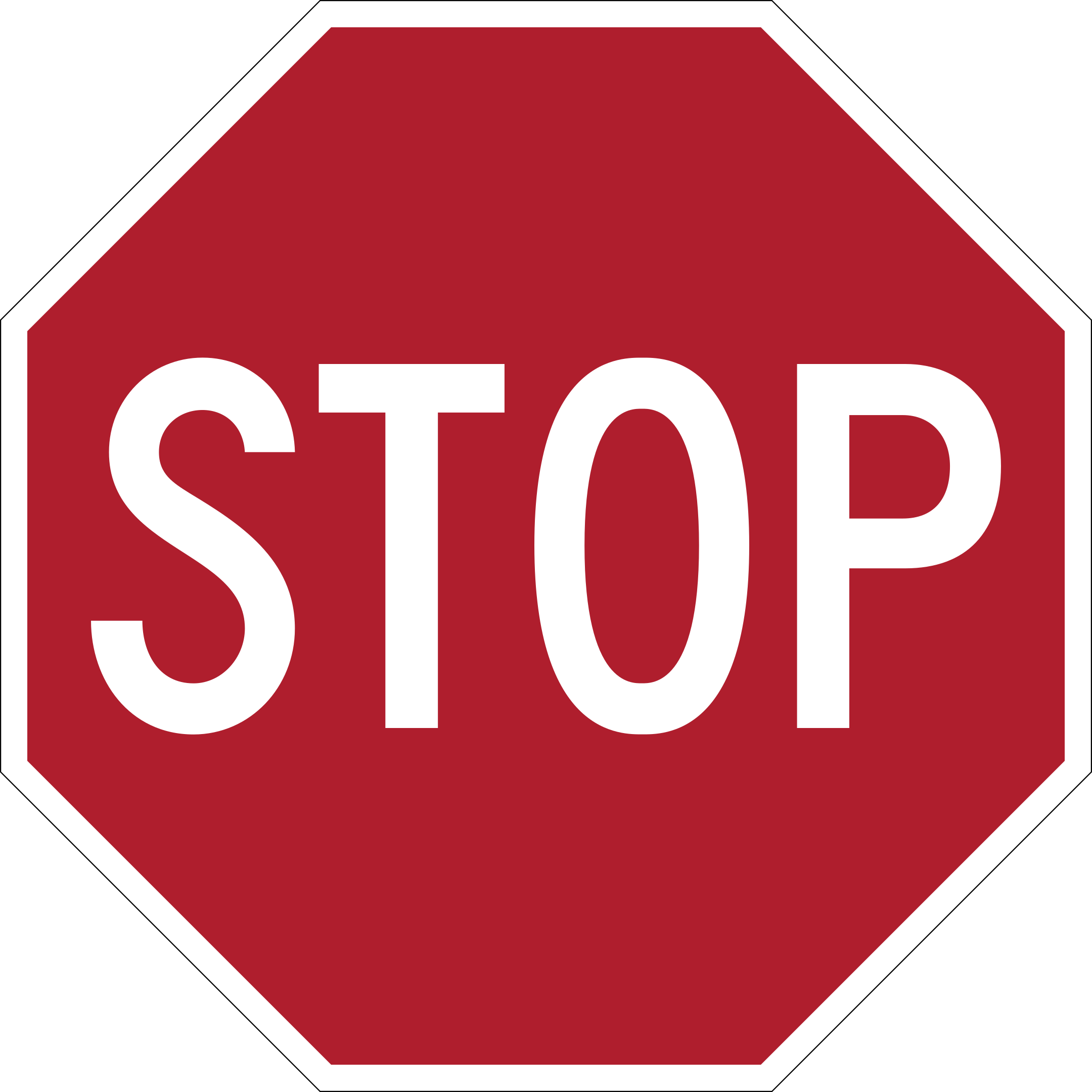
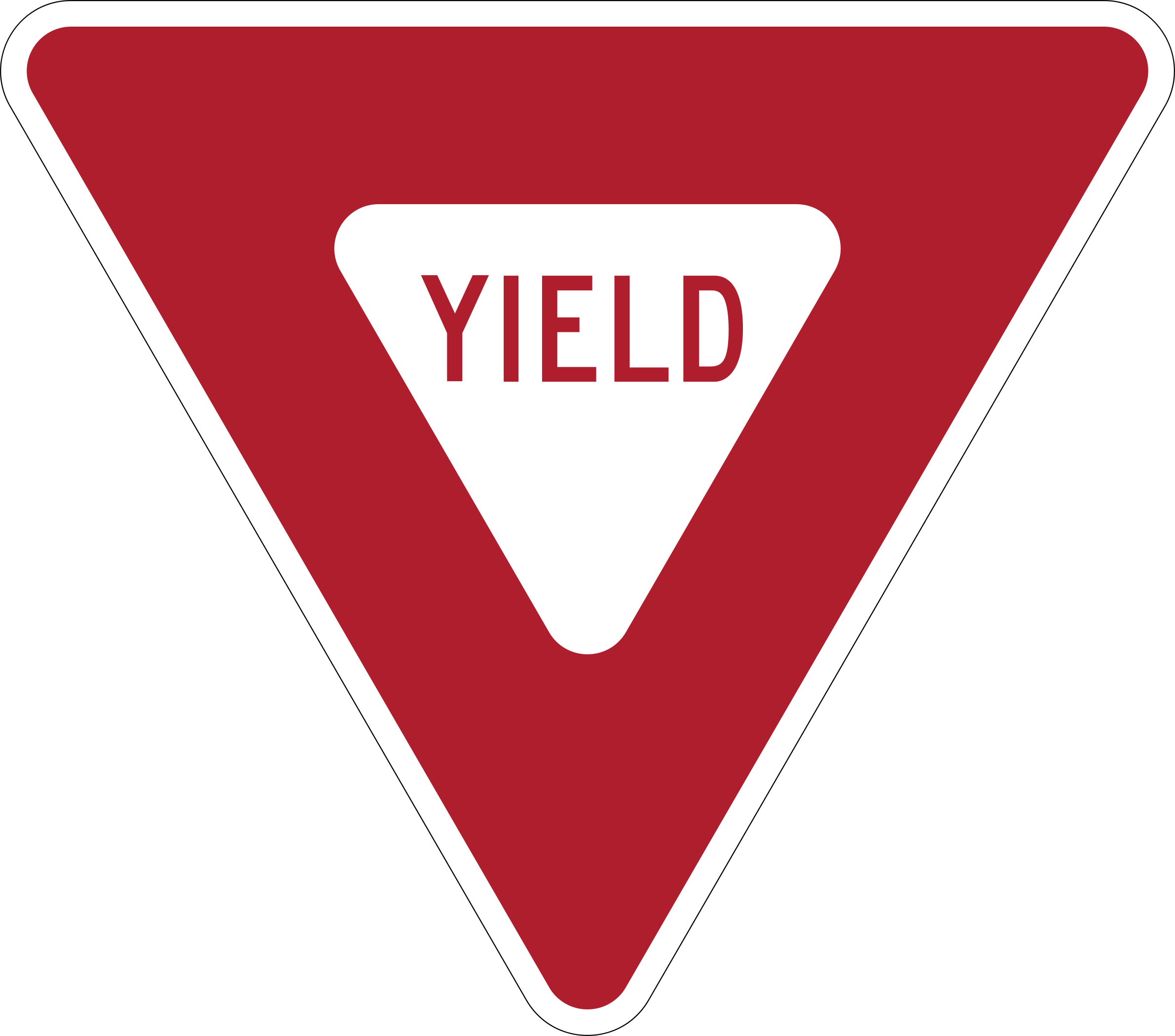

A STOP or YIELD past the rails is one reason to add R8-8. The crossbuck is at the crossing.
What is the Do Not Stop On Tracks sign often mistaken for?
Stop Here On Red (R10-6), which tells you where to stop. R8-8 tells you where not to.
| 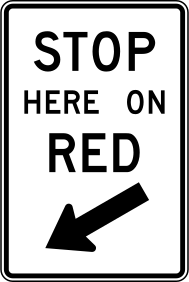 |
|---|---|
| GroupRailroad crossing signs | GroupRegulatory signs |
| ShapeVertical rectangle | ShapeVertical rectangle |
| ColorWhite background, black legend and border | ColorWhite background, black legend and border |
| What it meansThe rails have to stay clear even when the traffic beyond them has stopped moving. | What it meansOn red the stop happens right here, at a post deliberately set well back from the crossing. |
What does the permit test ask about the Do Not Stop On Tracks sign?
This question is from the practice bank, with the answer marked.
This sign means:
- A.Stop before the tracks every time
- B.Do not enter the crossing unless you can clear it completely(correct answer)
- C.Trains no longer use these tracks
- D.Stopping is allowed if a signal is red
Source: MUTCD R8-8
Questions drivers ask about the Do Not Stop On Tracks sign
The light past the tracks is green. Can I follow the car ahead onto the rails?
Only if your whole vehicle fits on the far side. New York VTL 1176 bars driving onto the tracks without room on the opposite side for the vehicle you are driving, and the ban holds even when a signal would let you go. If the car ahead fills the gap, wait at the near line. The green does not create pavement.
Is this sign required at every crossing?
No. Section 8B.07 calls for it where queues are likely to reach the rails: a STOP or YIELD sign past the crossing, a circular intersection past it, or a pre-signal. A rural crossing with nothing beyond the far rail may have no R8-8. The New York, California, and Florida statutes apply whether or not the sign is posted.
What does Florida charge for blocking a crossing?
Section 316.1576 makes it a noncriminal traffic infraction, punished as a moving violation, to drive through a crossing you cannot clear without stopping or without blocking other traffic or a train, even on a signal that says go. A first violation is $500 or 25 hours of community service, and 6 points. A second is $1,000, 6 more points, and a suspension of not more than 6 months. A separate subsection covers a vehicle that would hang up for lack of clearance underneath.
Why does the Garden City sign say State Law over the legend?
Figure 8B-1 shows R8-8 as DO NOT STOP ON TRACKS with no header, so the State Law line is a local addition. The duty under it is New York VTL 1176: do not drive onto the tracks unless there is undercarriage clearance and room for your vehicle on the far side. The header is not a second rule.
Sources
- MUTCD 11th Edition, Part 8, Table 8B-1
- MUTCD 11th Edition (December 2023), Part 8, Section 8B.07, Figure 8B-1, and Table 8B-1
- New York Vehicle and Traffic Law section 1176, obstructing a grade crossing
- California Vehicle Code section 22526, Anti-Gridlock Act
- Florida Statutes section 316.1576 (2025), insufficient clearance at a crossing
- Texas Transportation Code section 545.302, stopping on a railroad track
What are the other railroad crossing signs?
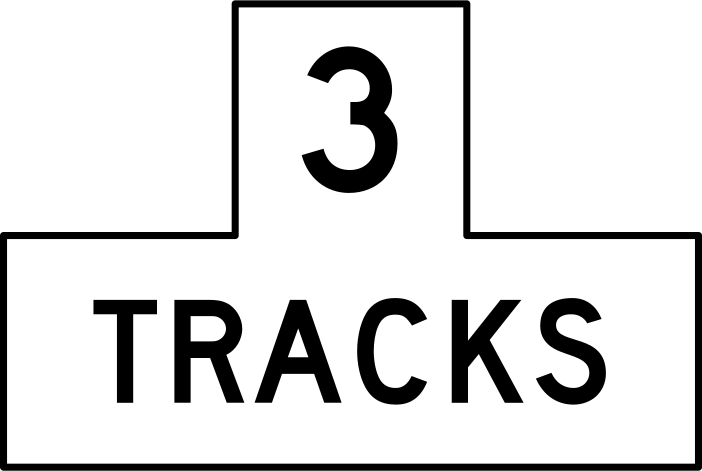

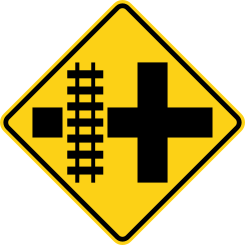

All 8 railroad crossing signs on one page, or every US road sign by shape and color.
Test yourself on this sign and the rest of the set with a road signs practice test for Florida, Texas, California or New York.
The artwork is the federal design itself, which the manual dedicates to the public domain in MUTCD 11th Edition, Part 1, Section 1D.06, checked 2026-09-09. The Interstate Shield, the 511 pictograph and the National Scenic Byway graphic are named exceptions and are not reproduced anywhere on this site.
Source: Manual on Uniform Traffic Control Devices, 11th Edition. Not affiliated with or endorsed by the Federal Highway Administration or any state agency.