What does the Grade Crossing (Crossbuck) sign mean?
The Grade Crossing (Crossbuck) sign (MUTCD R15-1) is a railroad crossing sign under the federal Manual on Uniform Traffic Control Devices, the national standard the states build from. You are at the tracks, not approaching them. In most states the crossbuck itself carries the duty to yield, and rail traffic holds the right of way at every crossing.
Source: MUTCD 11th Edition, Part 8, Table 8B-1, checked 2026-09-09.
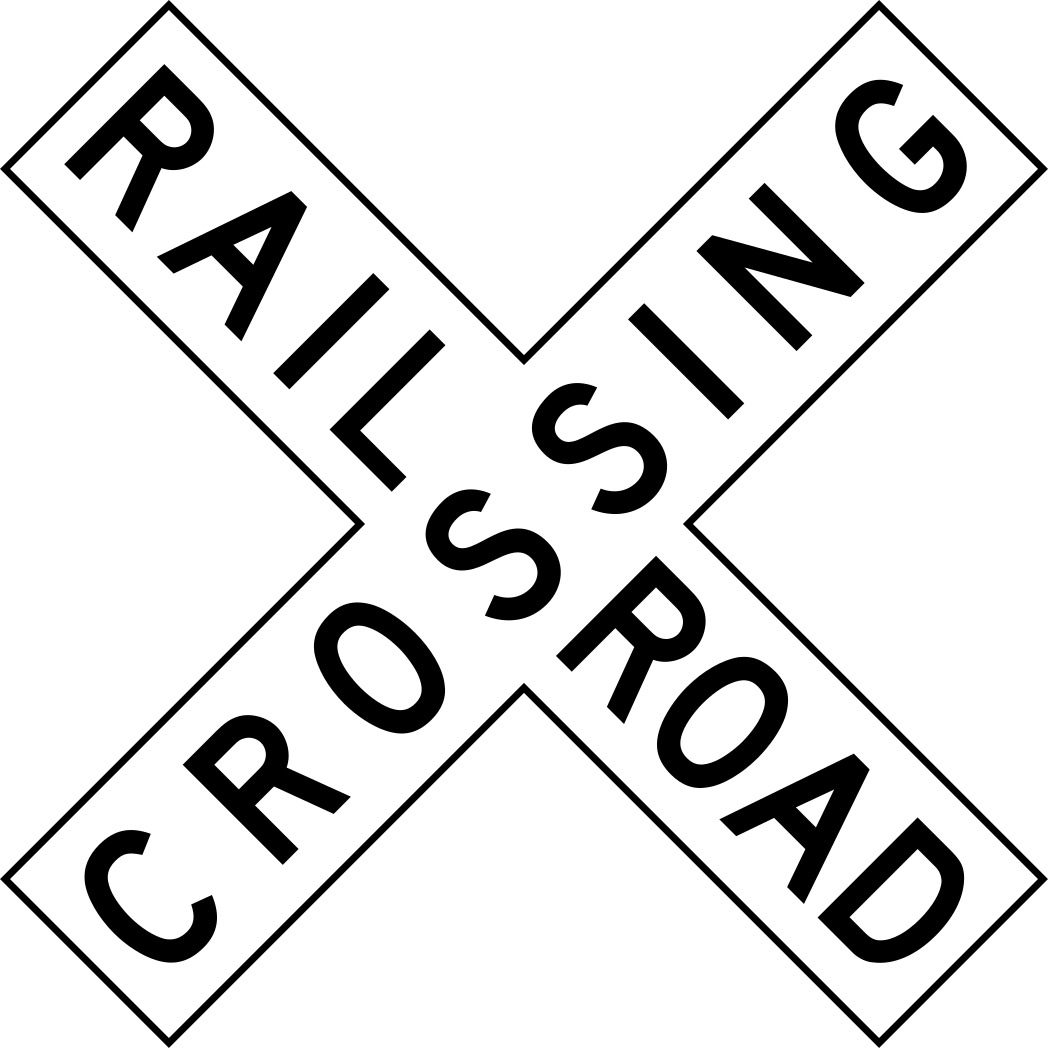
What shape and color is the Grade Crossing (Crossbuck) sign?
| MUTCD code | R15-1 |
|---|---|
| Group | Railroad crossing signs |
| Shape | Two crossed blades forming an X |
| Color | Retroreflective white with the words RAILROAD CROSSING in black |
What a crossbuck means. A railroad grade crossing, at the crossing itself. It carries the same legal weight as a yield sign.
What white means. Regulatory. A black legend on a white background is a law, not advice.
Railroad crossing signs. Advance warning, crossbuck and the passive versus active distinction. Rare on the road, common on the test, and the questions turn on who has right of way.
Where does the crossbuck stand, and what shares the post?
Section 8B.03 requires at least one crossbuck on each road approach to every highway-rail crossing, including ones with lights or gates. Table 8B-1 sets each blade at 48 by 9 inches minimum, and the sign center should be about 9 feet above the near edge of the pavement. How close the post may stand to the rail is left to the railroad and the regulatory agency. Two or more tracks require the Number of Tracks plaque. A second crossbuck goes on the left for restricted sight distance, poor road geometry, or a one-way multilane approach.
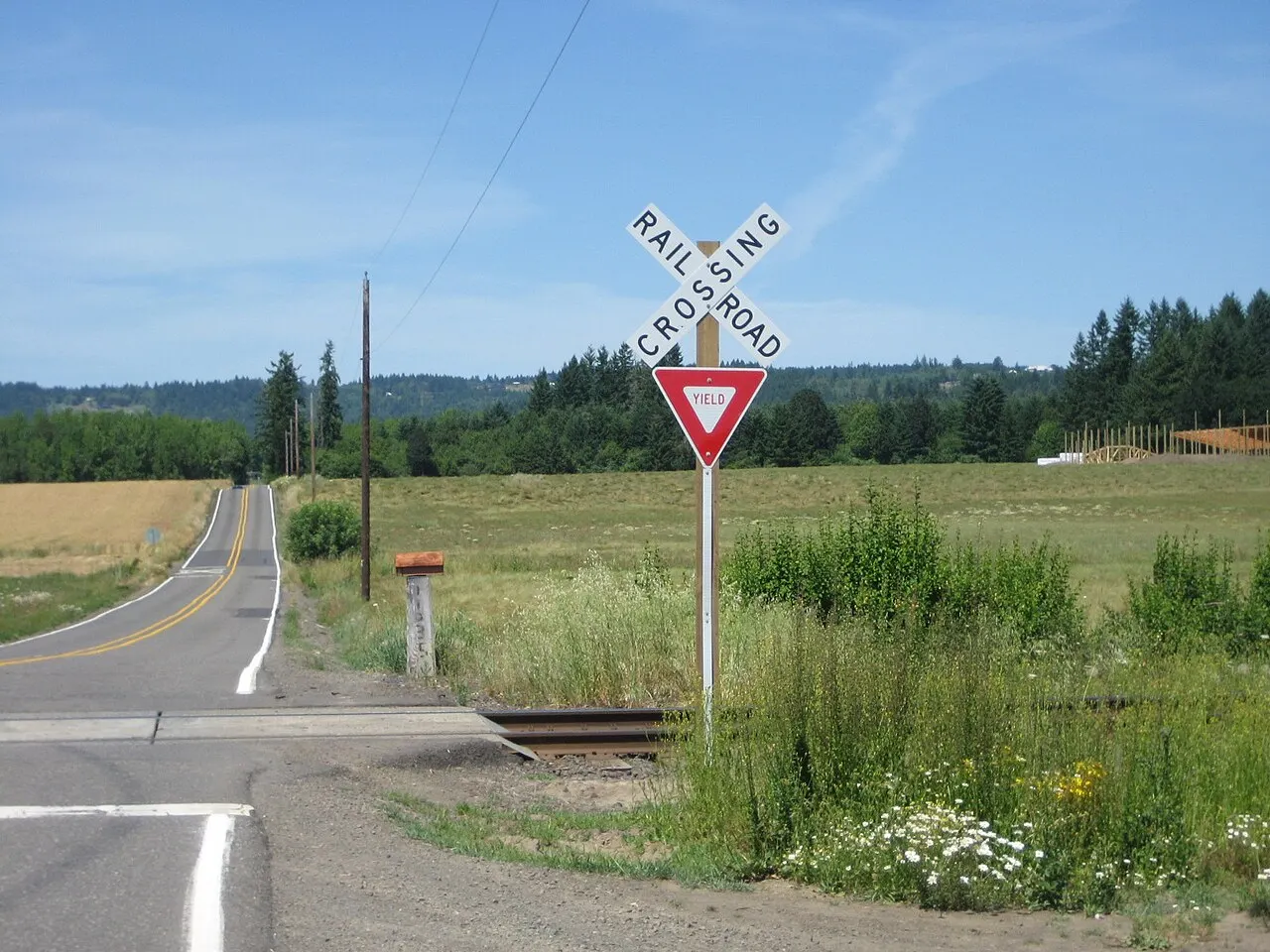
Section 8B.04 builds the passive assembly: crossbuck, plaque if needed, and YIELD or STOP, usually on the same post. The North Plains photo shows YIELD under the blades. YIELD is the default. STOP needs an engineering study, and the manual limits it to unusual conditions, pointing the Diagnostic Team at sight lines (including seasonal crops), the number of tracks, train and vehicle speeds, and crash history. Under Section 8C.03 a STOP assembly on a paved road should get a stop line, a YIELD assembly may get a yield line or a stop line, and either line should be at least 15 feet from the nearest rail. Where flashing lights control the crossing, the stop line should go about 8 feet before the signals or the gate, whichever is farther from the tracks.
| On the post | What changes |
|---|---|
| YIELD, no lights | The default. Texas 545.251(c): yield to a train in hazardous proximity, and stop only if safety requires it. |
| STOP | An engineering study found every vehicle should stop. Section 8B.04: a full stop not less than 15 feet short of the nearest rail, even with the track empty. |
| Lights or a gate | Those devices give the order. The YIELD-or-STOP assembly is for passive crossings. |
What do you do at a YIELD crossbuck with no lights?
- 1Look before the wheels reach the rail
The round sign was the preview. This post is the crossing.
- 2Yield means you can still stop
Texas Section 545.251(c) says yield to a train in hazardous proximity and go at a speed reasonable for conditions. If safety requires a stop, stop at a marked stop line, or with no stop line, not closer than 15 feet or farther than 50 feet from the nearest rail.
- 3Count the plaque
A number of 2 or more means the train that just cleared can hide another. Section 8B.03 makes the plaque mandatory there.
- 4A signal or gate replaces the yield
Section 545.251(a) requires a stop 15 to 50 feet from the nearest rail for a clearly visible signal, a lowered gate, a flagger, a train within about 1,500 feet that sounds a signal and is an immediate hazard, or a train plainly visible and in hazardous proximity. Section 545.251(d) makes driving around, under, or through a gate that is closed, closing, or opening a separate offense.
Lena, 45 mph, Texas county road
- 1On March 3, 2026 at 9:20 a.m. Lena reaches a passive crossing on a road posted at 45 mph: crossbuck and YIELD, one track so no plaque, no lights, no gate, and a painted stop line. It is the same pairing as the North Plains photo.
- 2The track is empty as far as she can see. She slows enough that she could stop at the line, then crosses without a full stop. On the way back a train is plainly visible and close. She stops at the line and stays there until it has passed and the crossing is safe.
Outcome. The first pass was a lawful yield. The second needed a stop because the train was in hazardous proximity, and crossing ahead of it would have been an offense under Section 545.251, fined $50 to $200. A STOP sign on that post would have required a full stop on the empty pass too.
- A full stop at every crossbuck. That applies when STOP is mounted, or when a train, signal, gate, or flagger requires it. Section 8B.04 notes that certain commercial vehicles and school buses stop at every crossing under a federal rule.
- Looking while you are already on the rails. A required Texas stop is 15 to 50 feet back.
- Skipping the second train because the plaque is small.
- Driving around a lowered gate because the blades "only mean yield." Section 545.251(d) makes it an offense.
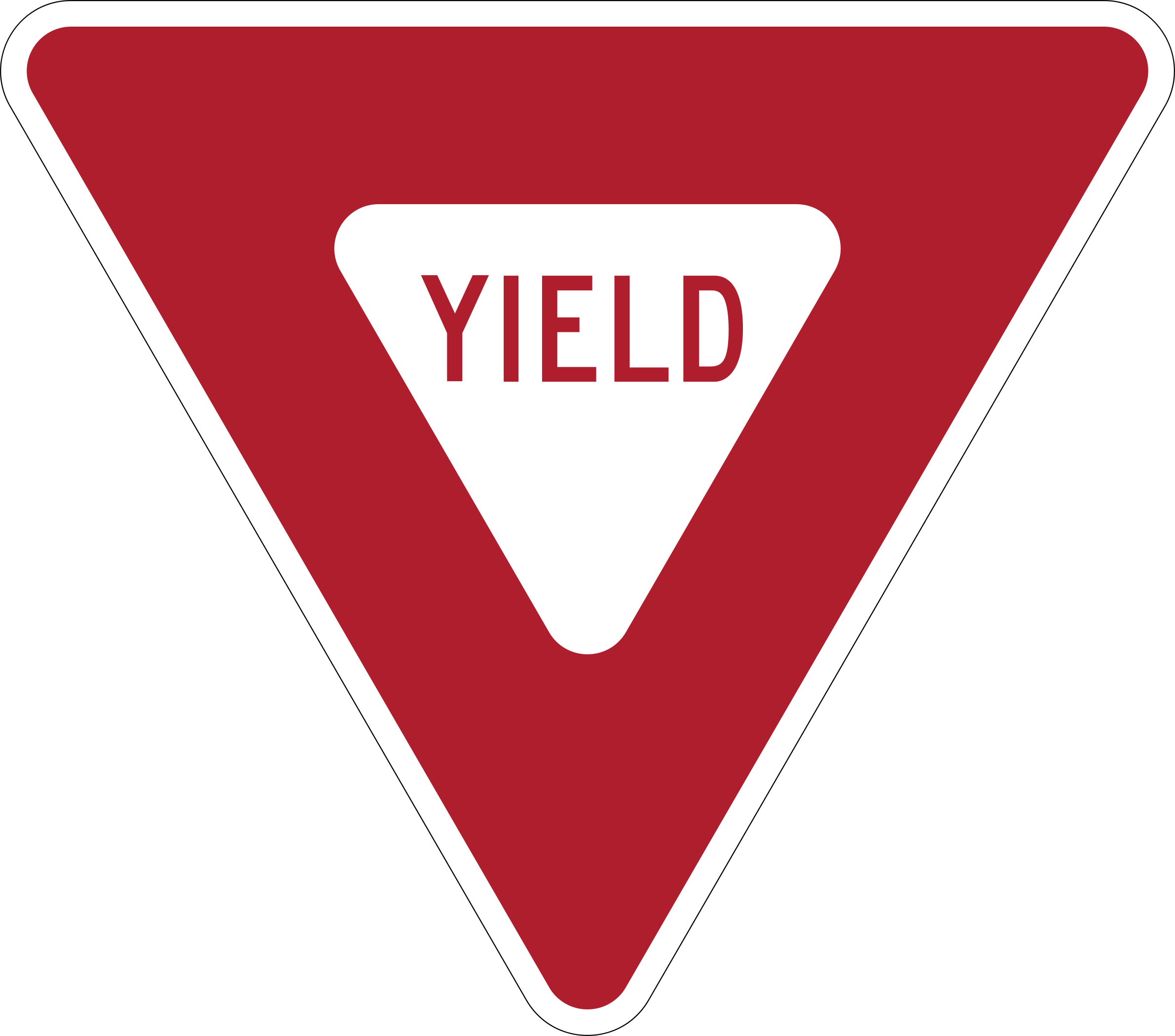
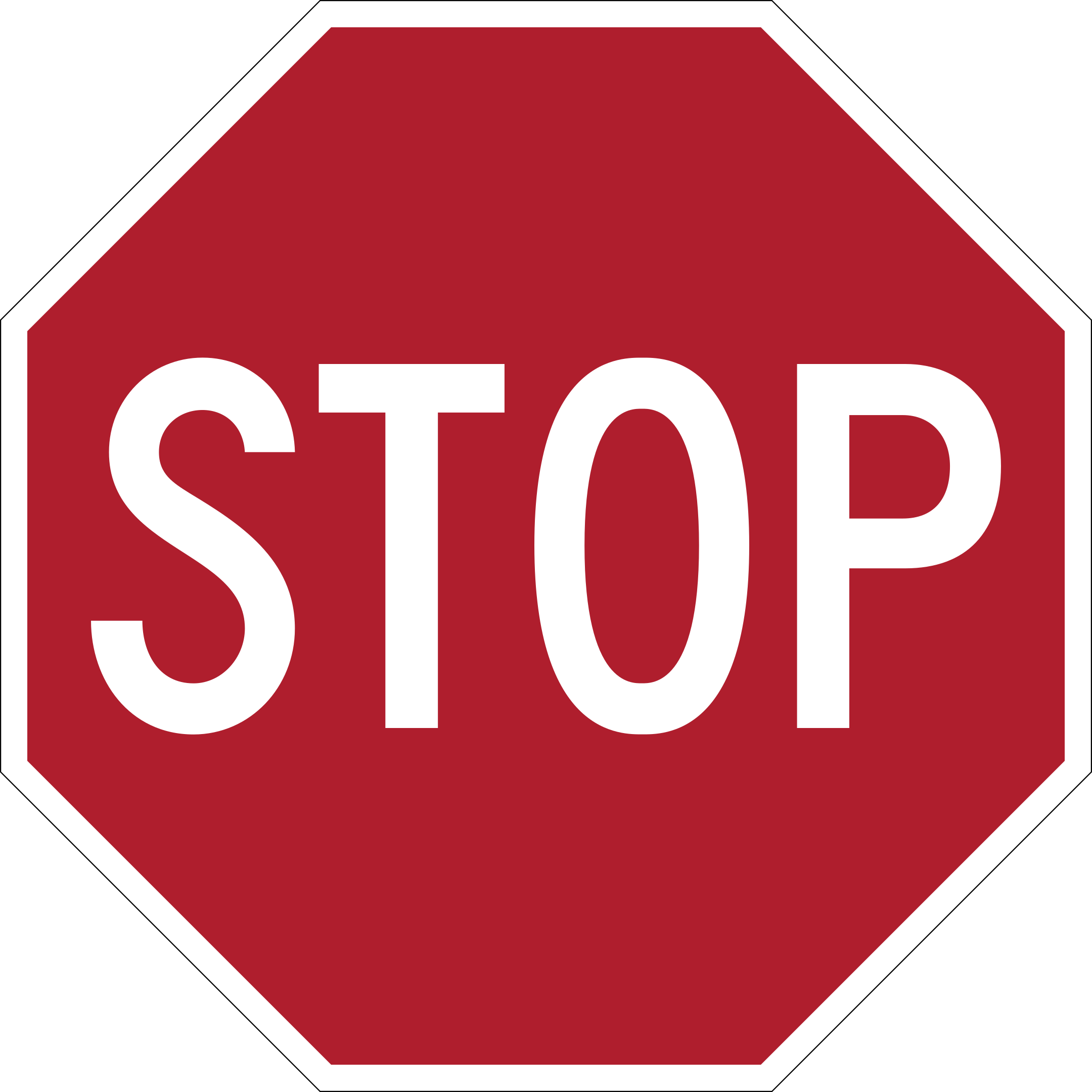
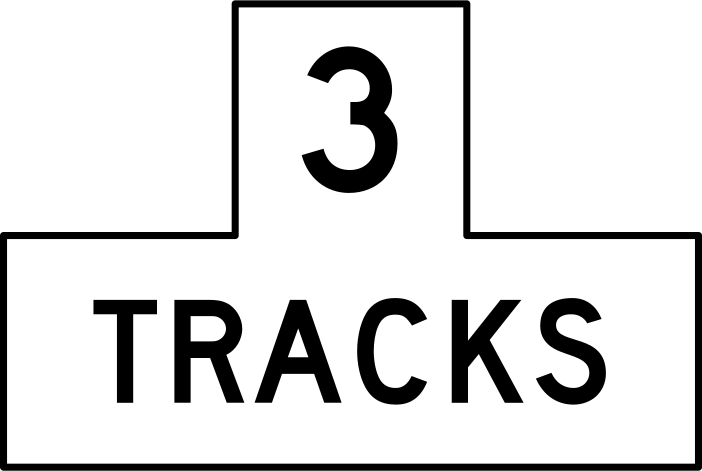

YIELD or STOP shares a passive post. The plaque is for two or more tracks. The round sign is the one you passed.
What is the Grade Crossing (Crossbuck) sign often mistaken for?
Being read as advisory. MUTCD Section 8B.04 makes a YIELD sign the default traffic control device for Crossbuck Assemblies, so a crossbuck with a yield sign carries a legal duty to yield, and a crossbuck with a STOP sign requires a full stop.
Which signs get mistaken for the Grade Crossing (Crossbuck) sign?
- Grade Crossing Advance WarningW10-1
The crossbuck (R15-1) at the crossing itself. W10-1 is the only round warning sign in the manual and is the one exception to the orange rule inside work zones, where it stays yellow.
What does the permit test ask about the Grade Crossing (Crossbuck) sign?
These 2 questions are from the practice bank, with the answer marked.
This sign sits at the crossing itself. It means:
- A.Trains have right of way and you must yield(correct answer)
- B.The crossing is closed to traffic
- C.Stop here on every approach regardless of trains
- D.The tracks are no longer in use
Source: MUTCD R15-1
At a railroad crossing with no gates or lights, you must:
- A.Proceed without slowing, trains always signal
- B.Slow, look both ways and listen before crossing(correct answer)
- C.Stop every time regardless of conditions
- D.Cross only if another vehicle goes first
Why: Passive crossings put the responsibility on you. Slow down, look along the track in both directions, listen, and never start across unless you can clear the far rail.
Source: Federal MUTCD, 11th Edition (FHWA)
Questions drivers ask about the Grade Crossing (Crossbuck) sign
Why do some crossbucks have STOP and others have YIELD?
YIELD is the default. STOP is added only after an engineering study finds that every vehicle should stop. Section 8B.04 points the Diagnostic Team at sight distance, including seasonal crops, the number of tracks, train and road speeds, and the crash history. STOP at one crossing says nothing about the next passive crossing down the line.
The lights are flashing and the crossbuck is still there. Which do I obey?
The lights and the gate. The YIELD-or-STOP assembly in Section 8B.04 is for crossings without the active systems in Chapter 8D. Section 8B.03 still requires a crossbuck on an active approach, so the blades stay. Texas Section 545.251(a) requires a stop for a clearly visible signal or a lowered gate, 15 to 50 feet from the nearest rail, and you stay stopped until it is safe to go.
There is no stop line. Where do I stop when I have to?
Texas Section 545.251(c), for a crossbuck with no signals, gates, or flagger, says to stop at a clearly marked stop line if safety requires it, or with no line, not closer than 15 feet or farther than 50 feet from the nearest rail. Subsection (a) uses the same 15 to 50 foot band for signals, gates, and a plainly visible train. Section 8C.03 keeps any painted stop or yield line at least 15 feet from the nearest rail.
Sources
- MUTCD 11th Edition, Part 8, Table 8B-1
- MUTCD 11th Edition (December 2023), Part 8, Sections 8B.03, 8B.04, and 8C.03, Table 8B-1, Figure 8C-1
- Texas Transportation Code section 545.251, obedience to a train signal
What are the other railroad crossing signs?

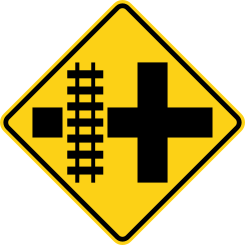

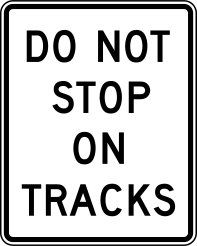
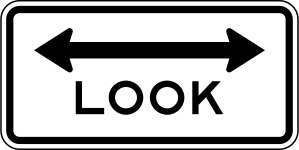
All 8 railroad crossing signs on one page, or every US road sign by shape and color.
Test yourself on this sign and the rest of the set with a road signs practice test for Florida, Texas, California or New York.
The artwork is the federal design itself, which the manual dedicates to the public domain in MUTCD 11th Edition, Part 1, Section 1D.06, checked 2026-09-09. The Interstate Shield, the 511 pictograph and the National Scenic Byway graphic are named exceptions and are not reproduced anywhere on this site.
Source: Manual on Uniform Traffic Control Devices, 11th Edition. Not affiliated with or endorsed by the Federal Highway Administration or any state agency.