What does the Yield sign mean?
The Yield sign (MUTCD R1-2) is a regulatory sign under the federal Manual on Uniform Traffic Control Devices, the national standard the states build from. Priority belongs to whatever is already using the road you want, vehicles and pedestrians alike. Slow enough to hand it over, stop if that is what handing it over takes, and move in only on a gap you have actually seen.
Source: MUTCD 11th Edition, Chapter 2B, Table 2B-1, checked 2026-09-09.
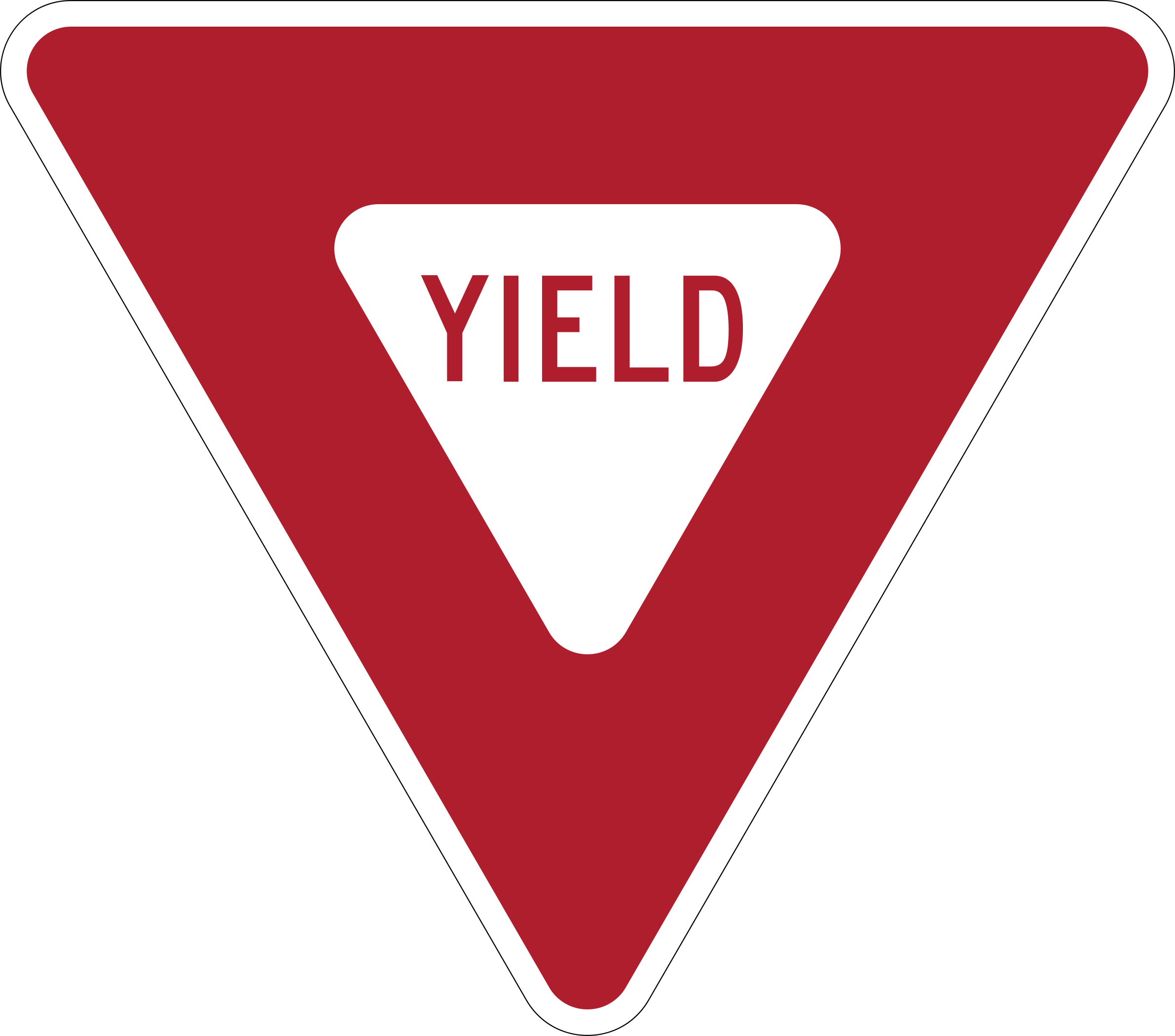
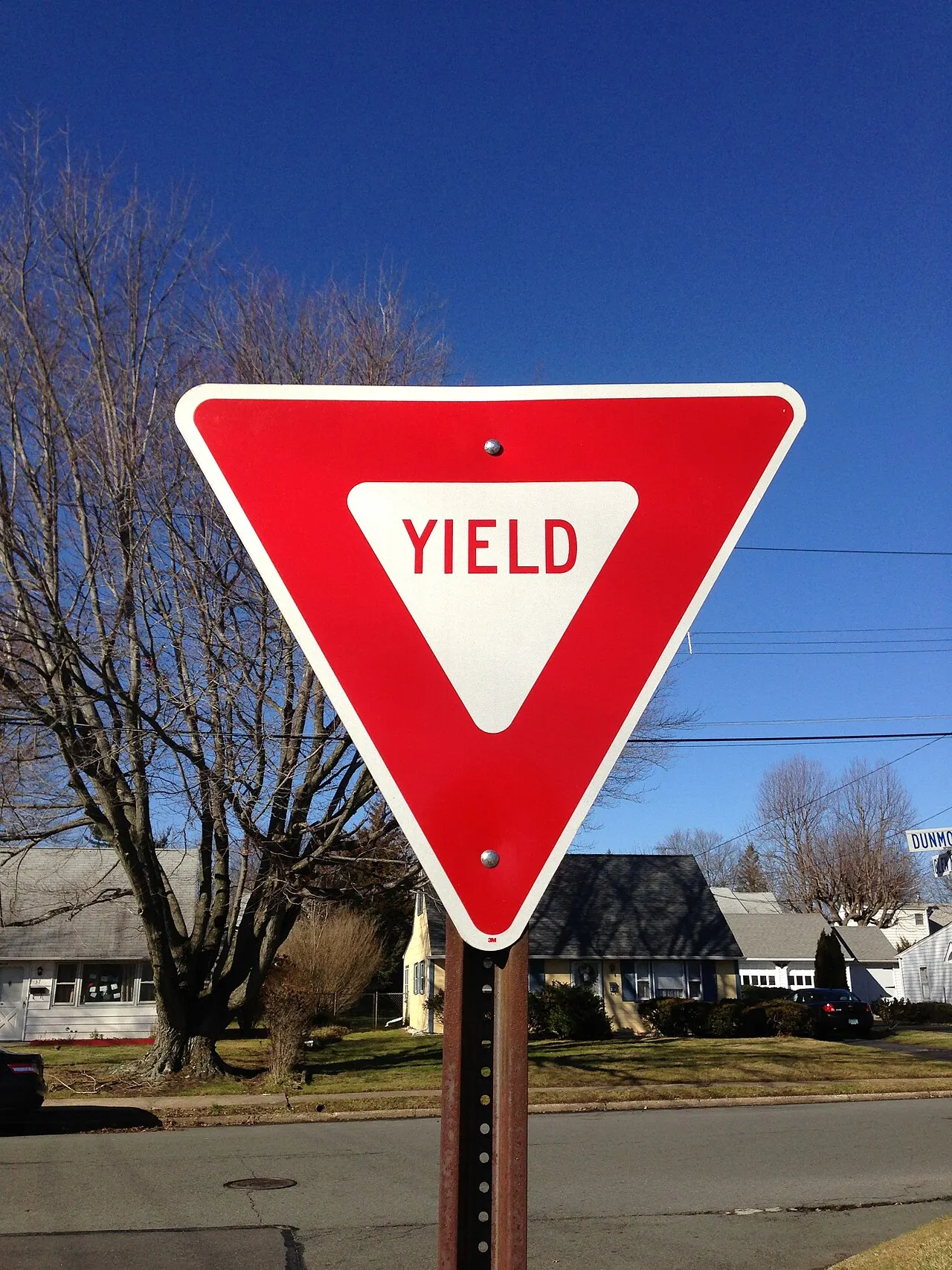
What shape and color is the Yield sign?
| MUTCD code | R1-2 |
|---|---|
| Group | Regulatory signs |
| Shape | Equilateral triangle, point down |
| Color | White background, wide red border, red legend |
What a triangle, point down means. Yield. The only downward-pointing triangle in the system, and like the octagon it is reserved so that shape alone carries the instruction.
What white means. Regulatory. A black legend on a white background is a law, not advice.
What red means. Stop, yield, or a prohibition. Red never advises, it always forbids or commands.
Regulatory signs. Every sign in this group has a statute behind it, so disobeying one is a citable offense on its own. Permit tests tend to word them as a duty you owe rather than show you the face.
When is a yield sign the right control?
Section 2B.05 says R1-2 assigns the yield on certain approaches, including a two-way road entering a one-way stretch such as a narrow bridge. You slow to a reasonable speed, or stop when that is what it takes to avoid interfering. The sign shall not be a changeable message sign.
Section 2B.10 says that where a full stop is not necessary at all times, less restrictive measures such as a YIELD sign should be considered first. Its guidance lists the conditions engineering judgment should find together: adequate sight distance on the yield approaches, one lane and no turn lane on every approach, an angle from 75 to 90 degrees, local streets or a local street at a collector, and combined volume under 1,800 units a day or 140 in the peak hour. Those units add motor vehicles, bicycles, and pedestrians. The crash test depends on the change: two or more correctable crashes in the previous 12 months to add yield where there was no control, or two or fewer in 12 months to relax a minor-road stop into a yield.
Options, separate from that list, include the second intersection of a divided-highway crossing, a channelized turn lane set off by an island even when the other lanes have a signal or a STOP sign, a merge with inadequate acceleration geometry or sight distance, a low-volume rural road, and an approach that can only turn right. Two rules are standards. A YIELD sign shall stand at a roundabout entrance and shall not control the circulating roadway. YIELD signs shall not face every leg of an ordinary intersection. Only a roundabout is excepted.
Where does the post go, and how big is the triangle?
Section 2B.18 requires the near right side. Its guidance adds not farther than 50 feet from the cross street pavement, and, except at roundabouts and channelized right turns, ahead of the near edge of a marked crosswalk. A multi-lane roundabout approach with a raised splitter island on the left should also carry a YIELD sign on that island side. On a single-lane roundabout approach, that left-side sign is optional. A TO ONCOMING TRAFFIC plaque may be added at a one-lane bridge. TO TRAFFIC IN CIRCLE or TO ALL LANES may be added at a multi-lane roundabout.
What do you actually have to do?
- 1Slow to a reasonable speed
Florida requires the slowdown in obedience to the sign. A stop is required only when safety requires it. California Vehicle Code 21803(a) requires you, on reaching the sign, to yield to vehicles that have entered the intersection or are close enough to be an immediate hazard. It does not mention a stop.
- 2If you must stop, stop at the statute point
Florida: before the near crosswalk, or if none, at the point closest to the cross street from which you can see its approaching traffic. After slowing or stopping, yield to any vehicle in the intersection or close enough to be an immediate hazard during the time you are crossing.
- 3Once you have yielded, the duty flips
California Vehicle Code 21803(b) says that once you have yielded and you enter, other approaching drivers shall yield to you. Florida does not print that second sentence.
Florida Statutes 316.123(3) does not make every yield a stop. But if you drive past a yield sign without stopping and then collide with a pedestrian in a crosswalk or a vehicle in the intersection, the statute treats that collision as prima facie evidence that you failed to yield.
Keisha at a Florida yield sign, a car 80 feet out
- 1Keisha approaches a YIELD sign at 25 mph on a residential street in Florida. A car on the cross street is 80 feet from the intersection, traveling at 30 mph. At 30 mph that car covers about 44 feet each second, so it is under 2 seconds away.
- 2Florida Statutes 316.123(3) requires a stop when safety requires one. This gap does. She stops before the near crosswalk rather than trying to beat the car.
- 3That car passes. The next vehicle is about 400 feet out, also at 30 mph, so roughly 9 seconds away. She can cross and clear before it arrives, so it is not an immediate hazard during the time she will be in the intersection. She enters.
Outcome. She waited out the car that was under 2 seconds away, then took the gap at 400 feet. Florida publishes no minimum gap in feet.
Yield at the roundabout entrance
The driver entering the circle yields.
Section 2B.10 puts the YIELD sign on the approach and forbids one on the circulating roadway.
Traps that sound right and are not
- A full stop at every yield, including an empty roundabout entrance. Both statutes require the yield. Florida requires the stop only when safety requires it, and California 21803 does not mention a stop.
- Yield signs on every leg of an ordinary crossroads. Section 2B.10 allows that pattern only at a roundabout.
- A yield sign used only to slow drivers on a straight road. Section 2B.06 says YIELD signs shall not be used for speed control.

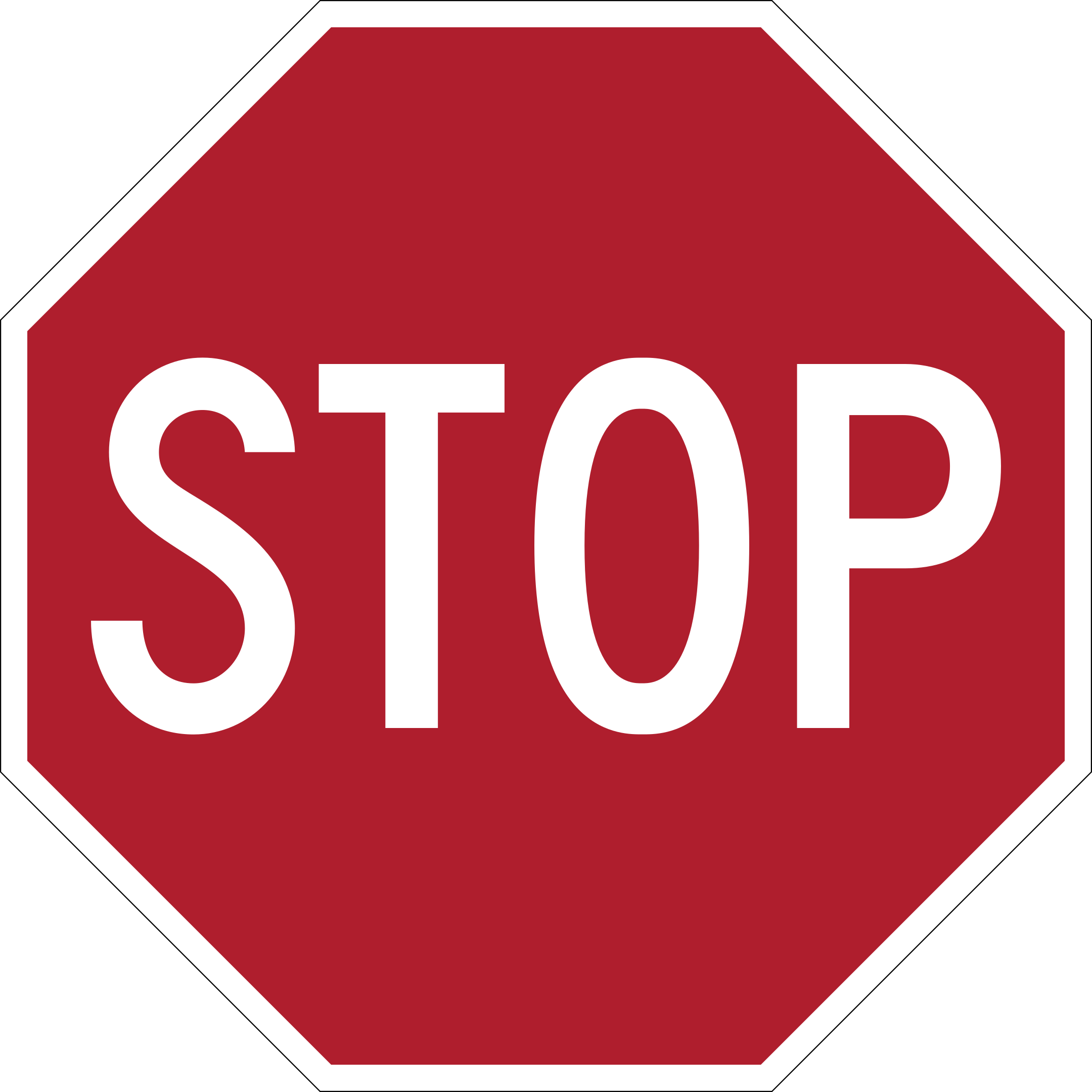
What is the Yield sign often mistaken for?
Stop (R1-1). Also Yield Ahead (W3-2), which is a yellow diamond containing the same triangle and only warns of a yield sign further on.
| | |
|---|---|---|
| GroupRegulatory signs | GroupRegulatory signs | GroupWarning signs |
| ShapeEquilateral triangle, point down | ShapeOctagon | ShapeDiamond |
| ColorWhite background, wide red border, red legend | ColorRed background, white legend and border | ColorYellow background, black border, red-bordered triangle symbol |
| What it meansPriority belongs to whatever is already using the road you want, vehicles and pedestrians alike. | What it meansThe duty is a complete stop, wheels no longer turning, at whichever of these you reach first: a painted stop line, the near edge of the crosswalk, or the point where you can finally see along the cross street. | What it meansA yield sign is coming; be ready to slow and yield. |
What does the permit test ask about the Yield sign?
These 2 questions are from the practice bank, with the answer marked.
This sign requires you to:
- A.Stop completely every time
- B.Slow down, be ready to stop, and let traffic already there go first(correct answer)
- C.Maintain speed because you have the right of way
- D.Stop only when a pedestrian is present
Source: MUTCD R1-2
A downward-pointing triangle means:
- A.Stop
- B.Yield(correct answer)
- C.Merge ahead
- D.School zone
Why: The inverted triangle is used only for YIELD. Slow down, yield to traffic and pedestrians already there, and stop if you need to.
Source: Federal MUTCD, 11th Edition (FHWA)
Questions drivers ask about the Yield sign
Do I have to stop at every yield sign?
No. Florida Statutes 316.123(3) tells you to slow to a speed reasonable for the conditions, and to stop if safety requires the stop. California Vehicle Code 21803 requires you to yield to vehicles that have entered the intersection or are close enough to be an immediate hazard, and to keep yielding until you can go with reasonable safety. A stop is how you yield when the gap is too short. It is not a separate duty on an empty approach.
If I roll past a yield and hit someone, what does Florida say?
Florida Statutes 316.123(3) says a collision with a pedestrian in a crosswalk, or with a vehicle in the intersection, after you drove past a yield sign without stopping, is prima facie evidence that you failed to yield. That is a proof rule, not a printed fine and not a finding that covers every other crash at a yield sign. If you did stop, this particular sentence does not apply.
Why is the yield sign at the roundabout entrance and not on the circle?
Section 2B.10 of the MUTCD 11th Edition makes that a standard. A YIELD sign shall be used at the entrance to a roundabout to make entering drivers yield to other traffic. It controls the approach roadways and shall not control the circulatory roadway. On a multi-lane approach with a raised splitter island, Section 2B.18 says a second YIELD sign should also stand on the left. On a single-lane approach with a raised splitter island, that left-side sign is optional.
Can the city use a yield sign just to slow traffic?
Section 2B.06 says YIELD or STOP signs shall not be used for speed control. Yield control at an intersection has its own test in Section 2B.10, including sight distance, a single lane on each approach, volume under 1,800 units a day or 140 in the peak hour, and a crash count. A triangle posted only to make people lift off the accelerator is outside that section.
Sources
- MUTCD 11th Edition, Chapter 2B, Table 2B-1
- MUTCD 11th Edition (December 2023), Sections 2B.03, 2B.05, 2B.06, 2B.10, and 2B.18, and Table 2B-1
- Florida Statutes 316.123 (2026)
- California Vehicle Code 21803
What are the other regulatory signs?
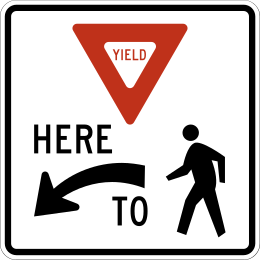
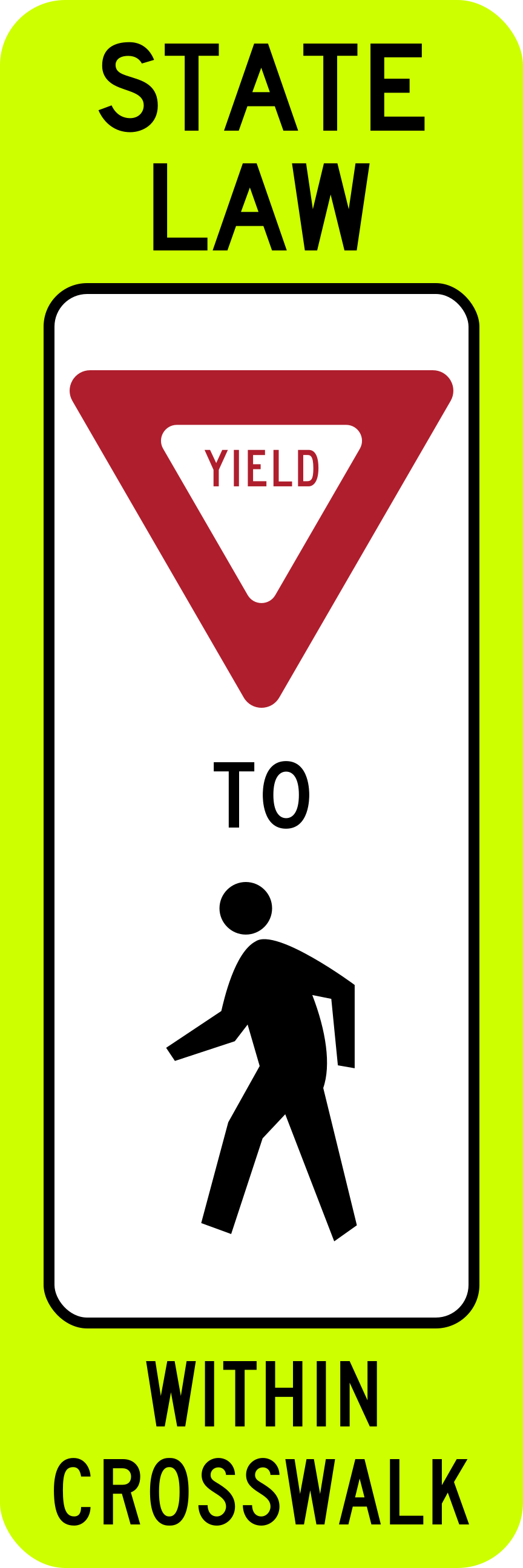
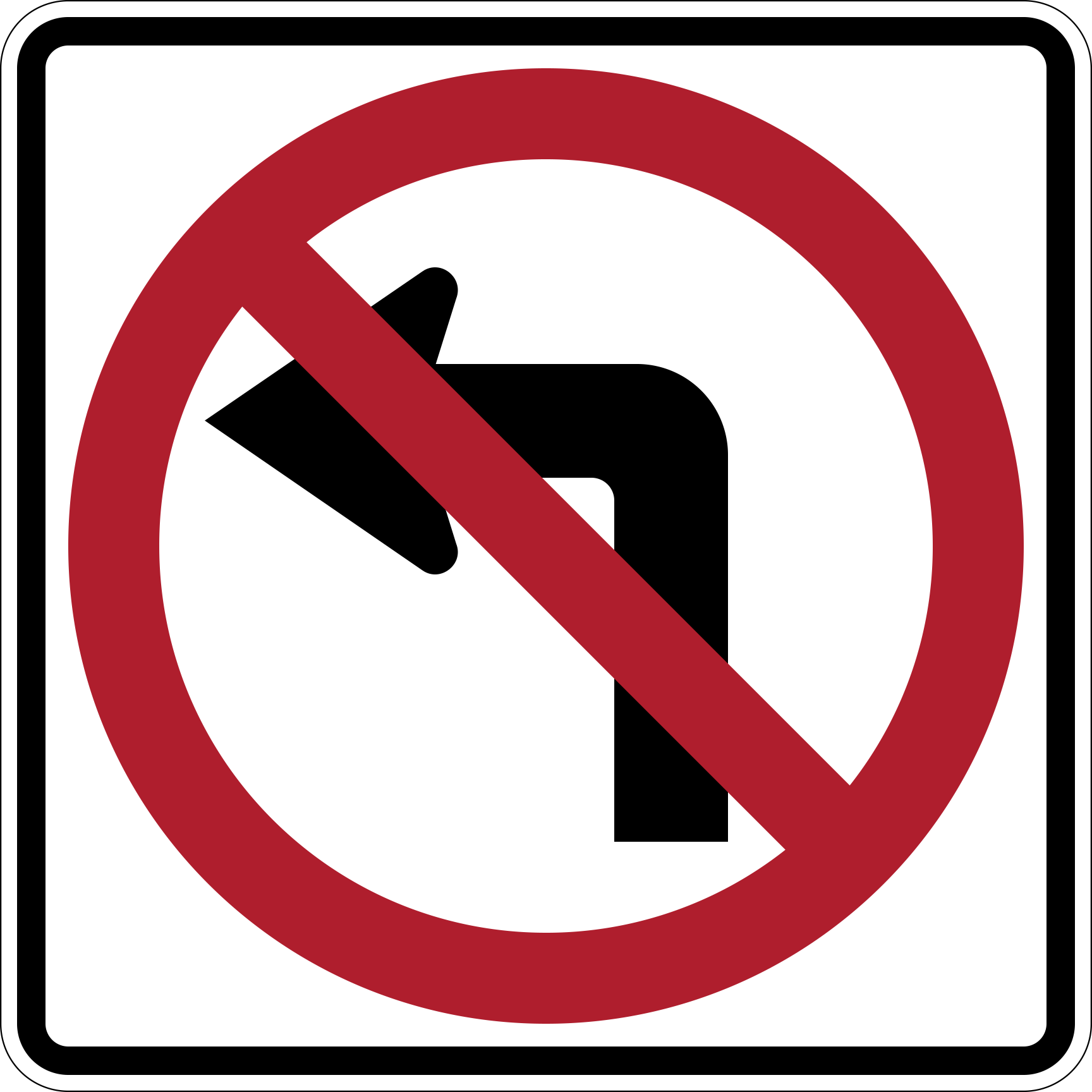
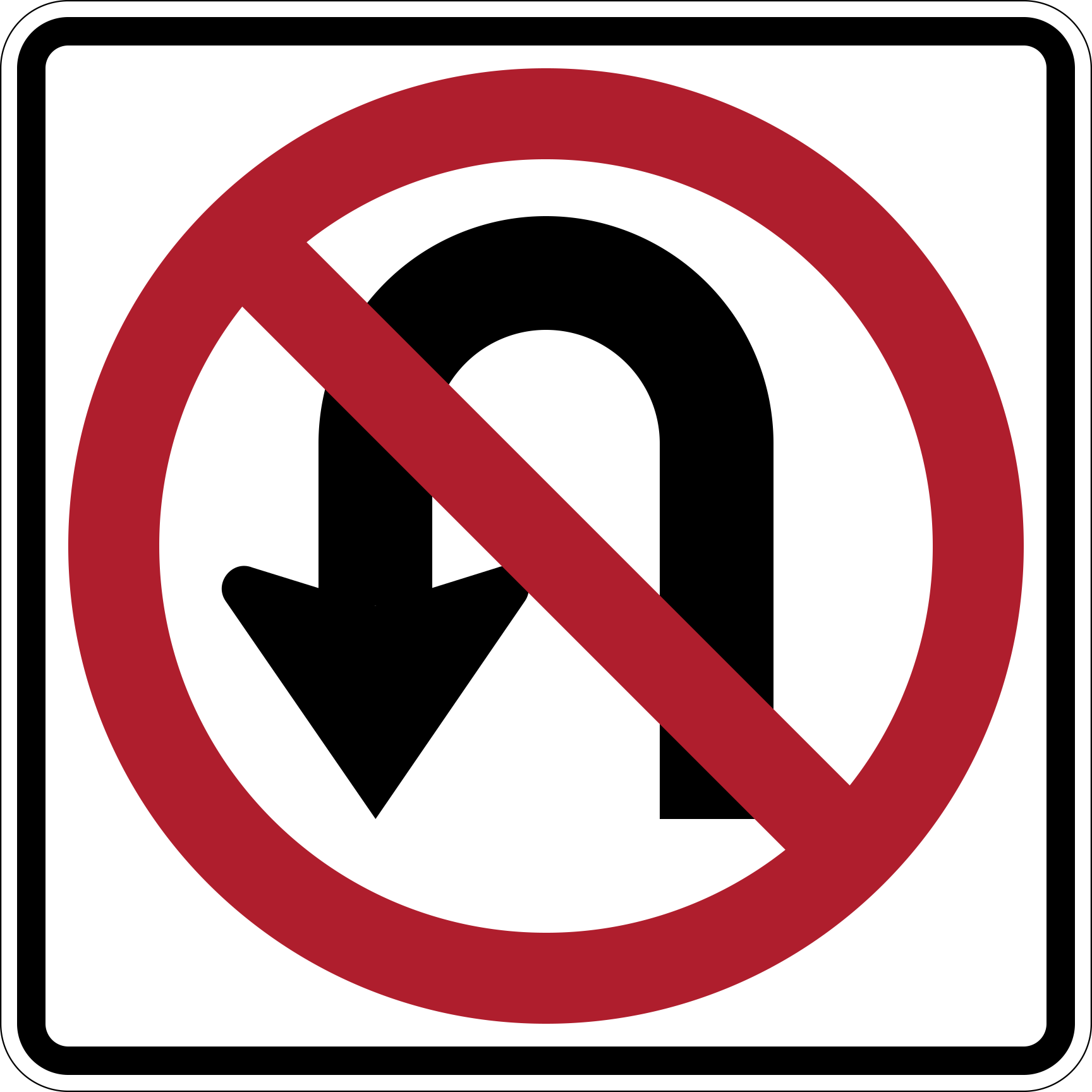
All 39 regulatory signs on one page, or every US road sign by shape and color.
Test yourself on this sign and the rest of the set with a road signs practice test for Florida, Texas, California or New York.
The artwork is the federal design itself, which the manual dedicates to the public domain in MUTCD 11th Edition, Part 1, Section 1D.06, checked 2026-09-09. The Interstate Shield, the 511 pictograph and the National Scenic Byway graphic are named exceptions and are not reproduced anywhere on this site.
Source: Manual on Uniform Traffic Control Devices, 11th Edition. Not affiliated with or endorsed by the Federal Highway Administration or any state agency.