What does the Stop sign mean?
The Stop sign (MUTCD R1-1) is a regulatory sign under the federal Manual on Uniform Traffic Control Devices, the national standard the states build from. The duty is a complete stop, wheels no longer turning, at whichever of these you reach first: a painted stop line, the near edge of the crosswalk, or the point where you can finally see along the cross street. Rolling through slowly breaches it even on an empty road.
Source: MUTCD 11th Edition, Chapter 2B, Table 2B-1, checked 2026-09-09.
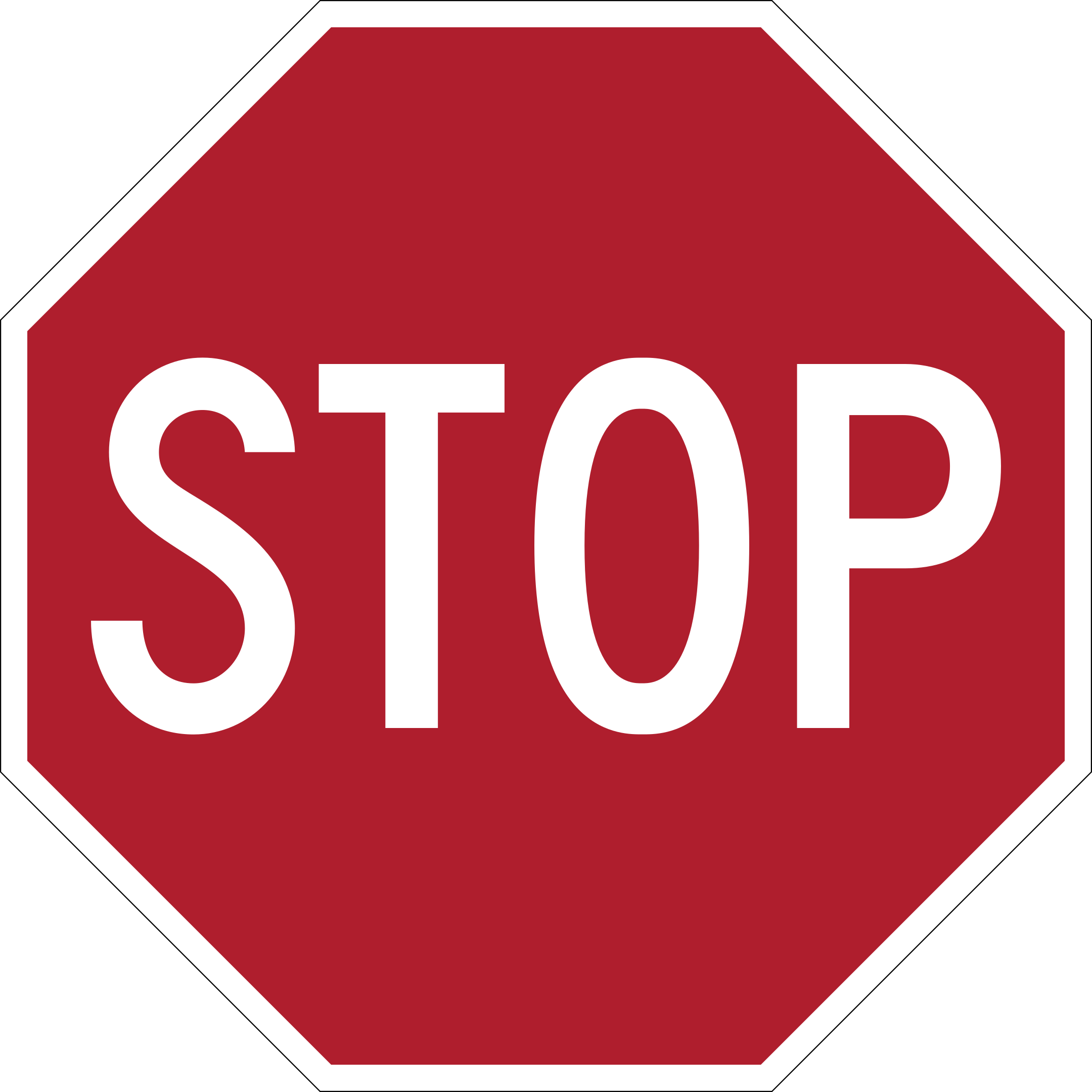
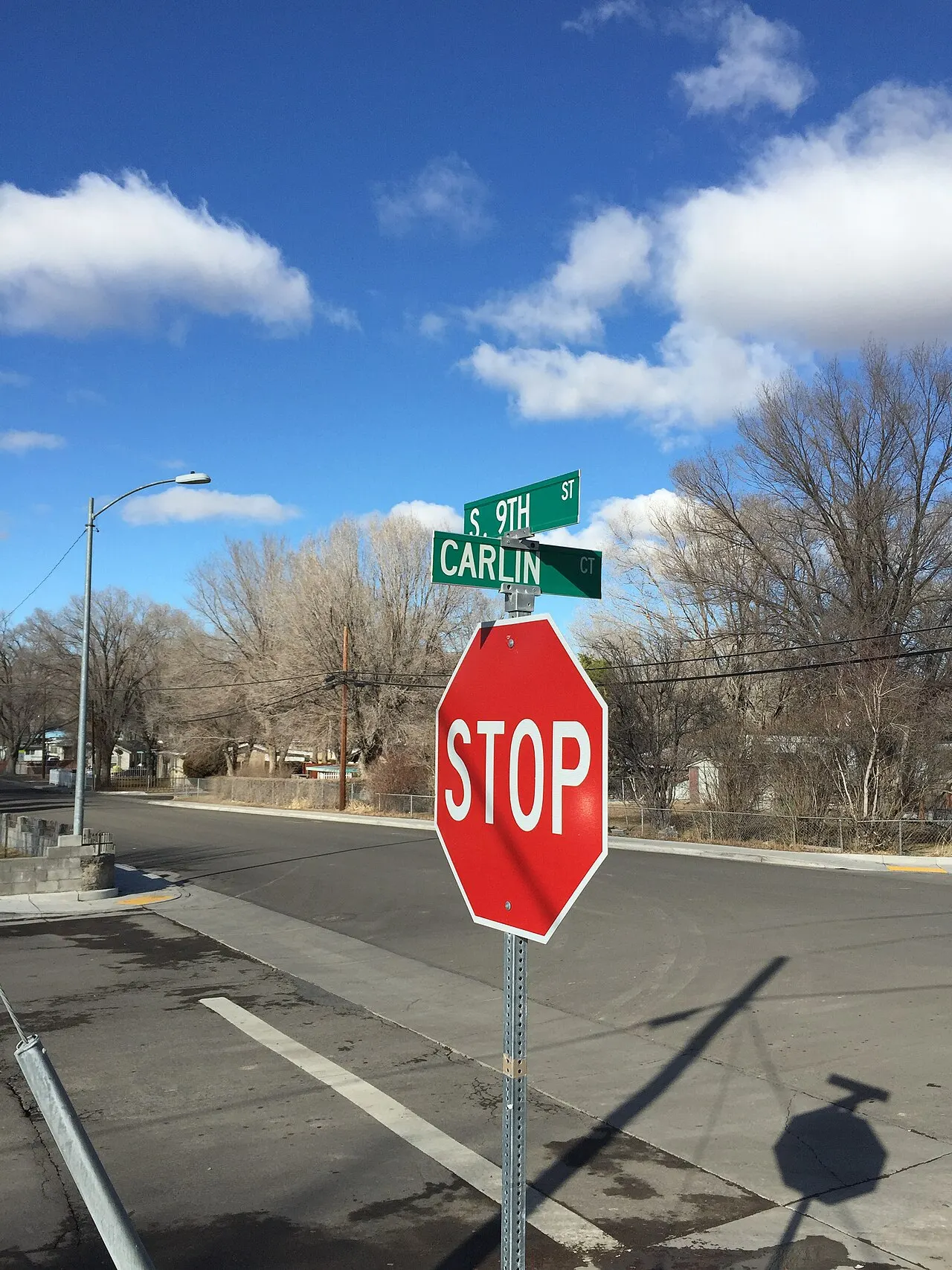
What shape and color is the Stop sign?
| MUTCD code | R1-1 |
|---|---|
| Group | Regulatory signs |
| Shape | Octagon |
| Color | Red background, white legend and border |
What an octagon means. Stop, and nothing else. It is the only eight-sided sign, so the shape alone identifies it in fog, in the dark, or from behind when the legend is not readable.
What red means. Stop, yield, or a prohibition. Red never advises, it always forbids or commands.
Regulatory signs. Every sign in this group has a statute behind it, so disobeying one is a citable offense on its own. Permit tests tend to word them as a duty you owe rather than show you the face.
Where is the stop sign put, and how big is it?
Section 2B.04 says an R1-1 is used when a full stop is always required. The face carries no second legend, and it is not a changeable message sign. Section 2B.18 puts it on the near side, on the right-hand side of the approach, as close as practicable to the intersection while keeping it as visible as possible to the drivers it controls. Guidance says not farther than 50 feet from the pavement edge of the road you are about to enter.
If a crosswalk is marked, the sign should sit ahead of the crosswalk edge nearest to you. Where two roads meet at an acute angle, the sign should be angled or shielded so the other road cannot read it. At a wide-throat intersection, or on an approach with two or more lanes, an extra STOP sign may go on the left, on a channelizing island or median where there is one, or overhead. A STOP sign and a YIELD sign shall not share a post.
Section 2B.03 makes 36 by 36 inches the multi-lane minimum. You may not drop a STOP sign to the 30-inch size just because a multi-lane street is posted at 35 mph or less. If the sign in its required right-side position still has restricted visibility, Section 2B.18 requires Stop Ahead.
Exactly where do you stop, and then what?
- 1Pick the stopping point the statute names
California Vehicle Code 22450: stop at the limit line if one is marked. If not, stop before entering the crosswalk on the near side. If there is no limit line and no crosswalk, stop at the entrance to the intersecting roadway. Florida Statutes 316.123(2)(a) uses the same first two points, then a different third point: the point closest to the cross street from which you have a view of its approaching traffic, before you enter.
- 2Stop
Both statutes say the driver shall stop. Florida 316.123(2)(a) opens with one exception: a police officer or a traffic control signal directing you to proceed. Neither statute publishes a count of seconds. A slow roll is not the stop those sections describe.
- 3Yield to the hazard, then go
California Vehicle Code 21802(a) then says you yield to any vehicle that has approached from another highway, or is close enough to be an immediate hazard, until you can go with reasonable safety. Once you have yielded and enter, 21802(b) makes other approaching drivers yield to you. Subdivision (c) says the section does not apply when stop signs stand on every approach. Florida 316.123(2)(a) states the same yield, judged over the time you are moving across the intersection.
| If there is no line and no crosswalk | California Vehicle Code 22450 | Florida Statutes 316.123 |
|---|---|---|
| Where the stop is made | At the entrance to the intersecting roadway | At the point closest to the cross street with a view of its approaching traffic, before you enter |
| Is the sign post named as a stopping point? | No | No |
| Published minimum time stopped | None | None |
The first two points match: a marked limit line, otherwise the near crosswalk. The states diverge only when both are missing.
Section 2B.06 says a STOP sign shall not be used for speed control. It means a full stop was judged necessary, not that traffic should go slower in the middle of the block.
How does that work for one driver?
Andre in California, limit line painted
- 1On September 8, 2026, Andre drives east at 30 mph on a California residential street with one lane each way. The STOP sign is on his right, 22 feet from the cross street pavement, inside the 50-foot guidance. A limit line is painted.
- 2Vehicle Code 22450(a) sends him to that line, not to the post. A car from the cross street has already entered. He stays stopped until it clears. The next cross-street car is 300 feet away at 30 mph, about 7 seconds out, so it is not an immediate hazard while he crosses. He enters.
Outcome. He stopped at the limit line and yielded to the vehicle already in the intersection. Because this is not an all-way stop, 21802(b) then requires the approaching driver to yield to him.
Stop sign on the road that ends
The driver on the stem yields.
That driver has the stop sign. The driver already on the through road does not.
Which permit-test answers miss this sign?
- Stopping beside the post when a limit line or crosswalk is closer to the intersection. Section 2B.18 guidance lets the post stand up to 50 feet from the cross street, so it can sit well back from the stopping point.
- A "three-second stop." California 22450 and Florida 316.123 do not publish one.
- Reading a yellow Stop Ahead diamond as the place to stop. Section 2B.18 calls for that sign in advance of a STOP sign whose visibility is restricted. It warns. It does not mark the stop.
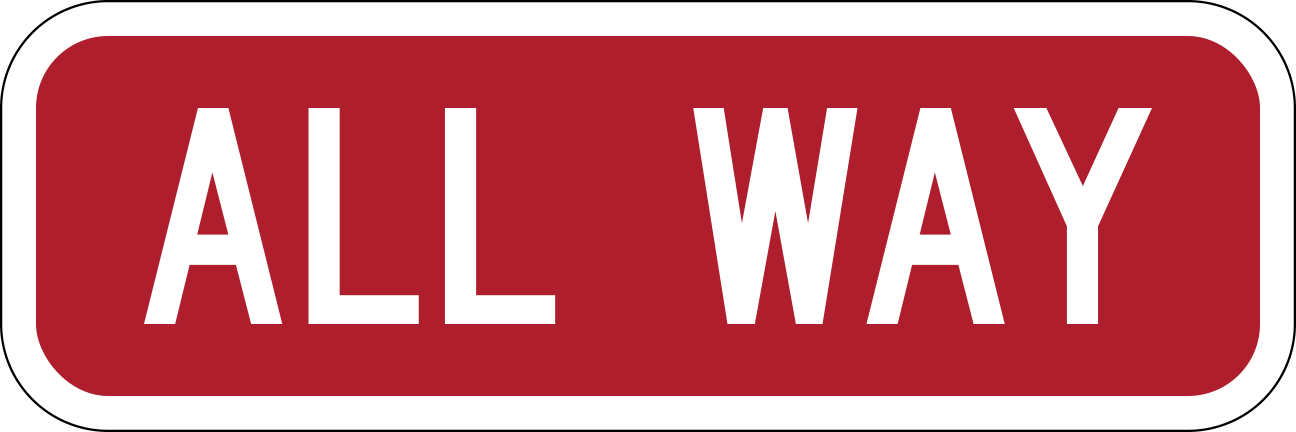

The plaque is only for an all-way stop. The yellow diamond warns that the octagon is coming.
What is the Stop sign often mistaken for?
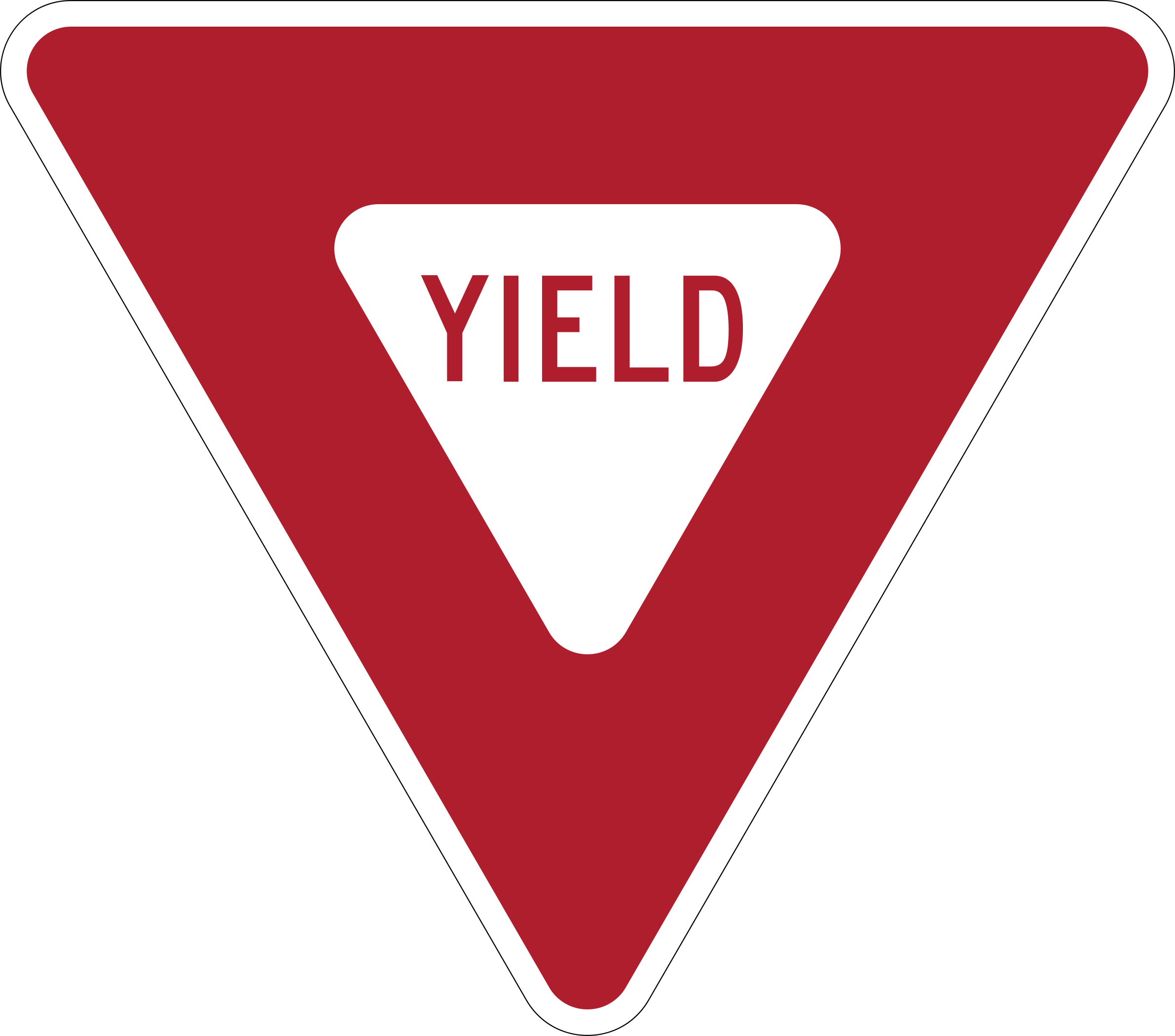
Yield (R1-2) is the only other non-rectangular red sign and requires slowing, not stopping. Stop Ahead (W3-1) is a yellow diamond and is only a warning that a stop sign is coming, not an instruction to stop where it stands.
| | |
|---|---|---|
| GroupRegulatory signs | GroupRegulatory signs | GroupWarning signs |
| ShapeOctagon | ShapeEquilateral triangle, point down | ShapeDiamond |
| ColorRed background, white legend and border | ColorWhite background, wide red border, red legend | ColorYellow background, black border, red octagon symbol |
| What it meansThe duty is a complete stop, wheels no longer turning, at whichever of these you reach first: a painted stop line, the near edge of the crosswalk, or the point where you can finally see along the cross street. | What it meansPriority belongs to whatever is already using the road you want, vehicles and pedestrians alike. | What it meansThere is an octagon beyond this point that a driver at speed will not pick out in time. |
What does the permit test ask about the Stop sign?
These 2 questions are from the practice bank, with the answer marked.
You arrive at this sign. What must you do?
- A.Slow down and continue if nothing is coming
- B.Come to a complete stop, then go when the way is clear(correct answer)
- C.Stop only if another vehicle is already waiting
- D.Yield to traffic on your left and proceed
Source: MUTCD R1-1
An eight-sided (octagonal) sign always means:
- A.Yield
- B.Stop(correct answer)
- C.Do not enter
- D.Railroad crossing
Why: The octagon is reserved for STOP alone. Shape is deliberately unique so the sign is readable in fog, at night, or when snow covers the face.
Source: Federal MUTCD, 11th Edition (FHWA)
Questions drivers ask about the Stop sign
Do I stop at the sign post or at the line?
Stop at the limit line if one is painted. California Vehicle Code 22450 says that, and if there is no limit line, stop before the near crosswalk. If neither exists, stop at the entrance to the intersecting roadway. Florida Statutes 316.123 uses those first two points, then a different third point: the point closest to the cross street from which you can see its approaching traffic. The post itself is on neither list. Section 2B.18 sites the sign for visibility, and its guidance allows it up to 50 feet back from the cross street pavement.
Is a rolling stop legal if the cross street is empty?
No. Both California Vehicle Code 22450 and Florida Statutes 316.123 say the driver shall stop. An empty cross street removes the reason to wait after the stop. It does not remove the stop. Florida allows slowing without stopping only at a yield sign, in 316.123(3), not at a stop sign. After a real stop, California Vehicle Code 21802 has you yield to vehicles that have approached from another highway or are close enough to be an immediate hazard, and lets you proceed once you can do so with reasonable safety.
How long do the wheels have to stay still?
Neither California Vehicle Code 22450 nor Florida Statutes 316.123 publishes a number of seconds. An answer that says "three seconds" is not from those sections. Stop means stopped, at the point the statute names, before you enter. Then look. If nothing has entered and nothing is close enough to be an immediate hazard while you cross, you proceed. Section 2B.04 of the MUTCD sets no time either.
What if an officer waves me through the sign?
Florida Statutes 316.123(2)(a) opens with the exception: you do not make this stop when a police officer or a traffic control signal directs you to proceed. The sign does not outrank that direction. Subsection (4) makes a violation a noncriminal traffic infraction, punishable as a moving violation under chapter 318. The section does not print a dollar amount, so a fine printed on a practice question is not from this statute.
Sources
- MUTCD 11th Edition, Chapter 2B, Table 2B-1
- MUTCD 11th Edition (December 2023), Sections 2B.03, 2B.04, 2B.06, and 2B.18, and Table 2B-1
- California Vehicle Code 22450
- California Vehicle Code 21802
- Florida Statutes 316.123 (2026)
What are the other regulatory signs?
All 39 regulatory signs on one page, or every US road sign by shape and color.
Test yourself on this sign and the rest of the set with a road signs practice test for Florida, Texas, California or New York.
The artwork is the federal design itself, which the manual dedicates to the public domain in MUTCD 11th Edition, Part 1, Section 1D.06, checked 2026-09-09. The Interstate Shield, the 511 pictograph and the National Scenic Byway graphic are named exceptions and are not reproduced anywhere on this site.
Source: Manual on Uniform Traffic Control Devices, 11th Edition. Not affiliated with or endorsed by the Federal Highway Administration or any state agency.