What does the Advisory Speed plaque mean?
The Advisory Speed plaque (MUTCD W13-1P) is a warning sign under the federal Manual on Uniform Traffic Control Devices, the national standard the states build from. The recommended safe speed for the curve or ramp the sign above it warns about, in good conditions.
Source: MUTCD 11th Edition, Chapter 2C, Table 2C-1, checked 2026-09-09.
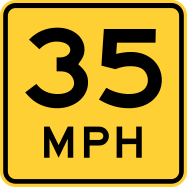
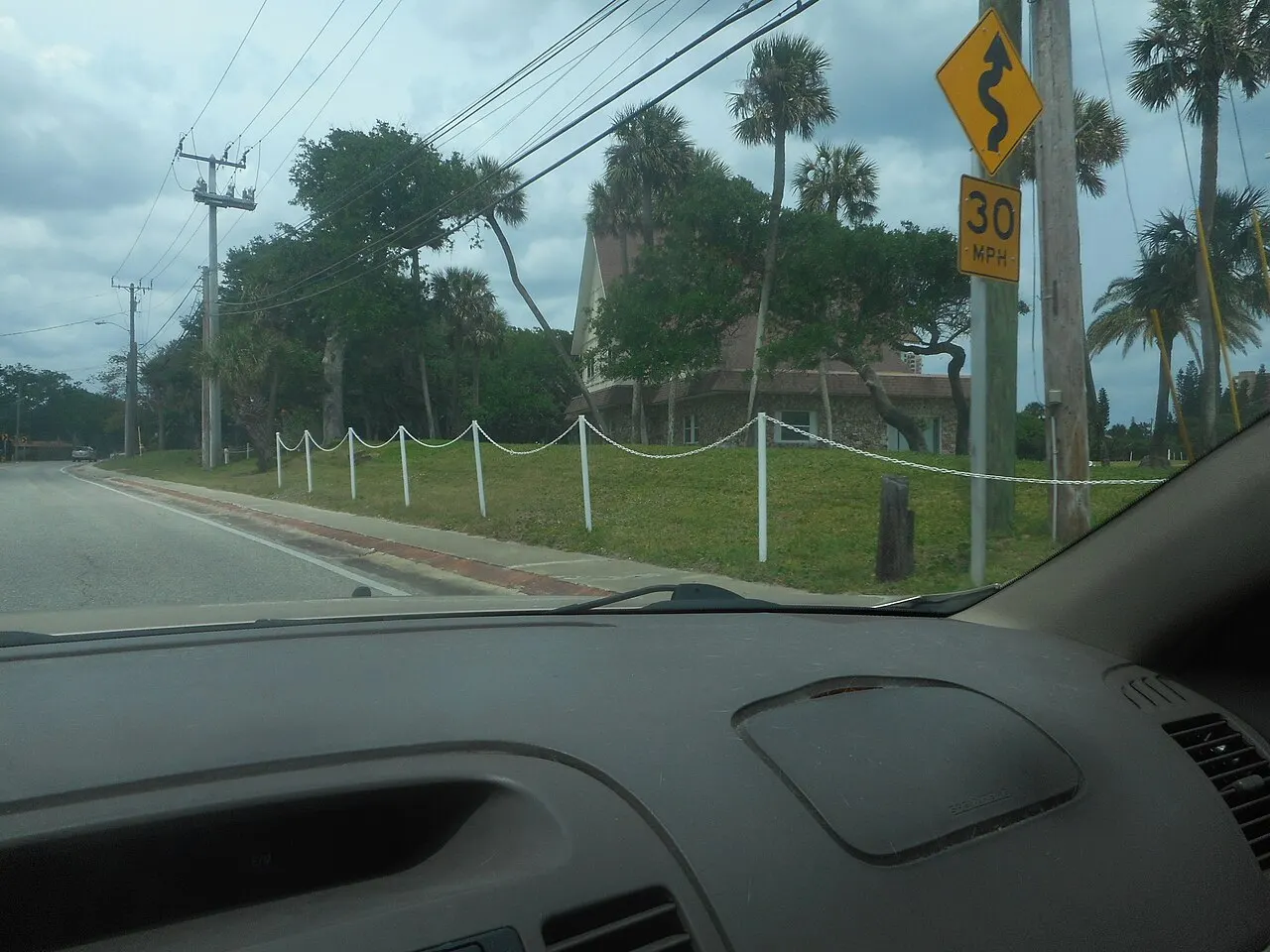
What shape and color is the Advisory Speed plaque?
| MUTCD code | W13-1P |
|---|---|
| Group | Warning signs |
| Shape | Square plaque below a warning sign |
| Color | Yellow background, black legend and border |
What yellow means. General warning of a permanent condition ahead.
Warning signs. A diamond reports a condition and orders nothing. What you do about it is left to you, and that gap between a report and an order is what test writers keep probing.
When is this plaque required, and when is it only recommended?
Section 2C.59 lets a W13-1P supplement an advance warning sign. On a curve the choice follows Section 2C.06 and Table 2C-6. The differential is the gap between the advisory speed and the posted limit, the statutory limit, or the 85th percentile speed on the approach.
| Speed differential | Advisory Speed plaque |
|---|---|
| 5 mph | Optional |
| 10 mph | Recommended |
| 15 mph or more | Required |
MUTCD 11th Edition, December 2023, Table 2C-6 and Section 2C.59. The same section also requires the plaque wherever an engineering study shows road users need an advisory speed for some other roadway condition.
The digits are a multiple of 5 mph (paragraph 04). Except in an emergency or a temporary condition, the plaque cannot go up until an engineering study has set the speed (paragraph 05). It only supplements an advance warning sign and is never its own installation (paragraph 06). If the warning sign also carries another plaque, such as an advance street name, the advisory plaque should go directly under the warning sign with the other plaque below it (paragraph 07).
How does an agency pick the number?
Paragraph 09 requires an engineering study that follows established practice. Paragraph 10 says to base it on free-flowing traffic. Paragraph 12 lists established practices that suit a curve: the compass, safety-based, accelerometer, design equation, and ball-bank methods. The ball-bank criteria in the manual are 16 degrees for 20 mph or less, 14 degrees for 25 to 30 mph, and 12 degrees for 35 mph and up. Paragraph 13 reports research showing drivers often exceed posted advisory curve speeds by 7 to 10 mph. That is a finding, not permission to add 10.
W13-1aP, the Confirmation Advisory Speed plaque, is a different plaque. It may go only with a One-Direction Large Arrow on the outside of a turn or curve, or with an exit gore sign. It cannot stand alone, and it is not a second approach plaque.
What do you do with the number?
- 1Slow before the condition
The plaque gives the speed for the bend or other condition the warning sign above it describes. It is not a limit that starts at the post.
- 2Treat the number as a free-flow study speed
Paragraph 10 bases the study on free-flowing traffic. The plaque prints no wet-weather alternative, and rain can make its number too fast.
- 3Do not read it as a second maximum
Section 2B.21, paragraph 23, says not to use a Speed Limit sign for an advisory speed. The yellow number was not adopted as the legal limit.
- 4A plaque on the outside arrow is confirmation
A W13-1aP on the large arrow at the outside of the bend faces approaching traffic and confirms the advisory as you reach the curve. It is not a separate limit.
Is the yellow number a speed limit in Texas?
Texas Transportation Code section 545.352(a) makes a speed over the limits in subsection (b), or over a limit set under another section of that subchapter, prima facie evidence that the speed is unreasonable and unlawful. Subsection (b) lists 30 mph on an urban district street other than an alley, 15 mph in an alley, 70 mph on a state or U.S. numbered highway outside an urban district, and 60 mph on an unnumbered highway outside an urban district, plus school bus and beach figures. A yellow plaque is not on that list. Section 545.351(c)(2) still requires an appropriately reduced speed approaching and going around a curve. The MUTCD sets no fine for exceeding an advisory speed.
Lena, outside an urban district on a numbered Texas highway, June 2, 2026
- 1No special zone is posted, so section 545.352(b)(2) makes 70 mph the prima facie limit.
- 2The curve plaque reads 35. A 35 mph differential is past the 15 mph row, so Table 2C-6 requires the plaque, and Chart B of Table 2C-4 pairs chevrons with the advance sign.
- 3Thirty-five is above 30, so Section 2C.07 makes the advance sign a Curve sign. Table 2C-3 has no 35 column. At 70 mph it lists 450 feet to slow to 30 mph and 375 feet to slow to 40 mph, figures already reduced by 250 feet of reading distance.
- 4Lena holds 70 past the sign and brakes only once she is in the bend. The 35 was the study speed for the curve itself.
Outcome. Texas did not adopt 35 as a limit, so this is not a 35 mph speed-limit case. Section 545.351(c)(2) still required a reduced speed going around the curve, and holding 70 into it does not meet that duty.
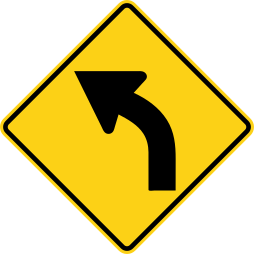
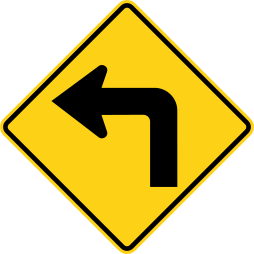
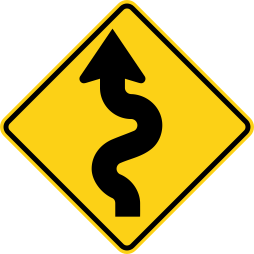
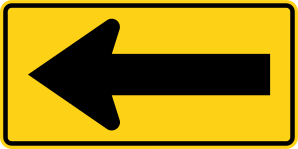
The approach plaque is W13-1P under the warning sign. The plaque on the outside arrow is the confirmation plaque, W13-1aP, and it is optional.
Section 2C.59 reports that drivers often exceed a posted advisory curve speed by 7 to 10 mph. That describes what people do. The speed the engineering study determined is the figure on the plaque, and the manual does not tell agencies to post a number and then expect you to add 10.
What is the Advisory Speed plaque often mistaken for?
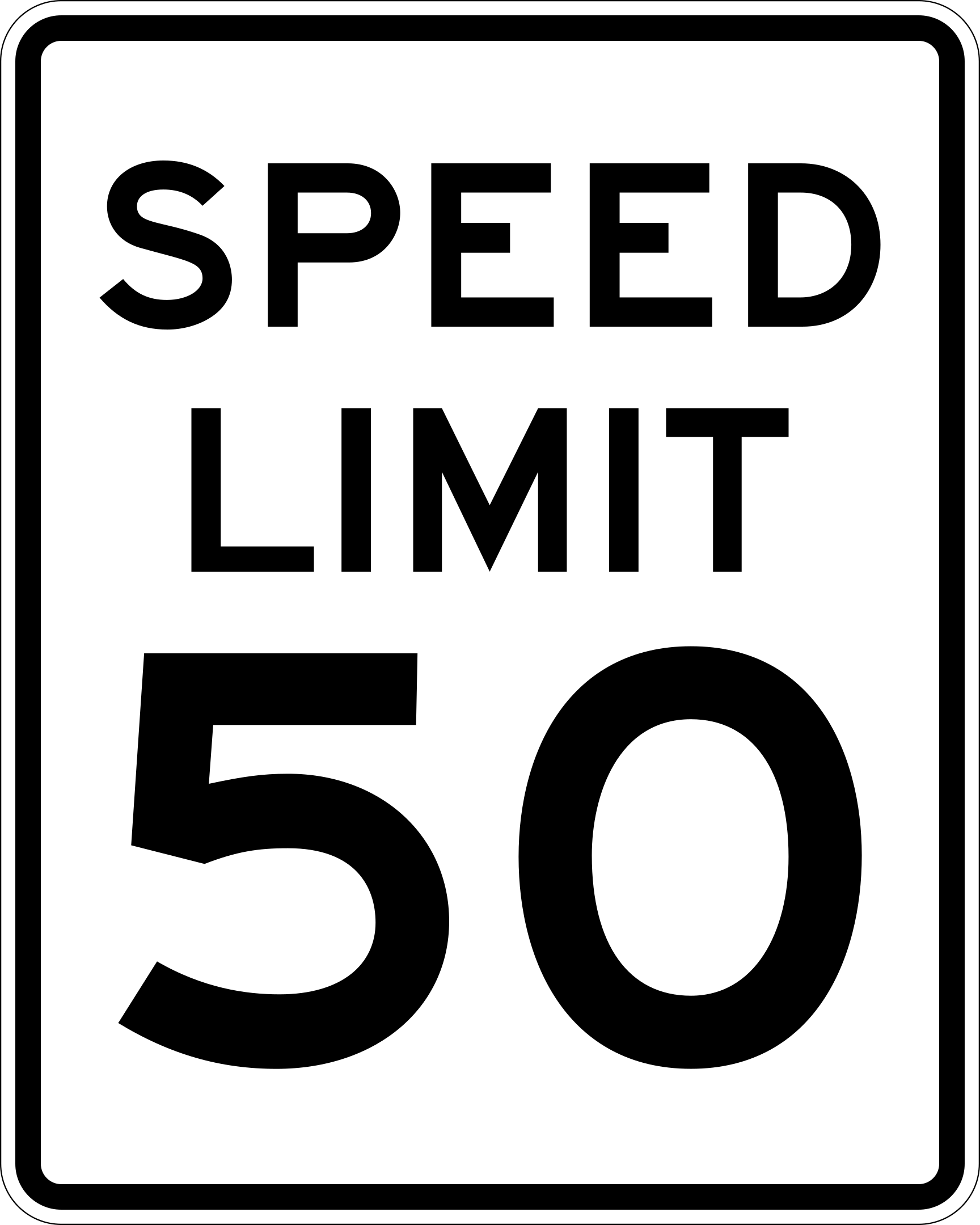
The Speed Limit sign (R2-1). Yellow advisory speeds are not enforceable limits in themselves, though exceeding them can support a careless-driving charge.
|  |
|---|---|
| GroupWarning signs | GroupRegulatory signs |
| ShapeSquare plaque below a warning sign | ShapeVertical rectangle |
| ColorYellow background, black legend and border | ColorWhite background, black legend and border |
| What it meansThe recommended safe speed for the curve or ramp the sign above it warns about, in good conditions. | What it meansA ceiling fixed by law, and it assumes the best case: dry pavement, clear sight lines, light traffic. |
What does the permit test ask about the Advisory Speed plaque?
This question is from the practice bank, with the answer marked.
A yellow sign showing a curved arrow with a posted number means:
- A.A mandatory maximum speed limit
- B.An advisory safe speed for the curve(correct answer)
- C.A distance to the next exit
- D.A weight limit for the bridge
Why: The number on a warning sign is advisory: the recommended speed to take the feature safely in good conditions. The legal limit remains the posted regulatory limit.
Source: Federal MUTCD, 11th Edition (FHWA)
Questions drivers ask about the Advisory Speed plaque
Will I get a speeding ticket for going over the yellow number?
Not under a speed-limit section that never adopted that number. In Texas, section 545.352 treats a speed over its listed limits, or over another limit set under that subchapter, as prima facie evidence of an unlawful speed. The plaque is not one of those limits. You can still be cited under section 545.351 if the speed was unreasonable for the curve. The MUTCD prints no fine for the plaque.
Why do two curves with the same shape show different plaques?
The number is not looked up from the arrow. Paragraph 09 requires an engineering study using an established practice, and paragraph 11 says each location should be evaluated periodically or when geometrics, surface characteristics, or sight distance change. Two bends that look alike on a sign can differ in superelevation, pavement, or sight distance, so they can carry different advisories.
Can the plaque be higher than the speed limit sign back down the road?
Section 2C.59 does not print a sentence that says the advisory must be lower than the posted limit. The differential in Table 2C-6 is defined as a difference from the posted limit, the statutory limit, or the 85th percentile approach speed, which is the case the table is built for. A plaque used for some other condition still has to come from an engineering study and still has to be a multiple of 5 mph.
What is the small plaque on the arrow at the outside of the bend?
That is the Confirmation Advisory Speed plaque, W13-1aP, not a second limit. Section 2C.59 allows it only with a One-Direction Large Arrow or an exit gore sign. The arrow stands on the outside of the turn or curve, facing approaching traffic, so the plaque confirms the advisory as you reach the bend. It is never installed as its own sign.
Sources
- MUTCD 11th Edition, Chapter 2C, Table 2C-1
- MUTCD 11th Edition, December 2023, Sections 2C.06, 2C.07, and 2C.59, Tables 2C-3, 2C-4, and 2C-6
- MUTCD 11th Edition, December 2023, Section 2B.21 (advisory speed is not an R2-1)
- Texas Transportation Code section 545.351
- Texas Transportation Code section 545.352
What are the other warning signs?
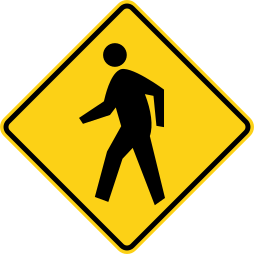
All 55 warning signs on one page, or every US road sign by shape and color.
Test yourself on this sign and the rest of the set with a road signs practice test for Florida, Texas, California or New York.
The artwork is the federal design itself, which the manual dedicates to the public domain in MUTCD 11th Edition, Part 1, Section 1D.06, checked 2026-09-09. The Interstate Shield, the 511 pictograph and the National Scenic Byway graphic are named exceptions and are not reproduced anywhere on this site.
Source: Manual on Uniform Traffic Control Devices, 11th Edition. Not affiliated with or endorsed by the Federal Highway Administration or any state agency.