What does the Do Not Enter sign mean?
The Do Not Enter sign (MUTCD R5-1) is a regulatory sign under the federal Manual on Uniform Traffic Control Devices, the national standard the states build from. Entry in this direction is banned outright, because the lanes past the sign run at you rather than with you.
Source: MUTCD 11th Edition, Chapter 2B, Table 2B-1, checked 2026-09-09.
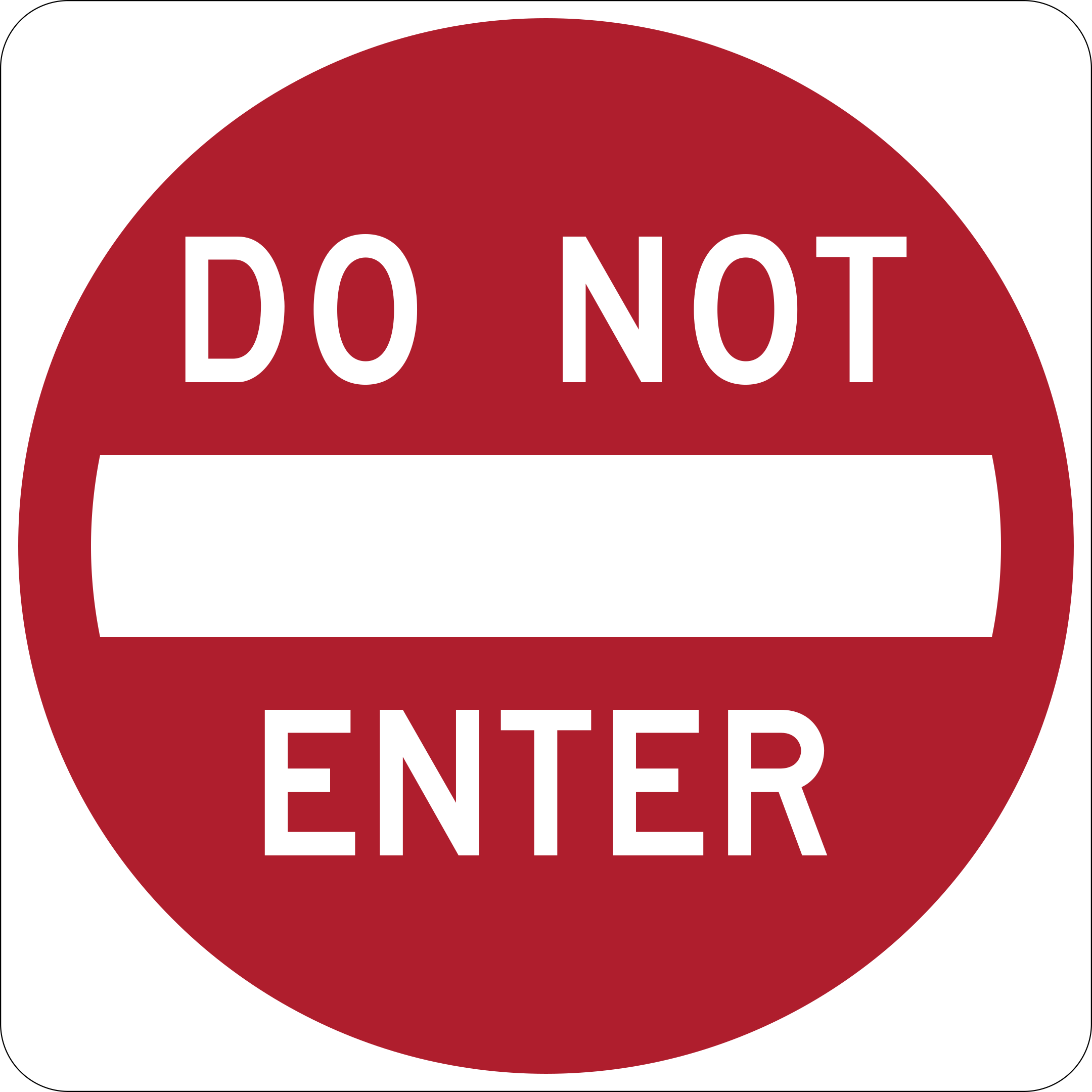
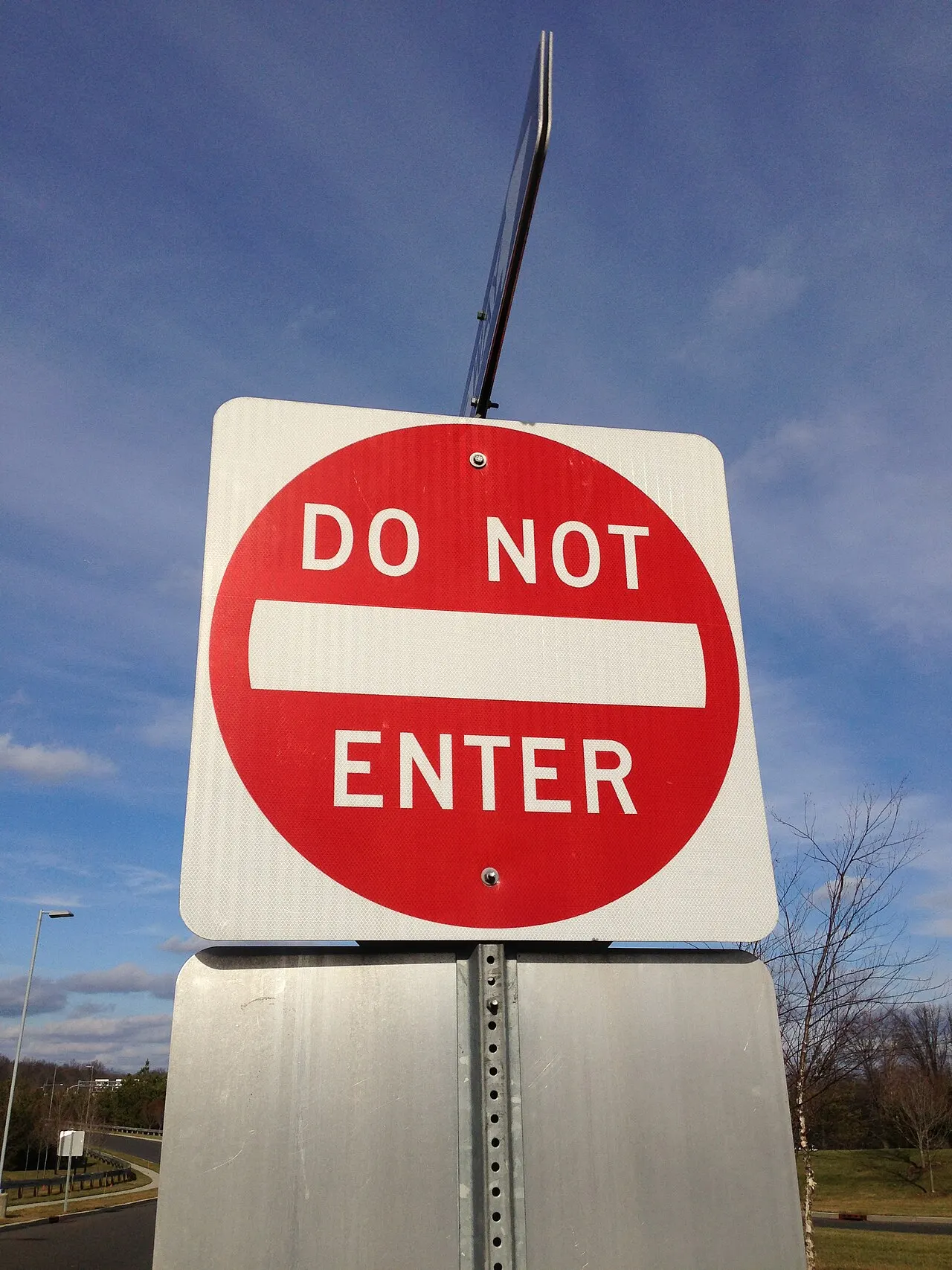
What shape and color is the Do Not Enter sign?
| MUTCD code | R5-1 |
|---|---|
| Group | Regulatory signs |
| Shape | Square |
| Color | White background, red circle containing a white horizontal bar, black legend |
What white means. Regulatory. A black legend on a white background is a law, not advice.
What red means. Stop, yield, or a prohibition. Red never advises, it always forbids or commands.
Regulatory signs. Every sign in this group has a statute behind it, so disobeying one is a citable offense on its own. Permit tests tend to word them as a duty you owe rather than show you the face.
Where does the manual require this sign, rather than leave it optional?
Section 2B.46 of the MUTCD 11th Edition (December 2023) makes the R5-1 a Standard at four kinds of location. It shall be used where a two-way road becomes one-way, where an interchange exit ramp meets a crossroad (Section 2B.48 has the detail), where a channelized or turning roadway meets a two-way undivided crossroad, and at a divided-highway crossing that works as two separate intersections. Only the last of those has an exception, in paragraph 4.
That exception is narrow: a low-speed urban street that is a divided highway, at a crossing that works as two intersections. Where a divided-highway crossing works as one intersection, paragraph 3 lets the agency add the sign without requiring it. Paragraph 2 is Guidance for other sites, such as a place where wrong-way movements are common or where the angle of the roads keeps One Way signs alone from getting the restriction across.
- Place it in direct view at the point where a driver could enter a divided highway, one-way road, or ramp the wrong way (paragraph 6).
- Aim it at that wrong-way traffic. If traffic it does not apply to can see it, turn it away or shield it (paragraph 8).
- A second sign is allowed, particularly where traffic approaches from an intersecting road (paragraph 9).
- The 3-foot low mount in Section 2B.48 is only for a sign along a freeway or expressway exit ramp, facing someone already going the wrong way. It is not for an ordinary corner.
What do you do in the few seconds before the bumper reaches it?
- 1Treat the face as the limit, not a warning to slow
The sign is regulatory. Braking and then rolling past it to "just turn around" is the entry the Standard is there to stop.
- 2Stay on the roadway that matches your direction
On a one-way pair or a divided road, the legal roadway is the one that does not have this face aimed at you. The other one carries traffic toward you.
- 3At a divided highway, turn left only after crossing the median
Coming from the crossroad at a crossing that works as two intersections, go straight across the near roadway and into the median opening before you turn left onto the far roadway. In Figure 2B-14, the Do Not Enter faces on the median noses sit where a driver who turned left too early would enter the near roadway against traffic.
- 4Expect a second face
Paragraph 9 allows a second sign, particularly for traffic coming from an intersecting road. If you are turning in from a side street, the face meant for you may be that second one.
Dana Ruiz where a street turns one-way
- 1On April 14, 2026, Dana is driving north at 25 mph on a two-way street. At Elm Street, the block ahead becomes one-way southbound. An R5-1 on the far side of the Elm Street intersection faces her, the case in Section 2B.46, item A.
- 2Her destination is two blocks farther north, and the southbound block looks empty. It is still closed to her, because entry in her direction is what the sign prohibits.
- 3She slows, signals, and turns right onto Elm, then heads north on the next parallel street, where no R5-1 faces her.
Outcome. She never enters the one-way block. The prohibition starts at the sign, whether or not a car is coming toward her.
Which answers sound careful and are still wrong?
- Picking "yield and enter if the lanes are empty." Nothing in Section 2B.46 turns this into a yield. Empty lanes are still closed to your direction.
- Picking "it only applies at night or on freeways." The four required sites include ordinary divided-highway crossings and channelized turns, not only ramps.
- Picking "a low-speed urban street never needs one." The omission in paragraph 4 is an option, and only for a low-speed urban divided street at a crossing that works as two intersections. The agency may still post the sign there.
- Reading a sign you see from the side or back as if it governed you. Paragraph 8 says a face visible to traffic it does not apply to should be turned away or shielded. The message belongs to the drivers it faces.
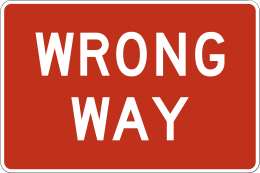
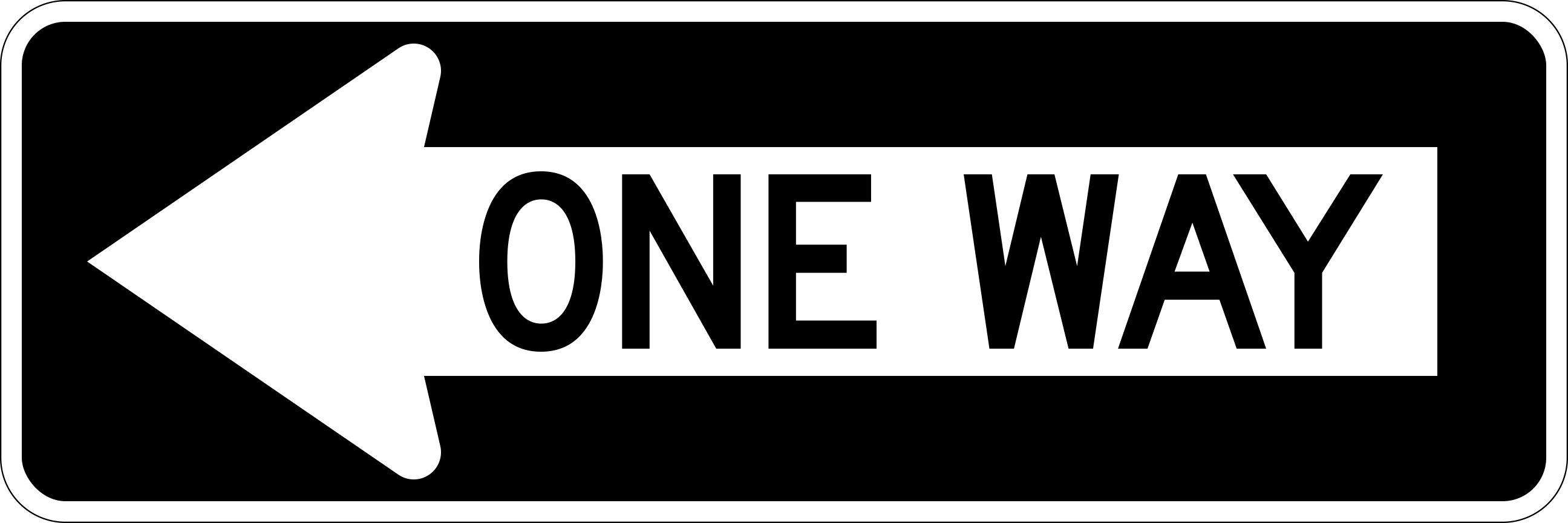
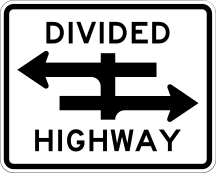
One Way tells you the legal direction. Divided Highway Crossing tells you which side of the median to take. Wrong Way is a supplement farther in, not a substitute for this face at the entrance.
Section 2B.46 allows an Except Bicycles plaque (R3-7bP) with this sign when counter-flow bicycle traffic is allowed. Without that plaque, do not assume a bike may enter. The plaque is how the exception is shown.
What does state law add after you ignore the face?
Florida Statutes section 316.088 lets the Department of Transportation and local authorities designate a highway, a roadway, part of a roadway, or specific lanes for one-way travel, at the times official traffic control devices show. On a roadway designated that way, a vehicle shall be driven only in the designated direction. The section prints no fine: a violation is a noncriminal traffic infraction, punishable as a moving violation under chapter 318.
California Vehicle Code section 21657 gives the authorities in charge of a highway the same power to designate one-way roadways or lanes by official traffic control devices, and requires driving only in the designated direction. On a divided highway, section 21651(b) makes driving anywhere but to the right of the barrier or dividing section a misdemeanor. Neither section states a dollar fine.
What is the Do Not Enter sign often mistaken for?
Wrong Way (R5-1a), which is the second-chance sign you meet further in if you ignored this one. Do Not Enter faces you at the entrance; Wrong Way faces you once you are already headed down the roadway against traffic.
| |
|---|---|
| GroupRegulatory signs | GroupRegulatory signs |
| ShapeSquare | ShapeHorizontal rectangle |
| ColorWhite background, red circle containing a white horizontal bar, black legend | ColorRed background, white legend and border |
| What it meansEntry in this direction is banned outright, because the lanes past the sign run at you rather than with you. | What it meansEvery lane around you faces the other way. |
Which signs get mistaken for the Do Not Enter sign?
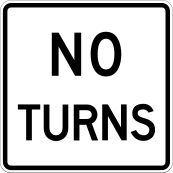 No TurnsR3-3
No U-Turn (R3-4) and the Do Not Enter sign (R5-1), which bans entry rather than turning.
What does the permit test ask about the Do Not Enter sign?
These 2 questions are from the practice bank, with the answer marked.
Seeing this sign facing you means:
- A.The road ahead is closed for construction
- B.You are about to drive the wrong way into oncoming traffic(correct answer)
- C.Only local traffic may continue
- D.The road ahead is private property
Source: MUTCD R5-1
A sign reading DO NOT ENTER means:
- A.The road is closed for road work
- B.You are facing traffic coming toward you and must not proceed(correct answer)
- C.The road is private
- D.You must yield before entering
Why: DO NOT ENTER marks the wrong-way end of a one-way road or an exit ramp. Seeing one means you are about to drive into oncoming traffic.
Source: Federal MUTCD, 11th Edition (FHWA)
Questions drivers ask about the Do Not Enter sign
Can I pass it just far enough to turn around if I see no cars?
No. Section 2B.46 uses the sign where entry in your direction is prohibited, including where a two-way road becomes one-way and at the divided-highway crossings it lists. An empty roadway is not an exception in that section. Turn around only from a movement the sign is not forbidding.
Does it apply to someone on a bicycle?
The sign is a regulatory exclusion of the wrong-way movement. The only bicycle exception the section states is an Except Bicycles plaque mounted with the sign when counter-flow bicycle traffic is allowed. If that plaque is not there, the section does not give riders a free pass.
Why is there sometimes a second one?
Paragraph 9 of Section 2B.46 allows a second sign, particularly where traffic approaches from an intersecting road. It is the same prohibition shown to more drivers. It is not a different rule, and it does not mean the restriction starts farther down the road.
The sign is at a divided highway in town and traffic is slow. Can the city leave it out?
Only as an option, and only in the case paragraph 4 describes: a low-speed urban street that is a divided highway, at a crossing that functions as two separate intersections. Elsewhere on that list the sign is a Standard. Seeing a street without one does not tell you the movement is legal.
Sources
- MUTCD 11th Edition, Chapter 2B, Table 2B-1
- MUTCD 11th Edition (December 2023), Chapter 2B, Sections 2B.46 and 2B.48, Figure 2B-14 and Table 2B-1
- FHWA: MUTCD 11th Edition page (Revision 1, December 2025, is now the current version)
- Florida Statutes section 316.088 (2026)
- California Vehicle Code section 21657
- California Vehicle Code section 21651
What are the other regulatory signs?

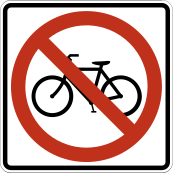
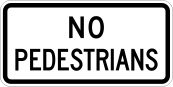
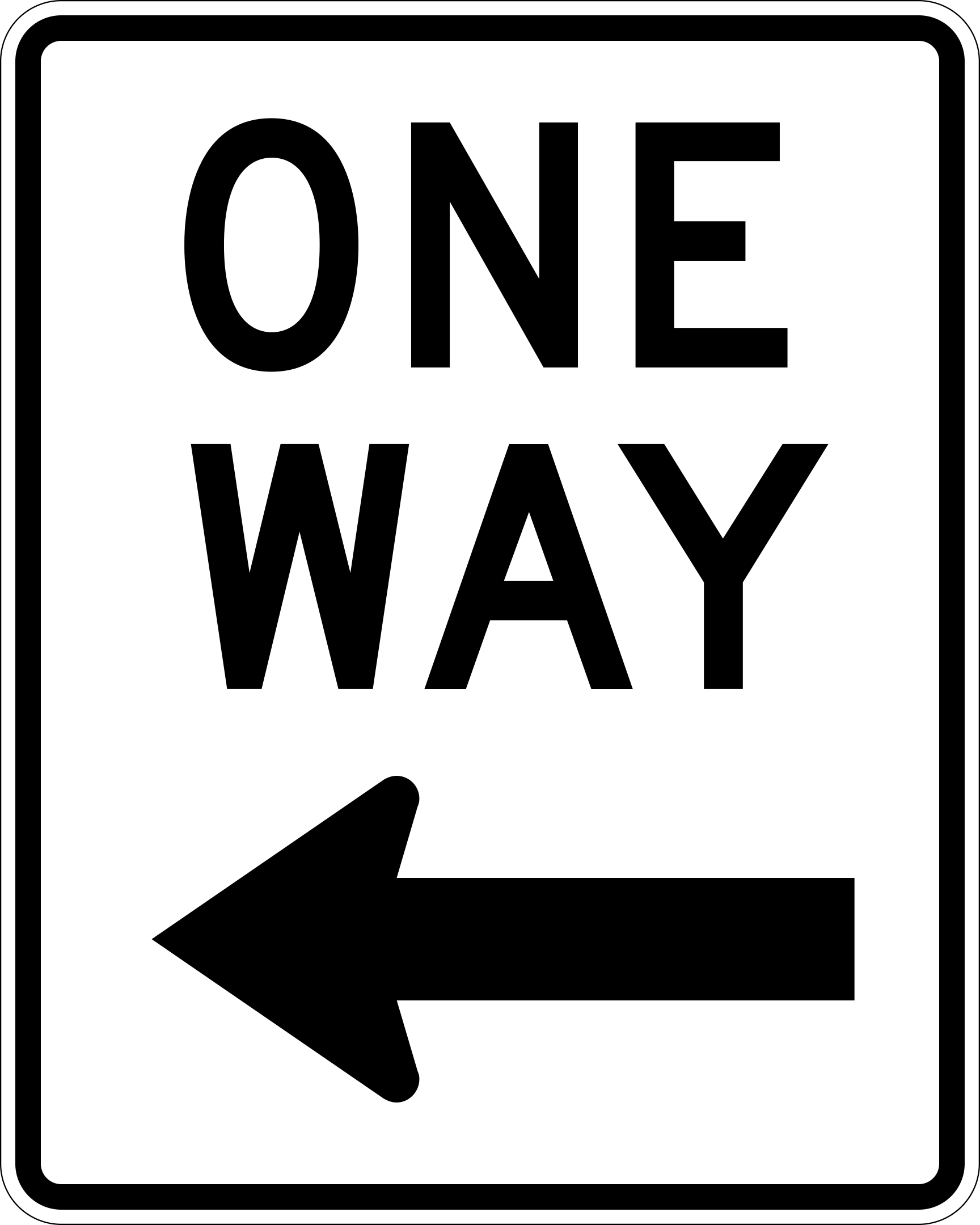
All 39 regulatory signs on one page, or every US road sign by shape and color.
Test yourself on this sign and the rest of the set with a road signs practice test for Florida, Texas, California or New York.
The artwork is the federal design itself, which the manual dedicates to the public domain in MUTCD 11th Edition, Part 1, Section 1D.06, checked 2026-09-09. The Interstate Shield, the 511 pictograph and the National Scenic Byway graphic are named exceptions and are not reproduced anywhere on this site.
Source: Manual on Uniform Traffic Control Devices, 11th Edition. Not affiliated with or endorsed by the Federal Highway Administration or any state agency.