What to bring for the Texas learner license test if you are under 18
Texas gates the learner license on school attendance, which catches people out, so bring the paperwork for that as well as for driver education. An applicant must be at least 15 and under 18 (Transportation Code s. 521.222(a)), must come with a parent or legal guardian or bring the application signed by one and notarized, and must bring a driver education certificate for the classroom hours TxDPS asks for first: the first 6 hours of a concurrent course, or all 24 of a block course. You also need either a high school diploma or GED, or a Verification of Enrollment and Attendance (VOE) form. TxDPS's teen page asks for at least 90 percent attendance in the past semester, while s. 521.204(a)(3), which the Texas Driver Handbook DL-7 repeats, requires at least 80 days of attendance in the fall or spring semester before you apply. The teen page treats the VOE as valid for 30 days from issuance, or 90 days if issued June through August, and DL-7 says it may be dated no more than 30 days before you apply during the school year, or 90 days during the summer, so a form collected too early is a wasted trip. The vision exam and the knowledge exam are taken at the same stage. Checked in September 2026.
Source: TxDPS, Texas Learners License as a Teen and Choosing a Driver Education Course; Texas Driver Handbook DL-7 (rev. January 2026); Transportation Code ss. 521.222, 521.204, checked September 25, 2026.
What papers does the DPS counter actually ask for?
DPS's learner-license page lists what the license and permit specialist needs to see: a completed application, proof of U.S. citizenship or lawful presence, proof of Texas residency, proof of identity, a Social Security number, a Texas driver education certificate that shows classroom completion, and a high school diploma, a GED, or a Verification of Enrollment and Attendance form.
Use form DL-14B if you are under 17 years and 10 months. DPS's forms index labels DL-14A for applicants 17 years and 10 months or older, so a teen close to 18 switches forms while still under 18 for school proof, parental signature, and Graduated Driver License rules. The application is available online or at the office, and TDLR's parent-taught page notes that filling it in before you arrive speeds up the visit.
Classroom completion is shown on a certificate built on TDLR's model, not on a school letter. DPS lists DE-964 or DEE-964 for certified driving schools and parent-taught courses, and DE-964E for public school driver education. TDLR's DES Search site has a tool to validate a driver education certificate. If your provider did not give the knowledge exam, you take it at the driver license office.
DPS lets you start classroom work at 14, but you cannot apply for the learner license until 15. The concurrent method is the first 6 classroom hours, then the learner license, then the remaining 18 hours. The block method is all 24 classroom hours before you apply. TDLR's parent-taught overview page also sets 24 classroom hours, but its parent-taught learner license page still prints 32 for the block method, so ask the course provider which total its certificate reports. Bring the certificate for the method you finished.
- Appointment confirmation
All in-office services are by appointment. Book at txdpsscheduler.com, up to six months ahead.
- DL-14B or DL-14A, signed
DL-14B under 17 years 10 months, DL-14A after that. Parent or guardian signs, or you bring a notarized signed application, or proof the signature is waived.
- Citizenship or lawful presence, identity, residency, SSN
Identity papers must be originals or certified copies. Two printed residency documents, or form DL-5. The SSN goes on the application and is checked with the Social Security Administration.
- DE-964, DEE-964, or DE-964E
Classroom completion only. Behind-the-wheel hours come later, for the provisional license.
- Diploma, GED, or VOE
VOE needs a school-official signature. Stamped or computer-generated signatures are accepted.
- $16 fee
Learner license under 18 on the DPS fee table, including a $1 administrative fee. The card expires on your 18th birthday.
Built from the TxDPS learner-license how-to-apply list, the fee table, the DPS forms index, and TDLR certificate names.
Parent-taught courses add extra paperwork
TDLR's parent-taught learner page lists papers the DPS teen page does not: the receipt from the parent-taught instructor designation, proof of Texas vehicle registration, and proof of vehicle insurance, or a signed statement that you own no vehicle. If the parent instructor is also your legal guardian, TDLR says to bring a certified court order showing guardianship. Under Transportation Code s. 521.1655(a-1), a parent-taught provider may give only the highway-sign and traffic-law parts of the exam, so the vision test happens at DPS.
How do I get a Verification of Enrollment that DPS will accept?
You get the VOE from the school, not from DPS. TDLR hosts the form, and a public, private, charter, or home school official signs it. The form itself says issuing it is the school's decision alone, and that neither DPS nor the Texas Education Agency can change that decision. DPS will take a high school diploma or a GED instead, so a graduate does not need a VOE at all.
Two attendance rules sit on top of each other. Transportation Code s. 521.204(a)(3), which s. 521.222 borrows for the learner license, requires enrollment in a public, home, or private school with at least 80 days of attendance in the fall or spring semester before you apply, or at least 45 days of current enrollment in a high school equivalency program. DPS and TDLR add the 90 percent class-credit rule, which the VOE form ties to Education Code s. 25.092. If you did not get credit for a class, the school checks whether you were present 90 percent of the time it met. If you were not, the attendance committee or administration may set conditions you must meet first.
| Paper | Who issues it | Catch |
|---|---|---|
| High school diploma or GED | The school or GED program | No VOE needed. |
| VOE during the school year | School official, including home school | Valid 30 days. 90 percent attendance plus the 80-day statute rule. |
| VOE issued June through August | School official | Valid 90 days instead of 30. Still needs the signature. |
| Last report card, summer only | The school | Allowed if you apply in summer, are still enrolled, and the card shows name, attendance, and grades. |
| GED-prep proof | The equivalency program | 45 days of active enrollment. DPS lists this when you cannot obtain a VOE. |
DPS learner-license page, TDLR Verification of Enrollment page and form, Transportation Code ss. 521.222 and 521.204(a)(3).
Does a parent have to stand at the counter with me?
Someone with authority has to sign. Transportation Code s. 521.145 says an application under 18 must be signed by the parent or guardian who has custody, or by that parent's agent under a power of attorney. If you have no parent or guardian, your employer or the county judge of the county where you live signs instead.
On the day, DPS lets you bring a parent or legal guardian, evidence that parental authorization is waived (its example is emancipation), or the application already signed by the parent or guardian and notarized. DPS's appointment rules let only customers into the building, but they list parental authorization as a business reason that lets a parent in. The cosigner can later ask DPS in writing to cancel the license under Transportation Code s. 521.304, which releases the cosigner from liability for your later driving.
How do I prove who I am and where I live if nothing is in my name?
Identity and residency are separate piles. DPS's identity page gives three routes: one primary document, or two secondary documents, or one secondary plus two supporting documents. Names and dates of birth must match. If you use a name that is not on your birth certificate, add a marriage license, divorce decree, revised birth certificate, court-ordered name change, or a Department of State Health Services marriage verification letter.
An unexpired U.S. passport book or card is enough by itself for identity. Without a passport, the usual stack is a birth certificate (original or certified copy, never laminated or photocopied) plus two supporting items such as school records and the actual Social Security card. Puerto Rican birth certificates issued before July 1, 2010 are not accepted.
Residency is two printed documents that each show your name and Texas residential address, and one of them must show at least 30 days in Texas. A Texas high school report card or transcript for the current school year is on DPS's list, and brochure DL-57 adds that it needs a preprinted address. Printed electronic statements count. Two months of the same service do not. DPS's residency page and DL-57 (rev. March 2026) accept two different services on separate statements from one municipal utility, but the older DL-15 checklist (rev. August 2024) says both documents cannot come from one source, so use two sources if you can. If nothing is in your name, use form DL-5: attach copies of two household residency documents, proof of family relationship (a birth certificate is one example), and the signed affidavit. DL-57 says only residency documents may be photocopies. Identity documents may not.
Type your Social Security number on the application. DPS checks it through the Social Security Administration's SSOLV system. The number is not printed on the card and is not stored in the barcode. If you are not eligible for a number, complete affidavit DL-13 at the office. If the number does not verify, DPS will not issue the license until the federal record is corrected.
When should I collect the VOE, and what happens once I am in the office?
Collect the VOE last, because it runs on a short clock. DPS prints 30 days from issuance, or 90 days from issuance in June through August. TDLR's VOE page gives the same 30-day and 90-day windows, but the TDLR form itself (rev. July 2012) still prints an older summer rule: a VOE issued in the last 5 days of the school year expires on the first day of the next school year. Handbook DL-7 says the VOE may not be dated more than 30 days before you apply during the school year, or more than 90 days during the summer. Book the appointment first on the Texas Scheduler, then get the VOE dated inside that window. Appointments can be set up to six months ahead, and brochure DL-57 says a first Texas license is applied for in person.
Outside June through August, a form dated April 1 still works at an appointment on May 1 and fails on May 2. If your appointment slips, get a new VOE. DPS publishes no grace period on that 30-day limit.
- Age 14Classroom may start
DPS allows the classroom phase at 14. You still cannot apply until 15.
- Classroom doneGet DE-964 / DEE-964 / DE-964E
6 hours (concurrent) or all 24 (block), then the certificate. One TDLR parent-taught page still prints 32 for the block.
- SchedulerBook the office visit
All services by appointment. Most offices release a limited number of extra slots online during the day.
- Inside 30 daysGet the VOE
90 days if dated June through August. Diploma or GED skips this step.
- Appointment dayVision, and knowledge if needed
Signature, thumbprints, photo, $16. A temporary permit the same day if you qualify.
Maya, 15, Levelland, April 2026
- 1Maya Reyes turns 15 on March 3, 2026. On March 12 she finishes the first 6 classroom hours of a concurrent teen course from a TDLR-licensed provider and is issued a DE-964 for the learner license. The provider does not give the knowledge exam.
- 2On March 20 she books an original-license appointment for Thursday, April 16, 2026 on the Texas Scheduler, 27 days out. She does not collect a VOE yet.
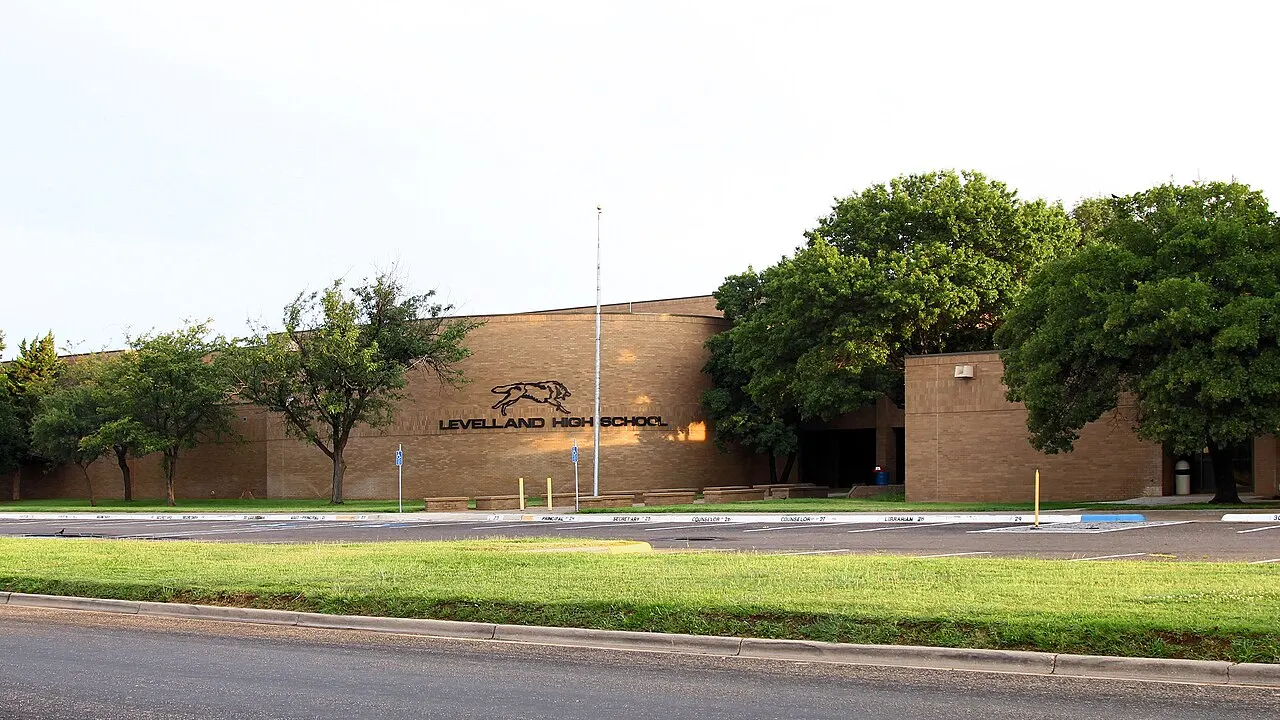
- 3On April 8 Levelland High School issues her VOE after checking her 90 percent attendance in the fall 2025 semester, with a school official's computer-generated signature. Dated April 8, it can be used through May 8.
- 4Her report card has no preprinted address, and no bill is in her name. Maya fills in Section A of DL-5, her mother completes and signs Section B, and they attach copies of a mortgage statement and a city water bill in her mother's name plus Maya's birth certificate as proof of relationship. Identity is the certified birth certificate, her school photo ID, and her Social Security card.
- 5Her mother signs DL-14B in front of the specialist. Maya pays $16, passes vision, and takes the knowledge exam at the office.
Outcome. The specialist accepts the stack: the VOE is 8 days old, the DE-964 shows classroom completion, and residency comes through the parent affidavit. Maya leaves with a temporary permit the same day, and from then on a licensed driver 21 or older must sit in the front passenger seat whenever she drives. DPS says the learner card itself usually arrives by mail within 2 to 3 weeks.
If the knowledge exam is still due on the day, handbook DL-7 sets the pass mark at 70 percent, and DPS publishes no question count. Transportation Code s. 521.161(d) allows three attempts at each part per application, and DL-7 holds the application for 90 days after a first failure. Plan the VOE around the appointment you actually have.
What does TxDPS not publish on this?
Whether one utility can supply both residency documents. TxDPS's residency page and brochure DL-57 (rev. March 2026) accept two different services on separate statements from one municipal utility, while the older DL-15 checklist (rev. August 2024) says the two documents cannot come from the same source. Using two different sources avoids the question.
More questions about this in Texas
Can my Texas driver education school give the knowledge exam so I skip it at DPS?
Yes, if the provider offers it. Transportation Code s. 521.1655 lets a licensed in-person or online driver education provider give its own students the vision, highway-sign, and traffic-law parts of the exam in s. 521.161. A parent-taught provider may give the sign and law parts only. The DPS learner-license page says you take the knowledge exam at the driver license office only if you did not take it during the classroom portion. Bring the certificate that shows classroom completion either way.
I am homeschooled. Do I still need a VOE?
Yes, unless you already hold a high school diploma or GED. Transportation Code s. 521.204(a)(3) names home school next to public and private school, with the 80-day attendance rule. TDLR's VOE page applies the same 90 percent class-credit rule to home schools, and the TDLR form has a School Name/Home School field, so a home school official completes and signs the standard form.
What if I do not have a Social Security number?
Texas still wants a number on a driver license application when you are eligible for one. DPS verifies it electronically with the Social Security Administration. If you are not eligible, you complete Social Security Number Affidavit DL-13 at the driver license office. That affidavit is not accepted for a commercial driver license. If you are eligible but the number fails SSOLV, DPS will not issue the learner license until the federal record is fixed.
Does a Texas ID card I already hold replace the identity pile?
A Texas driver license or identification card that is not expired more than 2 years is a primary identity document on the DPS identity page, so that one card can satisfy identity. Citizenship still has to have been established, and you still bring residency, SSN, the driver education certificate, and school proof. DPS's apply page says you surrender the Texas ID when you apply for a driver license, and Transportation Code s. 521.183 makes that surrender a condition of getting the license.
Who can sit beside me after I leave with the learner license?
Transportation Code s. 521.222(d) requires a person in the seat beside you who holds a license for that vehicle type, is 21 or older, and has at least one year of driving experience. DPS's learner page states the same 21-or-older front-seat rule. That supervisor commits an offense under s. 521.222(g) if they sleep, are intoxicated, or are too busy to watch you. Wireless devices, including hands-free, are banned for you except in an emergency.
Sources
- TxDPS, Texas Learners License as a Teen and Choosing a Driver Education Course; Texas Driver Handbook DL-7 (rev. January 2026); Transportation Code ss. 521.222, 521.204
- TxDPS, Choosing a Driver Education Course
- TxDPS, Apply for a Texas Driver License
- TxDPS, Identification Requirements
- TxDPS, Texas Residency Requirement
- TxDPS, Social Security Number (SSN)
- TxDPS, Driver License Fees
- TxDPS, Driver License Services, Appointments
- TxDPS forms index, DL-14B (under 17 years 10 months)
- TxDPS forms index, DL-14A (17 years 10 months or older)
- TxDPS, Texas Driver Handbook DL-7 (rev. January 2026)
- TxDPS form DL-15, What to Bring When Applying
- TxDPS form DL-5, Texas Residency Affidavit
- TxDPS form DL-57, What it takes to Apply
- TDLR, Getting the Learner License (parent-taught)
- TDLR, Getting Started with Parent-Taught Driver Education
- TDLR, Verification of Enrollment and Attendance
- TDLR VOE form (PDF)
- TDLR, DES Search (validate a driver education certificate)
- Texas Transportation Code Chapter 521
Other questions about Texas
- How many questions can you miss on the Texas permit test?
- What happens if you fail the permit test in Texas?
- What to bring for the Texas license test if you are 18 or over
- Can you take the permit test online in Texas?
- Moving to Texas: do you have to retake the written test?
- Texas supervised driving hours, and whether the log is turned in
Ready to practice for the Texas test?
How this works in other states
The under-18 stack and the 18-and-over stack for Florida, Texas, California and New York, including REAL ID and name changes. Read the guide.
Written by Vikas. Checked against the source above on September 25, 2026. TxDPS does not run this site and does not endorse it.